Resources

The image of the beach environment displays its givens: sand, sea, sky, dunes, plants, even the unseen particles in the air. The image of the boardwalk and “private property” sign shows a (passable) boundary onto which one can walk to the beach. It provides narrow, bounded access to a more open, free beach space. In times of change, the academic dean must understand the givens and the boundaries of theological education. Givens are the physical (temporal) and ontological realities that give boundary (like the narrow boardwalk) and freedom (like the open beach) to the work of the dean. As deans of theological schools, theological givens ought to be primary. As the beach becomes something else without sand, sea, and sky, the theological school becomes something else without a certain set of theological givens, and their relationship to other realities. Theological convictions and commitments rooted in texts and traditions, and how they cohere, serve as the sand, sea, and sky of the theological school environment. Other givens––cultural, social, institutional, etc.––will inform each dean’s context. The theological givens, I think, order and prioritize the other givens. The dean must know and value the givens in order to understand and carry out her role as an academic leader. Boundaries show the dean the context and scope of her work. They also indicate lines that either ought not or should be crossed. At times, the dean must help faculty, staff, and students flourish within a certain boundary, whether institutional, cultural, social or others. Other times, the dean must help faculty, staff, and students break through boundaries such as an antiquated and disparate curriculum. Curriculum revision offers one example where the academic dean leads the school to define new boundaries. These new academic boundaries will resonate if they reflect the givens of the school, like the boardwalk “fits” the beach environment because of how it helps us access and enjoy the beach. Academic leadership necessitates clear vision and creative discovery of the proper path for the people of the theological school. The givens and the boundaries of the school give the dean a context and lenses for that vision. When changes to theological education come, as they always have, a clear vision enables the dean to see his or her way forward so that the faculty, students, staff, and other constituents of the school may confidently follow, even if the future is unclear.

It sighed again the shark. Spitting out yet more fun gleeful humans thrilled at its unreal teeth.

The cactus can be a metaphor for our institutions; institutions whose pasts may seem dead, yet there may still be new growth emerging. The cactus grows around its historical center. The flowers are new life, distinct from and arising out of the present – in all its steadfastness, stability, and prickliness. The dean is to be the light of perspective whose shadow highlights the institution’s place in time.

I was not happy to see the headlights of an approaching dune buggy – its presence would ruin the unspoiled beauty of the beach. Yet when the dune buggy (labeled the “Turtle Patrol”) got close, I realized that the very friendly driver was actually removing a lot of plastic and other litter from the beach, thus caring for and enhancing its natural beauty. I still do not like vehicles on the beach, but I need to be more discerning. In theological education, as a dean, I must learn to withhold prior judgment of what I perceive about the ‘dune buggies’ approaching in the distance.

Walking along the long stretch of beach, the cross-section of the dunes revealed the stringy roots of the foliage penetrating and crisscrossing below the surface. This suggests that despite the shifting of the sands comprising the dunes, the roots help anchor the plants and enable them to continue thriving. Similarly, deans can draw upon their knowledge of the school’s history and roots to maintain a certain stability despite significant changes taking place around the institution.
The 2017-18 Deans’ Colloquy was constituted by a diverse group of deans representing 11 schools in the USA and Canada. Drs. Deborah Krause (Eden Theological Seminary), Luis R. Rivera (Garrett-Evangelical Theological School), and Paul Myhre (Wabash Center for Teaching and Learning in Theology and Religion) were the facilitators. The group met in Mustang Island for the second half of the colloquy. One of the topics for reflection was: “the Dean’s leadership role in times of deep changes in theological education.” The Deans were given an assignment to spend 45 minutes walking around the beach to identify aspects of the physical environment that may evoke thoughts or visions on the topic. They returned and shared their findings in small groups and then in plenary. It was a rich conversation. The group decided to share some of their reflections in the Wabash Center’s blog series for Theological School Deans. Instead of presenting thoughts in one particular way, they decided to do it freely . . . like the wind . . . like the waves . . . . The next 10 posts in this blog series represent some of those reflections.

Persons new to the office of the Dean may soon discover the need to acquire a new set of skills to effectively carry out the job. Those skills range from supervision, pastoral care (yes, more than you imagined!), educational administrative planning, curriculum design and planning, political acumen, budgeting and financial management, and assessment. Of these, none seems to puzzle novice deans more than educational assessment. While it can seem daunting, as I sometimes tell deans asking for help in this practice, "It's not rocket science, but it helps if you know what you're doing." There are six types of assessment practices, which, used together, will provide the dean a multifaceted and holistic view of student learning outcomes. These will provide deans, and Faculty, the data needed to evaluate the effectiveness of the curricula and to make wise and appropriate adjustments. Good data, rigorously derived, make for better decision-making than hunches, good-sounding ideas, predilections, or fads. As well, these assessments will provide the information needed to demonstrate rigorous academic practices to accrediting bodies. The Six Types of Assessments DIAGNOSTIC Diagnostic assessment measures a student's, or a class of students', strengths, weaknesses, knowledge, and skills prior to an instructional set (a course), or prior to starting a program of study. Examples of diagnostic assessments used in theological schools include the TOEFL language proficiency exam given to international applicants, and the GRE. Some schools may administer writing assessments to evaluate the need for remedial work in preparation for academic writing in a degree program. Some DMin programs use the MAT as part of their admissions requirements. Some schools administered the MMPI personality inventory as part of their application process (which, upon taking, the seminary intake counselor suggested I should not go into ministry; advice I ignored and went on to have a successful ministry career. So there.). FORMATIVE Formative assessment practices give evidence of a student's performance during instruction, during a learning experience, or in the midst of a course of study. Formative assessments are applied regularly at intervals throughout the instruction process. An example is a multi-faceted "mid-course" assessment with a faculty adviser to review academic performance and progress through a degree program course of study. This can include a student's self-assessment about their progress in formation goals. For students, formative assessments is an opportunity to receive feedback on academic performance and other goals. SUMMATIVE Summative evaluations measure a student's achievement at the conclusion of an instructional set or course of study. The most obvious course level summative assessment are final exams and the final grade a student receives in a course. At the program level, summative assessments can include a grade distribution analysis, program retention and completion rates, graduating class profiles, and, a grade point analysis of graduating students (highest, lowest, median, average). NORM-REFERENCED This assessment practice compares a student's performance against a national or other "norm" group. Some denominations require candidacy and ordination exams that demonstrate competencies in areas such as biblical exegesis, theology, polity, and worship and sacraments. These denominations can provide comparative data to show your students' placement in norm-referenced evaluations and exams. Due to the loose and broad interpretation of accreditation standards, the wide variety of theological school cultures and contexts, and the range and amorphous nature of what constitutes effective ministry practice or pastoral competencies, norm-referenced assessments are a challenge in theological schools. CRITERION-REFERENCED This assessment practice measures a student's performance against a published goal, specific objectives, or standards. In theological schools the most common criteria are interpretations of accreditation standards in program goals and the derivative student learning outcomes embedded in courses and program components. The application of well-designed assessment rubrics aid in the assessment of criterion-referenced evaluations. BENCHMARK Benchmark evaluations are similar to some of the above. These practices are used to evaluate student performance at periodic intervals, or at the end of a grading period. They can be used to predict student performance on end-of-course summative tests, or, end-of-program competencies evaluations. Benchmark evaluations can also be used to predict student performance post-graduation. The use of alumni surveys evaluated with alignment with degree program goals can help in benchmark assessment. Again, the range ministry contexts in which alumni serve, and the amorphous nature of what constitutes ministry competencies, provide a challenge for theological schools to establish benchmarks. The increasing attention to competency-based programs will likely require schools to identify "benchmarks" as indicators of levels of competencies. How many of these six assessments do you apply in your evaluation practices in your school? Which might you need to implement to provide a richer and more balanced assessment profile for your school? How, for whom, and where will you publish the results of your assessments? For information? For accountability? For reporting?
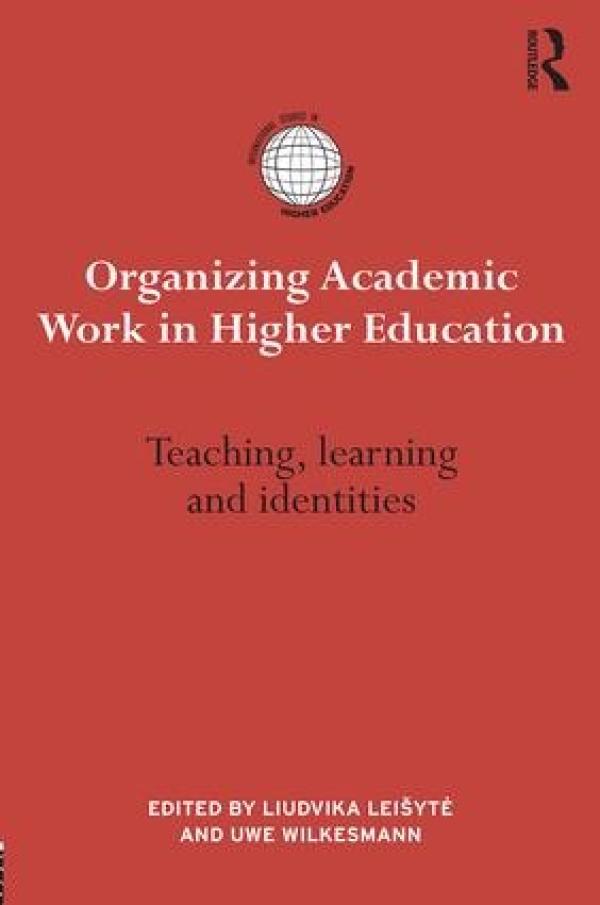
As much as teachers would like to argue to the contrary, the university is a business, an educational business to be specific. Universities, colleges, technical schools and the like are in the business of selling learning. They sell this product to those who see the need for education beyond the formative years, whether that be training in a trade or preparation for an occupation such as medicine, psychology, or religious service. Institutions of higher learning have been in existence for around a millennium, and have served as a tent pole artifact for institutional culture – universities have either set the bar of cultural progression or have fallen behind, sputtering to keep pace with the practitioners outside their hallowed walls who are establishing new trends and raising the bar set by the university. We seem to be in a contextual epoch that is squarely set between each of these extremes. There is still a hushed reverence that comes from finding a peer who attended Harvard, Stanford, Princeton, or Emory. Many in the academic community clamor to hear special lectures from Continental colleagues who have attended or are employed by Oxford, the University of Paris, or the University of Amsterdam. In some pockets, simply having a college or graduate degree can still mean higher pay, positional advancement, or advanced social standing. In the United States, we seem to be living in a time of both saturation and scarcity. Higher learning institutions are continually creating new and engaging programs to prepare interested individuals for securing employment in an ever-evolving, technologically-driven, globally-emerging marketplace. And yet the number of students seems to be shrinking as many weigh the cost of attending college or find that their career choice may not even require a college degree. Responsiveness to the changes taking place in society and academic preparation for those changes is of concern for leaders at universities, colleges, and trade schools. On one hand, the administration crunches numbers and devises business strategies to ensure that the institution remains open. On the other hand, faculty craft courses and develop programs to ensure that teaching is what keeps the institution open. This is the discussion that editors Leisyte and Wilkesmann present before the reader. Assembling over twenty scholars from across the globe, this volume demonstrates that the New Public Management model can be used to successfully organize institutions of higher learning. In providing specific examples from Germany, China, the UK, and the Netherlands, as well as individual authors speaking out of their own experiences, this volume shows how academic managers can integrate business-based operational models with rubric-based educational models to promote academic integrity and marketplace relatability. Change will continue to be the one true constant of the educational universe, and this volume provides a good map for the road ahead.
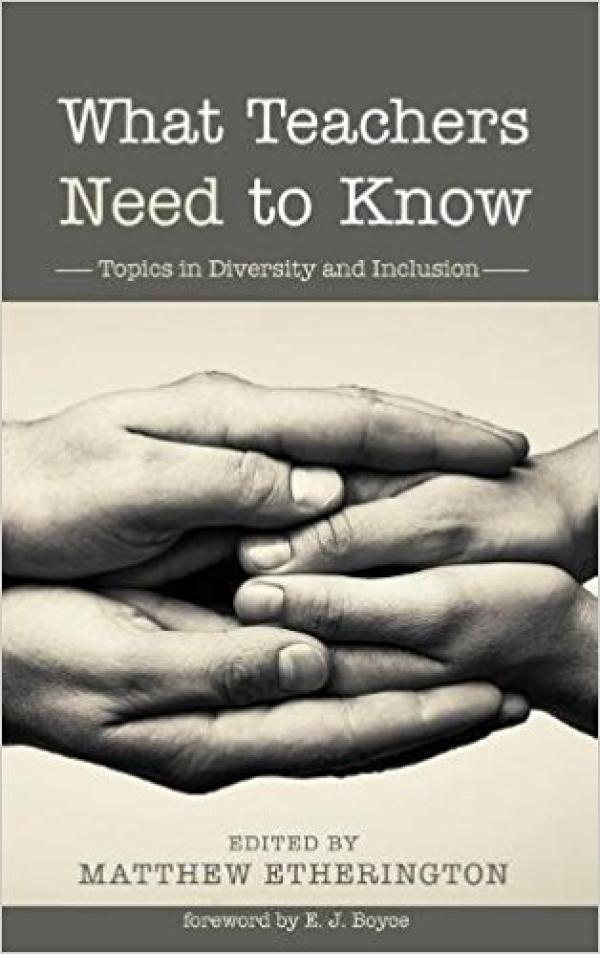
What Teachers Need to Know (Etherington, 2017) is a substantial text defining the diverse and inclusive experiences of contemporary education systems. The book is a compilation with three major parts: “Ethics,” “Inclusion and Teacher Management,” and “Worldview and Story.” Each chapter provides reading questions for use in a classroom setting or for deeper reflection. This is well-suited for an audience in higher education, especially for readers who could share personal experiences with diversity and inclusion topics after a practicum or time teaching. I would recommend this book for a post-graduate education library. The first part, “Ethics,” includes works by Sherick Hughes, Martyn Rouse, Jonathan Anuik, Chet Bowers, Eva Maria Waibel, the editor, Matthew Etherington, and James Dalziel. There is quite a range of topics in this section, but the Wabash Center reader might be particularly interested in Anuik's essay on faith-informed discourse. It is a study about the influence of missionary education on Indigenous beliefs, and how that reaches into Canadian public education today. It compels the reader to contemplate whether church and state can truly be separate in an educational context when there is such a significant inheritance of practice and values from a period dominated by religious influence. Part Two, “Inclusion and Teacher Management,” includes works by Peter J. Froese, Ken Pudlas, Lucinda Spaulding, Karen Copeland, Bruce Shelvey, and Ken Bradley. Spaulding's essay reflects the current shift of attention to patterns of bullying and puts forward the mechanisms school communities can provide for the resiliency of the students. Other essays in this section discuss topics such as mental health, special needs, and even bring in the parents' view on these issues as they exist in the educational system. This is an exceptional collection of essays on inclusivity. The third and final part, “Worldview and Story,” includes works by the editor, Matthew Etherington, Edward R. Howe, Adam Forsyth, Leo Van Arragon, Christina Belcher, and Cynthia à Beckett. This section has the most obvious correlation to religious studies within educational contexts. Topics include: tolerance, science and religion, and epistemology. This section could serve as an excellent initial reading for students in a practical theology or other contemporized religious studies capstone course. This book might not be a comfortable read in a public classroom, but maybe that is exactly why it should be read. Etherington's compilation offers academic theological reflection for secularized educational contexts. This book could be useful in a range of contexts. It may be particularly helpful to new teachers, parent associations, pastors of students, and community leaders.
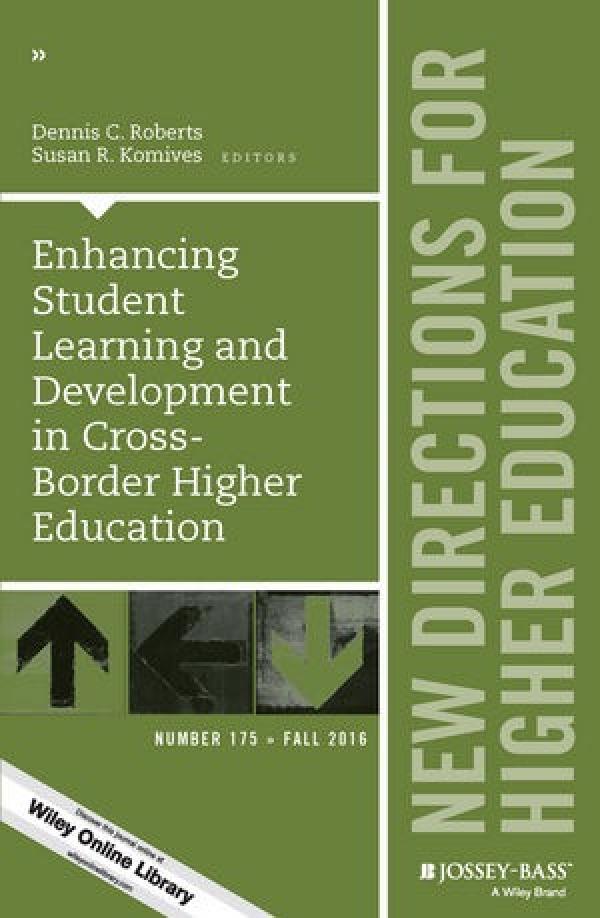
This volume is dedicated to cross-border education, a type of internationalization focused on education strategies that move across national and regional lines. Editors Roberts and Komives cite J. Knight’s description of internationalization as “the process of integrating an international, intercultural, or global dimension into the purpose, functions, or delivery of postsecondary education” (10). Internationalization, at first blush, may appear but a mere euphemism for globalization, a rather deleterious concept especially when partnered with education. Roberts and Komives, however, are quick to point out how internationalization differs from globalization in both purpose and process. Globalization promotes rampant product production, increased uniformity, the ubiquity of certain products and hegemonic narratives, and is often associated with the pernicious effects of the exploitation of vulnerable populations around the world. In contrast, “internationalization is a process of infusing international ideas across a variety of functions and experiences” in which “distinct attributes of identity are accorded value” (10). Internationalization, according to Roberts, “embraces the inevitable – a shrinking planet with growing shared reliance on each other” but also seeks to preserve culture (10). Cross-border education (CBE) goes beyond the traditional study abroad mindset; it requires “infusing international, cultural, or comparative perspectives in existing courses,” “modifying teaching and learning processes through virtual experiences,” and incorporating scholarship from other cultural settings to bring the world “home” to students within their own schools (16). It also encourages fluidity of people, programs, projects, and policies across national and regional lines and places a high premium on critical analysis of the cross-cultural application of educational practices. Section one addresses how to systematically study educational practices and evaluate their transferability to a different context. Darbi Roberts’ contribution requires readers to address how and why educational systems choose from which programs to borrow. Section two illustrates examples of student learning and development programs around the world (South Africa, China, UK, Mexico, and more) created to address specific populations and needs within their own cultural and national boundaries but which may prove incredibly useful for others throughout the world. Previously, much research on student learning and development originated in the United States, but this volume highlights the growing programs in other parts of the globe. McGlory Speckman writes about first-year village programs in South Africa, where this program was developed, and the need of many students from backgrounds of “economic, social, and political deprivation” for a communal and supportive environment as they transition to a university setting (34). Wong’s chapter is a fascinating foray into a unique population in China, students born under China’s 1979 One Child Policy, whose disruptive adjustment to university life requires universities to set up programs addressing this population’s lack of compromising skills and enhance their resiliency and self-reliance. These programs include everything from complicated team work, physical training, and mentorship to a simulation activity called the “city challenge” in which “students are given very limited pocket money and they have to earn their food by selling products they invent” (45). Chapter 5 focuses on a specific program at the University of Sheffield, UK, dedicated to “looked-after children” and “care leavers” (49). Encouraging this population towards higher education is a real challenge, as “only around 6% of English care leavers enter higher education at the age of 19, compared to 48% of a similar age in the general population” (53). Mexico’s legacy of political corruption, financial disparity between rich and poor, and a general lack of civically engaged citizens have created a challenging environment for local universities trying to educate their students to become leaders, according to Alicia Canton’s chapter. The Universidad de Monterrey (UDEM) has invested in numerous initiatives to encourage students to become involved in their communities such as implementing active pedagogies “connecting the student to current problems within the local community,” requiring every student to complete an internship at a local organization, offering cocurricular courses to develop leadership competencies, and mandating “every student perform 480 hours of service” (59-60). Section III moves readers back into the realm of theory, providing analytical tools for exploring data produced in specific student learning and development environments like those described in Section II. This section exemplifies how those designing initiatives to enhance student learning and development, especially in the arena of cross-border education (CBE), must explore the significance of context as well as content. Readers are prompted to explore prevalent cultural assumptions, national agendas, and various socio-political discourses which have informed and shaped their own definitions of learning and development, as well as those of the programs they wish to adopt or adapt. Broido and Schreiber’s chapter presents social justice frameworks for student learning and development as well as concise renderings of various pertinent dimensions of student development theories (identity development, cognitive-structural development, and self-authorship theories). Drawing on the work of Hofer and Weinstock, Broido and Schreiber note how “patterns of epistological development vary among cultures” and how cultural assumptions about knowledge, truth, and authority, can profoundly affect how students learn and develop (70). The general values of a culture “as well as the role of the family, religion, and social identity enhances a critical perspective on designing appropriate strategies for student learning and development” (75). Chapter 8 applies an ecological systems view to Singapore, a culture that highly values formal education, an attribute likely stemming from a belief among families that education is a passport out of poverty. Deference to elders and authority, possibly arising from a Confucian root in the culture, are attributes which lead to a particular learning environment, not unique to Singapore but definitely significant when considering program adoption across borders. Chen’s and Mathies’ contribution looks at increased interest in assessment and evaluation in the halls of higher education, in the U.S. and around the world, over the last few decades. The fact that college admission in many Asian cultures is controlled by the government via a national entrance exam, exemplifies just another way in which U.S., European, and Asian institutions approach education differently (89). Formerly faculty and now on staff as an academic advisor, I fully concur with the authors of chapter 10 that “in a cross-border educational paradigm, it is increasingly important for faculty and staff to orient their work and self-understanding of their roles to be that of educators” (93). The need for internationally competent staff will only become more critical in the future. Roberts and Komives close their volume with a look at how partnerships can enhance student learning and development by taking into consideration institutional motivations for transferring, adapting, hedging, or even avoiding certain programs or policies. Some aspects of student learning and development programs (such as career decision making, counseling, intercollegiate sports, student governance, fraternities and sororities, coed housing, and so forth) may work well in the “home” country but prove disastrous when transplanted into another environment. This volume will prove illuminating to any student affairs professional, academic advisor, study abroad or exchange coordinator, faculty, or administer within higher education today but it is especially germane to those directly or even tangentially involved with policy adoption across borders.