Resources
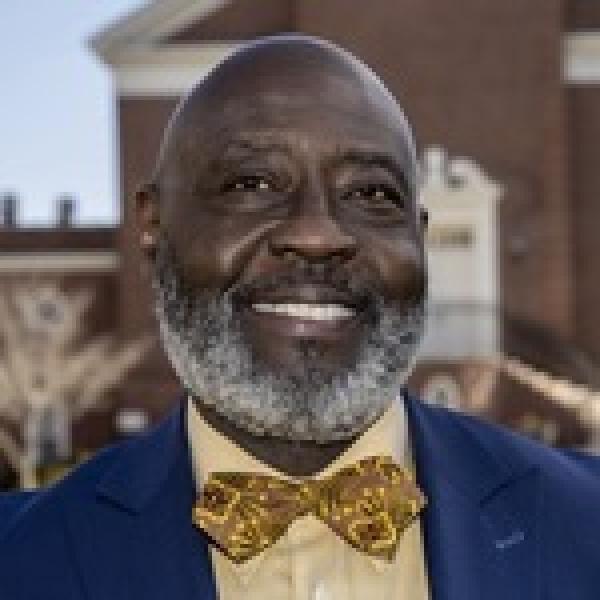
The following is adapted from a talk given by Dr. Jennings during the 2024 Wabash Center’s BIPOC Faculty Luncheon at the annual conference of the American Academy of Religion (AAR) and the Society of Biblical Literature (SBL). You sound What do you sound like in the rain, Standing between claps of thunder and lighting strikes, untamed and terrifying? Silence, though wise, is not an option given your task of directing toward shelter, while rain drops clean your face including your teeth, as if it were their right and duty. Storm time covers your time, threatening to last as long as your will to communicate, your willing locked into battle against blowing wind, promising many episodes, several seasons. But what do you sound like? Does your sound collapse under the weight of the elements, reduced to a shouting whisper, only inches from your inner voice? Or Have you found a bullhorn with fresh batteries that give your sound that familiar grabbled sound indistinguishable from anyone else seeking quick victory? Choices must be made in the storm, since you are yet directing and eyes blurred with much wet are still watching, straining to hear. But maybe the question to dis-cover the sound of your voice is what do you hear in it? One of the most challenging tasks of life in the academy, especially for people of color, is cultivating one’s own voice—and within that cultivation, to know one’s own sound. Voice and sound here, as I am using them, are thick metaphors that bring together the one and the many, the self and the institution. Voice in this regard is your self-witness, the testimonies you give, big and small; the pieces, the fragments of yourself you present; your showing and telling, depending on what you need or want to communicate in this world—in this academic world. Your sound is your way with your voice. At one level, your sound is your style inside your drama to speak and to tell. It is your bend with your pen as you write your own story page after page. But at another level, your sound is how you hear others hearing you. Your sound is your awareness of other voices and the way you weave in and out of other sounds. My friends, in the academy being heard (having voice) and being able to hear (knowing your sound) is still frontier work for us. I named two things here, voice and sound—being heard and being able to hear. Being heard and finding our voice in the academy is a challenge in the best of times. As I have written about this, it is the struggle against white self-sufficient masculinist form—that suffocating form of self-presentation and self-articulation around which flows the evaluative ecology and reward systems of the academy. We struggle against the pull to mimic the voice of that man, the finished man, who shows he has mastery, control, and possession of his knowledge. That struggle comes at us from outside of us and from inside. Outside, from the forms of formal and informal evaluation layered across our bodies. Inside, from the often-severe voices that we have internalized; those voice which place on us a quest for unattainable excellence. Inside and outside, forces bound to our will to survive—for our own sake and for the sake of our peoples. We know, however, its possible to resist that voice and find your own voice. We stand in the legacy of people who have, and are, doing just that. There is a poem in my book, After Whiteness, that tells the true story of how one sister helped another sister begin her journey toward her voice in the academy. It begins with the elder sister’s recognition of the struggle: My voice trembles always at the sound of your voice, which began for me so long ago, gently guiding me to what was good, great, weak, strong, straight into the vise, tightening ever so slowly that I mistake the hurting for stability, constrictions for conscientiousness I learn labored breathing, tighter thinking until I make the sound for help with every sound I make. But I think, this will not be forever. I will break free even if I must tear skin from my flesh to loose your stability. Sara saved her, took Joan from the other voice and placed her inside. She knew how, having lost enough skin to form a womb outside her body – the mindbodywomb - where bathing light would cover Joan’s thinking, protecting her from glaring light – light against light – knitting truth into her inward being before it could be snatched away by the other voice, until she emerged from Sara’s wombbodymind intact, and hearing none, the i passed unharmed into Joan’s voice flowing like refreshing waters ready to heal torn skin and cracked voices.[i] Finding voice is a constant work of abolition, of freeing your voice from his voice. But I have come to realize that the work of finding voice carries within it the task of learning to hear your sound. Over the years, I have met too many scholars, especially BIPOC folk, who do not know their sound. What do I mean by not knowing their sound? On the one hand, they have very little idea of what they sound like, they do not hear others hearing them. And on the other hand, they do not know how to move in sound and let the sounds of others flow through them. Let me tell you a story: There was this scholar who always spoke truth to power. He had made it up the rough side of the mountain. He knew what needed to be said in every setting, to every individual, every administrator, every colleague, and every student. Right, bright, brilliant, and insightful, he claimed his voice in white spaces, announced his present freedom to speak and his commitment to the struggle. His voice was and is urgent, vital, and necessary, but his colleagues have longed for his absence. They can’t stand him. Without knowing more details, you might say that he was simply being prophetic, marking the journey of so many BIPOC folks struggling against white hegemony. But in this case, the desire for his absence is unanimous among everyone, including BIPOC folk. He cannot hear himself which means he cannot hear others hearing him. He closed himself off from the sounds of others, and turned his own voice, aimed toward freedom, into his own prison. He is alone, bitter, and convinced he is too controversial and radical for the academy. He may be too controversial and radical for the academy. But, he is also bound to the voice of the white self-sufficient man even as he articulates freedom. What is missing from this scholar’s voice is the working with sound. Allow me to return to the first poem and add a few words: Choices must be made in the storm, since you are yet directing and eyes blurred with much wet are still watching, straining to hear. So maybe the question to dis-cover the sound of your voice is what do you hear in it? Do you hear others dreaming out here exposed to the elements, sharing in feeling fragile flesh, turning their bodies this way and that to negotiate with the wind? Do you hear the thunder calling you to join its rhythms, the lighting awakening you to surprise, pulling toward oneness with flashing light, accepting the risk of free air? Do you sense the rain as your support, your pips to your Gladys Knight, moving when you move even at midnight. The key here, my friends, is delight, delighting in the sounds, allowing the sounds to move through us, never seeking to possess them but to give witness to a hearing that is without end. Every musician knows, the character of your voice and the power of your sound depends on your ability to hear and keep hearing. What is critical in cultivating your voice is your ability to hear in ways that free you from being pulled toward mimicking the white self-sufficient masculinist voice even as you assert your freedom. How do we sound freedom even amid despair? This is the urgent question we face as we navigate Trump 2.0. The temptation at this moment is to give into the despair and allow that despair to hollow out our voices. However, we will need to speak prophetically. We must speak powerfully and urgently, speak truth to power. Our speaking must show our hearing, or our voices will reveal that we have closed ourselves off to the sounds around us. For the sake of our students, our communities, and for the sake of our scholarly work, we need to attend to our sound and show both our delight and our freedom for others in, and through, our voices. The sounds of many need to flow through us, merging and weaving in slices and pieces inside our own speaking, thinking, and writing, inside our own self-testimony. If not, we run the great danger of our having our own voices turned against us, weaponized and made dismally predictable in how they do not show a lively hearing. Allow me to close with just another stanza from this poem: If you hear, they will hear in your sound, glimpses of their sounds, then and there you will know your sound, directing toward shelter, announcing a free place. Notes & Bibliography [i] After Whiteness: An Education in Belonging (Grand Rapids: Eerdmans, 2020), 119.

This blogpost is a conversation between Kimberly Diaz, University of California Riverside, Michael DeAnda, DePaul University, and Neomi DeAnda, University of Dayton. KIM: Neomi, how did the Loteria session at the AAR come to be? NEOMI: This year marked the twentieth anniversary of the first time I attended the American Academy of Religion (AAR). Having a background in education and strongly believing that humans learn differently, I always questioned the ninety-minute and two-and-a-half-hour session format of presented papers for all sessions. Five days of these sessions bookended with breakfast meetings and receptions has always felt exhausting to me. Over the years, the suggestion of doing something different has arisen. While I have participated in other types of sessions like roundtable discussions and generative sessions, I wondered how I could entertain comments about doing something radically different at multiple sections’ business meetings. Last December, I found the game Millennial Loteria: Gen Z Edition at a big box merchant in Chicago, Illinois and Dayton, Ohio. I initially bought the game to incorporate into my Latina/Latino Religious Experience undergraduate course at the University of Dayton. This game provided an in-class common experience from which to build the semester. The course participants enjoyed, appreciated, and questioned the game. That same day, I posted a picture of the game on social media, igniting a quick discussion about the game itself. I was overjoyed to see such a response about something both so close and so new to my Tejana experience. The topic of immigration often takes center stage when the AAR and Society of Biblical Literature (SBL) meet in San Antonio. I am often frustrated about the lack of thought given to the plurality of possible topics which could thrive while meeting at this particular geographical location. Horacio Vela, session panelist, astutely remarked, “Loteria helps us appreciate the historical and evolving nature of Mexican-American cultures, identities, and religions. It also opens our eyes to the ways that Latina/o/x communities have handed down and scripturalized stereotypes about race, ethnicity, and gender.” The conversation on social media presented one such opportunity. From there, the idea was born to play the game at a session of the AAR. MICHAEL: How did you envision the format of playing Loteria in a conference session and what did you do to prepare? NEOMI: Carmen Nanko-Fernandez connected me with the co-chairs of the Religion, Sport and Play Unit, Kimberly Diaz and Jeffery Scholes. They were very amenable to helping me work through a proposal to submit to their call. The Experiential Session Playing Millennial Gen Z Loteria which was held Sunday, 3:00 PM - 4:30 PM in the San Antonio Convention Center-Room 225C (Meeting Room Level) came from that accepted proposal. The proposal recommended the following format for the session: play the game panelists respond group discussion. The day for the session arrived. I had conjured prizes from various tables in the AAR/SBL book exhibit and from a Wabash Center luncheon the day before. Keri Liechty from the Louisville Institute brought swag from their office. MICHAEL: Very cool. That’s a nod to kermeses, a site where Loteria is often played and the prizes are often donated tchotchkes and trinkets fished out of storage. Your approach is totally emulating the found-and-sourced prizes spirit. Tell me how the session went? NEOMI: The tone in the room was different from the beginning as game boards and emoji tokens (instead of frijoles) were handed out to session participants. I set the rules. Structured play. The play during the session would end when the last of the prizes was collected. After two rounds, it seemed the third round could be the last. The participants changed the rules when play was going to end sooner than they wished. During the session, the energy in the room dampened between playing the game and the initial responses. So the session followed a modified format: play the game initial responses from three panelists play the game group discussion. The emoji tokens were later labeled chingaderitas by panelist Gilberto Cavazos-Gonzalez. Session participants remarked about the relaxation they felt from play during an AAR session. I noticed the session attendants, most of whom did not know each other upon entering the space, quickly formed a community to continue play. NEOMI: Any reflections on theory, Michael? MICHAEL: It’s interesting to see how incorporating the game into this session really invited the play spirit for the entirety of the session and appropriated the space. It’s like you went total kermes at the AAR! This is what I love about games: They can be tools to restructure and rethink what’s possible. In your case, Loteria provided enough of a ludic structure to bring energy into the room, invite people to socialize, and allow people to unmask. I want to note that it was smart to pivot at the request of players, granting them agency in this. Furthermore, for critical game play, multiple rounds of playing a game are important. The first playthrough we are often consumed by the game, so this was a great way to familiarize people with the game. The initial responses then primed participants to approach gameplay with the criticality to then contribute to the group discussion. Games are ludic structures with potential to reimagine how we make meaning. It’s the meaning that we create in and through games that make them so potent. Think about a game like Ticket To Ride, for example. The literal actions sound quite lackluster (drawing cards, placing blocks on a board). However, the hermeneutics give meaning to these mundane tasks: laying blocks emulates building railroad tracks. Games of chance are good for providing just enough of a ludic structure while still allowing for socializing, but not too much that it’s all people focus on. So, folks can chat, and if they reach a lull in the conversation, they can lean on playing the game during the shift in their conversation. It’s also worth mentioning that play extended beyond the game Loteria in the session. This included participants playing with the format of the session, players influencing the restructuring of the session, and playing with language deployed at a conference (yes, the swearing). As we play, we perform and we also confront truths about ourselves. Horacio commented, “Playing and talking about loteria in the AAR session brought back memories of growing up in south Texas. It was also a welcome and refreshing alternative to the typical AAR/SBL panel, with just as much, if not more, scholarly discourse and analysis.” Horacio continued, “Newer versions of loteria challenge us to discuss, critique, and reshape our communities and cultures, which have always been characterized by diverse experiences and interpretations.” NEOMI: Kim, please tell us about your experience immediately following the session as well as your thoughts since. KIM: The experiential session of playing Millennial Gen Z Loteria was immediately followed by the business meeting for the Religion, Sport, and Play Unit. In between the sessions, I rushed to my unit co-chair, Jeffrey Scholes, eager to exchange thoughts about having just played Loteria at the AAR. Instantaneously, we agreed that this experiential session encouraged us to take a more practical approach to the third integral aspect of the unit: play. As far as we both knew, the Religion, Sport, and Play Unit had always approached play in terms of discourse, especially in the context of organized athletics, but never with the actual practice of play during a session. At the beginning of the business meeting, our first order of business was to confirm the ongoing use of experiential sessions of play at future AAR annual meetings. The way in which the experiential session of Loteria radically transformed the trajectory of the Religion, Sport, and Play unit demonstrates how actual play within the conference setting can help ground the decolonization of academia. As Neomi observed, Loteria participants quickly transformed from serious individual conference attendees into a group of light-hearted players who cared more about playing together than claiming the prizes and ending the game. Recalling my own experience, I vividly remember being hunched over, placing tokens on my Loteria card as Neomi called out Millennial Gen Z phrases from a stack of shuffled cards. My body positioned itself as it needed to, helping optimize my gameplay rather than unconsciously following Western constructs of professional bodily posture (such as sitting up straight with my legs crossed). Overall, this experiential session of play fostered a communal space where participants transcended the optics of Western professionalism and became immersed in the carefree spirit of play. Playing Loteria at the AAR was not merely a form of escapism, but, like every decolonial praxis, existed in the liminal plane between colonial hegemony and resistance. Throughout history many decolonial efforts have been led by women of color and Neomi leading the experiential session contributes to this history. But decolonial efforts should not be the sole responsibility of those on the margins, such as women of color in a heavily white/male dominated field. NEOMI: Great point connecting back to this year’s AAR theme of “La Labor de Nuestras Manos”! KIM: Yes. Why should we, as women of color, be the ones to bear this responsibility, especially in a way that caters to the comfortability of those beyond ourselves? What about exploring other generative effects, like discomfort and unfamiliarity, initiated by the more privileged rather than the labor of the oppressed? To continuously move toward resistance, particularly in the context of experiential sessions, religious studies scholars must actively challenge the pretense that their scholarly work inherently makes the world a better place, and become intentional about practically contributing to decolonization, especially as it transcends the comfortability of their own individualism. In the words of black lesbian poet Audre Lorde, “Without community there is no liberation, only the most vulnerable and temporary armistice between an individual and her oppression.” NEOMI: Fascinating! I did not see it as a decolonial praxis but as living in my own Tejana space. I honestly saw the session as something that comes from being Mexican-American, Chicana, Tejana. I loved being able to bring cookies as prizes to share, cookies which our parents had made during Michael and my father’s occupational therapy, as he learns to live life after stroke. The convention center was no wiser that I did not ask permission or order the cookies from their vendor. As Gilberto Cavazos-Gonzalez, session panelist, noted, “I was happy to be a part of this Loteria session. Although I did not recognize the Loteria images (I missed my Chalupa) it was still a trip down memory lane and the importance of play in family life and spirituality. It also helped me make the connection to the importance of cultural connections for Mexican Americans living in a sometimes hostile and racist U.S.A. environment.” There is something about play which allows for simultaneous space (re)creation, mockery, and truth-telling. MICHAEL: Play is like alchemy: it has deep transformative potential. Kim’s reflection on decolonizing underscores this, especially when she draws attention to exploring generative effects, as does Neomi’s approach to developing the session to reflect and live in Tejana space. Games afford ludic structures for play to happen.
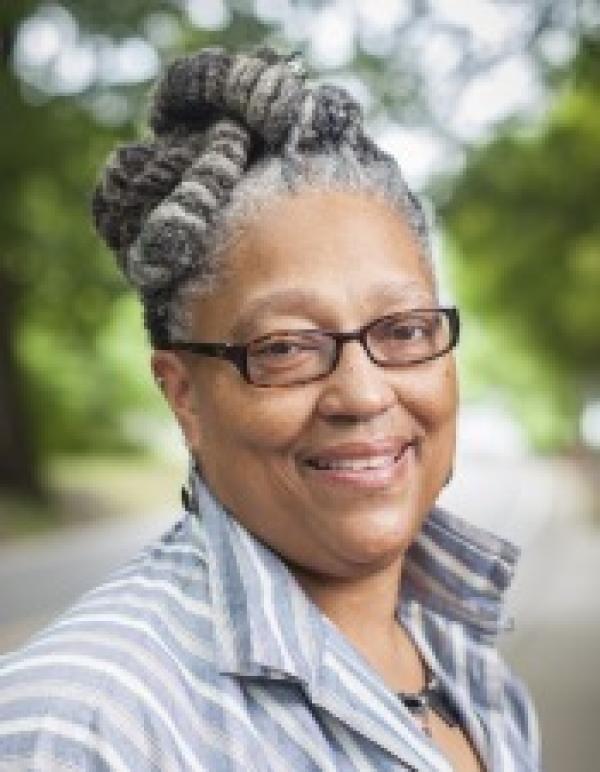
The following is adapted from a talk given by Dr. Townes during the 2024 Wabash Center’s BIPOC Faculty Luncheon at the annual conference of the American Academy of Religion (AAR) and the Society of Biblical Literature (SBL). Self-care is within the matrix of our total health; how we care for ourselves—mind, body, soul, and spirit. Self-care is often the last thing for which the academic life makes allowances. We must decide that we will craft the habits of mind, heart, soul, and body. There is no one way to go about self-care, as we each have our own biorhythms and social contexts. But I believe there are things that we can all hold onto in the necessary work of taking care of ourselves; things that will also help us in bringing people whole in the classroom; things that serve our scholarship, our institutions, our families, and our kin. In thinking these things through, I have found myself revisiting a passage of sacred text that is apocryphal for me. Some may have heard me reflect on this before. This passage has the same kind of holy-fying (wholly-fying) impact on me. It is found in the film, Daughters of the Dust by the African American filmmaker Julie Dash, which tells the story of a Gullah family preparing to come to the mainland at the turn of the twentieth century. Tradition, change, migration, and bondedness to the land, are woven together in the story’s Peazant family. The memories of slavery and working in the indigo plantations of the island are the stuff of history books, written in the hands of the older members of the island and in the stories, they tell to the younger ones, the games the young and old still play, and in the African and Arabic words they continue to teach the children. The passage that I revisit are lines spoken by the character, Eula, who had been raped by a white man. The narrator of the movie, the Unborn Child, is Eula’s child. Only the audience knows that the child she carries is truly the one she conceived, in love, with her husband Eli. Eula calls the women to task for ostracizing Yellow Mary, a prostitute, who turned to this life after her own experience of rape. Yellow Mary had come home to the island to be with her family again and to heal. Eula reminds them all that the fate and hope of Yellow Mary is their own—no one escapes the ravages of evil, no on stands outside of the promise. Eula turns to the younger women and her words are for us as well. ‘There's going to be all kinds of roads to take in life.... Let's not be afraid to take them. We deserve them, because we're all good women. Do you... Do you understand who we are, and what we have become? We're the daughters of those old dusty things Nana carries in her tin can... We carry too many scars from the past. Our past owns us. We wear our scars like armor, for protection. Our mother's scars, our sister's scars, our daughter's scars... Thick, hard, ugly scars that no one can pass through to ever hurt us again. Let's live our lives without living in the fold of old wounds.’ It is within this constellation of possibilities that I want talk about self-care with you. The notion of all kinds of roads, and our willingness to take them. The fact that we are, most of us, good women (and men). We are the daughters and sons of those dusty things that Nana carries in her tin can—there are scars: glass ceilings and other discriminations based on gender, sexual orientation, weight, beauty, race, age, religiosity, culture. And yes, we do wear some of those scars. For some of us they are like armor because we have discovered that we do need protection. But what does this do to us, ultimately, when we live our lives in the folds of old wounds? When we cannot see another way to be? These are the kinds of questions that come to mind when I am asked to talk about self-care. These are the kinds of questions that ask each of us to think through what it means to be responsible, to take responsibility for creating our health each and every day, to realize that taking care of ourselves is radical witness to God’s ongoing revelation—not only in history, but in the immediacy of our breathing. Indeed, God's presence is the very fabric of our existence, immanent and transcendent, and I think we must stay mindful that a key element of self-care is living our lives with integrity and faithfulness in God. This means coming to a sense of self, finding our identity, treasuring the gift of our lives. For me, self-care is an important component of health and healing in order to create whole and holy selves. So, we must take care that we do not spin our lives, our careers, our ministries around a success ethic that is grounded in measurable gains and regrettable losses. To practice care for ourselves, means recognizing that we can't run off with someone else's scholarship or appointment. Because even when we steal, that doesn't make it ours, it only makes it stolen. Self-care is about stretching into your deepest self to discover anew what restoration and healing can and must mean for you when it is grounded in grace rather than solely on the latest U.S. News and World Report model of success. I urge all of us to proclaim the blessedness, the sacredness of our lives. This can be a challenge. It is easy to lose sight of this in the midst of phones that ring without ceasing, calls that are never returned, e-mail after e-mail, and the oh-so omnipresent Zoom. But, if we think about the call to proclaim the blessedness, the sacredness, of our lives as a strength rather than as a virtue, we can draw comfort and sustenance. As a womanist, I believe that self-care must be embodied, personally and communally, as it brings together the historic force of our spiritual lives with the demand of the spirit to love our faith through our health and through taking care of ourselves as best we can. Self-care is not an abstract, sterile, utopian category. Health and redemption are tools to build bridges that actually go somewhere and give us redeeming time of sustenance building, so that we can continue to make bricks with no straw, if we must. We must, begin with the wounds, those scars, in Eula’s words, those of our mothers, daughters and sisters, thick and hard. We must start caring for those scars, the folds of those old wounds that have, in some cases maimed us with lies, secrets, and silences. These wounds that mark us, do not need to define us. For as wise folk, as people seeking wisdom, we must grasp a hermeneutic of suspicion. That is, we must examine our first works over and over again. Self-care comes in a variety of sounds and textures and I suggest that we need new visions of excellence and adequacy. Because holy boldness does not mean that we work ourselves to death right up to the pearly gates. We are not to provide racialized and gendered cannon fodder for a bureaucracy that likes to declare its holiness, or relevance, or scholarliness while colleagues engage in mind-numbing studious lint-picking from their sanctified navels; while some white male academics rail on about how white men can’t find jobs or a decent match to their self-anointed gifts and then look at all of us as if we should dignify such inane chatter; while issues of class go unaddressed every day and in every way; while “DEI” has suddenly become a four-letter word, while that very same diversity is helping to keep many of our institutions afloat financially. Or, at least give us enough buckets to keep bailing water until the capital campaign begins to reap benefits. No, self-care means declaring that part of who we are is about seeking liberation of soul and body and intellect and spirit. It means that we must challenge ourselves to ask tough questions of ourselves and our religious homes and our academic institutions and our ministries. Self-care means that prophetic healthiness must be more than so many coins in a bankrupt economy that traffics in people's lives as so much loose change. Self-care means unpacking the gospel into living. So, how do we get moving in the direction of our self-care? There are many models for us. We have much to learn from each other. We should sit down with each other and give each other the important details of living, share with each other how we have survived, how we have thrived. This is not a time for pulling out an arrogant litany of braggadociosness about how successful we have been, or a heart-piercing recitation of how hard it is. No, this is a time for genuine lament, where we name the realities of our situations with as much accuracy and precision as we can so that our lamentations help us see that what is before us can be managed, if not transformed. Self-care, we do this communally—together. We seek, together, faith-filled ways to work it out, to care for ourselves.
2021 AAR & SBL Annual Meetings Wabash Center VIRTUAL Events Wabash Center Virtual Session #1 - Thursday, November 18th, 11:00 AM-12:00 PM (Central Standard Time) Conversation with Authors: Becoming a White Antiracist Boldly, these authors call for the deconstruction of white supremist structures designed to maintain and reward the truncated imaginations of white professors concerning the systemic hatreds and racist activities baked-into our world of scholarly pedagogy and beyond. This conversation with Stephen D. Brookfield and Mary E. Hess, authors of Becoming a White Antiracist, will delve into their struggle to develop this counter-cultural motif. The work of becoming a white antiracist is routinely met with institutional obstacles, collegial nay-sayers, or out-and-out rejection. We will dialogue about the author's well-crafted approaches, strategies, and methods for creating an antiracist ecology in your school, workplace, community, and home. We will discuss ways to use this book as a resource to improve the formation of students, to correct the deformation of faculty, and to explore the needed identities to become a white antiracist. Presider: Nancy Lynne Westfield, The Wabash Center for Teaching and Learning in Theology and Religion Panelists: Stephen Brookfield,University of St. Thomas Mary E. Hess, Luther Seminary Wabash Center Virtual Session #2 - Thursday, November 18th, 2:00 PM-3:00 PM (Central Standard Time) Faculty Matters: Generative Formation of Early Career Colleagues Destabilizing forces in higher education and theological education increase the pressure on early career colleagues. Kindling and rekindling the genuine voice of an early career scholar requires intention planning and a supportive environment. Many colleagues report that they experience isolation and feelings of being overwhelmed with little recompense or community structures to help them adapt and thrive. What is the price of belonging in a faculty? What kind of formation is necessary to assist early career faculty with living into their creativity imagination and courage? This is a conversation with seasoned mentors of early career faculty who will discuss what they wish early career faculty colleagues know and would be about to nurture their own generativity survival and persistence. Panelists: Nancy Lynne Westfield, Wabash Center for Teaching and Learning in Theology and Religion Willie J. Jennings, Yale University Roger Nam, Emory University Jennifer Harvey, Drake University Wabash Center Virtual Session #3 - Friday, November 19th 11:00 AM-12:00 PM (Central Standard Time) Life-Giving Teaching: When Classrooms Are Not Cloistered Away from The World What if rather than teaching about the world as if it is a distant land to be grappled with after graduation we teach as if the world was our classroom? In order to create courses which are relevant meaningful and life-giving what would it mean to decenter the tried-and-true disciplinary tactics and instead place the joys sufferings perspectives and cultural meaning making apparatuses of students as the keystone of the course? Too much of our teaching is siloed away from the worlds and the realities from which our students leave and to which our students must return. This session is a discussion with colleagues who have a proven track record of seamlessly keeping the classroom connected to the world and vice versa i.e. praxis education. With intention and creativity these colleagues design courses which extend the classroom learning into connect with and operate in the world. Panelists: Nancy Lynne Westfield, Wabash Center for Teaching and Learning in Theology and Religion Almeda Wright, Yale University Kenneth Ngwa,Drew Theological School Annie Lockhart-Gilroy, Phillips Theological Seminary Registration for these programs is through the AAR & SBL Meetings Registration Website. Non-Member Registration. Member Cost: $210 Non-Member Cost: $395 AAR Virtual Meetings Website SBL Virtual Meetings Website
Wabash Center Virtual Events at the 2020 Virtual AAR & SBL Annual Meetings Wabash Center Virtual Session #1 - Monday, November 30, 4:00 PM- 5:30 PM “After Whiteness: An Education in Belonging” A 90 minute online conversation with Dr. Willie James Jennings, moderated by Dr. Nancy Lynne Westfield, with Dr. Craig Barnes, Dr. Daisy L. Machado, Dr. Kwok Pui Lan, and Dr. Shawn Copeland. The conversation will consider the implications of Dr. Jennings' bookAfter Whiteness: An Education in Belongingfor teaching and learning in North American college, university, and theological school contexts. The session will begin and end with comments by the author, Dr. Jennings, about his book and its implications for pedagogy in the 21st century. The bulk of the session will involve a conversation among peers, moderated by Dr. Nancy Lynne Westfield, about how the book raises specific questions about contemporary higher education practice and the implications of these questions for the future of higher education, particularly as it relates to theological education. In the book, Dr. Jennings asserts, “Theological education has always been about formation: first of people, then of communities, then of the world. If we continue to promote whiteness and its related ideas of masculinity and individualism in our educational work, it will remain diseased and thwart our efforts to heal the church and the world. But if theological education aims to form people who can gather others together through border-crossing pluralism and God-drenched communion, we can begin to cultivate the radical belonging that is at the heart of God’s transformative work.” (Eerdmans.com) Wabash Center Virtual Session #2 - Monday, December 7, 4:00 PM - 5:30 PM “Pedagogies of Justice and Care in Liminal Times” A 90-minute session for early career faculty teaching in a range of higher educational contexts. Early career faculty courses are often expected to adhere stringently to disciplinary canons and institutional ethos norms regardless of world events, national happenings, or social movements. At the same time, early career faculty are often expected to be the nimblest, most adept, most technologically savvy, and most able to adjust to complicated teaching tasks, yet they rarely have more than a little experience with teaching in higher education. In addition, they often find an abundance of expectations related to peer responsibilities like advising, mentoring, teaching, service to the institution through committees, and scholarship.Teaching during uncertain times can make teaching more difficult, even overwhelming. Justice and care for students and faculty in liminal times is often in short supply and finding practices and strategies of incorporating real time goings-on can be daunting. This session will attend to a range of topics and questions related to pedagogies of justice and care for the early career colleague. Presider: Dr. Nancy Lynne Westfield, The Wabash Center for Teaching and Learning in Theology and Religion Panelists: Dr. Shehnaz Haqqani, Mercer University - Macon Dr. Christine Hong, Columbia Theological Seminary Dr. Sara Ronis, St. Mary’s University, Texas Dr. Ben Sanders, Eden Theological Seminary Dr. Lisa Thompson, Vanderbilt University Divinity School Panelists will respond to such questions and topics as: What’s the alternative in social upheaval to pretending all is the same? What pedagogies of care might be employed in contested spaces and liminal times? How does one attend to student resistance and fear when engaging justice concerns and topics? What strategies of listening can support teaching during upheaval within or beyond the institutional context? How does one prepare one’s self to teach while the world is shifting? What does it mean for an early career scholar to read the institutional politics when the institution is, itself, in crisis? What is the role of educational imagination and design when creating syllabi in uncertain times? Registration for these programs is through the AAR & SBL Meetings Registration Website. Non-Member Registration. Member Cost: $200 Non-Member Cost: $385 AAR Virtual Meetings Website SBL Virtual Meetings Website