Resources
This series of short essays considers the complex choices and decision-making processes of instructors preparing to teach, and continuing to teach, introductory courses in religious studies. In a paper originally presented in the University of Chicago's “The Craft of Teaching in the Academic Study of Religion” series, Russell McCutcheon explores a “baker's dozen” of such choices and the larger pedagogical problems with which they are entwined, ranging from classic questions of skill development and content coverage to philosophical concerns around students' identification with their topics of study and institutional concerns around governance and assessment. Aaron Hollander provides a brief introduction and four doctoral students at the University of Chicago Divinity School respond to McCutcheon's essay, widening its scope, testing its applicability, and interrogating its undergirding suppositions from the perspective of early-career educators in the field.
One page Teaching Tactic: using visual arts in the biblical studies classroom.
One page Teaching Tactic: a method for engaging students' religious questions in an Islamic Studies course
This essay explores classroom dynamics when students identify and connect their own painful experiences to structural racism or ethnocentrism exhibited in the Holocaust or parts of Jewish history. The intrusion of this proximal knowledge can be an obstacle to student learning. If engaged by professors, however, I argue that proximal knowledge can be a catalyst that promotes learning. Social scientific theory provides a useful lens for helping students to better grasp and contextualize both their old experiences and the new materials that are being taught in the course within the larger structural frames of race, religion, and ethnicity that they have selected, but may not fully appreciate. Reflective guided journaling is an essential part of the learning experience.
This article emerges from the experience of incorporating doctoral students into our Contextual Education (CXE) Program at Emmanuel College (Toronto). This change, I argue, helped us to distinguish more clearly among and thus distinctly orient the different kinds of relationships and theological practices that make up our program towards the often-elusive goal of curricular integration. After outlining a definition of integration, I contextualize that definition in our particular practices at Emmanuel College using Kathryn Tanner's (1997) understanding of theology as a cultural practice as my guide. I then offer a brief overview of our CXE Programs to demonstrate how nurturing strategic partnerships within them has made certain forms of integration possible for our students. I close with some activities for practical application in other CXE contexts.
In this essay, I explore an exam format that pairs multiple-choice questions with required rationales. In a space adjacent to each multiple-choice question, students explain why or how they arrived at the answer they selected. This exercise builds the critical thinking skill known as metacognition, thinking about thinking, into an exam that also engages students in the methods of the academic study of religion by asking them to compare familiar excerpts and images. As a form of assessment, the exam provides a record of students' knowledge and their thought processes, and as a learning strategy, it encourages students to examine the thought processes they use to understand religion(s) and its many manifestations.
In this essay I propose that using online tools to connect geographically-separated classrooms for real-time collaborative learning experiences may effectively develop intercultural competency in the religious studies classroom. I explore personal examples from several international and inter-institutional collaborations with Jacques Derrida's reflections on hospitality to explain how using online tools in this way productively puts into question conventions about place, host, and guest. This engagement of students in collaboration with others beyond their classroom is effective because it takes the focus of learning past facts students might learn towards how they are communicating to learn.
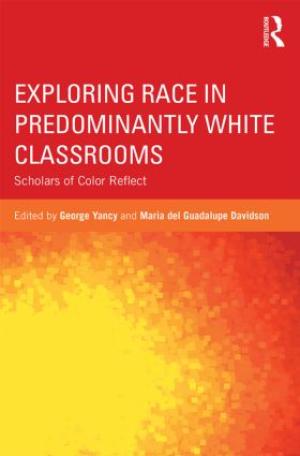
Although multicultural education has made significant gains in recent years, with many courses specifically devoted to the topic in both undergraduate and graduate education programs, and more scholars of color teaching in these programs, these victories bring with them a number of pedagogic dilemmas. Most students in these programs are not themselves students of color, meaning the topics and the faculty teaching them are often faced with groups of students whose backgrounds and perspectives may be decidedly different – even hostile – to multicultural pedagogy and curriculum. This edited collection brings together an interdisciplinary group of scholars of color to critically examine what it is like to explore race in predominantly white classrooms. It delves into the challenges academics face while dealing with the wide range of responses from both White students and students of color, and provides a powerful overview of how teachers of color highlight the continued importance and existence of race and racism. Exploring Race in Predominately White Classrooms is an essential resource for any educator interested in exploring race within the context of today’s classrooms (From the Publisher)

Journal Issue.
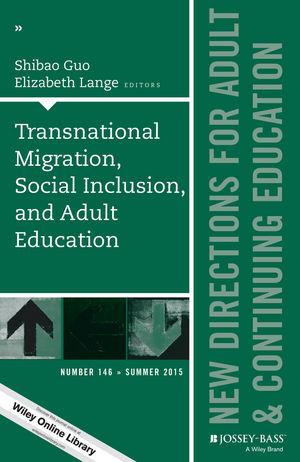
Click Here for Book Review Abstract: As a result of transnational migration, many countries are becoming increasingly ethnoculturally diverse, creating both new opportunities and challenges for practices of adult education. This volume examines the changing nature of adult education in the age of increased transnational migration and: • synthesize the latest research, policies, and practices in transnational migration and adult education, • examines the larger historical and structural issues of race and gender in immigration and newer theories, such as diaspora studies, in relation to adult education, and • provides examples and recommendations for enhancing socially just and inclusive adult education environments for newcomers. Transborder injustices and multiple dimensions of social justice permeate immigration dynamics and challenge adult educators to rethink social justice in a transnational age. This is the 146th volume of the Jossey Bass series New Directions for Adult and Continuing Education. Noted for its depth of coverage, it explores issues of common interest to instructors, administrators, counselors, and policymakers in a broad range of education settings, such as colleges and universities, extension programs, businesses, libraries, and museums. (From the Publisher)