Resources
One of the most critical skills theological school deans need, arguably now more than ever before, is that of problem-solving. The challenges facing theological schools continue to become more technologically complex, socially entangled, costly, and multi-faceted. It is evident that most deans are not just dealing with programmatic, administrative, and technological problems, they are dealing with wicked problems. The experience can feel like trying to unravel an endless tangled cord. Horst Rittel, one of the first to research wicked problems, references ten characteristics that describe this sort of complicated challenge: Wicked problems have no definitive formulation. Therefore, it becomes difficult for a dean to define the problem that needs to be addressed. This is a significant challenge given the tendency for people to want to know the one answer and simplest solution to a complex problem. With complex problems, it's never about just one thing. Wicked problems have no stopping rule or criteria upon which to determine "solving." Unlike challenges with clearly defined outcomes and measures of completion, wicked problems are persistent and tend to be moving targets. The answer to "When will we ever solve this problem?" is "Never." Solutions to wicked problems are not true or false; they can only be good or bad. When deans tackle wicked problems the best approach is to choose the best strategy at the time. Arguing about what "should" or "should not" be is pointless. There is no complete list of applicable "moves" for a solution to a wicked problem. Wicked problems require deans to be imaginative, fleet, flexible, and innovative. There is always more than one explanation for a wicked problem, with the appropriateness of the explanation depending on the individual perspective of the perceiver. Hence, deans will constantly deal with the impasse of multiple interpretations. The President will see it one way, the Faculty another, Trustees in their own way, donors and students differently altogether. Where one sits in the system determines one's perspective. It should come as no surprise, then, that no one will see the problem in the same way the dean does. This requires a multi-disciplinary approach to most wicked problems, as no singular perspective suffices. Every wicked problem is a symptom of another problem. Like a knotted bunch of cords, pulling on one end of the problem merely creates tension and tightens the knot on the other end. Deans need to be systems thinkers, understanding the interconnected complexity of the enterprise. No solution of a wicked problem has a definitive, scientific test. When proposing strategies for addressing complex problems deans often face the call to give evidence or proof that the action will be successful. That's just not possible with wicked problems. They require the courage to risk and the ability to adapt along the way. Every wicked problem is unique. The problems facing theological schools are endemic to all schools merely by virtue that they are systems of a type. But it remains true that each dean will have to solve their own problems in their own context. Finally, to paraphrase Rittel, deans attempting to solve a wicked problem must be fully responsible for their actions. That's the burden of leadership. Few, if any, in the organization will take responsibility for tackling wicked problems. That comes with the job of being the dean. While not all problems a dean faces are wicked, those that are will be the most demanding. Even difficult problems can have a solution, and most deans can get adept at tackling them. But wicked problems will be the most challenging to educational leaders due to the indeterminate scope and scale required to address them. Wicked problems can't be fixed; they'll be the bane of every successive dean and President in office. Questions: What are the wicked problems you face in your school? Who are you consulting with on addressing the wicked problems? Are you aware of your biases which may hinder you from seeing alternative and imaginative approaches? Are you alert to unintended consequences as you apply strategies to wicked problems? In what ways are you defining and interpreting the wicked problems to the various audiences in your school?
For the last two years, I have taught a required class on evangelism for ordination at the United Methodist Church at Asbury Theological Seminary on the Orlando Campus during the summer and January terms. The course is structured as an intensive class delivered over five days. Over these two years, I have never had an African American student in class. For example, in the J-Term of 2015, there were 11 white students: 9 males and 2 females. In the summer of 2015, there were 22 students: 12 males (2 Kenyans) and 10 females. In the J-term of 2016, there were 23 students: 19 males (2 Filipinos) and 4 females (1 Chinese). In the summer of 2016, there were 26 students: 12 males and 14 females (1 Chinese-American female). Given this, I have been surprised by the fact that the student demographics at the Orlando Campus is 24% Latino/a and 28% African American. Maybe it is due to the southern UMC as it is known for its lack of pastoral diversity. The last module of the class is devoted to racial reconciliation and mission. Students read “Evangelization and Politics: A Black Perspective” by James Cone. As you could expect, this is the module when silence becomes unbearable as students wrestle with evangelicalism and white privilege. It is also the moment when all the students have “a black friend” or when “my roommate in college was black.” The superficiality of our conversations has been frustrating and such frustration grew to the point that I considered changing the last module to something else. It was at this point that I sought the help of a respected colleague. His suggestion was for me to change gears and examine my own experience of discrimination and history as a brown Puerto Rican in the context of North American imperialism and colonization. Using the new approach, I replaced Cone’s article with primary sources of Protestant missionaries to Puerto Rico in the early 1900s, a sociological article on “the Puerto Rican Problem,” and excerpts from Gloria Anzaldua’s La Frontera. By contextualizing the history of race relations between white North Americans, Puerto Ricans, and other Latinas, I was able to deconstruct the disregarding ethos of racism that is embedded in a systemic structure of oppression in the United States. In light of evangelicalism’s insistence of individual responsibility, confronting racism as a systemic issue brought its own complexities to our conversations. Students were more engaged in discussing issues of race and oppression in the historical context of mission and colonialism. However, the closer we got to contemporary issues, especially immigration, the tone of the conversation changed and the discomfort around ethnocentrism and negative views on immigration was palpable. A good example was when a white male student in the summer of 2016 recited the talking points of the Republican Party to the class. He referred to the negative impact on immigration on crime, employment, and US culture in general based on language and customs. To everyone’s surprise, because she never spoke before in class, only the female Chinese-American student confronted the speaker by telling her family’s story of immigration. Her mother came to the US with a temporary work permit, but after it expired she stayed. As years passed, she married an American man and became a citizen more than a decade after her visa expired. She confronted the white male student and the whole class with her story and showed the ethnocentrism and stereotypes embedded in US society against immigrants. I learned that even though I am in complete solidarity with African Americans in their quest for justice and respect, students saw me as a Puerto Rican who does not embody the African American experience. On the other hand, when I embody my experience and the history of racism against Latino/a people in the US, the perception and reaction in the classroom change. At the end, we are contextual beings and sometimes the best way to teach others about race is not through theories, but through our own experience with racism. What triggers public opposition to immigration? Is immigration a racial issue? What triggers racial resentment against undocumented immigrants? What is the value of the implementation of autobiography in the classroom? How should professors move from autobiographical data to theoretical articulations in the classroom? How can professors help students take responsibility for their assumptions of the other in a safe manner? Is this desirable, or it would a shock approach to student assumptions be better?

Subscribe using an RSS reader such as Feedly or Inoreader. Follow us on Twitter and Facebook to receive announcements of new postings. Sign up for our eNewsletter to receive timely announcements of Wabash Center programs. May 30, 2017 "Teaching Theology and Religion" 20:2 (April 2017) Special Issue on Addressing Sexuality in the Classroom. New Books Added to Our Collection New Blog Post Pui-lan Kwok, Trump, Democracy, and Empire Latest Book Reviews Books Available for Review Journal Articles without Subscription Wabash Center Video Collection News: Joy L. Harlos Joins the Wabash Center Administrative Team Journal Call for Papers: "It Seemed Like a Good Idea at the Time: Learning from Failure

As an anthropologist of religion, I have advocated that the skills one develops in an ethnographic setting are necessarily translated to the classroom. I’m a proponent of creating a space for students to serve as experts and to speak to their own experiences—especially when addressing contemporary political movements and events. Active listening and collaborative learning with our students are key means through which we, as James Bielo notes, are able to be “ethnographers in, of, and for all the courses we teach.”[1] I like to joke with other anthropologists that we were the children who didn’t fit in; we sat on the sidelines watching the more popular children play, drawing rudimentary theories about their social dynamics and interactions. One of the first things one learns in the field is to drop all assumptions. We learn to ask questions to which we think we already know the answer and, more often than not, we uncover something altogether unexpected. This is my approach in my course on Religion and Society – a course that looks at the manifestations of religion in the contemporary world read through a lens and a critique of the social forces that dominate modern Western democracies. As has become almost canon among RS professors, I use the example of the American flag to illustrate Durkheim’s discussion of the totem and the distinctions between sacred and profane. As a Canadian living in the United States, I have the added benefit that I am able to feign ignorance. Holding a paper version of the American flag, I ask my students to reflect on what it stands for. “I didn’t grow up here,” I tell my students. “I don’t know what any of this means. Tell me abo-out it” (all semester long, I put the extended emphasis on my ‘u’s in preparation for this performance of difference). I pretend to be confused as they explain, yes, it’s a piece of paper, but really it means more: freedom, justice, liberty, etc. It’s a great conversation – one that is not original to me – and makes for a strong teaching exercise in an introductory religion class. Not only does it illustrate Durkheim’s theory of the totem, collective effervescence, and American civil religion, but it is also an excellent vehicle to get students comfortable with debate and disagreement in the classroom. Usually, the students respond well. They are acquainted with controversies surrounding the American flag; they quickly draw connections to such social issues as debates over the Confederate flag and Colin Kaepernick. In my experience, it is a topic that matters to them and they are already familiar with both sides of the argument and have already drawn their own conclusions. Because they are more or less set in their opinions, it serves as a good topic to practice respectful listening. Sometimes it is easier to listen openly to an opposing argument when you know that you’re not going to change your perspective.[2] And at an early stage in both the semester and in their college careers, learning to listen and practicing disagreement are key. I am unable to stop at this point. The exercise helps students learn to disagree from a shared starting point (American identity) but leaves me dissatisfied because it doesn’t attend to the experiences of dual nationalism of myself and many of my immigrant students. Canadians hold a form of national pride invested in our self-perception as the underdog. The first time I taught this lesson in the United States I followed the American flag with the Canadian one. I don’t know what I thought my students would say when asked about the national qualities and values associated with The Maple Leaf. But the responses of “hockey, Justin Bieber, bacon, and polar bears” were strikingly in contrast to the discussion of the core values signified by the American flag, for which many claimed they would willingly sacrifice their lives. I now take seriously collaborative learning experiences where some students’ lack of expertise might be highlighted. It is one that purposely redefines who counts as an expert and displaces my American-born students. A clarification about context is necessary. Middle Tennessee State University is the largest public institution in the state. It caters mostly to students from the Middle Tennessee area, many of whom are first-generation college students. Because of the wide availability of manufacturing jobs, low cost of living, and its identification by the American government as a refugee resettlement region, Middle Tennessee is more international than one might expect for a region that regularly boasts to be the ‘Buckle of the Bible Belt.’ In addition to significant Hispanic and Southeast Asian immigrant communities, the region has the largest Kurdish population in North America, a significant Laotian community who have been in the region for several decades, and a recent increase in immigrants from Somalia, Sudan, Egypt, Eretria, and Bhutan.[3] On the first day of every semester, I have students fill out an information form that—along with relevant questions asking about students’ majors/minors, preferred gender pronouns, previous courses in religious studies, etc.—asks what their hometown is. With this information in hand, I bring images of the national flags of their countries of origins and ask them to speak to their conceptions of their own flag.[4] Sometimes this exercise works and sometimes it falls flat. For the most part, my students who were born in another country immigrated to the United States with their families as children and have become naturalized citizens. Unlike myself, they have a sense of themselves as Americans. “What about this flag? What does it signify?” I wait patiently for Farrah, who immigrated to the United States as a child fourteen years ago to look up. Farrah looks up and laughs. “That’s the Egyptian flag,” she says excitedly. She begins to explain the symbolism of the colors and their revolutionary importance. She speaks proudly about the struggle to overcome oppression and how the white band symbolizes a peaceful exchange of power. “But it’s more than that,” she continues. “Egypt is the cradle of culture, the oldest continuing civilization. You wouldn’t have the developments in Europe or America if it hadn’t been for us. Or at least that’s what we learn in school. We’re taught that we are history.” At this point, I usually attempt to pick up a common theme between their form of nationalism and my own. With Farrah, it was easy to draw connections between the emphasis placed on a perceived bloodless transition of power in the national myths of Canada and Egypt. It doesn’t always work well. Farrah’s family moved to the US fifteen years ago, but they return regularly to Cairo to spend time with family. They are proud of their Egyptian roots. Often my Egyptian students, particularly those who are Coptic, are more critical of the national mythos. This past semester a student from Monaco rejected my attempts at a shared identity and instead placed me with the Americans observing, “Europeans just don’t care about these symbols the way you North Americans do.” I like this exercise because it displaces the students in a way for which they are not prepared. Their rehearsed points about the flag, which are perceptive and important, are all of a sudden lost in the context of a different national mythos. They are smart enough to know that the Justin Bieber jokes don’t cut it, and as Farrah lays claim to her country as the origins of history, she discursively moves the American-born students to the margins. If anyone understands displacement, it’s immigrants—from lines in airports and government forms to media rhetoric and misplaced cultural cues, feeling out of place is par for the course. It is my hope that this exercise serves as a place to begin larger conversations about religion, politics, and social issues and realigns our assumptions about who counts as an insider and who counts as an outsider. These are conversations that many of us are having both inside and outside of the classroom in consideration of gender, sex, abilities, race, ethnicity, and, of course, religion. But I’ve found the rhetoric about immigration, citizenship and nationality lacking. I am hesitant about language that in a spirit of inclusivity too quickly overlooks the lived experiences of our dual-national students. I’m not sure what I’m looking for, but I’d like to use this blog as a forum to think publically about it. I hope that you will join me in this conversation regardless of your nationality. [1] Bielo, James S. 2012. “Religion Matters: Reflections from an AAA Teaching Workshop.” Religion and Society: Advances in Research 3: 203–208. [2] A recent New Yorker article argues that changing one’s mind is even more difficult than we think: http://www.newyorker.com/magazine/2017/02/27/why-facts-dont-change-our-minds. [3] http://www.tennessean.com/story/opinion/contributors/2015/05/17/nashville-welcoming-immigrants/27479183/ [4] At the beginning of every semester, I have every student enrolled in this introductory course meet with me for a short one-on-one interview to get to know them, to talk about any early concerns they might have, and to emphasize my expectations about their responsibilities as students. I ask my immigrant students during this interview if they are comfortable speaking in class about their experience growing up in or coming from another country. Especially, given recent political developments, it would be inappropriate to ‘out’ them without permission.
The questions and challenges concerning the teaching of Islam and race that I raised last year in “Teaching Islamic Theology through Black Lives” are no less urgent and relevant now as they were then. In that contribution, I attempted to delineate ways in which I could make important interventions on race and racism in a relatively conventional course offering on Islam. The deepening consciousness and raised campus awareness over the Black Lives Matter movement has continued to spur learning interventions across campuses. One concrete way in which this has emerged here at Fairfield University is the formation and development of a Black Lives Matter course in the spring semester of 2016. Students, faculty, and staff came together to establish what is hoped to be a regularly taught course. I was able to join the second iteration of this course for the present spring semester of 2017. I took this as an opportunity to see if I could develop the converse of what I had implemented earlier, namely to teach Black Lives Matter through the lens of Islam and the experience of Muslims. This new opportunity for engagement, of course, presented a significantly different set of challenges, especially with respect to structure. Typically when I undertake a course, like my Islamic theology one, I have an incredible amount of autonomy because I serve as the sole instructor. I can plot out the content of a course, scale its pacing, and ultimately direct it as appropriate. In contrast, the Black Lives Matter course was designed from the outset to have a collaborative teaching structure. While the students enrolled in the course have a single instructor of record joining them for the duration of the course, a rotating group of University faculty and staff cycle through the classroom. On a weekly basis visiting instructors enter the classroom to offer their perspectives and share insights from their respective areas of expertise. While the diverse array of voices joining the students serve to both broaden and deepen the experience, it also entails negotiating some pedagogical hurdles. As one of the visiting instructors, rather than the instructor of record, I had to work around certain limits. As I sat down to plan out my contribution to the course, two pressing issues rose to the fore: 1) How could I navigate the challenges inherent to teaching in a rotation where my engagement with the students is limited to a single 75-minute session? and 2) How can I introduce most effectively Islam and Muslims as an important frame of analysis for the broader subject of Black Lives Matter? To spell out the difficulties of the first issue, I will enter the course in the fourth week as a newcomer and outsider whereas the students and the instructor of record will have developed by then into an ongoing and self-reflective learning community. My fellow colleagues will be facing a similar dynamic for their scheduled visitations. We will be entering as unknown entities offering ideas and starting conversations that may not be consistent with or may not bridge well with the concepts and terms previously introduced. We will have our own presuppositions and expectations. We will not be privy to the idiosyncrasies of the class. With this set of difficulties in mind, the faculty and staff contributing to the course took several steps in anticipation. First, several weeks prior to the beginning of the semester we came together for a half-day workshop. As a large group and then in smaller breakout ones, we shared our topics and approaches with one another in hopes of better understanding how the course as a whole would unfold and hold together. The syllabus was also circulated in advance so we could get in touch with those who would precede our visit and those who would follow us. We spent time as well discussing general pedagogical strategies for discussing sensitive matters related to issues of race and identity. In sum, efforts were made to prime each of us to connect with one another as we prepared to join the students for our one-time visit and to familiarize ourselves with the learning culture for this particular classroom community. With regards to introducing the relevance of Islam and Muslims to the course, I sought to build explicitly upon previously assigned materials while also providing new pieces for consideration. With respect to prior readings, I identified two pieces in particular that I thought worth recalling and reframing for the set of issues that I hoped to cover: (1) The Racial Contract by Charles W. Mills, which served as the course’s main textbook and presents an incisive critique of the ways in which white supremacy are operative politically and socially, and (2) the 2016 documentary 13th by Ava DuVernay, which explores how mass incarceration came to and continues to target disproportionately black communities. While Islam and Muslims do not figure explicitly in either exposition, I believe both works offered important windows for contemplating connections and points of intersection with the larger subject of Black Lives Matter. As for new material, I settled on the following reading: Edward E. Curtis, IV, “The Black Muslim Scare of the Twentieth Century: The History of State Islamophobia and Its Post-9/11 Variations,” in Carl Ernst, ed. Islamophobia in America: The Anatomy of Intolerance, (New York: Palgrave Macmillan, 2013), pp. 75-106. The benefit of Curtis’s contribution is that it both provides a historical overview of black Muslim American experiences while also shining a light on the ways in which black Muslim groups have been subjected to state surveillance, animus and at times suppression. A week before my visit I pre-circulated several questions for the students to consider. These questions made the task of revisiting and rethinking these earlier works more concrete and fostered a sense of continuity. Specifically, I wanted them to think back to 13th to see how they might imagine how the discourse on Islam and Muslims in America relates to the history of black criminalization and imprisonment in the United States. Furthermore, I asked them to think how the “racial contract” is at work with how Muslims are racialized presently in American society. When the day of my visit arrived, I drew explicit parallels between the country’s political discourse in the late 1970s and early 1980s over the war on crime and the war on drugs with the more recent discourse over the war on terror. I sought to illustrate the ways in which blackness and Muslimness have intersected in a number of significant ways: from the racialization of Muslims in America to the enduring place of Islam in the African American imagination, to the long historical experience of African American Muslims that includes groups like the Moorish Science Temple and the Nation of Islam, and persons like Elijah Muhammad, Malcolm X, and Muhammad Ali. Finally, we concluded by looking at the ways in which citizenship is used, even weaponized, as a means of exclusion and containment. Ultimately, working with structure of the course, I felt my time was best served by building my discussion of Islam and Muslims as explicitly and carefully as possible upon the ideas already seeded by previous readings and ongoing conversations in the Black Lives Matter course. While the visit produced a rich discussion, the need to adapt and connect is ongoing as this course and the call around which it is built moves forward.
Journal Issue. (This issue, and all "Spotlight on Teaching" issues prior to 1999, are not available on the AAR website.)
Journal Issue. (This issue, and all "Spotlight on Teaching" issues prior to 1999, are not available on the AAR website.)
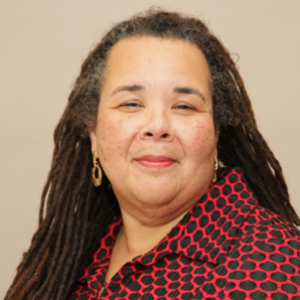
The car service arrived at my house. I grabbed my purse, suitcase, and briefcase and hurried out the door making sure it was locked behind me. As scheduled, we stopped to pick up a colleague who was also attending the conference in Toronto, Canada. Driving east on Highway 78 and almost to Newark International Airport, I gasped. My passport was still at home. My colleague asked if I wanted to go back and get it. I looked at my watch and said, “No.” Going back would likely mean we both would miss the flight. Once at the ticket counter, I handed the gate agent my ticket and driver’s license. I told him I was on my way to Toronto. He looked at my ticket to confirm an international destination. He asked me for my passport. I told him, in my most contrite voice, that I had left my passport on my dining room table. He stopped himself from rolling his eyes, but a faint sigh of annoyance slipped through his otherwise professional demeanor. Still, in a mode of apology, I asked, “Surely there is some other identification that I can use to cross the border . . . . Not everybody has a passport!” Without looking up from his terminal, he informed me he would accept a U.S. Voter Identification Card. “EUREKA!” I thought and “EEEEEeeeee!!!!!” came out of my mouth. I gleefully reached into my purse, found my wallet, located my voter registration card, and with the pride of the ancestors, I extended my arm to hand it to the ticketing agent. My flurry of emotion had gotten his attention, and he looked up from his terminal and at me. When I handed him the card, he stared in disbelief. Slowly he reached for the worn card, examined it suspiciously, and was flabbergasted. He went from doubt to shock with the reading of the card. He raised my card above his head and called to his left and then to his right—to the other agents at neighboring terminals—“Someone has it! Someone actually has a voter registration card!” The other agents reacted with nods of approval and surprise. The African-American gentleman processed my ticket and gave me a boarding pass. He said to me while handing back my voter card, “Nobody ever has these.” I thanked him for telling me of the alternative ID and asked if I would have any trouble getting back into the USA from Canada with only a voter registration card as ID. He said, “It’s the law. They have to let you back home.” My voter registration card has been in my wallet since 1980 – age 18. I carry the card as a symbol of ancestral work and sacrifice that created the democratic republic, the United States of America. The free labor of my African enslaved people provided ease in the creation of a democracy for those white men who reaped untold financial benefits and whose families still benefit from this legacy of blood and dehumanization. I carry my card to mark the progress of Black women. Through the leadership of such women as Barbara Jordan, Sojourner Truth, and Madam C. J. Walker, we are surviving. The card reminds me that in 1994, the brothers and sisters in South Africa seized democratic rights. I cried when after a three-day journey by wheel barrel—with grandchildren taking turns pushing—the grandmother cast her vote for Nelson Mandela as president. I cried because so many grand-women did not have wheel barrels for transportation to the polls. Lest my repletion become hollow romantic recollection and foolish sentimentality, I admit that I would have, even in 2002, known that my voter ID would allow me to cross the US/Canada border. Welding the power of democracy means knowledge of my rights as well as voicing my dissent when my rights and the rights of others are challenged, and even taken. The politicians and the system that benefits from my not knowing my rights must be challenged and dismantled. Undoubtedly, the recent executive orders by the newly elected president that would have banned Muslim brothers and sisters from entering the United States was stopped by mobilized voters. Unquestionably, the House and House Leader Paul Ryan, on March 24th, canceled their vote to repeal and replace the Affordable Care Act due to the pressure of grassroots efforts by churches, synagogues, and mosques; by grassroots advocacy organizations like Black Lives Matter and Indivisible; and by those Republicans, likely voters for President Trump, who felt betrayed when the bill would shrink Medicaid. With widespread acts of protest and resistance in the first hundred days of the presidency of #45, the complacency of the American voter has been shed. It is, for voters, an exciting and dangerous time in democracy. We are coming to the realization (again!) that liberty depends upon a voiced constituency. Without a voiced constituency, we have only ourselves to blame for the creation of a dictator as president. Democracy is not in the DNA of the United States. Instead, democracy is one of the most powerful ideas on earth and each generation must make the decision to doggedly pursue this profound belief or not. Classrooms hold the possibility of being the invaluable spaces where the idea of democracy is re-inscribed on every generation. While I do not believe classrooms are in-and-of-themselves democratic spaces, I do subscribe to the view that classrooms are training grounds for learning to use the spectrum of voices needed for our flourishing democracy. Our students must become border-crossing sojourners able to discern what is right and just. The classroom is where informed and thoughtful citizens should be shaped, constituted, and inspired for the work of justice. Classrooms are the spaces to cultivate the voices that would challenge the oppressions that have a stranglehold on our democracy. What are the rights of students in your institution? By what means are the rights of students known and owned by students? How do these rights enter into the course design for formation and accountability? What would it mean to discuss the rights of students in the classroom, and then juxtapose those rights and responsibilities with those of the local and national democratic system? In what ways does a banking system approach to teaching truncate citizenship? In what ways does a banking system approach contribute to a voiceless democratic constituency? Which pedagogies prepare students for full participation in democracy? What would it mean to assess all introductory courses to discover the kinds of voice students are expected to develop and utilize through class participation and assignments? What would it take to expand the repertoire of voices developed across the introductory courses? What would it mean to raise the awareness of faculty concerning the ways the U.S. democratic system affects international students and recently immigrated students? In what ways can faculty better support international students and recent immigrants through their course design?
Classroom instructors implementing pedagogical strategies for embodied learning about sexuality and religion need institutional support and assistance from colleagues and mentors to be successful. One means of providing institutional and peer support for classroom instructors is to host and lead a pedagogy workshop. Building on the work of Ott and Stephens on embodied learning and other articles and teaching tactics found throughout this issue of Teaching Theology and Religion, this article presents a sample design for a two-hour workshop with faculty and/or graduate teaching assistants on the topic of teaching sexuality and religion. Non-expert facilitators can lead this workshop and it is intended to start a conversation about pedagogy rather than to provide definitive answers to end the discussion. The goals are to demystify a taboo topic and to provide concrete strategies for teaching that will promote responsible engagement and a better-integrated learning experience for students.
Sexual activity and desire have often been seen as inimical to Christian spirituality and practice, and many people have come to view Christianity as austere and shaming regarding sexuality. However, sexuality, religion, and policy-making have become so intertwined, that to ignore how they intersect and affect particular individuals' lives does a disservice to students. This article presents resources and strategies for incorporating the topic of sexuality into liberal undergraduate and graduate theological classrooms. It provides guidance to instructors lacking research expertise in sexuality and focuses on three main pedagogical categories: perspective transformation; embodiment pedagogy; and sexual violence and trauma. One purpose of this article is to generate conversation: there is a need for further collaboration with colleagues who are experts in various disciplines to continue mining resources to offer diverse strategies and resources.