Resources
I wrote a very thoughtful essay about a week ago on teaching social justice as a theological value. It centered on a chance meeting my spouse and I had with the CEO and Executive Director of Habitat for Humanity of Westchester, Jim Killoran. In that piece, I wanted to make a connection between social justice and faith-in-action as I witnessed in Jim’s life and work, in what Habitat’s founder Millard Fuller called the “theology of the hammer.” It drew parallels with the origins of Habitat, to the life of Jesus as carpenter/builder, to the need for all of us as human beings to create shelter and sanctuary for one another, and our responsibility as educators to engage “pedagogies of the hammer” as a theological value. It was a thought provoking essay, if I do say so myself. And then Charlottesville happened. Every lovely, poetic turn of phrase that I articulated in that piece seemed meaningless in the wake of the violence unleashed in Charlottesville, VA this past weekend. As others have noted so poignantly, those who say “this is not who we are” are woefully misguided.[1] The hatred and violence of white supremacy, white nationalism, the alt-right, the KKK and Neo-Nazis have been with us for a very long time. They are part of the fabric of our country’s history and their legacy continues to drive our policies and practices. The fact that those who espouse this hateful ideology are now emboldened to show their faces – no more hiding behind a hood or an internet persona - at this moment in history is a reflection of where we’ve come as a country. In spite of the tremendous effort of many to build a beloved community where all are afforded their God-given right of human dignity, we have fallen far short. How do we, as theological educators, teach social justice as a theological value at this particular moment in our country and our world? I’m stumped by that question, to tell you the God-honest truth. In the midst of the images of torches and swastikas, of confederate statues and flags, my mind keeps going back, strangely, to a song by Bob Marley and the Wailers, “Corner Stone,” in which he paraphrases the biblical passage, “The stone that the builders rejected has become the cornerstone.”[2] While Marley applies multiple meanings to the “builder” and the “stone”, including the lover pleading for acceptance, the central message is consistent with the biblical interpretation: that which society refuses to accept as valuable can be, in fact, the foundation upon which our most essential values are constructed. If we accept this interpretation, can social justice be understood as the theological value which becomes the cornerstone for the future we wish to build together, where the dignity and integrity of all creation – including our planet – is valued and given the opportunity to flourish? I would like to believe in that possibility. Charlottesville – as well as the mosque bombing in Minnesota, the killings of so many Black women and men at the hands of the state, and the rounding up of undocumented persons, among so many other atrocities of late – challenge my belief at its core. It is just so overwhelming; I feel it deep in my bones and I hear the same from many of my students. I shudder to think about how I will need to teach from that place as a new semester begins in just a few days from now. And yet, there’s something about the process of building - of laying a foundation, with stones and cornerstones, and seeing something emerge from the ground up - that is instructive for us in this moment. Every new structure requires time, a plan for construction and a purpose for use. In rudimentary terms, it begins with clearing and preparing a space: from ensuring the ground is suitable, to assessing the impact on the surrounding landscape, to removing old foundations. Once the new foundation is laid, then the structure is assembled: wood, steel, nail and mortar. Load bearing walls need to be accounted for; windows and doors need to be thoughtfully placed. The design needs to resonate with the intention for functionality, for how the space will be used. Those creating this new structure may not have a clear picture of exactly what it will look like, or how it will interact with the structures around it, until it is near completion. To some extent, a certain degree of faith is required that those who developed the plan have taken every possible consideration into account. Before we glorify this lovely metaphor of building upon a strong foundation, we should be reminded that it was used as a powerful call to arms over 156 years ago by Alexander H. Stevens, Vice President of the Confederate States of America, and well-noted in his “Cornerstone Speech” given in Savannah, Georgia on March 21, 1861. In this address, Stephens claimed that the foundation upon which the United States was established, including the constitution that articulates that founding, “rested upon the assumption of the equality of races. This was an error. It was a sandy foundation, and the government built upon it fell when the ‘storm came and the wind blew.’”[3] In contrast, the Confederacy was based on a wholly different premise: “Our new government is founded upon exactly the opposite idea; its foundations are laid, its corner-stone rests upon the great truth, that the negro is not equal to the white man; that slavery - subordination to the superior race - is his natural and normal condition…This, our new government, is the first, in the history of the world, based upon this great physical, philosophical, and moral truth.”[4] This is our history as a nation. These are the cornerstones that have been unearthed, these are the structures emerging from the shadows, as violent backlash against those of us who believe unequivocally that all persons are made in the image of God are laying new foundations upon which structures of human flourishing can be shaped. Among the backlash are some who want to enshrine those cornerstones and structures – including statues of this Confederacy – as idols of worship for the next generation. If we, as theological educators, envision structures of human flourishing that are established upon foundations of justice, then I think we need to get our hands dirty to clear a space for them to be built. Maybe, if we want to teach social justice as a theological value, we will first need to make time to gather in community to plan for construction and a purpose for use. Maybe we need to get out of the classroom and into the community, pick up some tools and start unearthing those cornerstones that have upheld structures – our judicial system, our corporate boardrooms and, yes, our educational institutions – that have undermined the dignity and integrity of too many for too long. Otherwise, we run the deadly risk of building new structures upon the same foundations so resoundingly applauded in Stephens’ speech a century and a half ago. The stone that the builders rejected has become the cornerstone. That which is deemed as possessing less value in our society, that which matters less to the world, becomes the foundation for new ways of being in relation. This is the precisely the gift of the Gospel message, of Jesus’ incarnation from a place where nothing good comes. We are called to discern, for ourselves and with our students in the aftermath of Charlottesville, what stones we will reject and which will become the theological basis for our shared future. [1] David Potter, “White Supremacy vs. the Gospel in Charlottesville,” Sojourners, August 15, 2017. [2] Psalm 118:22; Matthew 21:42; Acts 4:11; 1 Peter 2:7 [3] (Link No Longer Available) [4] Ibid.

My most recent post for “Teaching Islam” deals with some of the stakes in teaching and studying religion at a Catholic college. My colleagues Shabana Mir and Sherali Tareen have also provocatively and sharply addressed related topics of “confessional” and “secular” curricular methodologies, so I’d like to continue the thread by focusing on student experience in the great debate on distinctions between religious studies and theology. I touch on the fluid boundaries of allegedly dispassionate approaches to the study of religion in my article “Normative Readings of the Qur’an,” in the Journal of the American Academy of Religion as part of a roundtable, “Normativity in Islamic Studies.” This roundtable focuses on scholarship; I would like to focus on teaching in this essay. Distinctions Aren’t Always Clear Notably, my own Department of Religious Studies at my Jesuit Catholic institution, Le Moyne College, offers courses in religious studies as well as theology. According to institutional parameters, theology courses differ from religious studies courses insofar as the former must give significant attention to Catholicism, either on its own or in relation to other traditions. Among the professors who teach theology courses at Le Moyne, some are Catholic and some aren’t. So what does it mean to engage (in) Catholic theology when it’s not limited to Catholics? I think this is at once a relevant field-wide query and also departmentally specific. However one answers the question, though, if a Catholic school is paying non-Catholics to teach Catholic theology—and my Catholic institution isn’t the only one doing this—in a religious studies department, then at the very least the distinctions between religious studies and theology aren’t black and white. As for student engagement with such matters, I find that students aren’t so interested in abstract theoretical distinctions between religious studies and theology, but are quite interested in making sense of such contours on the ground. In my first couple of years of full-time teaching, I attempted to formally introduce students to distinctions between religious studies and theology in the first days of class, but as the years go by, I find a better approach is to largely leave the debate in the background and to teach through examples instead, e.g., encouraging reflection on field trips to mosques or on challenges of teaching religion at a public high school full of disgruntled parents who think Islam is a devil religion. Teaching Students New Vocabulary As an undergraduate religious studies major myself, I was excited to learn about epoché (suspension, bracketing), both as a concept and as a disciplinary key term. Thanks to my colleague Darryl Caterine’s suggestion, I have begun making sure that students know the word epoché in the first week of classes, and without doubt, students find this helpful. What’s more, introducing students to the term gives them implicit permission to decide which approaches to studying religion ignite their interests most. To this extent, in a student-centered classroom—which in my case involves a lot of in-class discussion, often led by students themselves—it’s counterproductive to police the boundaries of conversation too much. If students want to talk about what a “true Christian” is, for example—based on their subjective, even myopic view of Christianity—that’s fine. Although the students shouldn’t expect me to chime in with my own partisan position, or corroborate theirs for that matter. Experimenting with Theological Inquiry One of my favorite writing assignments in recent years was in my course “Islamic Mysticism.” I posed in a prompt: Are Islam and mysticism inherently connected or could one reasonably separate the two? This prompt takes place in a context where we read, for example, William James’ categories of mysticism, while also giving attention to Muhammad’s role as a medium for divine Revelation, in addition to a variety of films, texts, and art that point toward the significance of first-hand numinous experiences. The prompt invites synthesis and reflection on course material, but is it an academic question or a theological question? I think it’s both. It’s academic because it requires students to synthesize evidence based on a careful examination of course material. But it’s theological, too, I think, because there is no single correct answer to the question and the stakes are significant in terms of how one’s answer might provide commentary on course material. How might student responses to the question incite them to go beyond epoché and perform their own creative process, or poeisis, with course material? In many ways students answer the question depending on personal sensibilities toward categories they understand as “Islam” and “mysticism.” The essay prompt, moreover, produced some really thoughtful essays, many of which included disclosures on how the students struggled with the question and changed their minds as they wrote; some students even referenced the question weeks later in the course. My sense is that giving students formal opportunities to personalize course material, while engaging in relatively free reflection, helps them perform better on a variety of levels. Conclusions: How Much Should Students Care? When speaking with colleagues across the country—with a particular Facebook thread in mind, I will admit—I sometimes get the impression that some of us don’t always want students to indulge their deepest interests in religion, at least not in our religious studies courses. This is understandable to the extent that many of us, including me, don’t want to put ourselves in positions of evaluating the veracity of a theological claim or spiritual experience. But I think one can largely assuage this concern by relying on low stakes assignments (e.g., short writing assignments, journal entries, in-class activities) that allow students to mine their own theological, spiritual, or metaphysical curiosities. Without this freedom, I think we risk signaling to students that they can’t learn as holistic beings. Ironically, many institutions require religious studies courses precisely so that students learn about the world beyond their classes in engineering, biology, business, or what have you. Perhaps as instructors we would do well to more carefully bracket our own disciplinary dogmas when they might impede the creativity, imagination, and even effort from our students. How do you navigate the boundaries between religious studies and theology in your pedagogical practices?
Remember the composition of religion departments back during the 1960s? They predominately and unapologetically consisted of white males – especially the so-called Ivies. Now imagine if one of these schools, realizing the need for different perspectives, decided that they wanted to have a feminist viewpoint taught in their department. A search committee would be formed, advertisements placed, interviews conducted, and after an academic year of deliberation, the most qualified candidate would be hired – probably a white man whose Ph.D. dissertation somewhat dealt with a few aspects concerning women’s issues. Even though several women steeped in feminist thought applied for the position, it would not be too surprising if a man would have been hired. So, allow me to rephrase my question: Can a man teach Women’s Studies? If identity does not matter as to who teaches racial/ethnic-based courses, then does gender matter? Maybe the question is not can but should. If we ask can, then the answer is obviously yes. Just like men can become proficient in feminist studies, so can whites become proficient in Latinx studies. And frankly, I cannot imagine any professor, regardless of ethnicity, race, or gender who can be considered scholastically rigorous if they fail to include these voices on a regular basis in every course they teach. For the record, in every one of my classes - except one (Formative White Male Ethicists) - I can and I do teach perspectives which focus on feminism, womanism, Black, Asian-American, Indigenous, and LGBTIQ religious thought. So if the question is can, then the answer is not only yes – but failure to do so indicates a lowering of academic standards. And yet, we face a situation where white people shamelessly apply to teach Latinx Studies simply because they can – or think they can. And like in the 60s, they are the ones who make ideal candidates in schools lacking the presence of Latinx. Latinx remains the largest ethnic/racial group in this country most underrepresented on Religion faculties. Ethnic discrimination against Latinxs is so prevalent that when a search is announced, the department hopes to find the brownest face with the whitest voice – or better yet, another white face who can appropriate our contributions to the discourse. While there are institutions who see the value of hiring a Latinx who will challenge their worldviews, and those of their predominately white students, to the core, most hope to find a Latinx who is not so damned angry. Of course, what they fail to realize is that if the teaching and views of Latinx scholars do not anger, do not challenge, do not disrupt, then they have indeed found the most assimilated brown face, which is of no use to nuestra comunidad. Such a hire is like pouring hot sauce onto a sloppy joe and calling it chili con carne. Should whites teach Latinx studies? The can question is answered in the affirmative because all scholars are responsible to include marginalized voices in their courses. But the should question is quite different. While the can question is about inclusion, the should question is about exclusion – excluding Latinx voices and bodies from white classrooms and institutions. During the 1960s, male-only teaching faculty needed the voices of women (and still do); but just as importantly, they also needed their presence as professors. Such institutions were as academically deficient then as those today lacking professors who are Latinxs (and by Latinx I mean those teaching teaching and focusing their works on the scholars from nuestra América – not the assimilated ones who teach white theology with a “spicy pepper” thrown on top). So, should whites teach Latinx Studies? No. Better yet – Hell no. There is a major difference between including the voices of Latinx scholars within everything you teach, and applying and being hired to teach exclusively in their place (regardless of whether you can or cannot). And shame on those institutions who continue to play games by making sure our radical and revolutionary voices do not, and potentially never will, sully their lily white halls by instead choosing whites, or Latinx in name only, to continue white theological hegemony in our classrooms.
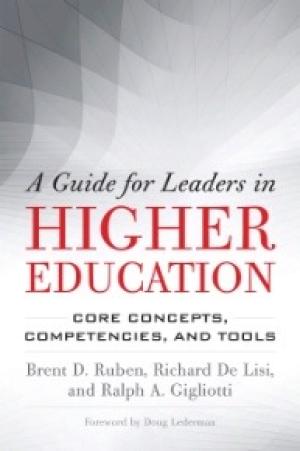
Brent Ruben, Richard De Lisi, and Ralph Gigliotti, all colleagues at Rutgers University, combine their teaching, research, and work expertise into a volume meant to be a “guide and a resource” (xviii) not only for current but also aspiring leaders, and those in less formal leadership roles on college campuses. Preceded by a pithy foreword by Doug Lederman, editor of Inside Higher Ed, the work is both frank and optimistic, a common characteristic of Brent Ruben, a practiced author in reference works for higher education leaders. The Strengths, Weaknesses, Opportunities, and Threats (SWOT) analysis that constitutes the foreword sets a tone that pervades this book: challenges abound in the current landscape of American higher education, but informed and prepared leaders can respond to these challenges and achieve excellence. The text is divided into four parts. Part One is an overview of issues, opportunities, and challenges faced by institutions and their leaders such as institutional mission (50) and diverse stakeholders (56). Part Two presents theories and literature in response to topics related to leadership like cross-cultural communication (80), and a “comprehensive leadership megamodel” (109). Part Three adds practical tools and applied models to the theoretical discussions of common issues alternating between effectiveness on the part of individual leaders and organizational effectiveness, one example being a tool for organizational review and improvement (181). Part Four, the final chapter, concerns the development of leaders in higher education. The authors’ prescience is on display from the outset of the work when they address the query, whither another book on leadership? Leadership, after all, is one of the more hackneyed subjects in recent decades, no less so in higher education where storied presidents, politicians, journalists, prestigious faculty, and popular commentators have all offered perspectives on the state of higher education and prescriptions for a better way forward. While Ruben, De Lisi, and Gigliotti spend a notable portion of the text describing higher education as they see it, their aim is to provide practical resources to current and future leaders, and in this they were successful. As such a resource, contingent upon the notions of developing competency- and communication-based leadership, A Guide for Leaders in Higher Education succeeds in providing accessible and useful resources to individuals across different leadership roles. While the authors took great care to ground their writing in case studies, hypotheticals, appendices, and applied models, at times it reads more like an introduction to a higher education textbook than an instrumental guide for those currently in leadership positions. As a midpoint between textbook and reference work, it is still successful at both and provides a clear and unbiased background to issues facing current leaders. For religion faculty in discrete or informal roles at their universities, the authors provide a distinctly helpful, perhaps overlong, review of leadership techniques, tools, and competencies. For current department heads and aspiring administrators, the text will assist in becoming conversant in the topics crisscrossing campuses and systems to better respond to today’s challenges.
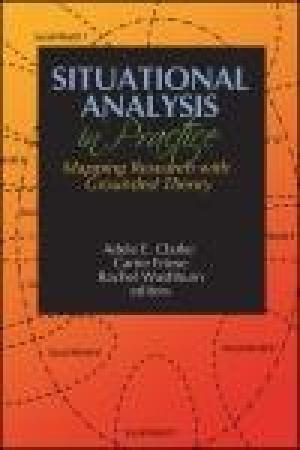
Aimed at students and researchers newer to qualitative analysis in general or to Situational Analysis (SA) in particular, Situational Analysis in Practice: Mapping Research with Grounded Theory is a history, theory, and how-to book gathered into one neat, accessible package. Comprised mainly (save the introduction) of attributed essays and reflections, the volume provides both theoretical depth and methodological breadth. SA is an inductive qualitative methodology that grew out of Grounded Theory (GT). Although the details are complex, the essential critique of GT that SA counters is an accounting of the messiness of human lives. Where GT can be described as exclusive by virtue of its analytical focus on main social processes, SA is described as inclusive: it widens the analytical lens to include power dynamics, discourse, context, non-human environment, and so forth – all the elements that under/overlie social process. The consequents “messiness” that SA encounters is made manageable by a mapping process. The book is divided into three discrete parts that allow the book to be used in a field methods course in whole or in part. The introduction (Part I) is a concise history of GT, the schools of thought that developed and competed for dominance, and the emergence of SA as a way to counter some of the perceived weaknesses in GT. A lack of emphasis on marginalized voices is the weakness in GT that is most alluded to, and this emphasis comes to the fore, especially when the introduction turns to the technique of and rationale for mapping SA. Part II, on interpretive qualitative method, contributes to the theoretical depth by expanding on the foundations of SA. Modelling the strengths of qualitative analysis, Adele E. Clarke humanizes the historical development of SA by offering her personal recollections and rationales. The two other essays in the section demonstrate how mapping with SA supports and is supported by feminist theories of knowledge acquisition and an inductive methodology. The fluid, process-oriented nature of SA is examined, providing foundation and foreshadowing for Part III and the methodology of mapping SA. The introductory section of Part III briefly explains three types of maps used in SA: situational, social worlds/arenas, and positional. The editors go on to note, however, that the flexibility of SA mapping assures that no two research projects will use it in exactly the same way. This is illustrated by the bulk of Part III, which consists of research essays by scholars from a diversity of disciplinary backgrounds and interests who have utilized SA mapping in their research. I liked the author reflections included after each essay. This adds to the pedagogical value of the work. The Appendices provide ample reference materials, websites, and further discipline-specific research that has been conducted using SA mapping. While no religious studies or theological research is specifically referenced, this work is accessible and substantive and could be a valuable tool for a field work or theory and methods course.
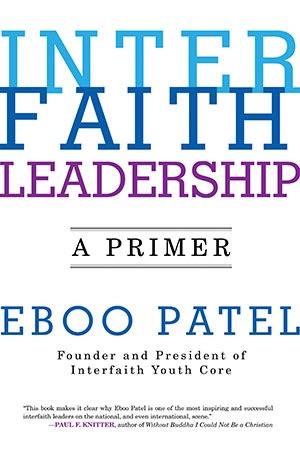
To date, one thousand colleges and universities have engaged the Interfaith Youth Core (IFYC) to catalyze interfaith cooperation, educate interfaith leaders, and build knowledge of faith traditions. Authored by the founder of IFYC, Interfaith Leadership contributes to a key IFYC goal: to train seven thousand interfaith leaders by 2020. Sharing his journey to interfaith leadership (Chapter 1), Patel discusses his theory of interfaith understanding (Chapters 2-3), shares his leadership vision (Chapter 4), and identifies leaders’ knowledge, skills, and personal qualities (Chapters 5-7). “Inter” in “interfaith” references “interaction between people who orient around religion differently”; “faith” stands for “how people relate to their religious and ethical traditions.” With the term interfaith, Patel highlights reciprocal influences: interactions with others impact how we relate to “our” religious and ethical traditions as well as to “theirs.” Interfaith leaders guide persons across a “landscape of religious diversity” toward “interfaith cooperation.” Can religious studies programs play a role in campus interfaith leadership training? Patel’s understanding of religious studies is informed by Wilfred Cantwell Smith. As Patel understands Smith, the academic study of religion errs because it looks at “systems” divorced from religious practice. For Patel, “religious system” means faith viewed through a religious studies lens. By contrast, interfaith explorations engage personal practices. Patel identifies two potential models of interfaith leadership: Stephen Prothero and Karen Armstrong. While Prothero focuses on systems (doctrines, texts, and rituals), neglecting the diversity and specificity of lived faith, Armstrong attends to “human-heartedness,” generalizing about spiritual traditions in ways that make these traditions unrecognizable to their adherents. Interfaith leaders, by contrast, support embedded dialogue. Patel illustrates: when the lone Muslim student in a world religions class declares he has never before heard the terms “Shia” and “Sunni,” his professor’s “abstract” approach to Islam is shown irrelevant to other students’ who comprehend “real world” Muslim faith. Eschewing “deficits, problems, and ugliness,” interfaith perspectives “appreciate” the “beautiful, life-giving, and admirable” in religion, building relationships through story-telling. For example, Patel attributes changes in the US between 1928 and 1955 in attitudes about Jews to the NCCJ (originally the National Conference of Christians and Jews. It currently refers to the National Conference for Community and Justice), an interfaith entity, not to the scholarly study of anti-Semitism. Patel also highlights a case study. Doctors trained in Western medicine identify symptoms of epilepsy in a Hmong child. Her parents, believing she is becoming a shaman, do not comply with treatment plans. A seizure puts the child in a vegetative state. Patel ponders whether an “appreciative understanding” of Hmong faith by the doctors could have led to a different outcome. IFYC does valuable work on campuses, promoting conversations about religion that make it safer for students of diverse traditions to express faith without fear. On some campuses, religious studies departments have been included in IFYC initiatives. However, participants in campus IFYC initiatives whose knowledge of the academic study of religion is drawn only from Interfaith Leadership will benefit from outreach by religious studies faculty. We can foster an informed understanding of our field as a vital resource for students seeking the knowledge, skills, and personal qualities needed by leaders in a religiously diverse world.
Dewey in Our Time is a volume of collected essays that provides an overview of Deweyan scholarship since the original publication of John Dewey’s Democracy and Education in 1916. Recognizing the continuing influence of Dewey’s works, the Philosophy of Education Society of Great Britain and the History of Education Society, UK invited scholars of education, philosophy, history, educational policy, and cultural studies to contribute to this volume. The volume is composed of an introduction and two main parts. In Part I, “Dewey in Changing Cultural Contexts,” the authors critically reinterpret Dewey’s wisdom and apply it to the educational contexts of Finland, Singapore, Spain, Japan, the UK, Australia, and the US. The diverse essays in this section engage with Dewey’s work on a philosophical level while also accounting for the histories that affect its reception in different national contexts. Taken together, the perspectives of authors from a variety of disciplines shed important light on the ways “science and epistemology, religion and politics” interact in the domain of education (3). Part 2 is titled “Dewey, Pedagogy, and Practice in Our Time.” “Our time” here refers to the first decades of the twenty-first century, seen in relation to and even under the shadow of the past and future. Hence, Part 2 treats the world in which teachers and educators work, live, and research as a space in constant flux. Each contributor to this section discusses Dewey’s relevance to a particular challenge in contemporary education. The essays make connections between “educative experience and experimentation; experience and moral judgment; doubt, difficulty, and struggle; and … action research” (4). Part 2 concludes with a call to replace current models of “citizenship education” with Dewey’s “democratic education.” The most valuable aspect of this book is the discussion of the wide range of Deweyan influences on contemporary education. For example, in Chapter 6, Javier Sáenz Obregón maintains that Dewey’s concept of educational experience has influenced contemporary education in terms of “self-reflection and self-creation” (96). Arguing that teachers, like students, are the “subjects of educational experience,” Obregón asserts that we must learn to apply to teachers the same aspirations we have for students (96). In particular, pedagogical practices should promote “inter-subjective transformation” for teachers and students alike (96). Andres English argues in Chapter 8 that Dewey’s concept of “struggle in learning” has influenced definitions of learning and of learning’s beginning point in contemporary education. Connecting Dewey’s concept of learning to historical and contemporary concepts of philosophical education (Plato, Rousseau, and J.F. Herbart), English distinguishes between productive and destructive forms of struggle and discusses how these conceptual distinctions can inform educational practice, based on the idea of the “in-between of learning” (129) – a condition of being beyond ignorance but not yet in possession of full knowledge. This condition is uncomfortable and difficult, but it offers rich possibilities for reflective thinking. Overall, Dewey in Our Time successfully demonstrates Dewey’s ongoing legacy in educational practice, policy making, and curriculum development and illuminates the ongoing Dewey-inspired research on historical and philosophical education. Teachers and educators will greatly benefit from this volume when undertaking the daunting task of pedagogical reconstruction in the face of changing realities. Researchers will gain deeper insight into the historical and philosophical underpinnings behind educational practice.
Empowering Learners with Mobile Open-Access Learning Initiatives is a well-designed book giving an overview and awareness to mobile activities as they can be provided in an educational setting. The anthology was compiled by Michael Mills and Donna Wake, both from the University of Central Arkansas. Most of the studies are North American, but there is ample diversity of circumstances in the populations studied and techniques showcased. The book is separated into four parts: practice, curriculum, assessment, and theory. This book will likely become a historic piece of educational observation on today’s environment, but just as importantly, it is future-looking. So how is the future looking? The authors are clearly optimistic about the future of higher education. The evidence shows the effectiveness of mobile technologies to provide a more equal and motivated voice in society. Considering the Wabash Center for Teaching in Learning in Theology and Religion’s audience, this book would be most effective for those in curriculum development and assessment. It is easy to read, but scientifically formatted. Each chapter constitutes a separate study contributing to the overall discussion, and new vocabulary is introduced and defined at the conclusion of each chapter. The publisher, IGI Global, is an established publisher of Information Science and this text could be useful even as a textbook for courses in Information Science and Technology. The book could have been enhanced through a greater diversity of authorship and a wider distribution of geographical locations. Mobile technology is world-reaching, but much of this book’s arguments were grounded in a Western cultural understanding of the world. It would have been helpful for that to have been disclosed in the preface as a both a limitation of this volume and a signal for further study about student learning in online open-access models of education. There was some effort by the authors to attend to issues related to physical and learning disabilities and learning needs of underprivileged communities. However, the only examples the authors provide outside of the United States were Kenya and Portugal. The real value of the book is its comprehensive structure of presentation and approach to mobile technology as a discipline. It does not make light of the common lay person’s experience with mobile technology. Rather, there is a sense of power behind today’s and the future’s possibilities for reducing social barriers in education. Empowering Learners with Mobile Open-Access Learning Initiatives would be an excellent contribution to a higher education library, and that is said without hesitancy even when the examples of technology in the book could be somewhat fleeting given the rapid changes in technology and online learning.

Educators who value the critical pedagogy of Paulo Freire, Henry Giroux, bell hooks, and Peter McLaren will be stretched and stimulated by Craig Hammond’s Hope, Utopia, and Creativity in Higher Education: Pedagogical Tactics for Alternative Futures. Hammond is critical of “institutional structures that have ossified around familiarity and academic routine” (35) and that tend to reproduce “a rather drab journey towards a perdition of apathetic inaction and uncritical conformity” (186). Instead, he advocates for “creative and democratic academic engagement” (11). Or, in more effusive rhetoric, Hammond writes: “The tyranny of … the academic warder, replete with encased frameworks of functionally categorized shells of knowledge, can be transformed to a context where knowledge is collaboratively resituated and revived, inhabited, and co-produced in multiple new and fresh directions” (53). His book includes autobiographical reflections, theoretical interpretations, practical teaching resources, and examples of artifacts created by students in Hammond’s courses at Blackburn College in the UK. Following an introduction, the book consists of ten chapters organized in three parts. The three chapters of Part 1 develop the pedagogically-relevant theoretical insights of Ernst Bloch, Roland Barthes, and Gaston Bachelard. The level of theoretical sophistication Hammond provides is rare in pedagogical texts. Part 2 begins to put practical substance to a critical, utopian pedagogy. In these three chapters, Hammond draws on Guy Debord and the Situationists to develop pedagogical strategies for creative engagement, illustrates the utopian potential of an alternative pedagogy via an autobiographical example, and provides practical teaching resources (autobiography assignment, peer-assessment framework, and syllabus). In Part 3, Hammond shares artifacts, commentaries, and narratives by learner collaborators in his utopian pedagogy. The pedagogy offered here – articulated as hopeful and utopian – is more Marxist than religious in its ideals. Nonetheless, given the widespread concern with diversity and inclusion in higher education settings in recent years, professors of theology and religious studies with an appreciation for critical pedagogies will benefit from reflecting on the theoretical ideas and pedagogical strategies offered here. Perhaps the easiest entry point for adaptation of Hammond’s ideas to the religious studies or theology classroom is via his discussion of Guy Debord’s (1970, Detroit: Red & Black) Society of the Spectacle (80ff.), with its clear renunciation of consumer society and the commodification of education. A more hopeful, utopian pedagogy is merited to respond to these societal pressures and allures. Hammond’s book – with its autobiographical elements, theoretical summaries, and pedagogical materials – combines disparate materials, all conveyed in evocative language (as suggested by the quotations offered above). This is not a book to be skimmed quickly. And this is perhaps as it should be. One of Hammond’s students, quoted in Part 3, comments on the incongruity of sitting in courses in which “the lecturer outlines the ills of didactic teaching and learning, from the front of the classroom, with no sense of irony” (166). By suggesting possibilities rather than delineating best practices, Hammond’s book is better aligned with the pedagogy it champions. Readers will likely find some aspects of the text more stimulating than others. Depending on the reader, perhaps it will be the theory, perhaps the autobiographical reflections of Hammond, perhaps the description of the creative autobiographical project, perhaps something else. As long as some creative and contextually relevant pedagogical intervention in the standard practices of our classrooms arises from this encounter, Hammond will have succeeded in his project of advancing a utopian pedagogy.
Renee Hobbs’s collection of personal narratives from leading thinkers in digital and media literacy is not only a fascinating foray into the field; it also presents various authors’ stories of encounters with dominant theorists across multiple disciplines. Sixteen authors from a myriad of academic disciplines (philosophy, education, communication studies, language and literacy, media studies, and fine arts, among others) spanning a number of occupations (professor, writer, teacher, director, and more) write out their intimate interactions with the theories and theorists (McLuhan, Heidegger, Bakhtin, Barthes, Foucault, Postman, Dewey, and others) that shaped their scholastic and personal lives. Each contribution in this collaborative work is a self-reflection, a collage made up of sundry parts of theory, experience, and practice. This collection started with Hobbs’s desire to unearth the historical origins of media literacy and trace the complex genealogy of media literacy. Hobbs diverges from the traditional historical treatise, in form as well as in content, by soliciting personal narratives from contributors, asking them to search out their intellectual grandparents, to map the DNA of the theories that shaped their lives and their work. While the subject is fairly standard, the vehicle (personal memoir) adds a compelling nuance to the investigation. If we take Marshall McLuhan at his word and the medium is, in fact, the message, then Hobbs’s collection is not only an exploration of media literacy but is also an embodiment of it. Although reticent to endorse one orthodox definition of media literacy, Hobbs describes media literacy as “the knowledge, competencies, and social practices involved in using, analyzing, evaluating, and creating mass media, popular culture, and digital media” (9). Media represent any form of communication and literacy, the ability to decipher said communication, and reaches far beyond the bounds of print. And media literacy, according to Hobbs, invites a deeper exploration of important issues concerning “heightened critical consciousness,” “the social nature of representation and interpretation,” “the dialectic of protection and empowerment,” as well as “the role of art in the practice of civic activism,” to name only a few (9). It is clear that development of media literacy is crucial not only for sustaining a world economy, connecting global communities, and engendering personal enrichment, but also vital for the creation of informed and engaged citizens. The whole collection is engaging and picking favorite contributions is a difficult task. However, I found David Weinberger’s description of his college-age identity crisis, subsequent nihilism, and profound encounter with Martin Heidegger’s concept of “Dasein,” intriguing and not a little humorous. Weinberger’s view of life and language (and therefore media), as inherited from Heidegger’s philosophy, emphasizes the inherent shared nature of media. Cynthia Lewis’s chapter explores media literacy via the theory of Mikhail Bakhtin and provides another example of the shared nature of media and how, as Bakhtin emphasized, “the word in language is half someone else’s” (78). Lewis succinctly summarizes Bakhtin’s view of language as “foundationally dialogic, intertextual, and heteroglossic” (78). Lewis also relates how her familial connection to Rabbinic Judaism’s love of dialogue, her suspicion of authority and institutions, her research interest in discourse analysis, and her role as a teacher of workshops on critical literacy brought her to love Bakhtin’s view of language as infinitely nuanced and beautifully complicated. Although previously familiar with Heidegger and Bakhtin, the work of Jerome Brunner, a cognitive psychologist, and scholar, was completely unknown to me when I picked up this book. In Hobbs’s chapter, she relives the three times she encountered Bruner’s work: as a child, in graduate school, and when she actually met Bruner - and how this fortuitous encounter led her to create this book. I am personally enamored with the role that narrative plays in personal and communal lives so Hobbs’s synthesis of Bruner’s view of people’s personal life stories as constructed, culturally shaped “variations on the culture’s canonical forms and stories” speaks to me (192). As I experienced, Hobbs’s collection about media literacy performs the function of media literacy as it explains the higher functions of media literacy. I highly recommend this collection for anyone interested in the reflexive relationship between scholarship and the personal (faculty, administrators, graduate students, academic advisors, and lay people alike). Although not a primer text on theory, this collection, by utilizing the lens of personal experience, makes an engaging text for those with even a moderate interest in theory and literacy.