Resources
Identity in the Classroom P18-103 Sunday 11:30 AM to 1:00 PM Convention Center - 201 (Street Level) Diversity in the classroom is often presented as a challenge for educators, but what if we consider the multiple identities of ourselves and those of our students as assets? Join Eric Barreto (Princeton Theological Seminary) and Rebekka King (Middle Tennessee State) for lunch and conversation about how this perspective can reorient our teaching. We will begin with a buffet lunch at 11:30 am and conclude at 1:00 pm. Pre-registration is required.Currently full, accepting pre-registration for waiting list. Space is limited to 50 participants. Send an email to Beth Reffett, reffettb@wabash.edu, to sign up. Registration deadline is November 1. Eric Barreto,Princeton Theological Seminary, Panelist Rebekka King,Middle Tennessee State, Panelist
Grant Design Conversations P19-101 Monday 9:00 AM to 11:00 AM Convention Center - 201 (Street Level) Do you have a grant idea for a project on teaching and learning? Have you ever thought about applying for a Wabash Center grant? Do you have questions about our grant procedures and protocols, whether your project would qualify, or how your ideas might be shaped into an appropriate Wabash Center proposal? Come see us in the Convention Center Room CCC on both Sunday, Nov. 18, 2:30 pm - 5:00 pm, and Monday, Nov 19, 9:00 am - 11:30 am to meet with one of the Wabash Center Staff. Please write Beth Reffett (reffettb@wabash.edu) to schedule a time to meet with us.
Faculty of Color Luncheon P17-110 Saturday11:30 AM to 1:00 PM Convention Center - 201 (Street Level) You are invited to attend the Faculty of Color Luncheon. This mealtime gathering is a space for fellowship, mutual support, and empowerment for our teaching lives. Hear about Wabash Center programming and how to apply for the 2019-20 Peer Mentoring Cluster grants. Pre-registration is required.Currently full, accepting pre-registration for waiting list. Send an email to Beth Reffett reffettb@wabash.edu. Registration deadline is November 1. Walk-ins may also be accepted if space is available.
Dinner for New Teachers (Invitation Only Event) P18-402 Sunday 6:30 PM to 8:30 PM Sheraton Downtown,I.M. Pei Tower Mezzanine Level - Denver Room By invitation only, new teachers will join together for an elegant dinner and directed table conversations about the first year of teaching.
Wabash Center Activities at 2018 AAR & SBL Annual Meetings Teaching and Traumatic Events P16-109 Friday12:00 PM to 5:00 PM (November 16) Convention Center - 201 (Street Level) We will begin with a buffet lunch at noon and conclude at 5 p.m. Prior to the workshop, participants will read a short essay in advance and be prepared to discuss your teaching context. Pre-registration is required. Space is limited to 40 participants. Send an email to Beth Reffett, reffettb@wabash.edu Registration deadline is October 15. Ella Johnson, St. Ambrose University, Panelist Richard Newton, University of Alabama, Panelist Teaching Against Islamophobia A16-208 Friday 1:30 PM to 6:30 PM (November 16) The Hyatt Regency Granite Room - (Third Level) Follow-up gathering for participants in the “Teaching Against islamophobia” workshop, co-sponsored with the AAR. Faculty of Color Luncheon P17-110 Saturday11:30 AM to 1:00 PM (November 17) Convention Center - 201 (Street Level) This mealtime gathering is a space for fellowship, mutual support, and empowerment for our teaching lives. Pre-registration is required. Currently full, accepting pre-registration for waiting list. Send an email to Beth Reffett reffettb@wabash.edu. Registration deadline is November 1. Walk-ins may also be accepted if space is available. Transferable Course Design P17-201 Saturday 2:00 PM to 3:30 PM (November 17) Convention Center - 201 (Street Level) This session is designed for individuals in contingent faculty positions. Contingent faculty (those teaching part-time or working full-time on a contract basis) are often called upon to teach multiple courses at short notice. Can course design empower preparation for a specific course, while also creating learning experiences transferable to other courses? Join leaders P. Kimberleigh Jordan (Drew Theological School) and Hussein Rashid (Barnard College) for refreshments and conversation about how one might pursue both goals with integrity. Session Leaders: Kimberleigh Jordan, Drew Theological School Hussein Rashid, Barnard College Space is limited to 50 participants. Please register in advance by sending an email to Beth Reffett,reffettb@wabash.edu). Registration deadline is November 1. Walk-ins welcome, as space is available. Reunion Dinner: Teaching Seminars for Doctoral Students P17-400 Saturday 5:00 PM to 6:30 PM(November 17) Convention Center - 201 (Street Level) Buffet Dinner for Participants in 2016, 2017 & 2018 Wabash Teaching Seminars for Doctoral Students (by invitation only). (Chicago, Dallas, NYC & Boston; ATSI, FTE, and HTI) Wabash Center Reception P17-501 Saturday8:00 PM to 10:00 PM(November 17) Sheraton Downtown,I.M. Pei Tower Second Level - Grand Ballroom 1 Come join us for drinks and dessert as we celebrate our work with faculty in religious studies departments and theological schools. Identity in the Classroom P18-103 Sunday 11:30 AM to 1:00 PM(November 18) Convention Center - 201 (Street Level) This session is designed for doctoral students in theological and religious studies. Diversity in the classroom is often presented as a challenge for educators, but what if we consider the multiple identities of our selves and those of our students as assets? Join Eric Barreto (Princeton Theological Seminary) and Rebekka King (Middle Tennessee State) for lunch and conversation about how this perspective can reorient our teaching. We will begin with a buffet lunch at 11:30 am and conclude at 1:00 pm. Session Leaders: Eric Barreto, Princeton Theological Seminary Rebekka King, Middle Tennessee State Space is limited to 50 participants. Please register in advance by sending an email to Beth Reffett, reffettb@wabash.edu). Currently full, accepting pre-registration for waiting list. Registration deadline is November 1. Walk-ins welcome, as space is available. Grant Design Conversations P18-203 Sunday 2:30 PM to 5:00 PM(November 18) Convention Center - 201 (Street Level) Do you have a grant idea for a project on teaching and learning? Have you ever thought about applying for a Wabash Center grant? Email Beth Reffett (reffettb@wabash.edu) to schedule a time to meet with us. Dinner for New Teachers (Invitation Only Event) P18-402 Sunday 6:30 PM to 8:30 PM(November 18) Sheraton Downtown,I.M. Pei Tower Mezzanine Level - Denver Room By invitation only, new teachers will join together for an elegant dinner and directed table conversations about the first year of teaching. Grant Design Conversations P19-101 Monday 9:00 AM to 11:00 AM(November 19) Convention Center - 201 (Street Level) Do you have a grant idea for a project on teaching and learning? Have you ever thought about applying for a Wabash Center grant? Email Beth Reffett (reffettb@wabash.edu) to schedule a time to meet with us. "Wabash Center Lounge" Convention Center 201 (street level) Come by and visit between sessions. Wabash Center events at the ETS Annual Meeting Other sessions on teaching
The image of the beach environment displays its givens: sand, sea, sky, dunes, plants, even the unseen particles in the air. The image of the boardwalk and “private property” sign shows a (passable) boundary onto which one can walk to the beach. It provides narrow, bounded access to a more open, free beach space. In times of change, the academic dean must understand the givens and the boundaries of theological education. Givens are the physical (temporal) and ontological realities that give boundary (like the narrow boardwalk) and freedom (like the open beach) to the work of the dean. As deans of theological schools, theological givens ought to be primary. As the beach becomes something else without sand, sea, and sky, the theological school becomes something else without a certain set of theological givens, and their relationship to other realities. Theological convictions and commitments rooted in texts and traditions, and how they cohere, serve as the sand, sea, and sky of the theological school environment. Other givens––cultural, social, institutional, etc.––will inform each dean’s context. The theological givens, I think, order and prioritize the other givens. The dean must know and value the givens in order to understand and carry out her role as an academic leader. Boundaries show the dean the context and scope of her work. They also indicate lines that either ought not or should be crossed. At times, the dean must help faculty, staff, and students flourish within a certain boundary, whether institutional, cultural, social or others. Other times, the dean must help faculty, staff, and students break through boundaries such as an antiquated and disparate curriculum. Curriculum revision offers one example where the academic dean leads the school to define new boundaries. These new academic boundaries will resonate if they reflect the givens of the school, like the boardwalk “fits” the beach environment because of how it helps us access and enjoy the beach. Academic leadership necessitates clear vision and creative discovery of the proper path for the people of the theological school. The givens and the boundaries of the school give the dean a context and lenses for that vision. When changes to theological education come, as they always have, a clear vision enables the dean to see his or her way forward so that the faculty, students, staff, and other constituents of the school may confidently follow, even if the future is unclear.
Teaching and learning in academic settings can sometimes appear contrived or artificial in relation to the “real” world or professional contexts for which students prepare. However, this does not always have to be the case. One of the things that has surprised me about teaching in theological education is the spontaneous emergence of holy moments or sacramental spaces in the classroom. These serendipitous occurrences have transpired despite carefully constructed lesson, lecture, and discussion plans. The intrusion of grace-filled moments in the midst of linear, rationally focused pedagogical agendas remind me of the synergistic power of the Divine that never leaves us alone, even in our best efforts and intentions. Addressing trauma through pedagogy as a form of educational and professional development can be an integral part of the teaching and learning experience. Pain is a part of life. In fact, pain is a constant, albeit varied, component of what it means to be human. There is great value in developing ways to gradually face pain directly, as opposed to shrinking or retreating from its reality. Part of a quality classroom education is helping students negotiate methods of confronting pain. Knowledge-based and contextually-driven learning enables students to acquire applicable models for dealing with pain and trauma in other settings. One way of thinking about teaching and traumatic events in the classroom is to envision instructional and experiential sacramental spaces. Sacraments are outward, visible signs and symbols of invisible, interior spiritual graces. They are gifts of the Divine. Although primarily viewed as specifically dogmatic and rites-based, sacraments can also be understood in terms of the varied means by which God manifests transcendental grace. Opening pathways for the intrusion of the holy, through multiple iterations, into learning spaces mirrors the healing process and thus becomes a viable way in addressing trauma. Historically, Roman soldiers took an oath of allegiance, or sacramentum, declaring a vow of obedience to their militaristic superiors. Similarly, adherents of ancient religious cults ritualistically declared service to the gods or mottos heralded by those societies. By pledging devotion and loyalty, participants bonded to the values and beliefs exemplified by the institution. Christians adopted this system in response not only to the allegiance believers swore to the Divinity of Christ, but also in recognition of the gift of Christ’s own suffering. The solidarity of God with humanity in pain formed the nucleus of a movement. Swearing the sacrament of faith to God was indeed, as in the other systems, a rite of membership. But it was also a means of acknowledging the work that God had done and was doing on their behalf. This deeply reflective theological method is relatable to teaching trauma in the classroom. Teachers and learners bring their best efforts in terms of preparation, study, and participation. That is, they do the work. Yet, they also make room for the work of God. Teachers can allow for this to happen through the cultivation of listening moments in the classroom. For example, the traditionally contemplative method of lectio divina is organized by study, prayer, reflection, and meditation. These steps allow for holy listening to the Spirit in the midst of the rational, exegetical process of biblical learning. Balancing the logical processes involved in classroom learning with short breaks of reflection, problem-solving, and simple quiet nurtures a sacramental atmosphere. In so doing, awareness is distilled that God embraces our best efforts with the unmerited grace that transforms.
It sighed again the shark. Spitting out yet more fun gleeful humans thrilled at its unreal teeth.
More than once, a student has reported on a trauma unfolding in real time in the middle of class. Students with laptops open, or phones nearby, have shared breaking news of university lockdowns or school shootings. Just this semester, in the hours surrounding classes, we’ve seen gun violence and middle school walkouts, women’s rights and sexualized violence, police brutality and other forms of racist misuse of power, DACA and the risk and vulnerability of undocumented students, and more. As a teacher, how does one prepare for what to do next? Part of responding to trauma is preparing to be present in unpredictable moments. Where in the curriculum do students learn whether to interrupt teaching and learning, to rewrite budgets, sermons, pastoral prayers, to scrap programming or lecture content in favor of addressing a trauma at hand? This year I’ve experimented more regularly with a strategy I’ve used occasionally to structure time and space into my courses for the unpredictable. When trauma interrupts class, I often feel compelled to address it. However, I don’t always know which issues will trigger which students. Disclosing personal histories of trauma is not something I require nor think should be required. Histories of trauma exist, at all times, in visible and invisible ways. Some new trauma will interrupt, a decision is made about whether or not to address it, and unintended consequences may follow. A “one-layer removed” pedagogical strategy helps me hold space to respond to trauma that interrupts courses while also protecting students from having to disclose their personal histories or being triggered directly. The strategy structures a simulated conversation about having a conversation about the presenting traumatic event. It’s not the conversation per se, but a directed conversation about the possibility of a more direct conversation at another time and place. Thus, the pedagogical exercise is by design one-layer removed from a trauma that interrupts. How does it work? The one-layer removed practice requires at least 15 minutes of class time on a regular basis throughout the semester. I divide the class into groups of three with a seeker, a consultant, and an observer (a classic role play design). In larger groups, seekers can tag team or consultants can work together, or observers can share unique observations in turn. The seekers are the students themselves in their actual or imagined future vocational setting. The seeker contacts the consultant(s) about how to address a particular trauma in their ministry setting, practicing collegial consultation with a prompt: Seeker: Given the topic of class today and the reading we’ve been doing, I want to respond to (fill in the trauma that has interrupted the class in real time or in the local or global community). Can you help me imagine how to do so? The consultant and seeker discuss possible conversations they imagine having or not having in their ministry, vocational, or other context at another time and space. After 5 minutes, the observer(s) reports about connections they see to the course themes, readings, contextual factors, trigger warnings or concerns, and more. Then, to debrief, the group can join with another group or the whole class can have a brief or longer conversation. This “one-layer removed” practice highlights three learning goals I have for students in several of my classes: (1) practicing and preparing to remain present when unpredictable care concerns and moral dilemmas arise (2) demonstrating and committing to ongoing courageous self-awareness and leading courageous communal awareness[1] (3) building on this awareness, cultivating a living referral network through practices of relationship-building, consultation, and networking. When trauma infuses public discourse during a semester or even during a class session, a one-layer removed practice helps the class work on all three of these goals. Here’s an example. This past fall, the #metoo movement arose with renewed energy[2] in which people, particularly women, disclosed experiences of abuse through social media and public protests. It was hard not to notice. In October 2017, I was teaching examples of trinitarian pastoral theology that took seriously intersectional concerns of gender, class, race, and a history of surviving abuse. There were lots of connections between course requirements and collective trauma being disclosed through the #metoo public discourse. In a class session, I used previously set aside one-layer removed practice class time: Seeker: Given the topic of class this week and the reading we’ve been doing on taking women’s experiences seriously in our theologies of pastoral care and given the eruption of the #metoo movement this week, I am thinking about quoting this prayer[3] in my faith community’s service this week. Do you think that’s wise and how could I frame it? In the brief but important conversations that emerged, students practiced putting words to something that was painfully very familiar to some and not at all to others. Students considered how various folks with various experiences might receive either these words, other words, or lack of words about #metoo. Students brainstormed the kind of referrals they would need in their pocket that week in their various ministry and nonprofit contexts, no matter what was said or unsaid, about local resources they might print on a service bulletin. We discussed self-care, courageous communal care, and, yes, we incorporated assigned readings on implications for trinitarian pastoral theology and why that mattered. A one-layer removed pedagogical strategy helps students in my practical and pastoral theology and ethics classes prepare for moments when trauma or other dire care needs interrupt their work as a student, minister, nonprofit leader, or even dinner conversations with family and friends. Increasingly in the last year, as a pastoral theologian, I’ve been called by friends and strangers both near and far to support communities regarding various traumas. For example, I’m on a non-profit board whose carefully constructed budget had to be completely rethought when violence erupted in our service population. Suddenly we needed to fund emergency counseling and care across multiple countries and communities. Here is just one example where my own lived experiences and the learning outcomes I have for my students aligned: the need to create a referral network before you need it. Trauma will impinge on previously scheduled plans and folks will ask religious and spiritual leaders for advice, expect to hear a word or prayer, and hope to find some assistance in what to do next. I teach graduate students in theological education at the Masters and Doctoral levels and often remind my students that whether or not they see themselves as religious or spiritual leaders, folks who know they are educated in graduate theological education will expect them to be present in significant life and death moments. Where can students practice this in the curriculum? I’ve found that a pedagogical practice of one-layer removed can offer crucial time and space to practice. [1] This awareness is important for helping students know which issues are too close to their own experience for them to be a care-provider and therefore need to establish referrals for help with these issues before they are needed. [2] Tanara Burke, longtime supporter of social justice for women and girls of color and founder of the nonprofit organization “JustBeInc,” created the “me too” movement to support survivors of sexualized violence a decade before the social media #metoo campaign of 2017 (see for example, https://www.nytimes.com/2017/10/20/us/me-too-movement-tarana-burke.html. See also http://justbeinc.wixsite.com/justbeinc/board ). [3] I provided each group with copies of a blog that had been published that week from Rev. Sarah Griffith Lund at https://sarahgriffithlund.com/2017/10/18/god-were-you-there-when-metoo/
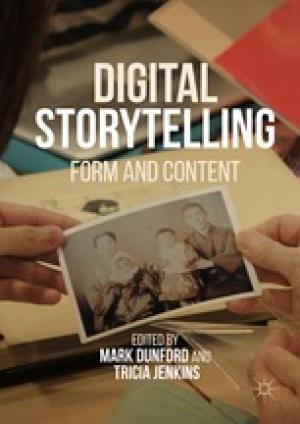
Upon reading the varied chapters that constitute Digital Story Telling: Form and Content, I could not help but be reminded of Salman Rushdie’s comments on the power of story. Those who do not have the power over the story that dominates their lives, the power to retell it, rethink it, deconstruct it, joke about it, and change it as times change, truly are powerless, because they cannot think new thoughts. (1991, Dec. 12, New York Times) Rushdie’s words illustrate the demands the postmodern world places on all individuals. It is a world replete with a multiplicity of stories in a myriad of forms… stories of domination and liberation, state narratives and personal accounts, corporate media renderings, and cellphone videos. In this world, the personal and political are not easily divorced. It is a world eager for new mediums which can offer the individual tools for agency and a space in which to tell, retell, rethink, deconstruct, joke about, and change their story. Digital Storytelling (DS) appears to be one such medium. What is DS? This volume’s editors, Mark Dunford and Tricia Jenkins, describe it as “a simple, creative process whereby people with little or no experience of computers gain the skills needed to tell a personal story as a two minute video using predominately still images combined with recorded voice-over, and often including music and/or other sounds” (3). The end products are “self-representational stories which emerge from a collaborative workshop process using a ‘Story Circle,’ in which a range of writing stimuli and other activities are used to develop trust within the group and ‘find’ the story” (3). Much of this definition comes from a pioneer in the field of DS, Joe Lambert, whose Digital Storytelling workshops, terminology, and methods have shaped the DS movement. DS is a form of participatory media in which political activism is embedded in its very practice. Lambert describes how in the 1990s he and those he was working with “thought of the Internet, new low-cost digital media production tools, and the distribution opportunities of the web as major advances that could promote global democracy and liberation” (22). The advent of the Internet for such a medium is tantamount to the proliferation of the printing press in sixteenth-century Europe. One need only look to social media platforms such as Facebook, YouTube, and Instagram to see how the Internet and low-cost media production tools have changed what we watch and how we watch it. DS is a precursor to this platform proliferation and the motivations driving it as a process appear to have been less fiscally motivated. One of the paramount intentions of DS is to provide the voiceless the means to be heard. Of course, DS workshops have facilitators and funders, both of which, intentionally or not, are intimately involved in the creation and dissemination of these personal stories. The volume is segmented into four elements or parts: Practice (five case studies from Kenya to the UK of DS in action); Content (pieces addressing the role content, especially content of a political [Simsek] or socially provocative [Kuga Thas] nature, plays in how that content is created, collected, received, parsed, and disseminated [Lewis and Matthews] and licensed [Spurgeon]); Form (insights garnered from when the cultural specificity of the DS model requires modification such as in Japan, Romania, and Ireland); and Understanding (three essays honing in on the limits and potential of DS as a political and personal force in the world). The volume culminates with Nancy Thumim’s chapter “Therapy, Democracy, and the Creative Practice of Digital Storytelling” in which she reflects on the unifying themes of the book (DS as democratizing work, DS as therapy, DS as meaning-making, reflection, presentation, and representation) as well as the logistical and ethical challenges DS faces (issues of ownership in regard to co-created media, the afterlife of created materials, restructuring workshops to accommodate participants of disparate backgrounds and differing needs). DS, in its varied iterations, straddles the personal and public and opens up a space for creativity among communities created by the DS workshops and those affected by their material output (artifacts). Perhaps the most compelling aspects of this volume are the stories (as found in Rainbird, Henry, Hardy and Sumner, Lewis and Matthews, Ogawa and Tsuchiya, Alexandra, and Brushwood Rose) of those persons challenged with mediating and assisting others (often those whose voices go unheard) through the process of narrating their own stories. As an academic advisor, the power of storytelling for self-actualization is readily apparent to me. Like the DS workshop facilitators in this book, academic advisors are involved in a co-creative narrative process. Advisors help students reflect on their goals and values and provide them with tools and mechanisms for authoring their own academic life story. The examples of DS workshop facilitators agonizing over how active to be in the creation of these personal stories should resonate with any reader who works in a co-creative capacity (advisors, administrators, teachers, parents, therapists, and so forth). The stories presented in each of these chapters are rather remarkable and, indeed, powerful. Anyone interested in modern media, narrative, social activism, communication studies, film, as well as those versed in DS scholarship, will find this a compelling read.