Resources
Despite the progress of the women's movement, many women still feel silenced in their families and schools. Based on in-depth interviews with 135 women, this moving and important book explains why. (From the Publisher)
Reveals the deep and pervasive search for meaning that haunts Generation X. This book is must reading for anyone who would understand the spirituality of young people at the turn of a new millennium.—Robert A. Ludwig, author of Reconstructing Catholicism for a New Generation In Virtual Faith, Beaudoin explores fashion, music videos, and cyberspace concluding that his generation has fashioned a theology radically different from, but no less potent or valid than, that of their elders. Beaudoin's investigation of popular culture uncovers four themes that underpin his generation's theology. First, all institutions are suspect — especially organized religion. Second, personal experience is everything, and every form of intense personal experience is potentially spiritual. Third, suffering is also spiritual. Finally, this generation sees ambiguity as a central element of faith. This book opens a long overdue conversation about where and how we find meaning, and how we all can encourage each other in this central human searching. (From the Publisher)
A practical nuts and bolts guide for teachers from any discipline who want to design interest-provoking writing and critical thinking activities and incorporate them into their courses in a way that encourages inquiry, exploration, discussion and debate. (From the Publisher)
With its ecumenical perspectives and its comprehensive consideration of Christian practices, this is a fitting volume to inaugurate Jossey-Bass's new Religion in Practice series. The volume's editor, Dorothy Bass, a United Church of Christ minister and Director of the Valparaiso Project on the Education and Formation of People in Faith, identifies the book's audience as those who seek a way of life rich in faith and integrity. Bass and Craig Dykstra, v-p for religion at the Lilly Endowment, provide opening and closing essays, which focus, respectively, on the yearning of believers for ways to incorporate faith in their lives and on how to keep the practice of faith alive. In the book's 12 central essays, a wide variety of theologians from a range of Christian communities explores practices vital to Christian daily life. These practices include honoring the body, providing hospitality, caring for the household, keeping Sabbath, speaking truthfully, forgiving and shaping worthy communities. All of the practices are informed by two essential Christian practices: prayer and Bible study. This excellent collection of essays presents ways of thinking about and engaging in a spiritual life. (From the Publisher)
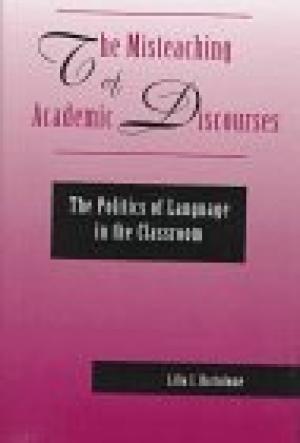
Bartolome explores issues in teaching working-class minority students the mainstream academic ways of speaking necessary for success in school. Drawing from her own experience as a white teacher of Mexican- American students, she reveals the veiled antagonism between students and teacher, emphasizes the political dimensions of language, and critiques the dominant deficit ideology that underlies the cultural difference explanation of academic underachievement among linguistic minority students. (From the Publisher)
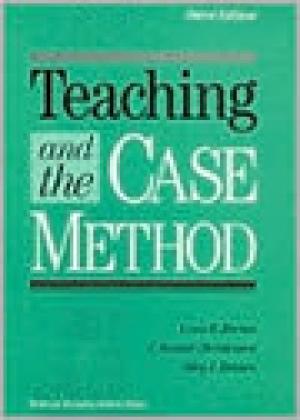
This third edition of Teaching and the Case Method is a further response to increased national and international interest in teaching, teachers, and learning, as well as the pressing need to enhance instructional effectiveness in the widest possible variety of settings. Like its predecessors, this edition celebrates the joys of teaching and learning at their best and emphasizes the reciprocal exchange of wisdom that teachers and students can experience. It is based on the belief that teaching is not purely a matter of inborn talent. On the contrary, the knowledge, skills, and attitudes that make for excellence in teaching can be analyzed, abstracted, and learned. One key premise of Teaching and the Case Method is that all teaching and learning involve a core of universally applicable principles that can be discerned and absorbed through the study and discussion of cases. (From the Publisher)
An ethnographic study of a series of workshops on pedagogy in religious studies, inaugurated by the American Academy of Religion. Reporting on workshops in New England and the Maritimes, the east, southeast, and southwest, discusses what was and was not effective in the workshops, variables contributing to success that people setting up similar workshops can draw on, and the current state and recent history of religious studies. (From the Publisher)
Good practice in assessment is taking place on hundreds of campuses across the country, yet much of this work goes unreported. Now, Assessment in Practice brings together in one volume the best current knowledge of assessment methods that work and principles that should be incorporated into all effective assessment efforts - whether at institutional, program, or departmental levels. Drawing from 165 actual cases-and reporting 86 of them in their entirety, in the words of those who developed them-the authors illustrate methods and techniques covering a wide range of assessment objectives in diverse types of institutions. Classroom assessment topics include mathematics, foreign language, technology, and more. Topics on overall institutional effectiveness range from student motivation in standardized testing to a multiple-campus, course-embedded approach to assessment of general education. A helpful cross-referencing system that enables readers to access cases by assessment objective, institutional type, and measurement method is included. (From the Publisher)
Banks enters the debate on contemporary theological education with a comprehensive and refreshingly practical call to a missional model for theological education. He strives to root this model in a greater appreciation for biblical perspectives on formation for ministry.... Banks provides an extensive review of historical and contemporary issues and models of theological education. His review is critical, and while his missional model is ambitious, he does not avoid facing the practical consequences and challenges faced by those who would move toward what he considers a more authentic approach to the formation of persons called to theological education as teachers and students. (From the Publisher)
Twenty-nine articles from international journals that 'will provide the reader with both a comprehensive map of how contemporary Christian theologians approach the tasks of Christian education, and also skillfully selected excursions in the complex terrain. (From the Publisher)
Wabash Center Staff Contact
Rachelle Green, Ph.D.
Associate Director
Wabash Center
greenr@wabash.edu