Resources
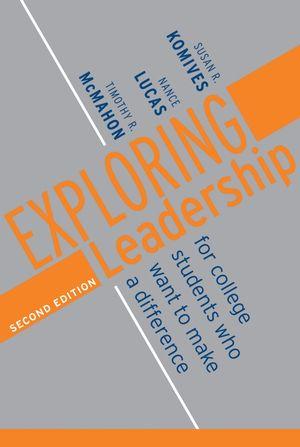
From the Publisher This is the thoroughly revised and updated second edition of the best-selling book Exploring Leadership. The book is designed to help college students understand that they are capable of being effective leaders and to guide them in developing their leadership potential. Exploring Leadership incorporates new insights and material developed in the course of the authors' work in the field. The second edition contains expanded and new chapters and also includes the relational leadership model, uses a more global context and examples that relate to a wide variety of disciplines, contains a new section which emphasizes ways to work to accomplish change, and concludes with concrete strategies for activism.

These essays come from scholars in a wide variety of fields: not just theology, but law, literature, political science, education, and philosophy. The essayists are teacher-scholars who genuinely seek to live out the sometimes-competing vocations of professor and believer. Though most of them teach in church-related institutions, they not only affirm the need for a clear theological vision on which to base institutional and pedagogical planning; they also stress the importance of diversity, pluralism, and true academic freedom. (From the Publisher)

From the Publisher This book gives voice to the experiences of women of color - women of African, Native American, Latina, East Indian, Korean and Japanese descent - as students in pursuing terminal degrees and as faculty members navigating the Academy, grappling with the dilemmas encountered by others and themselves as they exist at the intersections of their work and identities. Women of color are frequently relegated - on account both of race and womanhood - into monolithic categories that perpetuate oppression, subdue and suppress conflict, and silence voices. This book uses critical race feminism (CRF) to place women of color in the center, rather than the margins, of the discussion, theorizing, research and praxis of their lives as they co-exist in the dominant culture. This book makes salient three characteristics of critical race feminism. Just as it is places emphasis on the application of theory to real life issues, the authors' narratives address concerns about the academic community, home, and family. Just as CRF supports a discourse of resistance, the book provides a forum for different voices as multi-representations of the counterstories against the acceptance of the dominant culture and the status quo. And, finally, the contributors' stories reflect CRF's emphasis on narrative to deepen the understanding of their lives as women of color. The first part of the book addresses the issues faced on the way to achieving a terminal degree: the struggles encountered and the lessons learned along the way. Part Two, Pride and Prejudice Finding Your Place After the Degree, describes the complexity of lives of women with multiple identities as scholars with family, friends,and lives at home and at work. The book concludes with the voices of senior faculty sharing their journeys and their paths to growth as scholars and individuals. This book is for all women of color growing up in the academy, learning to stand on their own, taking first steps, mastering the language, walking, running, falling and getting up to run again, and illuminates the process of self-definition that is essential to their growth as scholars and individuals.

Chronicles the development of the intellectual culture of the Western university and proposes an approach to university education that keeps faith with central Christian doctrines. (From the Publisher)

High-performance mentors are not born. Even experienced educators need training in order to provide constructive support to entry-year teachers. James B. Rowley's mentoring framework has been used to successfully train thousands of teachers to acquire the six essential behaviors of high-performance mentoring: committing, accepting, communicating, coaching, learning, and inspiring. With more than twenty years of experience in training mentor teachers, Rowley blends real-life stories with established research to help readers * Understand mentoring as a performance continuum with escalating developmental stages * Improve assessment, communication, and coaching skills * Reflect on the mentoring process and analyze mentoring relationships * Utilize mentoring as a pathway to personal and professional growth Designed for both experienced and novice mentor teachers, this book will also be an enormously useful resource for mentor program coordinators, trainers, staff developers, and principals who want to assure that participants grow in their teaching practice as a result of the mentoring experience. (From the Publisher)

Journal Issue.
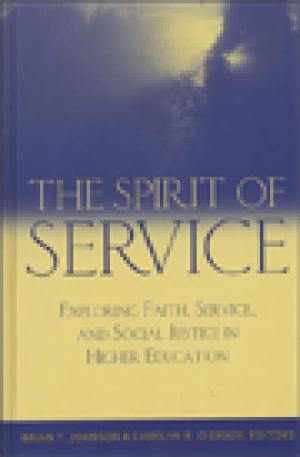
In The Spirit of Service , the contributing authors explore the intersection of faith, service, and social justice in higher education. Reflecting upon the role that higher education plays in preparing future generations of citizens and leaders, this book asserts that spirituality and values necessarily involve one's person—and that educators must begin to connect student learning with the human experiences of faith, service, and commitment to social justice. Each of the authors describes a teaching experience in order to critically reflect upon the divide in academic culture between responsible, rigorous, intellectual competence and personal values. The authors' lessons in success and failure are meant to provide guidance for all institutions that are committed to preparing young students to lead lives of leadership and civic engagement. Divided into three parts, this book: * Explores the meaning, practice, and implications of religions or spiritually motivated service * Offers specific examples from faculty for integrating faith or spiritual perspectives with service, including what has worked and what dilemmas remain * Focuses on specific dilemmas and implications for engaging in service for social justice Containing a wealth of practical suggestions and strategies, The Spirit of Service represents a conversation in progress; it is an attempt to understand how to help undergraduates integrate service and spirituality for the purpose of social justice. (From the Publisher)
Journal Issue. Full text is available online.
Wabash Center Staff Contact
Sarah Farmer, Ph.D.
Associate Director
Wabash Center
farmers@wabash.edu