Resources
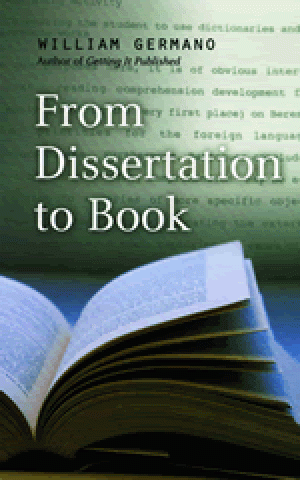
All new Phd's hope that their dissertations can become books. But a dissertation is written for a committee and a book for the larger world. William Germano's From Dissertation to Book is the essential guide for academic writers who want to revise a doctoral thesis for publication. The author of Getting It Published, Germano draws upon his extensive experience in academic publishing to provide writers with a state-of-the-art view of how to turn a dissertation into a manuscript that publishers will notice. Acknowledging first that not all theses can become books, Germano shows how some dissertations might have a better life as one or more journal articles or as chapters in a newly conceived book. But even dissertations strong enough to be published as books first need to become book manuscripts, and at the heart of From Dissertation to Book is the idea that revising the dissertation is a fundamental process of adapting from one genre of writing to another. Germano offers clear guidance on how to do just this. Writers will find advice on such topics as rethinking the table of contents, taming runaway footnotes, shaping chapter length, and confronting the limitations of jargon, alongside helpful timetables for light or heavy revision. With crisp directives, engaging examples, and a sympathetic eye for the foibles of academic writing, From Dissertation to Book reveals to recent PhD's the process of careful and thoughtful revision—a truly invaluable skill as they grow into their new roles as professional writers. (From the Publisher)

A groundbreaking work on holistic spiritual formation in Christian higher education. Contemporary Christian universities claim that students grow spiritually while enrolled, yet very little work has been done exploring the influences of various parts of the university on student spiritual formation, especially, but not limited to, the impact of faculty. Building a Culture of Faith addresses the unique role faculty and others play in student spiritual formation, including historical and contemporary approaches; sets out a framework for understanding spiritual formation as it is practiced in the Christian university; and provides practical models for the roles the university plays in the spiritual formation of students. (From the Publisher)
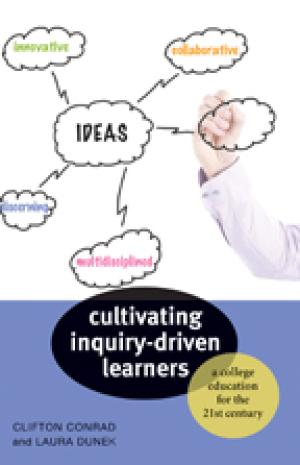
Inquiry-driven learners anticipate, embrace, and adapt to disruptive change. Clifton Conrad and Laura Dunek advance a transformative purpose of a college education. They invite stakeholders from across higher education to engage in vigorous dialogue about the aims of a college education—and how to realize those aims. Increasingly influenced by market forces, many universities employ a default purpose of a college education: preparing students for entry into the workforce. As a result, students remain unprepared for a world in which much of the knowledge they acquire will have a shelf life of only a few years. Cultivating Inquiry-Driven Learners charts a new way forward. It proposes that a college education prepare students to be innovative and adaptable by developing four signature capabilities: core qualities of mind, critical thinking skills, expertise in divergent modes of inquiry, and the capacity to express and communicate ideas. In concert, these capabilities empower students to explore and foster ideas that will prepare them to successfully navigate constant change, capitalize on career opportunities, enrich their personal lives, and thoughtfully engage in public life. This innovative book also explores a wide range of initiatives and practices for educating inquiry-driven learners. Examples illustrate possibilities for developing inquiry-driven learners across the curriculum and are drawn from institutions with remarkably different missions and identities—from research universities to liberal arts colleges. "This book revitalizes the notion of a 'well-rounded' education by describing how inquiry-driven learning is critically important for these times. It is the sort of foundational text that invites discussion and debate and describes with clarity and economy of prose the pressures facing colleges and universities and how they ought to respond."—Matthew Hartley, University of Pennsylvania. (From the Publisher)
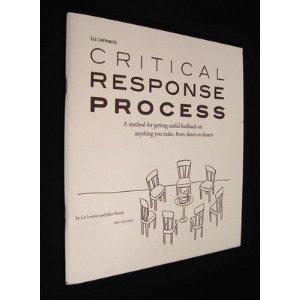
Liz Lerman's Critical Response Process is a multi-step, group system for giving and receiving useful feedback on creative processes and artistic work-in-progress. Originated in the early 1990's by choreographer and MacArthur "Genius Grant" Fellow Liz Lerman, the Process has been widely embraced by artists, educators, and administrators. It has been applied in such diverse contexts as choreography classes, post-performance discussions, actor/playwright collaborations, curatorial decision-making, and university level curriculum assessment. In addition to reflection on the work at hand, the Critical Response Process affords artists a voice and a degree of control within the critique of their work promoting dialogue with audiences, fellow artists, students, mentors, and other colleagues. This book, Liz Lerman's Critical Response Process, offers a detailed introduction to the Process, beginning with its three roles and four core steps. With particular emphasis on the role of the facilitator, this illustrated publication offers guidance on how artists and participants can get the most out of the Process and the opportunities it offers to ask question, give answers, and voice opinions. A final chapter discusses adaptations and variations. Charts and annotated sample dialogues demonstrate the inner workings of the Process. (From the Publisher)
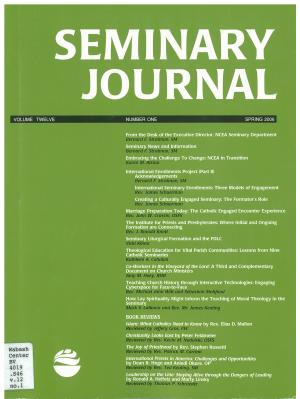
Journal Issue.
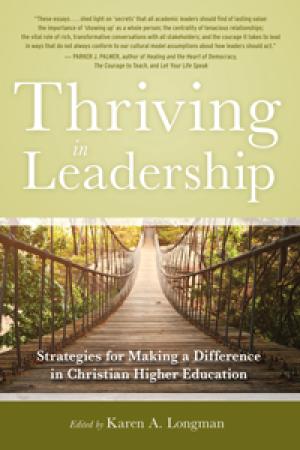
In this book, seventeen senior leaders from faith-based colleges and universities across North America--collectively bringing with them hundreds of years of leadership experience--share fresh insights into the theory and practice of Christian higher education leadership. These authors speak honestly about the successes, failures, and demands that have shaped their current leadership decisions and their visions for the future.In this book, seventeen senior leaders from faith-based colleges and universities across North America--collectively bringing with them hundreds of years of leadership experience--share fresh insights into the theory and practice of Christian higher education leadership. These authors speak honestly about the successes, failures, and demands that have shaped their current leadership decisions and their visions for the future. (From the Publisher)
Journal Issue.

Landing a tenure-track position is no easy task. Achieving tenure is even more difficult. Under what policies and practices do faculty find greater clarity about tenure and experience higher levels of job satisfaction? And what makes an institution a great place to work? In 2005–2006, the Collaborative on Academic Careers in Higher Education (COACHE) at the Harvard Graduate School of Education surveyed more than 15,000 tenure-track faculty at 200 participating institutions to assess their job satisfaction. The survey was designed around five key themes for faculty satisfaction: tenure clarity, work-life balance, support for research, collegiality, and leadership. Success on the Tenure Track positions the survey data in the context of actual colleges and universities and real faculty and administrators who talk about what works and why. Best practices at the highest-rated institutions in the survey—Auburn, Ohio State, North Carolina State, Illinois at Urbana-Champaign, Iowa, Kansas, and North Carolina at Pembroke—give administrators practical, proven advice on how to increase their employee satisfaction. Additional chapters discuss faculty demographics, trends in employment practices, what leaders can do to create and sustain a great workplace for faculty, and what the future might hold for tenure. An actively engaged faculty is crucial for American higher education to retain its global competitiveness. Cathy Ann Trower's analysis provides colleges and universities a considerable inside advantage to get on the right track toward a happy, productive workforce. (From the Publisher)
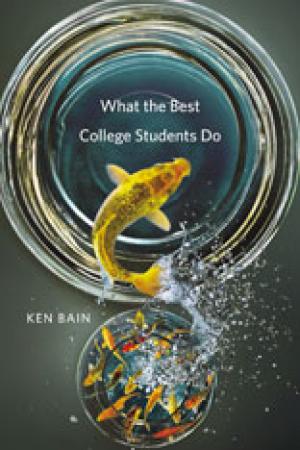
The author of the best-selling What the Best College Teachers Do is back with more humane, doable, and inspiring help, this time for students who want to get the most out of college—and every other educational enterprise, too. The first thing they should do? Think beyond the transcript. The creative, successful people profiled in this book—college graduates who went on to change the world we live in—aimed higher than straight A’s. They used their four years to cultivate habits of thought that would enable them to grow and adapt throughout their lives. Combining academic research on learning and motivation with insights drawn from interviews with people who have won Nobel Prizes, Emmys, fame, or the admiration of people in their field, Ken Bain identifies the key attitudes that distinguished the best college students from their peers. These individuals started out with the belief that intelligence and ability are expandable, not fixed. This led them to make connections across disciplines, to develop a “meta-cognitive” understanding of their own ways of thinking, and to find ways to negotiate ill-structured problems rather than simply looking for right answers. Intrinsically motivated by their own sense of purpose, they were not demoralized by failure nor overly impressed with conventional notions of success. These movers and shakers didn’t achieve success by making success their goal. For them, it was a byproduct of following their intellectual curiosity, solving useful problems, and taking risks in order to learn and grow. (From the Publisher)
Journal Issue.
Wabash Center Staff Contact
Sarah Farmer, Ph.D.
Associate Director
Wabash Center
farmers@wabash.edu