Resources

Journal Issue.
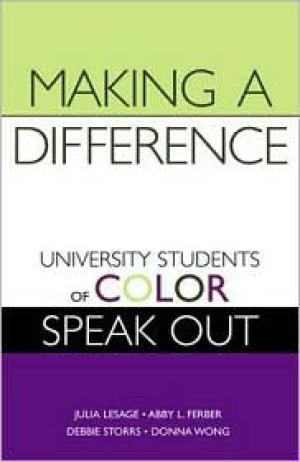
In Making a Difference, students of color relate their first-hand experiences with educational systems and campus living conditions. Their narratives provide an insider perspective useful to anyone working on diversity issues who is trying to improve institutional culture and policy. The contextualizing essays following the student narratives are written by academics and student affairs professionals who draw links between issues of institutional access, recruitment and retention of students and faculty of color, curriculum changes, teaching strategies--especially for teaching whiteness and racial identity formation, campus climate, and the relation between an individual institution's history of dealing with race to developments in public policy. (From the Publisher)
The president of Pittsburgh Theological Seminary addresses everyone who has a stake in theological schools and education: educators, administrators, students, and donors. He discusses institutional challenges, program challenges, and student concerns. Each chapter ends with an issue for discussion. (From the Publisher)
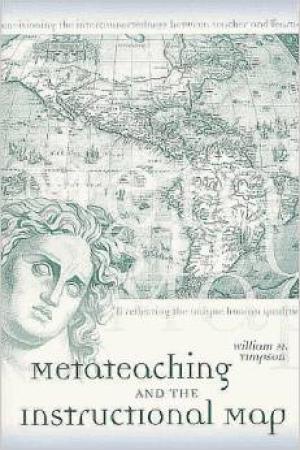
Bill Timpson presents his conception of metateaching. As metacognition is the idea of thinking about thinking, metateaching is the idea of thinking about teaching. Your mind will be infused with new, innovative — yet practical — ways to think about your classroom after reading this book. You will learn about the Instructional Map, a systematic tool to help you organize your classes and visualize the direction, components, and impact of different aspects of teaching. Ideas from the fields of cartography and orienteering will give you a fresh angle from which to view your teaching practice. (From the Publisher)

Journal Issue.
This introduction to reading and understanding the Bible focuses on perspectives that are often ignored. Here, emphasis is placed on how issues involving race, class, and gender influence our understanding of the Bible. The author shows how "standard" readings of the Bible are not always acceptable to people or groups on the "margins." The poor and those who are targets of discrimination because of their ethnic group or gender may have quite different insights and understandings of biblical texts that can be of value to all readers. (From the Publisher)

This challenging collection of essays offers a refreshing approach to the troubling--and timely--subject of religion and public policy in America, and the ways in which issues of church and state affect our national identity. The result of a series of conferences on religion and politics conducted by the Public Religion project at the University of Chicago, funded by a grant from the Pew Charitable Trust, this collection brings together an extraordinarily diverse set of contributors. Represented within its pages are the ideas and opinions of scholars, politicians, and religious leaders with backgrounds in law, politics, history, and divinity, among them Senator Paul Simon of Illinois. With its wide range of critical approaches and varied perspectives, this volume makes a vibrant contribution to the national dialogue on politics and religion. Chief among the essay topics are the evangelical roots of American political life; early conflicts between Enlightenment thinking and spiritual impulses in developing a national identity; the practical problems that today's politicians face in campaigning; the impact of constitutional and legal language regarding our definitions of religion; and the way in which the media's treatment of our spiritual life frames our perceptions of it. These thought-provoking essays will inspire readers to rethink, argue, perhaps act, but most importantly, to converse about this timely and important issue. This volume will have wide cross-disciplinary appeal. Students and scholars of history, religious studies, and political science will find great value within its pages, as will scholars of divinity and law, and members of this general public concerned with the intersection of faith and politics in American life. (From the Publisher)
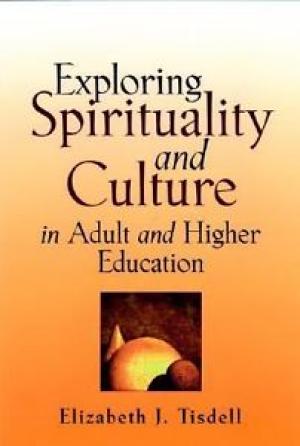
"Exploring Spirituality and Culture in Adult and Higher Education is written from the unique perspective of teacher, researcher, and author Elizabeth Tisdell, who has extensive experience dealing with culture, gender, and educational equity issues in secular adult and higher education classrooms, and formerly in pastoral and religious education settings on college campuses. This book discusses how spiritual development is informed by culture and how this knowledge is relevant to teaching and learning. For educators, an understanding of how spirituality is informed by culture, and how spirituality assists in meaning-making, can aid in their efforts to help their students' educational experiences become more transformative and culturally relevant." Throughout this book, Elizabeth Tisdell shows higher and adult educators how they can draw on both psychological and sociocultural aspects of spirituality to facilitate ongoing knowledge construction in their students - and themselves. For example, educators and students can use classroom activities that incorporate image, symbol, music, and art forms that focus on both the commonalities and differences of human experience. (From the Publisher)
"Leaders of the American Catholic community want to and need to reach out to young adults. But effective ministry to young adults depends on an understanding of the attitudes and the needs of the current generation of Catholics in their 20s and 30s. This is why Dean Hoge, William Dinges, Mary Johnson, and Juan Gonzales began their study of young adult Catholics. How do they actually live their Catholicism? Are they alienated from the church? Are they cynical about the church's moral teachings? Do they take the pope's statements seriously? Do they attend Mass? Have significant numbers left for other churches? Do they want Catholic education for their children?" Seeking answers to these and other questions, the authors conducted a national survey in 1997, supplemented by a telephone survey and then by personal interviews with over 800 men and women across the country. The interviews put a human face on the information provided, and they form a compelling part of this timely narrative. Of special interest is the focus on Latino Catholics. The authors underscore observations that include the strength and tenacity of Catholic identity in spite of many challenges, the high level of personal decision making among those interviewed and surveyed, and the readiness of young Catholics for institutional reforms. (From the Publisher)

Journal Issue.
Wabash Center Staff Contact
Sarah Farmer, Ph.D.
Associate Director
Wabash Center
farmers@wabash.edu