Resources
Teaching and Improvisation Virtual Symposium Using Creativity Pedagogy Leadership Victor L. Wooten, Five Time Grammy Award Winning Bass Player Author of The Music Lesson: A Spiritual Search for Growth Through Music Description Teaching in these times of the unforeseen and the unforeseeable necessitates the skills and abilities of making use of the context, feeling the moment, knowing how to make use of whatever is at-hand. There is, perhaps, no better time than this unpredicted moment of COVID 19, Black Lives Matter national activities, economic downturn, and higher education upheaval than to be part of a cohort of teachers, artists, and creative people discussing the necessity of improvisation. What would it mean to incorporate improvisation as a pedagogical and spiritual practice into your teaching and learning life? Who better to assist with honing creativity, spontaneity, and rhythm than five-time Grammy award winning bass guitar player Victor Wooten? We will be reading Victor’s book The Music Lesson as well as his soon to be released second title: Spirit of Music. We will learn from Victor know-how about ways of freeing one’s self from a script and letting go to the power of the Spirit in any moment, and most especially, in the teaching moment. This cohort is convened by invitation only. Goals Through the use of creativity pedagogy, the overarching goal of the symposium will be to engage in sustained reflection with a musician known for improvisational skills to get a deeper sense of the teaching life in terms of imagination, performance, artistry, and creativity. We will do this through: Reflecting mindfully on the teacher as improvisor Opening-up our imaginations in conversation about the art, task, burden and joy of teaching Hearing one another’s stories and considering the formation and deformation of teachers who struggle to be and become creative Exploring the ways musicians participate as band members, band leaders, composers and creative engineers and making parallels with the teaching life Exploring the embodied wisdom and know-how affiliated with the work and world of jazz and the accompanying skills, crafts, and knowledges of that world Exploring the significance of a “life as a student of creativity,” and the necessary relationships for a deep spirituality when attempting to sustain a vocational life in the institutional settings of higher education Dates and Times Cohort will convene via Zoom with Victor Wooten on the following Wednesdays, 3:00 to 5:00 PM Eastern Time: Wednesday, October 7, 3:00 to 5:00 PM Eastern Wednesday, November 4, 3:00 to 5:00 Eastern Wednesday, December 2, 3:00 to 5:00 Eastern Wednesday, January 6, 3:00 to 5:00 Eastern Wednesday, February 3, 3:00 to 5:00 Eastern Wednesday, March 3, 3:00 to 5:00 Eastern Wednesday, April 21, 3:00 to 5:00 Eastern Wednesday, May 19, 3:00 to 5:00 Eastern Participants Esther E. Acolatse,University of Toronto Wonhee Anne Joh, Garrett-Evangelical Theological Seminary Tim Lake*, Wabash College/The Wabash Center for Teaching and Learning in Theology and Religion Boyung Lee, Iliff School of Theology Tat-siong Benny Liew, College of the Holy Cross AnneMarie Mingo, Pennsylvania State University Paul O. Myhre*, The Wabash Center for Teaching and Learning in Theology and Religion Nathan Myrick, Mercer University - Macon Stephen G. Ray, Chicago Theological Seminary Leopoldo A. Sánchez, Concordia Seminary (MO) Mitzi J. Smith, Columbia Theological Seminary Marcell Silva Steuernagel, Perkins School of Theology, SMU Lisa L. Thompson, Vanderbilt University, The Divinity School Katherine Turpin, Iliff School of Theology Ralph Basui Watkins, Columbia Theological Seminary Nancy Lynne Westfield*, The Wabash Center for Teaching and Learning in Theology and Religion *Symposium staff Important Links Payment of Participants Policy on Full Participation Our Philosophy of Workshops Travel and Accommodations Travel Reimbursement Form Questions about the Symposium? Dr. Paul O. Myhre Senior Associate Director myhrep@wabash.edu. https://www.youtube.com/watch?v=GONEnFyj73w Social Media Facebook Twitter Instagram YouTube Flicker Lilly Endowment, Inc. Other Lilly Supported Initiatives
I have a confession to make. When everything moved online in the spring I detested everyone in every Zoom class and work meeting in which I participated. Okay, I didn’t quite detest my students and colleagues, but there was great resentment there. I hated working from home. Always have. My home is sacred space—a sanctuary from the difficulties of the world. A place to rest and play. But now all these people were invading my sacred space. I felt like I had turned my home into my classroom/office, and I wanted my home back. All the work-from-home experts talk about having designated areas and divisions. I tried to do that for myself and thought that students would do it for themselves as well. Then I had to design a week-long concentrated class that would meet synchronously on Zoom, and the idea that we would pretend that we were in a classroom separate from our home felt a bit silly for a class running from 8:30 a.m. to 5:00 p.m. every day for a week. And while there is something to having a designated work space, my home office is still in my home. So instead of ignoring the fact that we were all in class at home, I incorporated the home. I started by asking myself two questions: What does it mean to invite a class into your home? In what ways is holistic learning enhanced when each person is in their individual sacred space? I now approach all Zoom classes as an additional way to teach to the whole person and now incorporate the home throughout the course. I begin by asking about the space they have welcomed me into. Many people spend time on their Zoom space as they normally would on their home space when guests are coming over. At the beginning of the class, I ask them to introduce us to their space, whether it be a virtual background or the corner of their home they have prepared for us to see. Backgrounds can also be used as a visual representation of a concept. For my adolescent spirituality class, I encouraged students to use virtual backgrounds of a place that represents spiritual significance. Most students removed the virtual backgrounds after presenting them, but then spoke about their kitchen in the background, which led to a conversation about eating as a spiritual practice. When discussing the china cabinet behind one student and how the china was passed down from various family members, a conversation began about the spiritual practice of connecting with ancestors—a powerful spiritual practice for many cultures. In my Administrative Leadership class we each choose a background that makes us feel like a leader. If students choose to keep their cameras off, they can pick a picture for us to see instead. These exercises allow us to explore a concept through visual representation. This is often done in physical classes through pictures. Why not do this in Zoom classrooms with backgrounds and homes? An educator can also incorporate their students’ homes by asking class participants to find something in their home that represents a particular concept or theory being discussed in class. Certainly, not everybody has the same things accessible to them in their homes and the goal is not to show off what one has, but since any understood concept can be explained by just about any symbol, students can deepen their understanding by articulating a concept using a symbol and learn the complexities of a concept or theory by hearing their classmates do the same. I also design activities that can be done with other people in students’ homes. This is a little trickier because of the variety of living situations; I certainly do not want to pry. So, I acknowledge the diversity and simply note assignments which students can do with other people if they so choose. Once I embraced the process, the opportunities to incorporate the home seem endless. The fact is, we are not divided beings. I always work from home even if that means coming up with an idea in the shower or discussing over dinner that interesting thing a student said. I am not a divided person, and neither are my students. Teaching to the whole person means incorporating the space where the teaching occurs. Teaching and learning are sacred wherever they occur, and the learning space is so much richer, fuller, and wonderfully complex when it is the space that individuals have spent lots of time designing, cultivating, and nurturing. I am truly grateful for the invitation.
In what forms does racism show itself in faculty cultures? What does it take to identify the performance of racism before it happens and while it happens? What can be done to combat the visible and invisible practices of racism in a faculty? The conversation with Dr. Melanie Harris and Dr. Jennifer Harvey will be hosted by Dr. Nancy Lynne Westfield.
Becoming a learner once a seasoned scholar is a task fraught with discomfort, identity challenges, and the gaining of new confidences. Dan Ulrich (Bethany Theological Seminary) reflects upon a shared project with womanist colleague Mitzi Smith (Columbia Theological Seminary) where they explored issues of intercultural knowledges and unlearning white supremacy.
Throughout the spring and summer, from my porch, and in the comfort of my rocking chair, I had noticed bats feeding on insects under the street light. Then, on Sunday night, a bat came into my house. Sitting up in bed, reading on my iPad, I was enjoying an uneventful evening. Silently, a bat flew into my bedroom. I felt it enter before I saw it. I looked up from the iPad screen in time to see long flapping wings fly through, into the adjoining room, and out of sight. Startled and immediately panicked, my shrieks, calling on “JESUS!” “Jesus…. JESUS!!!” was what broke the silence. My fever pitched, full-throated summons for “JESUS!” continued as I jumped from the bed, ran to door the bat had just flown through and slammed it shut. Still shrieking, I realized there were two other doors in my bedroom which, to keep the bat from circling through again, must be closed. I ran from door to door, slamming each door and commanding Jesus to save me. By day break, I had barely slept. My heart was still racing. I could not get myself out of panic. I got dressed and waited for 7:00 AM – when Campus Services opened. Promptly at 7:00AM I emailed Campus Services. It was a distress email – “Please come now! Bat in house! Hurry!” At 7:10AM my doorbell rang. I ran down the stairs – fully expecting to be devoured by the silence shattering bat. A campus facilities colleague, donning a face mask and holding a fishing net, entered my house. The bat wrangler looked at me and asked, “Are you okay?” Meeting his gaze, I answered in a tone of defeat, “No.” I showed John upstairs to the scene of the incident. As we walked, he talked to me about the habits of bats. As he talked, I decided his net was not big enough to capture the intruder. John said from my description, the bat in my house was a Brown Big – Eptesicus fuscus – a protected bat in the state of Indiana. They eat insects and only attack when threatened. John’s information did not comfort me. After the inspection, John lingered in the kitchen chatting with me and waiting to see if the bat might move around again. Before leaving, he gave me his cell phone number so I could direct dial. The rest of the day I was skittish. I heard noises that were not there and saw bats in previously familiar shadows. I creeped around my own house and dreaded nightfall. I considered going to a hotel, but talked myself out of it. The next day, campus facilities personnel returned with a professional bat remediator. The inspection began in the bedroom and carefully scoured the first and second floors, then both men went into the attic. They found evidence of bat activity in my attic, but no roosting. They said that was good news. I was unconvinced. They scheduled a time to return to repair possible places where bats might be entering the house and to clean up the evidence of bat activity. The purpose of my bat report is not necessarily about the bat. I am mostly reflecting upon my reaction to the bat. Before the bat flew into my bedroom, I would have told you that I would not have panicked. I would have said that I would have likely been startled, but I would not have thought that I would have shrieked and run around the room like a character in a cheap horror movie. I have lived in the city, on dairy farms, and in suburbs. I am accustomed to critters, inside and outside. What had happened? Why was I so …. raw…. so… not myself …. so emotionally fragile? A few days before the bat invasion (okay one bat might not be an invasion) the news broke that Chadwick Boseman had died. When I heard the news, I sat on my couch and wept as if a beloved family member had passed over. What is happening? Why am I so …. emotionally spent? As a clergy person, I know to be a non-anxious presence, especially in times of crisis, loss, and emergency. I have experience sitting with families in emergency rooms, courthouses, and funeral homes to console and reassure. Even with my years of experience, nothing has prepared me for months of quarantine, months of re-organizing our programming, months of loss, uncertainty, grief, and anticipated terror – with no end in sight. My bat report is that I know first-hand that the cumulative stressors of 2020 can take a toll on body, mind and spirit. My sheer panic is evidence of the personal toll. We are exhausted. We have protest fatigue. We do not ask IF another Black person will be publicly killed by the police. We ask WHEN will another Black person be publicly executed by the police. Adding to the worry, the public protests organized by Black Lives Matter become more violent as unwelcomed agitators incite incidences of vandalism and cause significant harm. The presidential election season strains of acute disagreement, mud-slinging, and deep-seated ire. We dread election day, regardless of its outcome, for its promise of increased violence and national confusion. The death toll of COVID 19 signals the number of families grieving – we are nearing 200,000 grieving families in the United States and a million more grieving families around the world. Schools are trying to figure out how to keep students, faculties and administrators safe by taking calculated health risks for which they have little medical guidance. The surreal decision-making processes feel like roulette wheels and crap games in Las Vegas. We all know persons who have been furloughed, are unemployed, and continue to be underinsured. Parents are home schooling, working from home, and trying to keep family together – all at the same time. Person’s who live alone are in seclusion and loneliness. The exhaustion is palpable. For those of us who pay attention as the malaise of dis-ease, flagrant white supremacy, and uncouth violence rages on in daily life, a price is exacted from our bodies, minds, and spirits. How will our extorted souls find relief? When the bat flew into my bedroom, I freaked. Unbeknownst to me, I had reached my own psychic limit; I could not take one more thing and the bat was one more thing. When I no longer felt safe in my own house, I became terrified. The year 2020 has us all living on the verge of some kind of madness. I applaud colleagues who routinely work with mental health needs. I suspect the mental health experts know what I learned, again and some more, over the last couple of days. A foil for stress, anxiety, loss, fear, and terror is kindness. When I freaked-out about the bat in my house, my colleagues, friends, and family were steadfast and caring. The facilities colleagues who immediately came to my house were kind to me. No one told me that my fears were unfounded or that I should not have reached out for help. The bat remediation man was considerate as I reenacted the bat flying into my bedroom genuinely trying to convey my terror, but undoubtedly looking ridiculous. No one laughed at me or my fear. When I told family and friends about my panic, and chided myself for “over-reacting” – no one followed that line of conversation. Their kindness to me was to tell me that I get to respond to a bat in my house anyway I need to respond. A beloved neighbor said that if it happens again, to please text him – no matter the time of night or day. His concern for me made me tear-up. In 2020, gestures of kindness are not to be taken for granted. African American women are accustomed to being treated as invisible. Our distresses are typically ignored, belittled, or erased. Or, we are told we are strong and we can handle anything/everything – even our own terror. We are, by the metrics and actions of white supremacy and patriarchy, invisible or superhuman. Both are narratives meant for dehumanization and violence. Even so, here is my bat report. In a world where Black bodies do not matter, and the distresses of Black women are oftentimes ignored, when my colleagues and friends rallied to help me, I was healed, at least a little bit. Their attentive responses and care were life giving and life affirming. In my fear, kindness made all the difference. As we wade into our classrooms and into the fall semester, let us take the power of kindness with us. Let us engage our students with care and genuine concern, as best as we can. Remember, they might have recently had their own version of a bat in their house. Our classrooms are not separate from, or immune from, the loss, grief and panic which permeates our daily lives. Attempts at compartmentalization works against kindness, care, and a holistic understanding of why we come together to learn. During the multiple pandemics of 2020, we cannot pretend that classroom sessions (even on-line) are outside of this current, unrehearsed reality. If in our own panic, we cannot model calm for our students, let us not try to pretend. Know that the pretense and charade of normalcy will not form, but will de-form students. If/when you realize your strength and determination has wavered, do not be afraid to ask for care, help, and kindness. For easy access, several bat nets have been are placed around my house. I think I have gathered myself enough so that next time I will not freak-out. But if I do, I will not harshly judge myself as inadequate or lacking. I will call Jesus!, neighbors, and colleagues for help.
The multiple pandemics have caused a rethinking of community, connection, the sacredness of the body, and what it means to depend upon creation. Teaching cannot ignore the politics of relationship between one another, the planet and God. Teaching is justice work. Dr. Nancy Lynne Westfield hosts Dr. Cheryl Kirk-Duggan (Shaw University).

In Luke 1:20, an angel named Gabriel informs the priest Zechariah that he will remain mute during his wife Elizabeth’s pregnancy. Zechariah’s mistake was to doubt Gabriel’s announcement that they would have a child despite decades of infertility. Perhaps Gabriel made a mistake by reacting harshly to a question any reasonable human would have asked, but I have come to understand the priest’s silence as a prescription more than a punishment. I imagine a muted Zechariah growing spiritually and relationally as he listened more to Elizabeth, to their relative Mary, and to the Spirit who would guide and empower their son. I found myself identifying with Zechariah while participating as a learner in Dr. Mitzi J. Smith’s excellent course on African American Interpretation and the Gospel of Luke.[i] When we discussed my role prior to the course, Mitzi made it clear that I must not speak or write in ways that undermined her authority as the instructor. At her request I did not post any messages in the preliminary discussion forums in Moodle. One exception that Mitzi approved was a message explaining my relative silence and encouraging openness to womanist hermeneutics.[ii] When we transitioned to intensive sessions in Zoom, Mitzi sometimes asked my opinion, and she included me in breakout discussion groups. Even so, I remained one of the quietest learners in the class. Although I identified with Zechariah’s temporary silence, his privilege offers a more enduring analogy. My privilege has included a history of talking in class. My parents valued education highly and had resources to help me succeed, including my mother’s training and experience in early childhood education. With their encouragement, I became a precocious talker, quick to get teachers’ attention and give answers they wanted. Not all of my classmates were so advantaged. In How to Be an Antiracist, Ibram X. Kendi describes the anger he felt at biased teaching in third grade. A white teacher regularly ignored raised non-white hands while engaging with favored white children.[iii] The flip side of similar biases enhanced my education in many respects, but there were drawbacks. I missed out on what others would have said if I had not taken so much “air time,” and my relationships were often better with adults than with peers. I was oblivious to the injustice. The skills and habits I learned as a child helped me compete for attention, grades, honors, and scholarships all the way through a PhD program. An MDiv program that emphasized collaboration taught me to dial back competition and seek the good of a whole class, but I still talked a lot. I continue to do so as a seminary professor. Extensive research has documented the impact of implicit bias on students’ achievement at all levels of education.[iv] There seem to be fewer studies focused on the impact of implicit bias on students’ perceptions of minoritized and women professors,[v] but I am learning from Mitzi and other colleagues that it is a serious problem. For many (but not all) students, my race and gender lend me added authority, whereas the same students may discount the authority of professors who are not white or male. For Mitzi these biases are headwinds that impede her teaching. Patriarchal biblical texts and interpretations have long supported to the silencing of women, and Luke-Acts has contributed to that injustice because most female characters model traditional silent roles. Mary’s prophetic hymn in Luke 1:67-79 is an important exception, but the overall impression remains. In relation to that tradition, Mitzi’s strong leadership and my relative silence constituted a small dose of justice. Most prescriptions come with warning labels, and so should silence. When privileged people remain comfortably silent in the face of oppression, we perpetuate injustice by refusing to add our voices and energies to movements for change. Silence can also be a symptom of passive-aggressive relationships, where resentments fester without being addressed in a timely way. Like fasting, silence is only healthy when it is temporary. It is best when chosen, not imposed, and when rooted in trust, not fear. In academic settings, silent students might be hiding a failure to prepare, or they might be afraid that voicing their thoughts will lead to negative judgments. My own motives for silence were mixed. I was willing to comply with Mitzi’s wishes and eager to hear what others had to say during each of the challenging and engaging sessions. I was also anxious not to fit the stereotype of a well-intentioned but clueless white guy. I abhor racism and sexism, but I also recognize that I am not entirely free from them. I did not want to say “the wrong thing.” Dr. Marcia Riggs has wisely suggested that intentional, interpersonal work on race and gender would have been valuable earlier in our collaboration.[vi] The course was not an appropriate space in which to do that work, but I hope to do more in the future. I also hope that my experience of “stereotype threat” will deepen my empathy and strengthen my planning for students who may be silent due to fear.[vii] Discernment of when to speak and when to remain silent is an essential skill for theological educators and for everyone who seeks justice. Zechariah’s silence prepares him to prophesy like Mary, and I hope to benefit from the same prescription. Notes [i] For more information about the course and the related Wabash Center grant project, search for previous posts by Drs. Mitzi J. Smith and Daniel W. Ulrich, beginning with “Learning Womanist Hermeneutics during Covid-19” at https://www.wabashcenter.wabash.edu/2020/07/learning-womanist-hermeneutics-during-covid-19/. [ii] Thanks to Mary Hess for suggesting this step. [iii] Ibram X. Kendi, How to Be an Antiracist (New York: One World, 2019), 44-55. [iv] See, for example, the studies summarized in Rachel E. Godsil et al., The Science of Equality, Volume 1: Addressing Implicit Bias, Racial Anxiety, and Stereotype Threat in Education and Health Care (Perception Institute, 2014), accessed August 28, 2020, http://perception.org/wp-content/uploads/2014/11/Science-of-Equality.pdf. [v] On the impact of race, see Bettye P. Smith, “Student Ratings of Teaching Effectiveness: An Analysis of End-of-Course Faculty Evaluations,” College Student Journal 41, no. 4 (December 1, 2007): 788–800. On age and gender see Alison F. Doubleday and Lisa M. J. Lee, “Dissecting the Voice: Health Professions Students’ Perceptions of Instructor Age and Gender in an Online Environment and the Impact on Evaluations for Faculty,” Anatomical Sciences Education 9 (2016): 537–44. [vi] Marcia Y. Riggs, “To Teach Collaboratively or Not?” [vii] “Stereotype threat” is fear of acting in ways that confirm a stereotype of a group to which one belongs. For research demonstrating its negative impact on learning, including in discussions of race, see Godsil, The Science of Equality, 31-33.
The first time that I taught a graduate-level class where anti-oppression work was a primary component of the learning, I made a major blunder. I structured the class with materials and exercises assuming that students understood that racism, sexism, and other forms of structural injustice based on identity categories and embodiment actually exist and had material, social, and intrapsychic impacts on the people who were most affected by them. At the time we were working on such concepts as how privilege functions in a variety of identity categories, understanding microaggressions, solidarity and co-conspirators, and other vocabulary and practices that would hopefully help students to work towards justice in their circles of influence in religious leadership. So the educational goals were about recognizing and intervening in situations where inequity and injustice are practiced in institutions, policies, and interpersonal interactions.We were a few weeks into the term before a brave student articulated what it turned out several other students were also thinking: namely, that racism and sexism had ended, and we were now in a post-racial age. So why were we spending so much time on what only a few bad people engaged in… on individual character flaws related to racism/homophobia/etc.? They personally were not racist (sexist, classist, or ableist). They were good people committed to social justice! But a significant number of the students in my classroom were convinced that meritocracy allowed hard work and good character to overcome any remaining barriers that might exist. Other students were familiar with how structural inequality worked in relation to their own targeted identity categories, but were less familiar with how this worked intersectionally or with other embodied experiences.Now, my hope is that in the more than a decade that has passed since this particular situation occurred, public protests and the increased access to perspectives beyond the mainstream have increased general awareness of ongoing racism and other forms of structural injustice. Certainly those with eyes to see and ears to hear should have had many examples in the day-to-day news of the last decade, where terms like misogynist and white fragility have begun to appear on major outlets such as National Public Radio, The Daily Show with Trevor Noah, and so on. Unfortunately, cultural polarization, the segregation of listening and reading practices, and the ways that online logarithms build echo chambers of like thinking means that some of our students have not been exposed to these kinds of conversations. Other networks and media outlets work to debunk the ideas of social inequality and define social justice not as a theological commitment but as a solely political term related to left-wing politics. Because of this, I still find that many students, particularly those raised in fairly homogenous white middle-class Christian communities and neighborhoods, have little nuanced awareness of the depth of structural inequality that is built into histories of policy, institutional legacies, economic pathways, educational access, and representation in media and leadership positions, and how these many arenas work together to ensure that this inequality replicates itself across generations.As a teacher in that moment, I quickly learned that simply asserting that structural inequality is a reality was not effective in challenging the common sense understandings of meritocracy and equality that students had heard all of their lives in their families, schools, churches, and other formative communities. Over the years, the many instructors of this first year class have developed a number of strategies to show, not tell, that structural inequality is very real and to help make connections across experiences where it manifests itself. Unfortunately, there is no quick solution to unlearning these “common sense” understandings, and learning the full interlocking force of inequality through a variety of contributing factors takes practice and careful attention over time for all of us, particularly when our identities do not force us to navigate those structures with attention.Here are some teaching resources that have been helpful in opening these conversations:Peggy McIntosh’s introductory piece “White Privilege: Unpacking The Invisible Knapsack,” provides useful directness in its listicle format of naming everyday indications of white privilege, although it tends to focus on individual experiences, albeit as they are embedded in social realities. This brief video about wealth inequality in the United States has initiated helpful conversations about our perceptions versus the realities of economic equity. https://www.youtube.com/watch?v=QPKKQnijnsM&feature=youtu.beThe video series Race: The Power of an Illusion by California Newsreel is particularly helpful in tracing complex relationships between FHA policy, redlining, urban development policy, and generational wealth difference, as well as exploring the history of defining race in Supreme Court decisions related to immigration and property ownership. https://www.racepowerofanillusion.org/Creating together a giant whiteboard-sized chart documenting historical events, legal changes/Supreme Court decisions, and strategies in the movement for full equality for LGBTQ+ persons. Looking decade by decade from the 1940s to the 2020s at interpersonal, institutional/communal, ideological/representational, and legal/policy changes over time (generally drawing on a range of websites that document the history of LGBTQ+ rights in the US), students begin to discern the depth of inequality built into these various levels of life for persons who are not heteronormative or living within gender binaries.
The first time that I taught a graduate-level class where anti-oppression work was a primary component of the learning, I made a major blunder. I structured the class with materials and exercises assuming that students understood that racism, sexism, and other forms of structural injustice based on identity categories and embodiment actually exist and had material, social, and intrapsychic impacts on the people who were most affected by them. At the time we were working on such concepts as how privilege functions in a variety of identity categories, understanding microaggressions, solidarity and co-conspirators, and other vocabulary and practices that would hopefully help students to work towards justice in their circles of influence in religious leadership. So the educational goals were about recognizing and intervening in situations where inequity and injustice are practiced in institutions, policies, and interpersonal interactions. We were a few weeks into the term before a brave student articulated what it turned out several other students were also thinking: namely, that racism and sexism had ended, and we were now in a post-racial age. So why were we spending so much time on what only a few bad people engaged in… on individual character flaws related to racism/homophobia/etc.? They personally were not racist (sexist, classist, or ableist). They were good people committed to social justice! But a significant number of the students in my classroom were convinced that meritocracy allowed hard work and good character to overcome any remaining barriers that might exist. Other students were familiar with how structural inequality worked in relation to their own targeted identity categories, but were less familiar with how this worked intersectionally or with other embodied experiences. Now, my hope is that in the more than a decade that has passed since this particular situation occurred, public protests and the increased access to perspectives beyond the mainstream have increased general awareness of ongoing racism and other forms of structural injustice. Certainly those with eyes to see and ears to hear should have had many examples in the day-to-day news of the last decade, where terms like misogynist and white fragility have begun to appear on major outlets such as National Public Radio, The Daily Show with Trevor Noah, and so on. Unfortunately, cultural polarization, the segregation of listening and reading practices, and the ways that online logarithms build echo chambers of like thinking means that some of our students have not been exposed to these kinds of conversations. Other networks and media outlets work to debunk the ideas of social inequality and define social justice not as a theological commitment but as a solely political term related to left-wing politics. Because of this, I still find that many students, particularly those raised in fairly homogenous white middle-class Christian communities and neighborhoods, have little nuanced awareness of the depth of structural inequality that is built into histories of policy, institutional legacies, economic pathways, educational access, and representation in media and leadership positions, and how these many arenas work together to ensure that this inequality replicates itself across generations. As a teacher in that moment, I quickly learned that simply asserting that structural inequality is a reality was not effective in challenging the common sense understandings of meritocracy and equality that students had heard all of their lives in their families, schools, churches, and other formative communities. Over the years, the many instructors of this first year class have developed a number of strategies to show, not tell, that structural inequality is very real and to help make connections across experiences where it manifests itself. Unfortunately, there is no quick solution to unlearning these “common sense” understandings, and learning the full interlocking force of inequality through a variety of contributing factors takes practice and careful attention over time for all of us, particularly when our identities do not force us to navigate those structures with attention. Here are some teaching resources that have been helpful in opening these conversations: Peggy McIntosh’s introductory piece “White Privilege: Unpacking The Invisible Knapsack,” provides useful directness in its listicle format of naming everyday indications of white privilege, although it tends to focus on individual experiences, albeit as they are embedded in social realities. This brief video about wealth inequality in the United States has initiated helpful conversations about our perceptions versus the realities of economic equity. https://www.youtube.com/watch?v=QPKKQnijnsM&feature=youtu.be The video series Race: The Power of an Illusion by California Newsreel is particularly helpful in tracing complex relationships between FHA policy, redlining, urban development policy, and generational wealth difference, as well as exploring the history of defining race in Supreme Court decisions related to immigration and property ownership. https://www.racepowerofanillusion.org/ Creating together a giant whiteboard-sized chart documenting historical events, legal changes/Supreme Court decisions, and strategies in the movement for full equality for LGBTQ+ persons. Looking decade by decade from the 1940s to the 2020s at interpersonal, institutional/communal, ideological/representational, and legal/policy changes over time (generally drawing on a range of websites that document the history of LGBTQ+ rights in the US), students begin to discern the depth of inequality built into these various levels of life for persons who are not heteronormative or living within gender binaries.
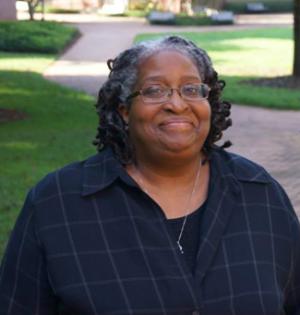
Throughout my twenty-five plus years of teaching I have most often declined opportunities to “team teach” (the terminology used in my institution) in the historically and predominantly white seminary I have spent the longest part of my teaching career. Why? Two primary reasons. First, I was the only full-time African American professor for a very long time. I had students questioning my qualifications because I was Black and female, so why would I place myself in a position to be judged worthy or not by students because my content and method differed radically from that of my white colleague? Second, I did not want to be patronized by a white colleague either defending my “right” to teach or “correcting” my position as That Womanist liberation ethicist. Some readers are perhaps wondering why I didn’t give my students and colleagues the benefit of the doubt? Well, I have spent most of my educational life as a student and teacher in historically white institutions. I have repeatedly been on the receiving end of well-meaning but white racially-biased surveillance and censoring by white students, professors, and faculty colleagues. Yes, I think that genuine mutual respect has developed now between me and my current colleagues. Still, implicit bias and racist socialization runs deep in ways with which my white colleagues are not yet ready to grapple. Thus, when Professor Mitzi Smith and Professor Dan Ulrich invited me to join them as a consultant (along with Dr. Mary Hess) for their project, “The Challenges of Effective Pedagogy of a Trans-Contextual Online Collaboration for an African American/Womanist Hermeneutics Course during COVID-19,” I was intrigued. The words “trans-contextual online collaboration” drew me to say yes. Given my reluctance to team teach in my context, I was impressed by my new colleague’s (Dr. Smith) willingness to teach with a white male colleague from another seminary while living into the learning curve for many of us in adapting to online teaching in response to the pandemic. Several questions came immediately to the forefront for me: Are Drs. Smith and Ulrich doing any pre-course race-gender-class work with each other? Or are they simply going to work through the inevitable race-gender-class tensions as they arise while the course is taught? How is “trans-contextual” to be understood? Is it an exchange across geographical borders and institutional boundaries and/or crossing dynamics of power between the two professors, between the professors and the students, between the different institutional norms for teaching and learning? This pedagogical decision of the course was ambitious: having an African American Womanist biblical scholar and teacher “out front,” while a white male biblical scholar was “a learning/teaching professor.” As a consultant, I worked hard to contribute helpful insights about the tensions that the two professors shared with us. Asking clarifying questions was my first way of engaging this. As both professors’ blogs revealed, they did honestly grapple with each other. My further questions were about whether students understood the roles and did not attempt to “force” a more familiar pattern of engaging the white male professor. After our last consultation, I remain convinced that it is necessary for professors to do race-gender-class work prior to and throughout trans-contextual or team teaching. In other words, teaching empathetically and justly with a colleague across race, gender, and class lines requires intentional dialogue to make explicit the race-gender-class assumptions of the teachers involved. This work must be as much a part of course preparation as learning the subject matter of the course from the perspectives and methodologies of each other. Most importantly, teaching collaboratively or team teaching adds a level of preparation and ongoing dialogue; reflecting with an African American woman and a white woman as consultants was a definite step in the right direction. COVID-19 necessitated teaching this course about homelessness online, and this created a barrier to direct engagement with persons who are homeless and with practitioners who work in solidarity with these persons. Professor Smith used pedagogical methods and reading assignments that created space for developing empathetic sensibilities for persons who are experiencing homelessness, rather than considering homelessness as solely a social justice issue. Likewise, she taught Womanist and African American biblical hermeneutical skills for teaching and preaching that can impact the lives of homeless persons through ministerial practice and can influence public policy. Lesson: Improvisation catalyzes online pedagogies, pandemic or not. To teach collaboratively, or not? I just might give it a chance, under the right conditions.
Wabash Center Staff Contact
Sarah Farmer, Ph.D.
Associate Director
Wabash Center
farmers@wabash.edu