Resources
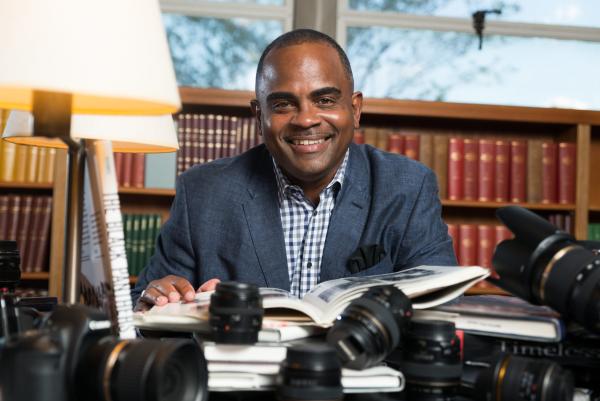
When I got my PhD in 1997 and began my teaching career we were just being introduced to PowerPoint. I like many others remember those days which have long since gone. Over my career we have moved from the use of PowerPoint to teaching in classrooms where students have laptops, tablets and phones. Students are engaging life through the screen. What does it mean to teach in an age where our students are being shaped by what they have in their hands? How do we focus our teaching in light of our student’s reality of living in an age where they are learning via moving and still images? How does our teaching align with how they see the world via Instagram, YouTube, TikTok and Facebook? We live in a world where, “…three hundred hours of YouTube video are uploaded every minute. Six billion hours of video are watched every month on the site, one hour for every person on earth. The 18–34 age group watches more YouTube than cable television. (And remember that YouTube was only created in 2005.)[1] “Every two minutes, Americans alone take more photographs than were made in the entire nineteenth century.”[2] We have become a world of image makers and these images have become our primary way to engage the world, learn about the world and our students are visual learners and much of our teaching is literate and oral. I propose that we embrace the visual world and learn as our students learn so that we can become more effective pedagogues. In his book How to See the World, Nicholas Mirzoeff articulates aspects of the contemporary visual age and provides insights about the history of visual media since 1930: As early as 1930, an estimated 1 billion photographs were being taken every year worldwide. Fifty years later, it was about 25 billion a year, still taken on film. By 2012, we were taking 380 billion photographs a year, nearly all digital. One trillion photographs were taken in 2014. There were some 3.5 trillion photographs in existence in 2011, so the global photography archive increased by some 25 percent or so in 2014. In that same year, 2011, there were 1 trillion visits to YouTube. Like it or not, the emerging global society is visual. All these photographs and videos are our way of trying to see the world. We feel compelled to make images of it and share them with others as a key part of our effort to understand the changing world around us and our place within it.[3] So, what does this mean for me and what does it mean for us? For me it has meant a complete shift in how I teach. I have moved from thinking first about lecture, words, reading and content to thinking visually. How will I engage the eyes of my students so that I can touch the mind of my students? How can I help them see what we are thinking about in this course as it lives in the world as an image that expands their imagination? Imagining the image expands the imagination of students who live in a world of images. The image becomes the lens by which my students enter this world on a daily basis therefore I start with them in my viewfinder. I see them as they see the world and because this is their starting point it is my starting point. I am teaching with them in sight, I see them looking at their phones, I see what they see and as they see so that I can teach in the visual language that they understand. My students sleep with their phones beside their beds and before they brush their teeth in the morning, they pick up their phones and start their day looking at images. I want my courses and my content to be on their home-screens. This is the world in which we live, this is the age in which we are called to teach. I had to change how I see my teaching so that my students could see what I am trying to get them to engage. This has been a major shift for me. It called me to go back go to school to learn how to see so that I could become an effective teacher in the visual age. I talk about my shift and embrace of the world in which we live in the short video that accompanies this Blog. In this video we are celebrating my installation in an endowed chair. The video speaks to the shift I have made, and I invite you to consider. What does it look like to teach in the visual age (pun intended)? Teaching in the Visual Age: Dr. Ralph Basui Watkins from Ralph Watkins on Vimeo. [1] Mirzoeff, Nicholas. How to See the World (4). Basic Books. Kindle Edition. [2] Mirzoeff, Nicholas. How to See the World (4). Basic Books. Kindle Edition. [3] Mirzoeff, Nicholas. How to See the World (4-5). Basic Books. Kindle Edition. *Original Blog published on December 11, 2019

In a previous post on this blog, I reflected on a common misperception among students preparing for ordained ministry and other leadership roles in Christian community: that studying theology in a formal sense is not of obvious utility in pursuing and exercising one’s larger vocation. I offered several reasons why that might be the case. And I described an assignment I had developed and used for the first time as a result of participating in the Wabash Center’s Teaching with Digital Media workshop. This project entailed making and sharing memes on theological themes and then reflecting on what was learned through that exercise. The goal was to give them a concrete experience of selecting specific theological concepts to communicate to a specific audience in order to elicit specific formational outcomes. The assignment required students to do small-scale, but active, public theologizing and employ techniques of metacognition to help them perceive more clearly the need for solid theological grounding as part of their formation and, by extension, for the formation they will be responsible for in others. For this semester, I created an assignment that amplified that intention by requiring them to offer a bit of formal theological instruction in a more direct and standard mode, but still in a digital form. The prompt for the assignment was this: Imagine that you are the rector of a program-sized parish. In substantive conversation with at least five readings assigned [in the previous unit], create a 5–7 minute presentation to teach your clergy staff about how one’s eschatological imagination can be a resource when engaging those of other faiths or of no faith. Create a TED-style talk, a narrated PowerPoint, a VoiceThread, or a video of another kind that your staff can view on their own time. It must include video, sound other than just your voice, and still images. Think carefully about what it is you want them to know and tailor the use of the technology to ensure that it is communicated to them clearly. Focus on the theology at the heart of your teaching. Ground your theology in the sources and be sure you let your hearers know when ideas are not your own, especially if you quote anyone’s writing. Students were given a deadline by which these presentations needed to be complete. I then posted them as separate threads in a Moodle forum open to the class. There was then a second deadline by which each student was “required to have watched all of the presentations and to have made substantive comments of a theological and/or pedagogical nature on at least three of them.” Finally, there was a third and final deadline by which students were “required to have replied thoughtfully to all comments made” on their work. I then viewed all the presentations and read through the discussions, and I assessed the projects based on a previously provided rubric of seven criteria, each with four levels: above standards, meets standards, near standards, and below standards. The seven criteria (with the maximum number of points earnable for each indicated in parentheses) were: use of sources (30), original and critical thinking (15), structure of presentation (15), pedagogy, meaning the clarity and achievement of the presenter’s learning outcomes (10), required elements (10), comments on peers’ presentations (10), and responses to peers’ comments (10). Interestingly, students were less intimidated by this assignment than by the meme assignment. Presumably, this has to do with the medium: all students have experienced an instructional presentation online, but not all are familiar with the syntax and culture of meme-making. During the Wabash workshop, we were encouraged to assign multimedia projects of this kind with very short time durations. Nearly universally, however, students bemoaned not having enough time to communicate all they wanted to say, wishing they had been able to provide more nuance in their presentations. I was surprised, but gratified, by this. Next year, I will increase the time limit, but I will also warn them that more time means a greater temptation to wander too far from the central idea the presentation is meant to communicate and that they must diligently maintain that focus throughout. The extent to which most students readily grasped the importance of providing ongoing theological formation for their clergy staff was highly gratifying. They attended to that task with rich creativity, substantive theology, and an inviting personal presence. As teachers-to-be, I think it was useful for them to see themselves and their colleagues in this role. Students were eager to discuss pedagogy in the forum, but a little less forthcoming about their specific theological choices. As the one evaluating and providing feedback on their approaches to the theological formation of others, I would like to know more about that and I will ask for more detail about that in the future. Overall, the use of digital media in connection with this assignment appears to have ignited the imaginations of the students to think about doing theological formation in the milieu they are most likely to do this in their careers: the parish. Education in formal theology in the seminary is meant to equip students for bringing the riches of the theological heritage and discipline to bear in the work of ministry. This assignment seems to have contributed well to that outcome.

It was just a few years ago when one of my graduate students lost her mother to a sudden unexpected illness. Despite the abrupt passing, three days later that student returned to class. Like any other day, she opened her laptop and took notes while listening to my lecture. Confounded by her composure, I talked to this student later and let her know that she could take extra time with any course-related work, and that I was giving her authorization to be absent and spend time with family. Yet she did not want to. She told me that being in class made her feel like everything was normal, as if her life was intact and unchanged. As a teacher, and of course, a former student, I empathized with her predicament. For many, school offers more than an education, but a place of community, sanctuary, sustenance, and security. In a matter of weeks, Covid-19 has radically altered how students are educated around the world. These transformations give us a glimpse of how our education system can and will change—for better and for worse. The pandemic has put students and educators in difficult circumstances, ranging from mere inconvenience to a total loss of one’s livelihood. It has also prompted new models of educational innovation that may have a lasting influence on the direction of learning and applications on the Internet. For myself, and nearly all the other faculty I know, we have been consistently relying on Zoom, a video platform, for online teaching, meetings, and teleconferencing. As the majority of educational faculty have shifted to online teaching, many of us have encountered the issues that come with it. First, we experience the unreliability of video conferencing as Zoom was not prepared for this heavy global usage. It has had to adapt quickly to the exponential surge in traffic. Second, we cannot ignore the difficulty of teaching online verses being in a physical classroom. Third, is the question of adequate means of evaluations for students and for students evaluating the professors. As a professor teaching online, I have had my share of difficulties and frustrations. The connection on my laptop has been faulty as I teach via Zoom, so I have resorted to using my phone data to teach rather than Wi-Fi. With the limited screen, I can only view two or three student’s faces at a time which isn’t the best way to stay engaged while teaching. During class, most students are on mute to cancel out distracting background noise, therefore, I sometimes feel like I am talking to a blank void because of the silence. I cannot imagine how difficult it must be for students to concentrate with the plethora of distractions both online and environmentally. In addition, it takes time for them to ask questions or participate in class discussions as they pause to unmute themselves. Furthermore, when the Wi-Fi is slow, some don’t have their videos on; it is even harder to teach looking at “blank” faces. Spontaneity is an important part of learning. Something a professor or a student shares may lead to further and deeper discussions which may not have been planned. This is often difficult to create in front of a laptop where the students are muted and sometimes their videos aren’t running. Teaching is about being present, engaging, dialogue, eye contact, body language, listening, and communion, and these cannot be simulated in front of laptop or cell phone. Videoconferencing ends up fostering instructor-centric learning, rather than multiway interaction which is ultimately collapsed into a one-way communication after a certain number of people join the conference. Looking through the materials gathered by instructional tech groups and learning centers, I see that the resources focus almost entirely on the operational “hows” of technology: recording lectures, making discussions, and examinations. However, it is not adequate to continue the learning-teaching venture. Past the digital connection, is the emotional one, particularly in times of uncertainty and rising anxiety. Of course, I do not question the shift to online or closed campuses, rather I think about how during periods of fear and anxiety, we must ensure students are not only learning effectively, but also are taking care of their mental health. We professors can provide solace, enrichment, and balance during a mentally and emotionally draining epidemic. Not only do I do my best to ensure that my classes are as positive and entertaining as they can be, but I also bring to attention that I am always available for support. I try to humanize myself and remind myself that so many students have left behind more than academics and classrooms. Above all, it is important for professors to ask our students what we can do to help them. In times of uncertainty, we can do our best to create space where students’ ideas and individual voices bring light to one another, as they do for us. While there is a surplus of uncertainties during this time, what we can be sure of is that Covid-19 has become the catalyst for educational institutions to explore new solutions in a short period of time. The question of student evaluations, therefore, needs to be seriously reexamined. With students under higher stress levels, educational institutions need to rethink how students are graded. With campus shut-downs, many libraries are closed and digital books and journals are limited. In the context of major world panic, economic alarm and growing illness, our students should be given leeway not just academically, but financially. Presently, we are seeing students and solution providers welcome the “learn anytime, anywhere” concept of online education. we have been reminded that the way of the future is through a range of mediums. Conventional in-person learning will be accompanied by novel education modalities, from live broadcasting, to virtual reality, to educational influencers akin to social influencers. We are finding that learning can be a practice integrated into daily routines, becoming a true ‘lifestyle.’ The rapid spread of Covid-19 has forced us to challenge ourselves and build resilience from incalculable threats, challenges, and insecurities. We must use this pandemic as an opportunity to remind ourselves that the skills we must impart to students in an unpredictable world include sophisticated decision making, creative problem-solving, and most importantly, adaptability. We do this to build resilience in them, and the future we help them create.
[su_youtube_advanced url="https://www.youtube.com/watch?v=B1v1Z7Yj0OU&feature=youtu.be"] Teaching is an inherently creative act. We have been taught to teach as we were taught. I was taught by classic lecturers. If it wasn't the lecture it was the socratic method, seminar method or students present and lets see who can do the best. When I started teaching I taught like I was taught. I have come to discard the old ways of teaching and allow myself and my students the freedom to explore and create an experience that is saturated with the creative spirit of the times in which we live. In this Vlog I ask what creative rhythms do you have in your life that inspire creativity in your teaching? I share my creative rhythms and I invite you to celebrate yours and realize how they inform the creativity in your teaching.
The previous blog in this series focused on “long shot” (“big picture”) editing, specifically, revision tasks related to changing scenes and cutting. This final blog in the series zooms in to “medium-shot” and “close-up” editing. I realize that not all preachers have time to focus on revisions every week. While I cannot offer extra time, I can offer recommendations from filmmakers to preachers who have only 30 or 45 minutes to revise their sermon prior to Sunday morning. Medium-Shot Revisions Choose one major move/section of the sermon and focus on setting the scene with vivid language that sparks a variety of senses. The preacher does this by first visualizing the scene and providing a “thick description.” Filmmakers can be helpful guides since they make hundreds of choices in order to provide scenes that create the desired impact on the viewers. Looking carefully at their craft can hone the preacher’s skills for description. Try this exercise: Choose a scene from a favorite film. Press pause and write your responses to the following questions. Where is the scene? How do you know? What objects appear in the scene? What details give you clues about the characters in the scene? What is the major color scheme in the scene? What mood does it create? What do you think happened just prior to this scene and what is likely to happen after? What in the scene involves your hearing? your sense of smell? Now go back to the major move in the sermon and describe your scene using the same prompts. This process helps you visualize the scene so that you can describe it in a way that helps your hearers visualize it . . . without a screen. Writer Janet Burroway summarizes this well: “The first requisite of effective setting is to know it fully, to experience it mentally; and the second is to create it through significant detail.”[1] One caveat: refrain from getting carried away with details that don’t actually advance the main trajectory of the sermon. In other words, not everything from the exercise will appear in the sermon. Keep only those descriptors that move you to the next section. Close-Up Revisions We now zoom in on individual phrases and words. The art of choosing just the right word is not lost on the preacher. In fact, sometimes we agonize over just the right word. I would like to recommend that preachers spend time on the particular phrases that serve as transitions from one major move (section) to the other. Once again, films can assist. Take a segment of the film you engaged above and watch the film until you’ve identified two to three scene changes. Once you’ve done that, take a closer look at the transitions themselves. How does the filmmaker guide us from one scene to the next? Are there hints in the previous scene that we will be moving to a new scene? Or, is the scene change abrupt? If so, why? What effect does an abrupt scene change have on a viewer? Once you’ve engaged the transitions in the film, return to your sermon draft to analyze its transitions using similar questions. The first step is to make sure that there are transitions. Second, identify the roles the transitions play. In his book, The Witness of Preaching, homiletician Tom Long suggests that connectors (his word for transitions) accomplish four communication tasks: provide closure for previous segment indicate how upcoming section is related to previous anticipate the content of the next section helps listeners adopt a stance Finally, be creative and not clichéd. There are common transitions that belong specifically to the genre of sermons, for example, “In today’s gospel reading . . .” You’ve heard it. You’ve said it. But why not be more creative, especially since when you begin to talk about Peter, we know you are referring to the section of scripture that was just read. Instead, if you are transitioning from a contemporary story to something that happened with Jesus and disciples, try this: “We weren’t the first to be in awe of Jesus’ capacity to calm the treacherous seas of life. The disciples saw it first-hand . . .” Again, while I cannot gift preachers extra time, I hope these recommendations, gleaned from the wisdom of filmmakers and their work on the screen, might at least offer some editing possibilities if and when preachers find they have extra moments once they’ve got their “rough cut” on the page. [1] Janet Burroway, Imaginative Writing: The Elements of Craft (147).
When we engage our teaching world online, let me encourage you to start where you are. It is not about the tech, gear and gadgets. It is about vision, imagination and design. In this vlog I show you my setup, my online classroom and how I think about this space. This is not a “how to video” but rather it is a glimpse into my inner world. I want to invite you to dream about your space, your vision for online teaching and how this might look for you. My goal is to inspire you to think deliberately about your presence and vision for your online classroom. [su_vimeo url="https://vimeo.com/403354389" title="My Online Classroom"]
In the first blog of this series (readers are encouraged to read this introductory blog, “Nobody Goes to the Cinema to Read the Screenplay,” HERE), I noted that I’ve tried to boost my multimedia literacy by becoming a student of the cinema and seeking convergences between filmmaking and homiletics. The second blog introduced the importance of audience impact in filmmaking (and especially “impact teams”) as a model for encouraging preachers to find out the impact a sermon actually has had on their hearers’ lives (find Part II HERE). It’s time now to turn to editing, an important step in both filmmaking and preaching. As effortless as it might seem, “a film is a universe where chance is never an excuse for anything . . . it is a series of hundreds of very particular decisions, and every single one of them must be felt. That is the agony and the satisfaction of the process.”[1] The same is true in preaching. (Unfortunately, sometimes the “agony” bit as well.) Instead of chance, we might talk about the Holy Spirit. But even then, it is often said that crafting sermons is “10% inspiration and 90% perspiration.” Part of the 90% is coming up with content, but another part is the arrangement of that content. That’s where editing comes in. Two big picture editing tasks have to do with changing scenes and cutting. Scene changes A lesson in scene changes begins with the script. Look at a film script and you will find that screenwriters indicate a scene change as such: INT. NIXON TEAM OBSERVATION ROOM – DAY – (1977) Soon thereafter might be a similar notation: INT. FROST TEAM OBSERVATION ROOM – DAY – (1977) Every time the scene changes (even simply from the interior of a room indicated as “INT” to the exterior indicated as “EXT” or, in this case, from one interior observation room to another), the screenwriter makes such a notation. In the homiletics classroom, it is instructive to have the screenplay in hand while watching the scene to become more observant of these changes. When the editor has done a successful job, we hardly even notice such changes when immersed in the film. While preachers want hearers to have this experience, it will not be a seamless one if, in the crafting process, preachers are not aware of the scene changes and the sense-making they serve. Therefore, literally inserting scene directions like these in our sermon scripts (as a reminder, I call them scripts) is one step (and not a very time consuming one) in the revision process. This helps us see if scenes are changing too often or not enough, or if they are in the right order. So, for example, one might see the following in a sermon script. EXT. SEA OF GALILEE – DAY – (30 C.E.) After a move highlighting the disciples strengthened relationship with Jesus, the preacher might remind her congregation about a recent congregational gathering organized for the purpose of strengthening their relationship with Jesus. The preacher would add the following to the script: INT. FIRST LUTHERAN FELLOWSHIP HALL – DAY – (2019) It often comes as a surprise to preachers to see how many times they flip back and forth between the 1st c. and the 21st c. in only one paragraph of writing. The result creates a kind of “homiletical jet lag” for the hearer and, therefore, needs to be edited. If preachers do keep the back-and-forth nature between centuries, transitional phrases become very important as “establishing shots.” Unlike the filmmaker, the preacher typically does not have a visual to suggest such a change. The visual must be created with words. A common (if not somewhat cliché) transition is, “just like the disciple, we . . .” At least this serves to move the hearer from the 1st c. to the present. Cutting Pardon the violent imagery, but “Kill Your Darlings” is the phrase used to exhort creatives to get rid of one’s pet (some say “self-indulgent”) scenes in order to serve “the greater good of the work.” In the same way that filmmakers know that movie-goers will not sit for a 4-hour film (nor will their budgets allow for it), preachers know the time expectations of their parishioners. A one-hour worship service likely requires a sermon that is no longer than 15 minutes. So, using best practices from filmmaking, teachers can teach the following steps to student preachers. First, return to the importance of impact; in preaching, this is called the sermon’s function. Make sure each move of the sermon advances that hoped-for impact and cut everything that does not. While that opening joke might get a laugh, if it does not guide people to a deeper relationship with Jesus, cut it. Second, rethink too much exposition of background story. Think: less is more. The film editor discovers it may not be necessary to run through a montage that begins with the moment of the protagonist’s birth, followed up with a wide shot of a current house before getting to the argument with one’s kids in the living room. Staying close on the body language during the living room dialogue, with an occasional shot of the photographs on the mantel, will give us the idea that there is a backstory. The same is true in preaching. The preacher need not reiterate the entire story that was just read a few minutes earlier. After offering an “establishing shot” followed by a transitional phrase, zoom in to the action of the scene of the living room. Let the hearers fill in the surroundings after you’ve given them what they need in order to do so. Now, I suspect many preachers hardly have enough time just to come up with something to say Sunday after Sunday, much less spend time in the “editing room.” As a teacher of preaching, I tell students that while I cannot give them time, I can teach steps for revising if and when they have even small bits of time. If nothing else, I encourage them to watch more films with an eye toward editing and impact, and perhaps some tools will serve their homiletical practices. [1] Jon Boorstin, Making Movies Work: Thinking Like a Filmmaker (Los Angeles, Silman-James Press), 6.

Amy Oden offers this Christian mindfulness practice for faculty and students who may need to pause occasionally during this time of disruption and anxiety in order to be more fully present. The practice draws on attentive breathing and embodiment from traditions of Christian spiritual practice. In this audio file, Oden walks through the 4 steps of 1) attentive breathing, 2) attentive embodiment, 3) acknowledgement and 4) discovery as outlined in her book, Right Here, Right Now: The Practice of Christian Mindfulness (Abingdon Press, 2017). 4 Steps To Christian Mindfulness Audio File Dr. Oden is also featured as a guest in the Wabash Center's Dialogue On Teaching Podcast. Episode 10 - A Teacher’s Imagination during the Crisis: Conversation with Amy Oden
[caption id="" align="aligncenter" width="562"] Egypt https://www.flickr.com/photos/ralphwatkins47/43570551171/in/album-72157669384150857/[/caption] What is the promise of documentaries for teaching and changing the world? Is the documentary the new pedagogical model for everyday classrooms? Is the professor of tomorrow not a lecturer or one who uses the Socratic method, forums, discussion boards, and blogs, but rather are they documentarians? Is the professor of the “now “ one who makes their own documentaries as content for their classes? Is this the game changer? Nick Fraser, in his book Say What Happened: A Story of Documentaries says, “. . . docs have morphed into contemporary essays, becoming a form whereby we get to experience highly provisional stabs at reality, but, far more than fictions, which are usually finished and fixed in their own reality, they are transformed by it. . . . . The best docs celebrate a sense of the accidental. And they matter. Like unknowable bits of the universe, they come into existence when a collision occurs.”[1] Fraser argues in his book that documentaries matter, they change the way we see and engage the world. Documentaries educate us, transform us, and challenge us. Fraser argues that the documentary is the new long form essay, it is what people are watching as they read. We are no longer a culture that is rooted solely in the literate and oral tradition, but a new tradition has emerged and it is the documentary as reliable scholarly source. If Fraser is right, and I believe he is, then how does this new reality expand our opportunities to teach in ways that are truly transformative and liberating? In my Evangelism and Social Justice course I assigned Michelle Alexander’s book The New Jim Crow: Mass Incarceration in the Age of Colorblindness along with Ava DuVernay’s, Oscar nominated documentary, 13th: From Slavery to Criminal with One Amendment and to my surprise this pairing was a game changers.[2] The students got it because they read, they saw, they felt it, and our conversation was transformative. The students were able to weave the two forms of scholarship together. In this class, we were wrestling with the fact that God calls God’s church to spread the gospel and that gospel is one of justice. God is on the side of the oppressed and God calls us to set the captives free. God calls us to see injustice, call it out and address it by correcting it. We spread the gospel by being the gospel. My students got it. One of my students said to me, “I finally get what Black theology is all about. I get it and I have to do something. Thank you so much for assigning the documentary. I see it now.” When she said, “I see it now!” this was eye opening for me (pun intended). It was the wedding of these two, the written word and the visual demonstration of that word, that help my students see. My students are used to watching Netflix, all of my students had a subscription or access to someone’s subscription and this viewing came natural to them. They live in the visual world and I have found that documentaries, like books, are a part of their scholarly diet. Why not feed this appetite? Do documentaries really make a difference? Can they change the way we see the world and then make us act on behalf of justice? Let me cite one case as example of just how powerful documentaries can be. The Fall 2019 edition of The ARTnews reported, “Agnes Gund believes in giving her art away, with donations of hundreds of works from her collection to the Museum of Modern Art spanning decades and others to the many institutions she has supported. But the 81-year-old philanthropist thought she could achieve more by selling a treasured painting after seeing 13th (Ava DuVernay’s,13th: From Slavery to Criminal with One Amendment). Feeling a call to action, Gund choose to sell her favorite holding . . . for $165 million to billionaire investor Steve Cohen, after refusing his overtures for years. She then used $100 million of the proceeds from the sale in 2017 to launch the Art for Justice Fund, a partnership with the Ford Foundation and Rockefeller Philanthropy Advisors currently working against the scourge of mass incarceration through concrete and poetic means.”[3] Agnes Gund’s worldview was changed by engaging the work of Ava DuVernay. Gund saw and she acted! Can we get our students to see and act? Can we employ the use of documentaries in our classes in similar ways we have employed readings in the pass? Can we make our own documentaries and have them replace our lectures? What does it take to make your own documentary? All it takes is a camera, editing software, and our no-permissions-asking selves to just go and do it. In my African Roots of Black Theology class, I created a two-part documentary to start the class. The students engage my asking the question in the context that gave rise to the question. It is a new and more visceral way for them to engage in a new form of contextual visual education. My students got to travel with me as I traveled through Egypt. I used the daily vlog as way to tell the story, share my questions, pondering and musings. The students go with me to where my story begins and it begins in Africa. I also created photo albums for all major stops along my journey so that students could pause and admire the still images in conversation with the moving images. I offer these examples as a testimony of my first attempts and I look forward to seeing yours as we ask what are the now / next in pedagogical practices? Sample Documentaries: Vlog Style [su_vimeo url="https://vimeo.com/355109032" title="Part #1: Out of Egypt"] Part #1: Out of Egypt I’ve Called My Son: A Son’s Journey Black to Africa (https://vimeo.com/355109032) [su_vimeo url="https://vimeo.com/355118012" title="Part #2: Out of Egypt Final Cut"] Part #2: Out of Egypt Final Cut ) Portraits of Egypt https://www.flickr.com/photos/ralphwatkins47/albums/72157669384150857 Giza Pyramids https://www.flickr.com/photos/ralphwatkins47/albums/72157693534362690 Sakkara, Step, Red & Bent Pyramid https://www.flickr.com/photos/ralphwatkins47/albums/72157697707740291 The Cairo Museum https://www.flickr.com/photos/ralphwatkins47/albums/72157696165977282 The Temple of Aset https://www.flickr.com/photos/ralphwatkins47/albums/72157698917086034 Edfu and Komombo https://www.flickr.com/photos/ralphwatkins47/albums/72157699345621995 Luxor https://www.flickr.com/photos/ralphwatkins47/albums/72157669383738737 Karnak https://www.flickr.com/photos/ralphwatkins47/albums/72157698915679014 East Bank Temples https://www.flickr.com/photos/ralphwatkins47/albums/72157671458282618 Denderah https://www.flickr.com/photos/ralphwatkins47/albums/72157696165292492 Abu Simbel https://www.flickr.com/photos/ralphwatkins47/albums/72157697695476081 References [1] Fraser, Nick. Say What Happened: A Story of Documentaries. Faber & Faber; London, 2019. p. 28. [2] Alexander, Michelle. The New Jim Crow: Mass Incarceration in the Age of Colorblindness. The New Press; NY, 2012. DuVernay, Ava. 13th: From Slavery to Criminal with One Amendment. Netflix; 2016. [3]Sheets, Hilarie M.. “Justice League: How Agnes Gund’s $165 Million sale of a beloved painting helped get others to join the fight against mass incarceration.” In The ARTnews Fall 2019 VOL. 118, NO. 3, p. 75-76.

As a professor, I am caught in the midst of a revolutionary period in education and technology. Education has had a slow building relationship with technology and has even had a love-hate relationship with the use of social media, despite its impenetrable growing prevalence in our lives. For younger generations, social media has gone from phenomenon to cultural norm, and the debate regarding whether or not to integrate social media into the classroom becomes more relevant. Social media is a pandora’s box of opportune connection, knowledge and dangerous pitfall. Though you can live without it, living with it in the digital age puts you among the same pace with the rest of the world. It holds everything that the modern world relies on for information, culture, entertainment and social activity. Aside from the obvious risks of using social media, like distractions and negative digital spaces, I have always been a vocal advocate for using social media in the classroom. As classrooms are going more digital and even more online courses are being taught, I believe that social media becoming a necessary tool to enhance student engagement, teaching methodology and learning development. I can share social media news that is relevant to the class materials or have students find relevant materials from social media which are pertinent to the content of the class. This can be done intentionally in the classroom, but unintentionally, it occurs rather frequently. This is due to the fact that students are already on social media and are sharing, following and seeking information which may help them in their studies. Social media is used by students for their assignments, for support, and for information. Since the students are already on social media, at times it is important to meet them where they are. We only have to look briefly at the major paradigm shift in education as a whole. Social media and technology have become the primary tool for personal education in the past decade, yet when you examine the educational and academic landscape, the archetypical classroom setting with a student listening to the teacher’s lecture has not changed all that much. The conventional antics in education are as always, a far step behind. Students now are gravitating towards learning digitally, where the preference to engage in information and material at an autonomous pace and in a self-directed manner becomes a greater expectation. Younger generations have grown up learning in such a manner, and its elevated efficiency leads me to believe that it’s not the students that need to adapt to educators, but rather the educators that need to adapt to them. Students today can and should expect to learn anywhere they are any time they want; they should be able to have the option to have a diverse learning source, not just the formal teacher and peer, but the global environment of classrooms filled with other teachers and peers. This fosters the opportunity for energetic co-learning and co-creation, inciting more dissemination of information for a democratic audience in a digital space. This is one of the greatest values of social media: its openness and interactiveness. It breaks down the walls between student and educator, allowing for all to be both simultaneously. We cannot slow down the consumption of information online, nor can we slow down how it is disrupting the traditions of education. As a result, rather than being the owner of knowledge I feel my responsibility adjusting towards being a facilitator and guider of knowledge. When I post on social media, I feel as though it is a conscious act of preparing my students to understand how to use social media as an educational, positive and professional tool in the modern climate. Information can quickly be disseminated on social media as the classroom goes beyond the walls of a classroom. Furthermore, it allows my students the chance to send me questions, while also keeping them informed and updated on what is occurring in the classroom. This unique avenue generates new forms of engagement that I would not otherwise establish in the typical classroom setting. The future of education will not be limited to physical spaces and classroom doors. Students and non-students alike should be able to learn in relation to updated current technology that allows for learning without bounds. As educators and students, we need to welcome this philosophy and utilize social media for a progressive education and a right step towards the future. You can follow Grace Ji-Sun Kim on Twitter, Facebook, Instagram and LinkedIn.