Resources
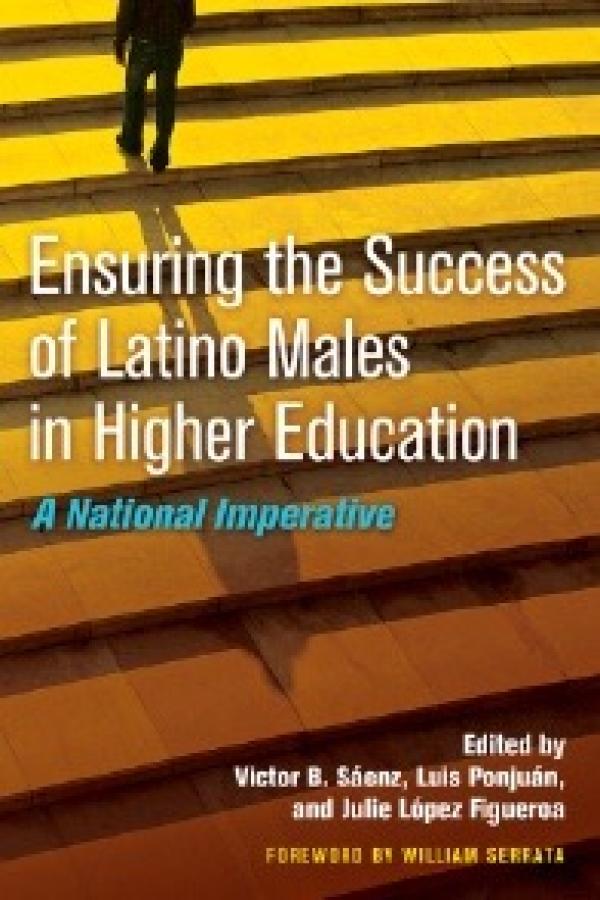
Why do so few Hispanic males enroll in and graduate from institutions of higher learning? Why are Latinas, by contrast, enjoying so much more success than Latinos? Moreover, why is there a dearth of research addressing these questions? This book, which includes twelve chapters written by leading Latin@ scholars, addresses these questions with the goal of broadening readers’ contextual understanding, deepening their comprehension of the specific challenges faced by Hispanic males in higher education, and securing their commitment to Latino success. The book’s contributors adroitly explore the complex challenges that Latino males face in the context of American society and higher education. The book’s first two chapters discuss many of the socio-economic factors contributing to the current Latino “crisis” in higher education. They carefully examine the Hispanic gender gap and the ways in which it is manifested along the educational pipeline, alternate life pathways for Latino males (such as military, low-paying labor, prison), and factors that frequently hinder Latinos from enrolling in college (such as lack of financial aid literacy and inadequate academic preparation). Multiple chapters investigate key cultural factors that significantly impact Latino experiences in higher education. Chapters Four, Five, and Eleven, for example, focus on Latino identity and intersectionality, probing complicated issues (for example, relationships between caballerismo, Latino persistence, and high attrition rates) and introducing humanizing nuances (such as the Latino male privilege paradox). Chapters Two, Seven, Eight, and Nine pose critical questions about the role that familismo plays in hindering and promoting Latino academic success. Those chapters also address other relevant topics such as the unique features of Mexican sub-culture and various forms of Latin@ cultural wealth. The final section of the book calls on academics to more thoroughly research the crisis pertaining to Latinos in higher education. Chapter Ten describes research on college administrators’ levels of awareness about the challenges faced by Latinos in academia. Their findings, namely that administrators’ awareness not only varied widely, but also that some administrators resisted acknowledging problem areas altogether, underscore the urgent need for more research. Chapter Eleven suggests that studies which compare and contrast the experiences of Latinos and Latinas might yield much fruit, while the authors of Chapter Twelve advocate for a strengths-based, data rich, interdisciplinary approach to research on Latinos, an approach which is successfully modelled throughout the book. In conclusion, educational leaders and researchers are sure to find this book – and especially the new research that it presents – a valuable and generative resource. The book’s contributors helpfully shift the research focus from Latino students’ resiliency and deficits to exploration of the social and cultural factors that shape their educational experiences. While the authors do not offer many substantive recommendations for educational programming and practice or directly address issues pertaining to Latinos in graduate education, they do make a strong case for “ensuring that the success of Latino males in higher education” becomes a national imperative. After reading the book, one also hopes that educators will wholeheartedly embrace Latino success as a moral imperative.
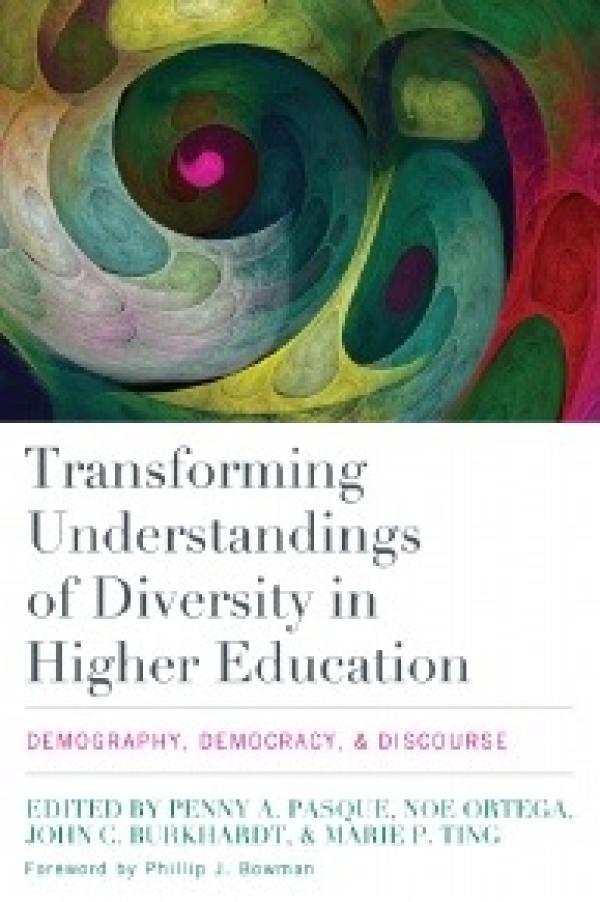
The National Center for Institutional Diversity at the University of Michigan invited contributors to this volume to share work that “pushes the edge of [the] latest conceptualizations of diversity” (xiv). Scholars of education, sociology, organizational leadership, policy studies, communication and speech, and social work contribute to the book’s study of “diversity issues in higher education,” offering a range of disciplinary vantage points (xvi). Diversity, the volume argues, is a natural state, not a problem to be eliminated. The book invites readers to consider multiple diversities in order to avoid generalizations that hide the complexities of difference. An introduction and conclusion outline how higher education has approached diversity over the past century (for example, as a variable to be controlled, a goal to be achieved) and point toward avenues of continued research. The book’s subtitle points to the volume’s claim that attention to the details of demography and democracy (“the arrangement of the distribution of power”) is “central to…public and political discourse” (226). Chapters appear in pairs, with the first in each set written by accomplished scholars who have “entered their professional careers after the twentieth-century framings of race, ethnicity, gender, class, sexual orientation, nationality, and ability have lost their authority” (223). These primary chapters address: diversity at historically black colleges and universities; college access for low-income students; inclusion of LGBTQ students; pathways to college for Latin@ students; the experience of space on campuses for students of color; disability; media influences; and Black male student athletes, African American female faculty at community colleges, and the mandate rhetoric of historically black colleges and universities. Reflections by graduate students form the accompanying chapters and develop from interviews with each author. These secondary chapters highlight each author’s “research and career trajectory” and attend to topics including social agency and the power of resistance, the value of uncertainty and the need for nuance, visibility, the value of alternate vantage points, racial battle fatigue, and safe spaces (13). Together, the paired chapters provide engaging research and unique insight into scholarly agendas and motivations. Religion appears in a handful of unexpected places in the volume. Biblical notions of the diversity of creation as a gift provide the editors’ first example of diversity as a productive good, not a problem to be solved (1). Reference to the Black church as a positive influence on educational attainment appears in an interview with one of the book’s contributors and another interview includes note of a Bible verse that summarizes the scholar’s sense that divine help supplements human effort in working toward the creation of safe spaces (119, 204). A primary chapter investigating religious diversity in higher education would have enriched the volume. Though undergraduate classrooms and campuses are the main focus of the book, for those who teach in graduate programs (whether secular or religiously-affiliated) the volume offers insight about the prior educational landscapes that shape students who pursue advanced study. In addition, the text draws attention to the complexity of diversity alongside the need for students to understand potentially negative implications and for instructors, researchers, and institutions to recognize blind spots.
I was scheduled to write a blog post on teaching about controversial issues and how they are shaping contemporary Muslim identities in North America. Guessing, however, that many readers may be fatigued from the barrage of unfavorable events – from the U.S. travel ban on citizens of seven Muslim-majority countries to a horrible attack on a mosque in Quebec – I have decided to dedicate this particular blog to one of my favorite pedagogical tools for inspiring hope as well as a lasting sense of personal connection to the subject matter: the telling of a story. Storytelling is one of the oldest techniques that human beings have used to teach one another. From pre-Islamic times to the present day, all Muslim societies have been shaped by orality in the form of tales, fables, myths, legends, and narratives. As I have emphasized to my students, there are many purposes for storytelling: for spiritual and moral guidance; for creating a sense of the supernatural, the metaphysical, and the existential; for inspiring learning, wonder, and adventure; for critiquing self and society; and for reinforcing historical narratives, in ways that can create positive social identity as well as stereotypes, prejudices, and even a basis for ongoing conflict. Whether I am teaching an introductory course on Islam or a graduate course on Sufi expressions of Islam, some of my greatest moments in class are when I share with students a story of my living experience of traveling to particular places in the Muslim world. For this blog I would like to share a story from a visit to Egypt more than a decade ago, as a window into diverse aspects of Arab and Middle Eastern culture (I also sometimes share this story when lecturing on traditional Islamic cities). While my particular story will differ from the stories other instructors will use in their own teaching, I hope that the manner in which I communicate different realities and experiences will prompt others to harvest their own distinctive experiences, and consider which aspects of those experiences might be richest in content for students – particularly those whose ideas about Muslim-majority and Middle Eastern societies are abstract and largely gleaned from news and popular culture. In 2003, I had the honor of planning and coordinating a conference at the Library of Alexandria in Egypt. After the conference was over I lingered in Egypt for a number of days, and on my last day I wanted to go shopping for books on Sufism in Cairo. (I would share with my students that Cairo and Damascus have long been two of the greatest cities in the Middle East for finding and buying books on Sufism.) A list of books in hand, my husband and I went from one bookstore to another and then another until we finally encountered, at the very back of one store, a beautiful elderly man who wrote and then recited the following sentence on a piece paper: “You must find Abdul Rahman at 5:00 pm in Azbakeya.” Inspired by this new lead, we set out to find Azbakeya but no one knew where it was. Finally, after much searching, we found it – an area in Cairo where there were booksellers of every kind, clustered in row upon row of small metal shacks. Somewhat daunted about where to start, we began to ask where we might find Abdul Rahman. As so often happens in the Middle East, many people were willing to stop, listen, and try to help, leading us from one person to the next but still no Abdul Rahman. Eventually, though, we did find Abdul Rahman and promptly showed him the list. How long, he asked, would we be in Cairo? “We leave tonight,” we informed him. Hearing this, he physically closed his shack for the day and said, “Follow me.” Surprised by this turn of events and uncertain about exactly where we were going, my husband and I then started to follow Abdul Rahman through the busy streets of Cairo, swerving this way and that. The sunset prayer had just begun and people were bustling about – some going home, some praying on the street, and others on their way to whatever events they had planned for the evening. Abdul Rahman then did a strange thing. He climbed into the front passenger seat of a taxi cab and beckoned us to get into the back of it. Still unsure of our destination, we complied with his request and felt good about this new, unforeseen but promising development. As a professor once told us, “Surrender to the grace of the moment.” As we made our way down paved but dusty streets, we started to realize that our cab was approaching “the City of the Dead” (I would share with my students how this is an area known to be both one of the largest cemeteries in the Middle East and also a place where the poorest of Cairo’s poor find spaces to live.) Abdul Rahman was taking us to his home. The cab dropped us off in front of a modest mausoleum building, and Abdul Rahman yelled up to the second floor where his beautiful daughter, perhaps 8 or 9 years old, was holding a baby. She peeked out, ran down to the front gate, opened it, and handed the baby to her father. We then entered the building and followed Abdul Rahman to his living quarters, where there were books on all four walls, and books in boxes as well as on top of boxes and tables. We could not imagine fitting more books into one space. Abdul Rahman then handed the baby to my husband before proceeding to search his stacks, and I thought to myself, “This is the first time I have seen my husband hold a baby and it was in the City of the Dead!” Knowing his collection well, Abdul Rahman moved efficiently from one stack to another and brought forth a stack of books on Sufism. Some, he pointed out, were hundreds of years old – for instance, an early edition of Ibn al-‘Arabi’s Futuhat al-Makkiyyah. Even though we did not want to bargain – no easy task for us in any event, made somewhat more awkward by the circumstances – we then had to haggle for the books. (I would share with my students the social significance of haggling and the art to a good haggler!) Soon, after a few purchases and some small talk about baby names (Abdul Rahman cited a hadith of the Prophet to explain his own preference for boys’ names starting with Abdul [meaning servant of a particular divine quality] and etymological variations on Muhammad [which translates literally as “praising and praiseworthy”]), it was time for us to leave. We had to get back to our hotel, check out, and then leave for the airport to catch our flight. Abdul Rahman went outside and hailed a taxi for us in the City of the Dead. While conversing with our young cab driver, we discovered that he was a Nubian, with roots in Egypt’s culturally distinctive south. Upon hearing that we had come from the United States, he smiled and, with a thumbs-up signal, articulated a single word with much drama: “Schwarzenegger!” We immediately grasped his meaning, though this was our first news of the matter: Arnold Schwarzenegger had won the election, becoming governor of California. Unable to resonate with his obvious excitement, we felt what might be described as the beginning stage of reverse culture shock. My husband and I looked at each other, and could read the same meaning in each others’ faces: “We are going back to that.” In an attempt to change the subject, we tried to steer the conversation to Egypt and Egyptians – so much hospitality, and so many amazing things to see. Our driver was happy to hear of our positive experience, and appeared to enjoy the exchange. Then about five minutes before arriving at the hotel our driver pulled over to the side of the road, and turned to us with a hand signal that every visitor to the country must learn within the first day or two: “Please wait just a minute.” He then hopped out of the car and left us in it! Once again we consulted intuition but things felt good and we “surrendered to the grace of the moment.” A few minutes later, our driver popped out of a small roadside shop, slid into the driver’s seat, and turned to present us with a single rose in each hand. He looked at us with light in his eyes and said, “Welcome to Egypt!” Many of my students over the years have told me that this is one of the stories they remember. Like other stories, it beckons them to encounter the Muslim world with openness, wonder and awe rather than fear, perplexity, or prejudgment. With this story, I invite my students to enjoy the process of entering into the same sense of discovery experienced by a traveler abroad on some new journey, never quite knowing what to do or what to expect, but open to common humanity, curious about cultural nuance, and eager for the inevitable experience of surprise.
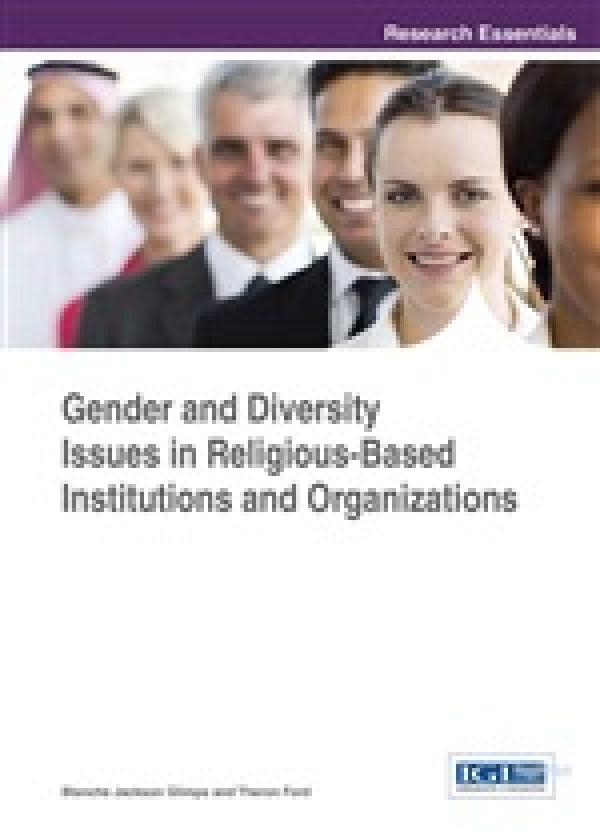
Gender and Diversity Issues in Religious-Based Institutions and Organizations offers a chilling reminder that much remains to be done to educate people on race, gender, and diversity. Blanche Jackson Glimps and Theron Ford craft a goldmine filled with breathtaking essays insisting that schools, institutions, and organizations cannot afford a wait-and-see attitude hoping that these issues will somehow work themselves out. They argue that education to inspire intentional acts to diversify is quintessential. This is accomplished in thirteen chapters written with a national and international scope by concerned experts who agree that although progress is being made in the areas of gender, race, and diversity, many people still feel alienated. For this, the authors marshall copiously documented arguments that expose relational problems in many religious schools, institutions, and organizations around the world. A dense annotation of each chapter is implemented with meticulous summaries and abstracts to offer a clear layout of the entire book. Readers are graciously guided to address a timely need while also given actionable solutions to these nagging issues and further recommendations on helpful publications to consult. In the end, what Glimps and Ford offer is a timely well-written encyclopedic work not just for socially and religiously engaged teachers and leaders but for any caring person willing to make a difference in human relationships for many years to come. As an African scholar teaching in the United States, I am particularly struck by Sheri Young’s “Psychological Essentialism” (80-123). Aspects of her argument permeate the entire book in many ways. She explores how religious institutions handle diversity matters and wonders if “there is a benefit to being ‘essentialized’ versus ‘essentializing’ others?” (84). In other words, do religious and social institutions have a good grasp on how to diversify their spaces? Case studies suggest that this is hardly the case. To essentialize self or someone else, she avers, has little if no benefit at all. To deal with psychological essentialism, religious and social institutions must own up to their stated mission goals because most of them “have an institutional mission statement that includes a goal to develop individuals who stand with, and serve, their fellow human beings” and “hold a view of education that includes promoting education that does justice, as faith does justice.” Exercising this noble mission by avoiding the biases that transform religiosity into wars about hierarchy and superiority, while upholding messages of faith, hope, and equality, religious institutions are better prepared to create positive changes to develop positive campus climates than religious institutions that are held in place by waging outdated superiority wars. (114) In many ways, the contributors to this volume testify to the fact that ours is anything but a postracial or gender sensitive world, even in religious circles. Racial and gender objectification is a daily experience for many people around the globe. A resilient hope runs through the book that well-meaning religious educators and leaders inspired by their mission statements will strive to reclaim their confessed commitments and goals to do the right thing by exercising genuine gender diversity, justice, and equality. This book is long overdue and should be read, studied, and its content applied in every institution, school, and social organization worthy of its socioreligious commitment to the betterment of human interrelationships for a foreseeable and lasting future.
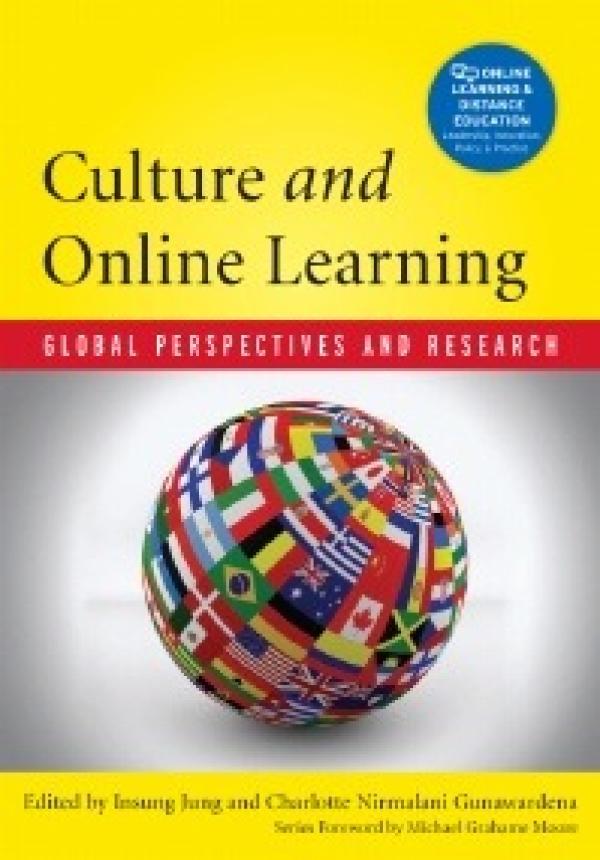
This helpful collection of seventeen essays addresses two important concerns within religious and theological studies: culture and online learning. Scholars of religion are giving increasing consideration to culture. (A search of Amazon for books on “religion and culture” yielded a hundred pages of “hits.” The first four books were simply entitled Religion and Culture.) Furthermore, more and more courses in religion and theology are offered online. Surprisingly, little research has been done in culture and online learning, and this book seeks to address this lack. Authors in this collection hail from Europe, North and South America, Asia, and Australia. (Unfortunately, none are from Africa.) The book appears as the third in a series, Online Learning and Distance Education. Editors Jung (from Japan) and Gunawardena (from Sri Lanka, teaching in the U.S.) write solely or collaboratively in eleven of the seven essays. The essays are grouped around eight themes: (1) learners, learning, and learner support, (2) non-native speakers, (3) facilitating learning, mentoring, and professional development, (4) learning design, identity, gender, and technology, (5) visual culture, (6) leadership, (7) quality, and (8) research. Many of the authors wrestle with a definition of culture. In the first essay, “Perspectives on Culture and Online Learning,” the editors write, “Culture impacts every facet of online learning, from course to interface design, to communication in a socio-cultural space, and to the negotiation of meaning and social construction of knowledge; thus a definition of culture that is flexible, dynamic, and negotiable is more appropriate to understand the online learning context” (1). Interesting insights are scattered through this collection. In “Online Identity and Interaction,” Gunawardena notes that students from Sri Lanka and Morocco “look to the online medium as a liberating environment that equalizes status differences” (35). In “Emerging Visual Culture in Online Learning Environments,” Ilju Rha (South Korea) urges online educators to integrate more visuals in their online courses. In “Accounting for Culture in Instructional Design,” Gunawardena, Casey Frechette (US), and Lumila Layne (Venezuela) introduce the Wisdom Communities instructional design model (WisCom), which “was developed to inform the design of collaborative online learning experiences” (57). (For more about WisCom, see https://prezi.com/1unppl6dh2a-/new-model-new-strategiesinstructional-design-for-buildingonline-wisdom-communities/.) In “Transformative Learning through Cultural Exchanges in Online Foreign Language Teaching,” Kerrin Ann Barrett (US) includes tips for instructors, such as “remember to breathe,” and tips for learners, such as “show your creative side in activities (asynchronous and synchronous)” (146). In “International Interpretations of Icons and Images Used in North American Academic Websites,” Eliot Knight (US), Gunawardena, Elena Barberà (Spain), and Cengiz Hakan Aydin (Turkey) write, “Many of the images and icons used in online environments depend on the meanings, concepts, metaphors, objects, and so on that are bound to the particular cultural context in which they were designed” (149). Just as neither religion nor culture is monolithic, neither is online learning. This stimulating collection from around the world will help online teachers to negotiate better the various cultural divides and thus offer our students better online learning experiences.
Patricia Pérez and Miguel Ceja published Higher Education Access and Choice for Latino Students as part of the Routledge Research in Higher Education series. Grounded in sociological studies of Latino students and their educational choices, the book’s essays highlight the multitude of challenges that confront Latino students in trying to successfully complete higher education. The essays are split into three sections. The first is “Home, Elementary, and Secondary Context”, part two is “Political Context and Postsecondary Choice,” and part three is “Model College Access and Transition Programs.” This structure allows the reader to see how a variety of issues contribute to how and why Latinos make specific choices in higher education. The first section focuses on essays that examine cultural and familial context. In “Sixth-Grade Teacher’s Perceptions of the College-Bound Student” the essay’s authors point to how teachers’ perceptions of what constitutes a “college-bound” student and an emphasis on “good behavior” heavily shapes whether a Latino student is deemed to be worthy of being on the college prep track or not. In the essay “Constructing College Choice” the authors examine how Latino Catholic high school students are coached to understand their “worth” in terms of potential scholarship money, and the pitfalls as well as benefits of this approach. In the second section, the essays focus on political issues affecting Latino college choice such as gender norms and expectations in “Latino/a Students’ College Destinations” and the issues that block access for undocumented students in “Rising Voices.” In the third and final section, the focus is on college access and programs that promote it, such as summer bridge programs for Latino students as described in “Supporting the College Transition Process and Early Academic Success” and in “Community Cultural Wealth and The Latino/a College Choice.” There are fourteen essays in the book; only a few are mentioned here to highlight some of the main themes. The essays cover a wide range of issues regarding Latino student college access, and each section builds upon the previous section, starting with home life and ending with bridge programs at college itself. Overall, the essays are fairly technical, based in sociological research, and this may make it hard for some readers outside the discipline to get though them all. Yet they provide a wide-angle lens on a huge variety of issues that face Latino students in trying to even consider going to college, let alone applying to one. This book is clearly geared towards those who work in the academic field of sociology and who are exploring issues around Latino college choice, and as it is expensive, is recommended for library collections. It is an informative book for educators as it gives them a varied and broad view on all the obstacles that Latino students in higher education face and offers ideas as how to overcome those obstacles in order help more Latino students achieve success.
Najeeba Syeed-Miller Assistant Professor Claremont School of Theology In my last entry, I made curricular suggestions on teaching Islam and pluralism. The curricular suggestions continue as follows: Juristic Approaches to Diversity Ethics of Disagreement: This method is an internal modality for dissent for scholars of Islam who developed a systematized..
An Empty Seat in Class emerges in the midst of the increasing deaths of young black and brown men and women around the country, and it seems rather prescient as the debate about responses to this violence emerges and takes center stage. While Ayers addresses the larger context of death and particularly the deaths of marginalized students in oppressed communities, this book is a shared meditation on grief and the role of the secondary school teacher in processing, responding to, and teaching alongside death and grief. It is shared because Ayers not only reflects on his personal stories and experiences in the classroom, but he invites a broad selection of teachers involved in secondary education to reflect on their experiences of and responses to the loss of a student. The book is framed around the recent death of one of Ayers’s students and his community and school’s response to this loss. Ayers is clear that it is not a how-to book and rather than focus on prescriptions or even overt psychological or pedagogical advice he turns to the practice and ritual of writing and reflecting. Ayers reminds that “our salvation lies more in literature and stories than psychological and political analysis”(6) and provides us with stories, engaging literature, and reflections as the reader proceeds through the tragic life cycle of a community’s, specifically a teacher’s, response to the death of student. The first half of the book outlines the complexity of dealing with urban violence and identifies the multiple issues faced by teachers, specifically those from vastly different socio-economic and political contexts than their students. Ayers does not shy away from the myriad ways that students and teachers respond to the “mystery” of death. He and his contributors look at the emergence of “murder economies” (23), individual and institution missteps, white privilege, and the simplistic and problematic assignation of blame and innocence that often permeates responses to death in urban communities and classrooms. While the first half of the book explicitly examines death and dying in urban, marginalized communities, the last section looks at mass school shootings and mortality in its many forms. By the end of the text, Ayers is clear that death is a specter that no one can escape and that all teachers and schools need to critically reflect on it together. Ayers emphasizes that “There are so many other ways that the terrible finger of fate points at our students. And for each of these tragedies, there is a classroom; there is a teacher” (88). I am deeply sympathetic to Ayer’s project, and the book makes a convincing argument for this type of intervention and its format. His work succeeds as a “meditation with and for teachers” (7) during these tragic times. However, the text also suggests that there is a better way to deal with death in our school communities, and I think more explicit engagement with successful models of intervention and more context about Ayers’s school and community would strengthen the book and would add nuance and depth to its focus on and argument for the inclusion of narrative and literature in our responses to death. Overall, Ayers’s multi-layered analysis that includes reflection, memorial, research, and deep attention to literature on death and grief will be an invaluable resource for teachers and will hopefully spur additional research on the practical and pedagogical issues that arise as a result of a student’s death.
Written from an Australian higher education perspective, the information in this volume could be useful to anyone engaged in teaching, supporting, or recruiting prospective students in tertiary institutions (xi). It is a worthwhile (beneficial) resource for educators desiring to transform classroom pedagogical practices and approaches into ones that are user friendly, foster social inclusion and academic excellence, and are convergent with the pluralistic student population they serve. Drawing on the expertise of multiple authors and a carefully constructed critical educational methodology, the book is divided into three sections. The first section introduces readers to the key terms and conceptual reasoning that underpin the participatory research used throughout the text. The second section (chapters 2 through 6) consists of selected student stories or case studies that provide windows of understanding about issues students face as they engage higher education and the educational and social factors that contribute to academic success. The authors contend that student voices serve as “organic educational theorists,” and thereby reinforce the authors’ claims that inclusive pedagogies must reflect the active involvement of the learner in achieving their own learning goals. The case studies themselves were “developed over the course of a longitudinal research project that investigated how students from diverse backgrounds succeed in higher education” (20). The students represent Australia’s multicultural population and include both on-campus and distance education students. They also represent varied social-economic, ethnic, gender, and age groups. The authors state, “While participants’ backgrounds and experiences differed, they shared interrupted educational biographies with no clear pathways into higher education” (20). The authors state that “students from diverse backgrounds require more time to fully comprehend course material, to integrate new knowledge into their existing frameworks and make sense of it”(120). Other insights provide food for thought for anyone working with students facing both academic and cultural challenges. For example, higher education approaches in Australia often demand more classroom participation and discussion than what students may be accustomed to in their countries of origin. Hence, a degree of adjustment by students is required for success. Other case studies highlight the experience of nontraditional age students who began their studies in their forties. These case studies provide insights about the role of social obligation and self-reliance in their own learning goals. As one student stated, “I was never going to give up right from the start, because I wanted a good solid qualification that would get me a job” (213). Additional factors mentioned by students in support of their academic success included family support and encouragement, mentoring, stable finances, internships, and the usefulness of student services. The discussion questions found at the end of every chapter are a welcome resource for educators. These questions are insightful and could easily be used in a variety of university forums to conscientize faculty. In addressing mature students, the authors raise the following question: “How do you currently support adult learners while respecting their adultness? What changes could you make in your current practice to assist mature age students to cope with study and the demands of on their time and energy from other life responsibilities and situations?” (159). In the final chapter the authors discuss the implications of the cases for university staff and conclude with a summary of suggested strategies for managing and supporting student diversity and higher education. What make this book significant is that it not only sensitizes educators to the challenges faced by students coming from non-traditional backgrounds, but it also incorporates solid methodologies to highlight needed improvements in the classroom. Having read and experimented with the book’s ideas in my own teaching I can attest to its usefulness.
Song-Chong Lee, Ph.D. Associate Professor of Religious Studies and Philosophy University of Findlay Due to the racial and religious homogeneity of my institution, which is predominantly white and Christian (the University of Findlay, in rural Ohio), I have unconsciously focused on issues of greatest concern to my students, especially in the beginning of my teaching career – and this has not included race. This is ironic, for I myself am a native born Korean transplanted to the American Midwest. It was not until I taught my Islam course in 2013 that I found this approach deficient. That semester I had...