Resources

The first time I did this in class, my students looked at me like I was crazy. I wanted to try something new. The traditional rigid “academic dialogue” model was no longer sufficient to inspire courage and honesty about topics that were dividing the world right in front of my eyes. They expected me to throw some discussion questions on the PowerPoint, break up into small groups for discussion, and then have them report out into a larger class discussion. I use this method of discussion often. Today, I invited them into an embodied dialogue. I smile warmly and offer instructions for our dialogue together. “I’m going to say a statement. If you agree with it, stand on the right side of the room. If you disagree with it, stand on the left side of the room. And if you are unsure, don’t know yet, or want to say, ‘It depends,’ you stand in the middle.” Embodied Dialogue is Generative The vitality in the room changes as students anticipate the first statement. Statement 1: “It is possible for a Christian to be racist.” The energy in the room is palpable as students physically take their stance. The movement creates a sense of generativity as students anticipate where their peers will stand. I wait for the movement to cease, for students to be in place. “Ok, is everybody in place?” I ask. I read their faces. Most students stand eager to engage. Others look about pensively, still trying to figure out if they want to move from one side to the other or to the middle. The statements fluctuate between levels of intensity. We move from less intense statements like “Education is the key to success in life,” to more intense statements like “Metal detectors keep schools safe,” and “Students should be suspended from school and arrested for violent behavior.” Then we move to even more intense statements like “God is at work in the government,” and “Protest is essential in America in order for justice to take place.” Embodied Dialogue Prompts New Awareness The “take a stance” activity invites students to exercise agency during the entire process of dialogue. Each participant actually gets to choose where he or she stands, even if that stance is “I don’t know.” Perhaps the recognition that everyone is invited into a certain level of risk helps level the dialogical playing field. Choosing our stance is nothing new. We are always choosing where to stand. This activity makes student aware of that. When they are standing in place students suddenly become aware of their body. Not just their body, but the bodies of others. Many are surprised to see which side of the room their peers decide to stand. “Why are you taking this stance?” I ask students. “Please tell us why you are standing where you are.” The invitation to respond to the “why” question is one of the most effective ways to invoke critical thinking. Students hear from those who stand with them, discovering that even those who say “I agree” may choose this stance for reasons different than their own. Many even surprise themselves with their own inability to say why they have taken their particular stance. The embodied awareness of their stance invites them into further exploration, into further participation. In a developmental stage where undergraduate students are still making sense of who they are, what they believe, and why they believe what they believe, it seems unfair to force them to choose one position or the other. And yet, this pressure to choose one way dominates Western understandings of adulting. To be a mature adult, we must know the “why.” We must know the right answer. The either/or dichotomy sometimes traps students. Captive to the desire to please those they admire, or to feign intellectualism, students rush to an answer. When students rush to an answer, they rush past another’s perspective in a hurry to arrive at their own. Our dialogue is no longer participatory. Mutuality is exchanged for “right” or “wrong.” We don’t internalize what others say in order to examine our own thinking; rather, our way of understanding becomes the rubric by which we judge all else. We judge, assess, and evaluate what others say against what we already think. Embodied Dialogue Illuminates the In-Between What I have found essential for this assignment is the in-between space. I tell students that at any point during this activity they can move from “I agree” to “I disagree” or from “I disagree” to “I don’t know.” It never ceases to amaze me how often students move in between these spaces. They exercise the muscle that enables critical thinking in real time. They demonstrate with their bodies that our opinions and perspectives can change and can also be changed in dialogue with others. How many times do we only provide two options for students? Yes or no! Democratic or Republican. Liberal or Conservative. Providing the either/or inadvertently communicates that there is only one right answer, and we are required to know it. We must choose a side, the right side. Our thoughts have to be settled. The incessant need to box people’s thoughts into categories does not leave room for everything else that comes between right and wrong, yes and no. It leaves no room for the nuances that exist in the liminal space of not yet, not sure, uncertain. It hides the continuum that always exists when it comes to peoples’ thought lives and rationales. What has fascinated me the most in this activity is how students create their own continuum. The three clear positions I offer somehow get stretched out during the game. Students who are not quite in the “I agree” category may lean there but may stand in the middle between “I agree” and “I don’t know.” They make the invisible visible through their bodies, helping us to see that even three clear positions cannot capture the complexity of some topics. The invitation to the in-between space is an invitation to sit in the “I don’t know.” To acknowledge that we exist in a world of unknowns and uncertainties more often than not. Yet in our rush toward certitude, we sometimes miss the process that gets us from “I dont know” to “I know,” “I feel certain,” and to “I agree” or “I disagree.” What if our desire for questions and answers was really an attempt to simplify hard, unanswerable questions? What if a more faithful way to seek understanding is through “questioning and wrestling?” [1] What if we refused to settle into the comfort and assurance of our “I knows”? What if we were required to embrace our “I thinks” and allow ourselves to be formed in and through our wrestling with God? These are the questions that emerge for me as an educator when I facilitate this activity. Embodied Dialogue is Participatory Participation is inherent in the word “dialogue;” thus, participatory dialogue should be a given. But it’s not. Not all dialogue is participatory. Too many students get lost in large group classroom discussion, are never really challenged to reflect critically. The one or two students who have something to say speak. Those who are more reserved remain silent, keeping their thoughts to themselves. It is possible to be invisible even in dialogue. Embodied dialogue makes it difficult for students to hide. This activity invites even the quietest students to be actively engaged in the dialogue. Academic dialogue may also be one-sided, where students tend to talk at, about, and over other students. Embodied dialogue is about talking with others. It invites not just participation but mutuality. To invite others to engage with our thought life even as we engage with theirs. Additionally, it models visually that our deepest beliefs often put us in proximity or out of proximity to certain people, especially when the conversation centers around diversity, equity, and inclusion. Hot-button topics remain easy to avoid in the classroom. This activity has become a regular part of my pedagogical toolbox, especially when engaging topics that are intense. After saying a statement, I hear students respond, “Woah, that’s tough.” In other words, the “hot” doesn’t disappear from the topic when using this approach. Students still exhibit passion and conviction. At the same time, students are less cautious with sharing. Something about the approach itself is disarming. This approach to dialogue offers the learning community space to reflect on controversial topics in a generative way. Dialogue was never intended to be passive. Rather, dialogue is an active, dynamic process where students are invited to explore, discover, and come to know themselves, others, and the world differently. [1] Carol Lakey Hess, “Echo’s Lament: Teaching, Mentoring and the Danger of Narcissistic Pedagogy,” Teaching Theology and Religion 6, no. 3 (2003): 135.

There's an old adage that says "The worst teaching method is the one you always use." We may consistently use a particular teaching method because "it works," or, because we may be unaware of other methods that can help engage students to bring about learning outcomes. Admittedly, we sometimes don't use a greater variety of methods because we fear risking that it may not work, students may not like it, or, it's beyond our comfort zone. Expanding our teaching repertoire by offering a greater variety of student learning methods and activities is not about making things interesting or entertaining (though those are not bad in themselves). Learning activities: Tap into multiple intelligences Increase student engagement Aid in concepts-attainment Help tap into different facets of understanding (Explanation, Application, Interpretation, Perspective, Self-knowledge, Empathy) Provide an opportunity for application Tease out creativity Help students make connections (the brain learns by making connections) Help students retain what they have learned (if a student has not retained it, they haven't learned it). Attached is a Student Engagement Methods checklist that can help expand your teaching repertoire. Methods applicable to the online learning environment are identified by an asterisk. Note that most classroom learning methods can be applied to the online virtual context to some extent or in some form. Review the checklist and check those methods you use most frequently. Then, check those methods you have never used. Finally, review the list to determine which (new) methods can serve as effective student engagement learning activities that can help your students achieve your course or lesson learning outcomes. Be adventurous, try something new!
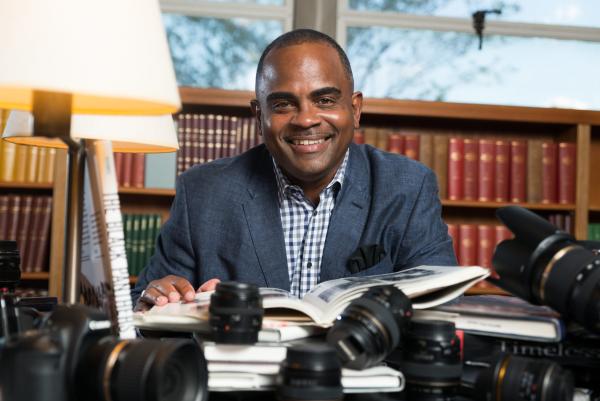
I learned something this holiday season—my first holiday season as a grandfather. My family traveled from Atlanta, Georgia to Orlando, Florida to surprise my mother, Mrs. Earlene Watkins, on her 80th birthday. The surprise is summed up in this moment. [caption id="attachment_239279" align="aligncenter" width="397"] Mrs. Earlene Watkins, My Mother[/caption] My mother didn’t know that that I was coming with my wife. But, we weren’t the big surprise. The big surprise was the new addition to our family. Her new, four-month old, great-grandson, Princeton Josiah Smith. My daughter, Nicole Smith, and her husband, Walter Smith, conspired with us to make this day possible! My daughter Nastasia Watkins and I both videotaped this historic moment. I shot with two cameras: I walked in using my Canon G7 Mark II, and then I shot with my Canon EOS C100. These two cameras are what I am most comfortable with. I had to bring them in large camera bags, set them up, and prepare to shoot. In contrast, my thirty-two-year old daughter, Nastasia Watkins, shot her video with the camera she lives with: her iPhone. She not only shot this video with her phone, but she also edited the video on her phone. She posted her video within minutes. I took my video back to the hotel, edited it on my laptop in Final Cut X, and posted my video on the next day! [caption id="attachment_239281" align="aligncenter" width="392"] My Mother, My Daughter, My Son-in-law and Princeton Josiah Smith[/caption] What did I learn? Nastasia Watkins is no teenager. My daughter is a partner in her own law firm. She and her peers are completely comfortable making memories with what is in their hands. As I watched her shoot video and take pictures over the holidays, it was clear that she was always ready to shoot. On the other hand, it was more work for me. It didn’t come naturally. I didn’t use my phone. I had to go get my camera, get ready, shoot, and then put the camera down. My daughter never put her camera down. It was no challenge for her to be engaged in the moment and shoot simultaneously. I was wowed by her ability to be fully present and to capture the moment. She taught me how her peers and those coming up behind her are processing, capturing, and seeing their world. They see the world with phone in hand. Their phone is not used to make phone calls, but as a way to see, engage, make sense of, understand, and frame their world. For we teachers, these are our students. They see their world through a screen the size of their phones. If we are to understand how to engage them, we must see what they see, how they see, and how they learn to make sense of that which they engage. How do we do this? We must pick our phones up and start to use them as they use them. I have to put my big, expensive cameras down. I am recommitting myself to using my iPhone X for the reason I say I bought it: for the camera. When you see commercials about the latest phone, they never advertise the phone’s ability to make phone calls. They sell the phone as a camera. It was the commercial that sold me, and after this holiday season I have recommitted to using the most powerful pedagogical tool I have with me all the time and that is the camera on my phone. When we use the phone as a camera and editing device, we will begin to engage and make sense of the world our students live in. This will, in turn, inform our teaching and learning. We will see the phone as a teaching and learning device and not as a distraction from our traditional teaching moments. When we see the tool in our hand as a revolutionary pedagogical device, it will change how we use that which we have in our hand. [caption id="attachment_239282" align="aligncenter" width="408"] The Family at the Surprise Birthday Party for Mrs. Earlene Watkins @ 80![/caption] Well, I know you want to see the two videos . . . here you go! Video by Nastasia Watkins https://vimeo.com/382453975 Video by Ralph Watkins https://vimeo.com/382456567 Photo credit: Victor Watkins

When I was invited to participate in this blog series, I was preparing to teach, for the first time, a course on the Catholic sex abuse crisis. I had wanted to teach the course for quite some time but was held back both by my sense of not understanding adequately the massive amount of material that comprised the crisis and my anxieties about how this material might impact students. What about students who were survivors of sexual violence? What about students who understood themselves as faithful Catholics? Or who had left the Church angry and bitter? What about students—and this is particularly relevant to my geographical context—who were suspicious of Catholics as an exotic, mysterious, pseudo-Christian sect? I taught the class. I had students who identified with each of these subject positions. Neither their written work nor their in-class participation nor our informal one-on-one conversations contained any evidence that they were unduly troubled by the materials or unable to grasp with the questions they raised. In fact, it was our collective sense of inadequacy as we grappled with the enormity and complexity of what we were trying to interpret that left us feeling overwhelmed. But, as those who go to the gym more than I do—which wouldn’t take a lot—would say, it was a good kind of pain. This semester, as I am writing my contributions to this blog series, I am teaching, for the sixth time, a course focused on Jesus films. This is one of my bread-and-butter courses. It is popular with students and it works like a well-oiled machine. The films require us to grapple with questions about gender, race, sexuality, ethnicity, and violence, but I have never paused to worry that the course might run the risk of traumatizing my students. (Although the level of brutality in Mel Gibson’s The Passion of the Christ comes awfully close.) Given my experience over the years of teaching this course, however, I should know better. A few weeks ago, I got an email from a student who self-identified as a fundamentalist Christian, as someone who had been taught that the Bible was inerrant, literally true, and harmonious. The comparative, rhetorical analysis of the gospels that comprises the first few weeks of this course were challenging him in profound and unsettling ways. He was having to grapple with the idea—and the evidence—that the Bible did not speak with a uniform voice and that it may, in fact, contain tensions that simply could not be reconciled. This student was seeking out a conversation. Since I grew up in a very similar religious context, I am able to talk about these types of concerns, without undermining the perspective of the course. As I tell all of my students, they can enter and leave my class thinking that the Bible is the inerrant, infallible word of God, but they will have to grapple with the fact that we only have access to that word in a complex, rhetorically sophisticated document with multiple perspectives on who Jesus is and why he matters. Every semester I’ve taught this course, I’ve had at least one student with these concerns. Sometimes several. Some have sought out conversation. Some have worked through their concerns in assignments. Some have probably dropped the course—or just kept their worries under wraps. Some have been more open; others have been more hostile. Some have clung to an apologetic task; some have offered to pray for me. Some have the greatest trouble when we talk about the Bible; others face their Waterloo as we start talking about the films. Still, others find the greatest challenge when we review the history of American Christianity. My experience with this class reminds me that what we, as scholars of religion and theology, take as our baseline—that religious ideas, texts, and practices have a history, that they have been subjected to a variety of interpretations, that they have ugly legacies, that they vary by time and place—is a profoundly disturbing perspective to some people. Just as we have come to realize that “objectivity” is never truly neutral and that “secularity” entails a normative vision, we also need to grapple with the fact that the foundational moves of the academic study of religion and theology might be the most traumatic dimension of our courses for some of our students.
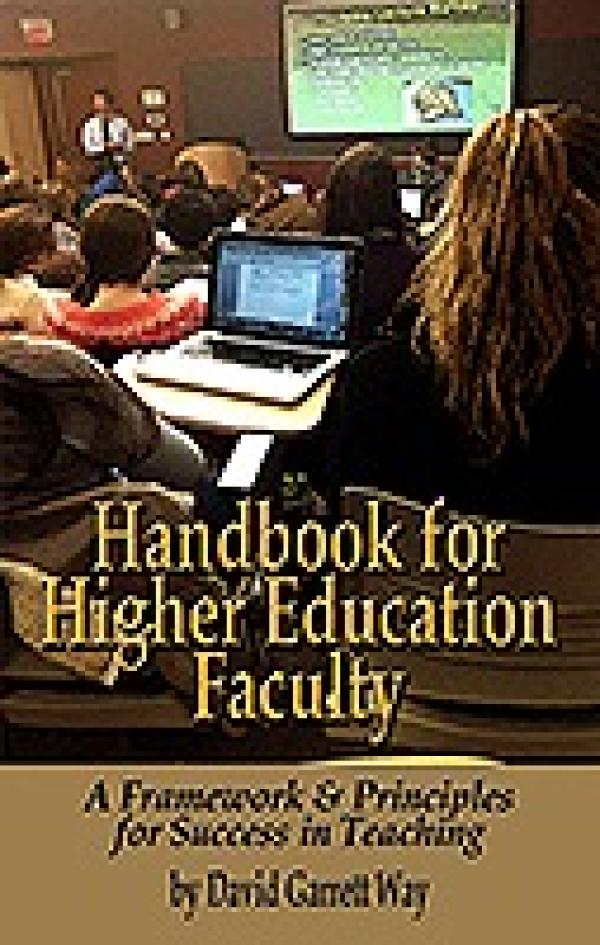
As a second year professor at a graduate institution of higher education, David Garrett Way’s Handbook for Higher Education Faculty: A Framework and Principles for Success in Teaching helps me understand my role as a faculty member in higher education. Way’s work synthesizes his forty years of teaching experience with the hope that he can help beginning educators with practical teaching knowledge (6). Way’s goals are to prepare his readers to accomplish a multitude of tasks. First, readers will be able to successfully execute their teaching plans in and out of the classroom. Second, educators will encourage deep and lasting learning in students. Third, educators will effectively assess learning as an authentic process while also documenting all efforts throughout their career. Finally, educators will be prepared to be evaluated by others (13). Way puts forth his plan in seven well-executed chapters. In Chapter 1, “Teaching and Identity” (15), Way uses the maxim that teaching is to lecturing as being is to doing. Teaching is a larger concept than lecturing and being is a larger concept than doing. The integration of all of these concepts is conversation. Since teaching is about generating conversations, Way proposes that we must understand who we are as beings living in specific identities. While thinking through some teaching techniques such as “warming up” (25) and “think-pair-share” (26), Way uses these concepts to help educators take inventory of their own individual styles and evolving personal theory while putting conversations with students into practice. Chapter 2, “Reflection and Teaching,” examines the dialogue that educators have between their “Espoused Theory” and their “Theory-in-Use” (32). In essence, Way believes that as educators, we must approach our pedagogy with a theory that we want to embrace (such as fostering dialogue) while being aware when our espoused theory goes awry (such as dominating class time with lecture, thereby squelching dialogue.) In essence, our thinking around our teaching takes continuous time and reflection. Chapter 3, “The Role of Higher Education in Society” (45), asks one of the most important questions in Way’s work: “(w)hat risks will you be willing to make in your career to remain true to your strongly held values?” (54). Assuming that the humanities and sciences must both engage with society for the betterment of society, Way does not want educators waking up twenty years into a career and asking “How did I get here? Why am I doing these things?” (55). In Chapter 4, “Preparing to Teach” (57), Way thinks through the macro and micro dimensions of prep work in overall course design and individual class sessions. Reviewing best practices in macro and micro design, Way argues that backwards course design (a concept borrowed from engineering) prompts an educator to begin by deciding what students must accomplish by the course’s end. I found the example of Cornell’s James Maas’s use of varying the stimulus very enlightening. Varying the stimulus in his case means recognizing that the average person’s attention span starts to drift after 10-15 minutes (67). Accordingly, Maas may lecture for ten minutes on an abstract concept and then move to a concrete activity for students to engage. In Chapter 5, “Creating Effective Learning Experiences” (71), Way examines how educators can plan and execute plans to the point that students desire meaningful and sustained learning that is “transforming, sustained, emotionally charged, surprising, painful, empowering, and fulfilling” (72-73). Way argues that an effective learning experience is a “kind of space – physical, emotional, psychological, intellectual and even spiritual” (73). In Way’s experience, role-playing and simulation are two methods that accomplish this. Student assessment occurs over time while evaluation is the final cumulative process of assessment. Chapter 6, “Assessing Student Learning and Providing Effective Feedback” (87), provides principles for planning, assessment, rubric development, and peer evaluation. Way concludes his book with Chapter 7, “Professional Development: Document and Measuring Progress” (105), as the culminating push for teachers in higher education to begin accumulating documents and engaging in events that provide a framework for modeling pedagogical growth. While I thoroughly enjoyed reading and pondering deeply my own pedagogical frameworks, principles, and early experiences in teaching, I was left wondering if there could be a follow up to Way’s text that addresses the gendered nature of teaching. A recent study on student evaluations (“Student Evaluations of Teaching [Mostly] Do Not Measure Teaching Effectiveness” by Anne Boring, Kellie Ottoboni, and Philip Stark) suggests that student evaluations are systematically biased against women. As an African American female professor in higher education, I have already felt the ways gender impacts teaching identity in my own educational experiences. I wonder if there are specific tools, frameworks, and principles that provide female faculty and faculty of color a blueprint for pedagogical success. Notwithstanding this, I enjoyed reviewing this important work that is crucial for early career faculty.
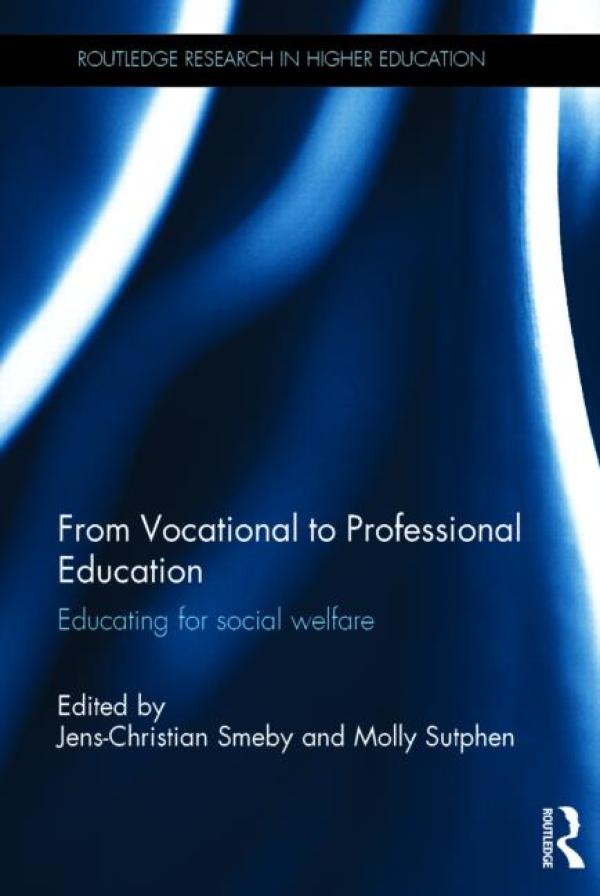
It is not often that edited volumes dedicated to teaching and learning are so easily able to cross the Atlantic. Happily, conference activity funded by the Research Council of Norway provided opportunity for Molly Sutphen of the University of North Carolina and Jens-Christian Smeby of Oslo and Akershus University College of Applied Sciences to collaborate with researchers in the field of education. In a series of international conversations, scholars addressed challenges faced by students in professional schools in the fields of education, social work, and healthcare (3) as a result of academic drift and the subsequent institutionalization of vocational programs into higher education (7). The purposes of this well organized, beautifully written, and coherent collection of essays is to identify these difficulties within their historical context, and – in light of current disciplinary methods – suggest recommendations for future development of the education of professionals. A near-constant defense of liberal arts education as of late has been accompanied since the mid-twentieth century with added pressure of assimilation of professional training in universities, specifically in the fields mentioned above. The professionalization of these programs is complex and the challenges are significant, facts often unknown to other disciplines; professional educators, to name one example, must master a complex knowledge base as well as curricular, pedagogical, and administrative abilities. Central to the success of these tasks within a higher educational setting, writes Smeby in his introductory chapter “Academic Drift in Vocational Education?” (7-25), is the necessity of “perceived coherence” on the part of the students that there are meaningful relationships between both theoretic and applied components of their education (25). But students are not the only ones looking for signs of perceived coherence; the transfer of the locale of professional education has had implications not only for students, but for faculty and the wider university culture as well. In Ala Agevall and Gunnar Olofsson’s “Tensions Between Academic and Vocational Demands” (26-49), three aspects of the transformation of higher education as a result of the academic drift are identified as worthy of note: cultural changes to university systems as they relate to hiring practices and student population; the way in which the link to the university system has altered perceptions of the professions; and the shift in emphasis of the university culture towards professional programs as a matter of concern, vis-à-vis credentials and training. After tracing generations of welfare professional programs in Sweden (28-30), the authors identify principle ways in which institutions of higher education can combine an academic education with professional mastery (31-35), followed by a case study in a Swedish setting. Subsequent chapters on the benefits of cross-field studies for professional students (Little, 50-69), coherence as it relates to bridging theory and practice (Heggen, Smeby, and Vågan, 70-88 and Laursen, 89-104), assumptions that emerge about and within research-based education (Kyvik, Vågan, Prøitz, and Aamodt, 105-23), use of evidence-based methods (Rasmussen, 124-36), dialogical pedagogies (Sutphen and Heggen, 137-45), and international trends in teacher education (Conway and Munthe, 146-63) are followed by a conclusion by the editors. The conclusion offers recommendations for models of pedagogies of coherence that include: “third space” learning (168-69); increased opportunity for research on practice (169); use of cases as opportunity for reflection on potential workplace experiences (169); greater collaboration between higher education and professional placement (169); and finally, educational leadership that is mindful of fragmentation (169-70). I am aware that the purpose of a book review in a journal for teaching theology and religion is to consider how it relates to or is useful for those in the fields of religion, theology, and religious studies. I am of the opinion – however optimistic it might be – that any analysis of education or pedagogy might be applied to any field, and this is true for Smeby and Sutphen’s edited volume on professional education, for this collection is particularly helpful at explaining some of the tensions that exist within universities and colleges around the coherence of the general education of professional students, and the way shifts in higher education have altered the landscape of the educational system, worldwide. In a liberal arts setting, the reality is that students in religion courses are most often there because the university has determined that the study of religion is essential for their general education; it is useful for both parties to recognize that students are seeking coherence and relevancy and are attempting to bridge theory and practice as much as their professors. . While one might hope that the relevancy of an education in the history or theology of any religion would be immediately obvious, nevertheless mindfulness of our students’ majors, disciplinary affiliations, professional aspirations, and desires for coherence can assist the religion professor in shaping her curriculum in such a way to make that applicability more transparent.

Textbook Gods is a collection of essays by predominantly European scholars of religion on the use of textbooks in primary, secondary, and post-secondary educational settings. Textbooks are understood to be books written primarily for classroom teaching that convey “key knowledge” within a given academic discipline (2). As such, textbooks generally present disciplinary knowledge as stable, firmly established, and definitive. The essays in this volume wrestle, first, with the problems of bias and essentialism in such authoritative, institutionally-sanctioned books. By extension, they also consider the impact of religious studies textbooks in reproducing knowledge of religion in the public sphere. Satoko Fujiwara argues in her essay, for instance, that the religion textbooks used in secular Japanese public schools prioritize world religions over ethnic religions and provide monothetic and essentializing accounts of these religions (for example, Christianity is love, Buddhism compassion, Islam obedience). Likewise, in their contributions James Lewis and Carole Cusack criticize textbooks for validating students’ ethnocentric prejudices about sub-Saharan African religions and aboriginal Australian religions. In a somewhat different vein, Bengt-Ove Andreassen critiques the way that introductory Norwegian textbooks present “religion” as a positive, universal phenomenon that is necessary for human fulfillment and flourishing. Other essays have a more methodological focus, discussing the ways that scholars of religion can assess religion textbooks, both as teaching resources and as indices of the status of scholarship on religion. Katharina Frank outlines a theoretically-informed methodology for assessing the ways that a new Swiss world religions textbook frames the phenomenon of religion. Mary Hayward surveys the use of visual aids in four textbooks that are used in England’s secondary school religious education courses, tabulating types of images and their relation to the text. She calls for a stronger interrelation between text and image because the privileging of text mirrors the privileging of the intellectual over the material in the study of religion. The essays in this volume are generally of good quality: they are well written, they fully contextualize the textbooks that they discuss, and they engage contemporary debates in the scholarship of religion (for example, on the public role of religion in secularizing societies; on the utility of “religion” as an analytical category). This volume should not be seen as an aid for teachers of religion who are considering which textbooks to use in their classes. Though the essays in it discuss many different textbooks at length, the primary topic is not their specific merits and demerits, but rather the role of textbooks as a genre in the production of public knowledge of religion. I would strongly recommend this book for experienced scholar-teachers who are reconsidering how they use textbooks, or even if they should use textbooks at all. The range of materials covered by the essays, and the diversity of opinions they present, make Textbook Gods a valuable resource.