Resources
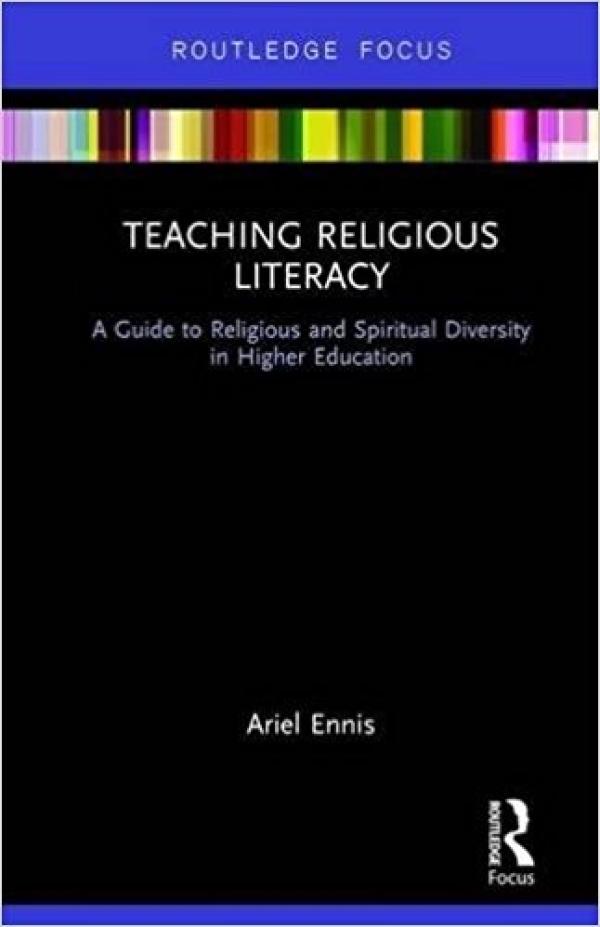
Ariel Ennis, Assistant Director and Senior Multifaith Educator at the Of Many Institute for Multifaith Leadership in the Office of Global Spiritual Life at New York University, has authored an important contribution to a burgeoning literature on campus-based interfaith and interreligious outreach. Noting that diversity and inclusion initiatives on American campuses frequently address race, sexuality, and gender while ignoring religious identity, Ennis reports on efforts at NYU to create a center to support spiritual life. Special attention is given to the development of a “Faith Zone” curriculum that trains leaders for enhanced multifaith encounters. Ennis analyzes a variety of extant approaches to cross-cultural religious and spiritual experiences, looking at intended outcomes of different programs. Focusing on the concept of “religious literacy,” he describes a framework for the NYU workshops on spiritual diversity that supports religious literacy initiatives. Included in the book is the Faith Zone curriculum and rubrics drawn from the AACU (Association of American Colleges and Universities) VALUE rubrics that are used for post-workshop outcomes assessment. He shares data from these assessments in order to demonstrate the impact on campus of the religious literacy curriculum. The book closes with the author’s reflections on how Faith Zone workshops could be offered on different types of campuses (public/private, religious/secular) and with his recommendations for successfully meeting challenges emerging from the workshops. Campus religious literacy initiatives that Ennis advocates embrace the question: Can we teach people to have more productive conversations about religion and spirituality in diverse settings? Using the definition of religious literacy developed by Dianne Moore of the Religious Literacy Project at Harvard Divinity School, Ennis answers this question affirmatively, setting four outcomes for the interfaith curriculum. Workshops will (1) enhance participants’ knowledge of historic and contemporary interconnections of religion with cultural, political, and social life; (2) embrace an ecumenical orientation that offers participants firsthand experience in exploring religio-cultural boundaries; (3) promote self-awareness about the intersections of participants' religio-spiritual identities with larger social forces; and (4) encourage participants' commitment to apply their new found religious literacy through practical projects that bridge intercultural divides. In contrast to Eboo Patel’s portrait of a fraught relationship between interfaith outreach and religious studies programs (https://www.wabashcenter.wabash.edu/scholarship/interfaith-leadership-a-primer/), Ennis’ book points to positive implications for partnerships on campus between religious studies programs and interfaith outreach. Similarities between Faith Zone outcomes and learning outcomes/assessment of the religion major on many campuses suggest productive cross-fertilization. Students could sustain the long-term impact of the workshop outcomes, adding depth and breadth, through coursework in religious studies grounded in similar learning outcomes. In complementary fashion, religious studies majors could apply learning in the major outside the classroom, enhancing their resumes, through interfaith internships: as graduates of Faith Zone training, they could lead workshops on religious literacy and develop and lead associated campus programming.
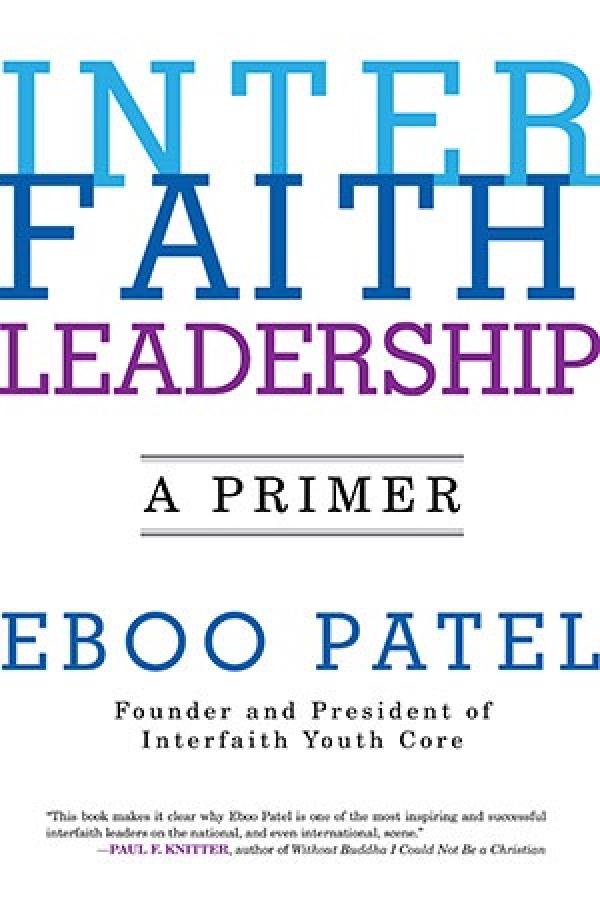
To date, one thousand colleges and universities have engaged the Interfaith Youth Core (IFYC) to catalyze interfaith cooperation, educate interfaith leaders, and build knowledge of faith traditions. Authored by the founder of IFYC, Interfaith Leadership contributes to a key IFYC goal: to train seven thousand interfaith leaders by 2020. Sharing his journey to interfaith leadership (Chapter 1), Patel discusses his theory of interfaith understanding (Chapters 2-3), shares his leadership vision (Chapter 4), and identifies leaders’ knowledge, skills, and personal qualities (Chapters 5-7). “Inter” in “interfaith” references “interaction between people who orient around religion differently”; “faith” stands for “how people relate to their religious and ethical traditions.” With the term interfaith, Patel highlights reciprocal influences: interactions with others impact how we relate to “our” religious and ethical traditions as well as to “theirs.” Interfaith leaders guide persons across a “landscape of religious diversity” toward “interfaith cooperation.” Can religious studies programs play a role in campus interfaith leadership training? Patel’s understanding of religious studies is informed by Wilfred Cantwell Smith. As Patel understands Smith, the academic study of religion errs because it looks at “systems” divorced from religious practice. For Patel, “religious system” means faith viewed through a religious studies lens. By contrast, interfaith explorations engage personal practices. Patel identifies two potential models of interfaith leadership: Stephen Prothero and Karen Armstrong. While Prothero focuses on systems (doctrines, texts, and rituals), neglecting the diversity and specificity of lived faith, Armstrong attends to “human-heartedness,” generalizing about spiritual traditions in ways that make these traditions unrecognizable to their adherents. Interfaith leaders, by contrast, support embedded dialogue. Patel illustrates: when the lone Muslim student in a world religions class declares he has never before heard the terms “Shia” and “Sunni,” his professor’s “abstract” approach to Islam is shown irrelevant to other students’ who comprehend “real world” Muslim faith. Eschewing “deficits, problems, and ugliness,” interfaith perspectives “appreciate” the “beautiful, life-giving, and admirable” in religion, building relationships through story-telling. For example, Patel attributes changes in the US between 1928 and 1955 in attitudes about Jews to the NCCJ (originally the National Conference of Christians and Jews. It currently refers to the National Conference for Community and Justice), an interfaith entity, not to the scholarly study of anti-Semitism. Patel also highlights a case study. Doctors trained in Western medicine identify symptoms of epilepsy in a Hmong child. Her parents, believing she is becoming a shaman, do not comply with treatment plans. A seizure puts the child in a vegetative state. Patel ponders whether an “appreciative understanding” of Hmong faith by the doctors could have led to a different outcome. IFYC does valuable work on campuses, promoting conversations about religion that make it safer for students of diverse traditions to express faith without fear. On some campuses, religious studies departments have been included in IFYC initiatives. However, participants in campus IFYC initiatives whose knowledge of the academic study of religion is drawn only from Interfaith Leadership will benefit from outreach by religious studies faculty. We can foster an informed understanding of our field as a vital resource for students seeking the knowledge, skills, and personal qualities needed by leaders in a religiously diverse world.

What’s a Catholic College? I grew up agnostic and converted to Islam when I was eighteen. A lifetime later, I now teach at a Catholic, Jesuit, liberal arts college. Like many religious studies educators, I continue to mull over questions about the intersections of identity, metaphysics, and socio-politics. So, when I began working at Le Moyne College, I wondered what kinds of encounters with religion my new position would have in store. I was especially curious because before coming to Le Moyne, I had taught only at state institutions (in California and Tennessee). Since joining the faculty at Le Moyne, I have engaged in a number of on- and off-campus mission-related programs, and these programs have raised a number of questions for me about what it means to teach where I teach: What is Catholic education? What is Jesuit education? To what extent can non-adherents of a tradition teach or study within an institutional context that espouses a particular tradition? My experience has shown me that by deepening my engagement with the Jesuit mission of the college I am better able to serve my students, and even better understand my own location in the pluralistic landscape of higher education. As Amir Hussain (Loyola University, Marymount), former editor of the Journal of the American Academy of Religion (JAAR) and current faculty member at a Jesuit institution writes in his “Editor’s Note” for the JAAR in 2011: “I wonder what the members of the National Association of Bible Instructors (the forerunner of the AAR) would have thought of their journal one day being edited by a Canadian Muslim scholar of Islam teaching at a Catholic university.” I appreciate Hussain’s playful gesture here because it underscores how intermingled religious studies pedagogy can be. That his self-conscious reflection on the context of religious and national pluralism makes its way into the flagship journal of the field is a positive sign for me, especially in a world of growing Islamophobia. As someone who studies and teaches about a particular religious tradition (Islam), I acknowledge the value of assigning categories, but this has its limitations and one’s religious identity is frequently a poor indicator of what people actually believe. (I write more on this in “Muslim in the Classroom: Pedagogical Reflections on Disclosing Religious Identity,” published in Teaching Theology and Religion [2016].) To illustrate this, I often invite my students to dig deep by asking ten Catholics to describe what their traditions mean to them, or to describe Who or What God is. Will they find ten different answers? I think so. As I’ve tried to figure out what Catholic education means to people, I too have encountered a range of voices. Engaging the Jesuit Mission Because my undergraduate and Ph.D. programs were both at state schools, I didn’t know to what extent I might engage Jesuit-related professional development opportunities at Le Moyne; I had no context to compare. Fortunately, I’ve been encouraged by the impact of mission-related workshops, conferences, and study groups on my intellectual development as a teacher, scholar, and citizen. In the broadest sense, teaching as a Muslim at a Catholic college reminds me of the importance of interreligious encounters and helps me, I hope, model and live the kinds of interreligious encounters that I encourage for my students. Conferences like “Collegium”—an annual weeklong colloquy on Catholic higher education—and “Islam at Jesuit Colleges and Universities,” at the University of San Francisco in 2015, have offered me a window into live questions and challenges that diverse educators at Catholic institutions face. I have the opportunity to reflect further on the topic at an upcoming conference at Seattle University, where I’ll participate in a panel entitled “Islam at Jesuit Institutions: Inter-religious Dialogue, Social Justice, and Campus Life.” Despite my own positive experiences encountering and engaging Jesuit education on and off campus, challenges of language and stereotypes still pervade the minds of students as well as faculty; think, for example, about the debates on the relationship of religious studies to theology. My department offers religious studies as well as theology courses, so my attention to these debates has heightened in many ways. To illustrate the disparities in thinking about religiously affiliated institutions, let me conclude this blog post with two brief anecdotes—one about faculty and one about students. Confusing Categories Faculty story: A job candidate for a position at Le Moyne once expressed to me that the school attracted her because it was “faith-based.” As I learned more about what she meant, it became clear that the candidate did not fully understand the context of Jesuit education or the particular institution at which she sought employment. It would be untrue to say that Jesuit education didn’t have a “faith-based” component, but looking around the United States, for example, what this component means to Jesuit schools and their faculty, broadly speaking, is quite different than what it means for, say, Liberty University or any number of “faith-based” institutions. Regarding my argument about religious identity as a poor indicator of, well, a lot of things, I think this becomes straightforward when one examines the range of “faith-based” institutions across the country. (She didn’t get the job.) Student story: A linguistic trope that I often press my students to explain is when they refer to someone as “super-Catholic.” Many of my students, apparently, have a “super-Catholic” member of their family. “Is what you mean,” I try to gently provoke them, “that your uncle is kind of obnoxious and not too interested in learning about diverse opinions?” Although students may not have this blunt characterization in mind when explaining their family member, they often agree with my interpretation. I’ll follow up: “Well, what about your Jesuit professors at Le Moyne—who spent over a decade training to enter the order? Do you consider them super-Catholic?” (If anyone connected to the Le Moyne community is super-Catholic, I should think it would be the Jesuits.) At this point, I suspect I succeed in slightly confusing students and problematizing the imprecision of “super-Catholic” code language. Indeed the institutional context aids me here in guiding students through a teachable moment about word choice and the assumptions we hold about various traditions. Making Context work for Students To help students understand the mission of their institution, I incorporate Le Moyne’s mission statement into some course assignments to invite student reflection on the raison d’etre of their liberal arts experience. Unsurprisingly, I encounter a range of responses. Some students, for example, don’t know that Jesuit means Catholic. At the other end of awareness, a Catholic religious studies major once shared something very perceptive with me: It’s easy to be a student at Le Moyne and pretty much ignore its Catholic-ness, but at the same time it’s also easy to engage with that part of the school if you choose to go that route. To further help my students reflect on institutional context and best appreciate the purpose behind their required courses (all Le Moyne students must take any religious studies class as part of the core curriculum), I briefly share at the beginning of the semester that I’m a convert, but that our course will ask us—professor included—to approach material from a position of epoche (suspension or bracketing of personal convictions). I find that flagging my positionality (while leaving its particulars undefined) as well as our methodological approach signals to my students that no one is out to convert them. (Although if I were out to convert them, wouldn’t it be odd that a Catholic hired someone to convert its students to Islam? What would that even mean—theologically, logistically?) Although I rarely make reference to my own Muslim identity after the first week of class, my courses on Islam focus on issues of race and privilege, so I know my students cannot escape the fact that their teacher is a white convert. As one student recently wrote in an anonymous feedback activity, “When I tell my sisters I have a White professor for this class, they are mind blown.” In conclusion, I consistently find that my typical 18-22-year-olds students appreciate the vibe of the institution, but they’re not necessarily convinced it’s because of its Jesuit Catholic heritage—even if I’m convinced that the institution’s affiliation affects students more than they might suspect. I also find that students tend to appreciate that a Catholic institution would offer classes about all sorts of different religions (as Le Moyne does). For many reasons, including a curriculum that values courses on Islam, I—and I think most of my students as well—consider Le Moyne a super Catholic college. Perhaps even a super-Catholic college.
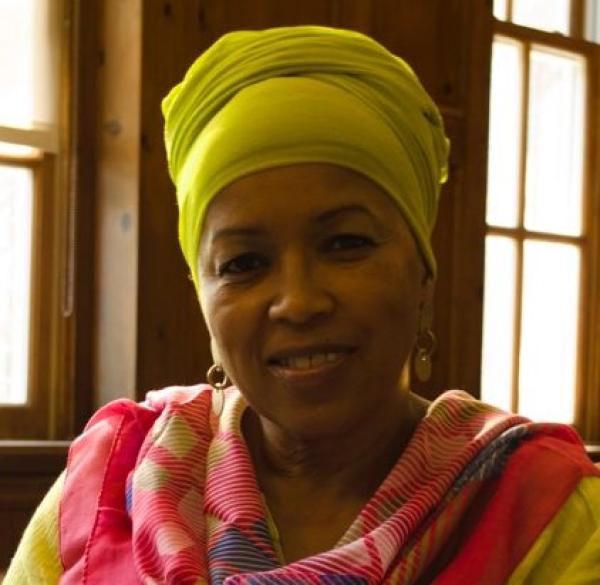
Lack of awareness about what Islam is and how its followers are religiously motivated to act, coupled with heightened tensions during the 2016 presidential campaign about the patriotism of American Muslims, led me to offer “Arabs and Muslims in the Media” as a first-time offering this semester. The twenty-one students who registered for the seminar include seven who have yet to declare a major, nine who registered for credit through the Critical Identities Studies (CRIS) Program, first-year Beloiters, graduating seniors, an exchange student from Ireland, and four born into Muslim households. Both of my teaching assistants had taken a minimum of one course with me that featured at least one section on the teachings or rituals of the world’s fastest growing religion. “Arabs and Muslims in the Media” was the first exposure to Islam, or to any of the daily realities of Muslims, for the majority of the class. We opened the seminar by engaging with Linda Martin Alcoff’s “The Problem of Speaking For Others,” an essay that challenged students to reflect upon their own positionality and privilege as they approached the two major assignments: a 200-word entry for this blog and a PSA about Islam and/or Muslims. Later in the first week, the class raised questions about the essay and their own insecurity about appearing to “speak” for followers of Islam. The sentiments of one student sums up the concerns of the rest: “I never thought about the impact of my own words on this level before, or how wrong we can be about what we think we know. I’m worried that I am not qualified to complete the final assignment.” To address such concerns, students received a brief survey of Islamic history and the emergence of Muslim communities in the U.S., along with an introduction to beliefs and practices, and the role of gender and sexuality, in Islam. Throughout the seminar, we critiqued a variety of visual and written representations. Guiding our journey were two primary texts: Evelyn Alsultany, Arabs and Muslims in the Media, and Moustafa Bayoumi, How Does It Feel to be a Problem: Being Young and Arab in America. Students reflected on the readings in various ways. Ryan, for one, noted, “By reading [Bayoumi’s work], I was opened up to the realities of young Arabs in America. I was able to read the real struggles they face from these negative stereotypes.” We watched a number of films, Youtube videos, and documentaries including “Frontline: Muslims,” “Persepolis,” “Jihad for Love,” and “The Kingdom of Heaven.” Students were also directed to analyze and review a film, selected from a list of more than 100, whose plots/characters featured Muslims and/or Islam. Interestingly, nearly half the class zeroed in on four: “Malcolm X,” “Slumdog Millionaire,” “The Battle of Algiers,” and “Dirty Pretty Things.” Our TAs, Grace Gerloff, and Joshua Randolph, also created a demo PSA that unpacked the concept of jihad. Their efforts helped students visualize what they could accomplish. While I focused on potential content for both the blog entry and PSA, Grace and Joshua mentored students on technical aspects and how to focus on a single idea. Students will present their PSAs during a public forum on May 5. Here’s a selection of student blog entries. Some students focused on the content of what they learned: Nikki: “Many Americans seem to view the hijab as a plea for help by its wearer, as though it were a sign of oppression rather than religious expression.” Constance: “The Qur’an states that both men and women should dress modestly, but what modesty means is up to interpretation.” Sasha: “Many people think that hijab refers to a specific style of garment worn by Muslim women but in reality, the concept of hijab is present in both Christianity and Judaism as well as other religions and cultures, just under different names.” Alberto: “In the Qur’an, Muslims are reminded that they are not the only people of God.” Diego: “The term “Allahu Akbar” is an Islamic phrase that translates to ‘God is Great.’ This is a phrase that is used in celebration, prayer, happiness, and many other occasions to thank God. However, the phrase is commonly tied only to terrorists.” Charlie: “The Angel Gabriel made me reevaluate the way that I was looking at Islam. Though the connection of Islam to Christianity and Judaism was something I had talked about before, this was the first explicit example I had seen that explicitly linked the three Abrahamic religions.” Chris: “The religion we have been told is the ‘enemy’ of the West, is in actuality more similar to our Christianity than we would currently like to believe.” Joe: “In high school, I enjoyed a series of action novels where the protagonist was an American special forces operative fighting to protect American interests from his Muslim enemies.These books contained blatant generalizations about the violent nature of Islam. I didn’t necessarily believe these statements, but I never questioned them.” Ryan: “By taking this class, I have been given great resources about the Muslim religion and the Quran which have allowed me to be able to pick apart what I have been taught and relearn the truth about Muslims and their beliefs.” Seamus: “This course taught me that no matter how many statistics you may know, they are not nearly as valuable as discourse, and the various identities involved, and the perspectives that they bring.” Jessica: “I personally knew nothing about Islam or any of its teachings before this class and the one thing I was very interested in was the hijab. In papers and stories, it is almost portrayed as a sign of oppression, which is not the case at all. I learned from this class the power of personal identity.” Other students reflected upon their own socialization: Kirsten: “There has been a call in the West to ‘save the oppressed Muslim women’ because of the belief that Islam is an oppressive religion. When I was younger, I fell for this ploy and believed that Islam required women to dress in a specific way.” Katlyn: “I grew up in a conservative household, I heard considerable stereotypes of Muslims. It narrowed my idea of women in Islam.” Diane: “I took this course because I thought it would be a great way to reflect and dive into how I might be able to navigate stereotypes and deep-rooted, false narratives as an aspiring journalist.” Hana: “I’ve learned that being Muslim and Anti-Zionist should not automatically qualify me as being anti-Semitic.” Still, others reflected upon the impact of technology on their new knowledge: Hoodish: “This class taught me that censored media is indeed very destructive. I intend to confront these people by making them acknowledge their biases towards Islam.” Ashley: “Video, specifically, has allowed me to learn about the different struggles that Muslims face depending upon their class, nationality, sect, immigration status, gender, sexuality, age, race, and family status.”
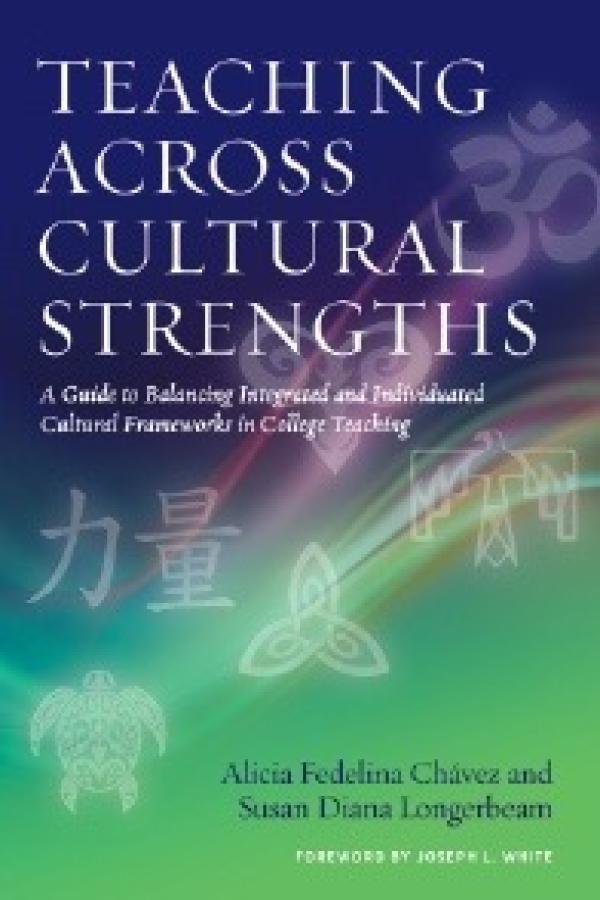
Teaching Across Cultural Strengths is a guide for faculty seeking to apply a cultural lens to their teaching practice; the goal is to learn how to “draw from the cultural strengths of all peoples in service toward equitable and effective teaching and learning” (xx). Chávez and Longerbeam adopt a complex definition of culture visualized in successive layers: artifacts and behaviors, beliefs, values, norms, and underlying assumptions (71). A central thesis is that university teaching in the United States follows an Oxford or Germanic model that has not adequately served students of color. The authors describe a dissonance between an individuated cultural framework characterized by private, compartmentalized, and linear learning and an integrated cultural framework characterized by mutual, cyclical, and contextually-dependent learning. The intent is not to favor one cultural approach over another but to stress the strengths and potential rewards of pedagogy combining a wider array of cultural norms. Based on research and faculty development conducted in Arizona and New Mexico, the book emphasizes Native and Hispano/Latino American students (12). Faculty interested in how their teaching is responsive to religious diversity in the classroom will find more than enough tools for reflection in this volume but only a small number of direct examples. The teaching of evolution in the biology classroom is mentioned as an example of potential incongruence between course content and student beliefs. Immediately following this case is the fascinating story of accommodations made for a medical student who dropped out due to a spiritual injunction against handling human remains (154-55). In their first chapter, the authors introduce their data-supported Cultural Frameworks in Teaching and Learning Model with activities and vignettes meant to help the reader transform their own pedagogy. This chapter has a workbook feel with four graphics in the first eight pages. The second chapter, “Culture in College Teaching,” offers a more readable treatment of the basic principles of the book and I would advise reading it first. The next three chapters offer extended explanations of how to implement culturally balanced teaching supported by a large number of classroom narratives. The sixth chapter is particularly useful since it is organized as “The Top 10 Things Faculty Can Do to Teach Across Cultures.” The final two chapters discuss the authors’ own work in faculty development and how others might initiate similar projects. The book contains a helpful index and two appendices: one describing how to create a “culture and teaching autobiography” and a second containing a short list of books for further learning. When I was in grade school, “Choose Your Own Adventure” books were all the rage. These titles were formatted in a way that let the reader jump around in the text to create her own story. In Teaching Across Cultural Strengths, Chávez and Longerbeam capture a similar spirit by arranging advice, questions, and activity prompts so that faculty can create their own workshop experience either individually or as a group. No one can be a perfect teacher but we are all called to be reflective teachers. In form and content, this book can be a useful asset on that journey and it is highly recommended.
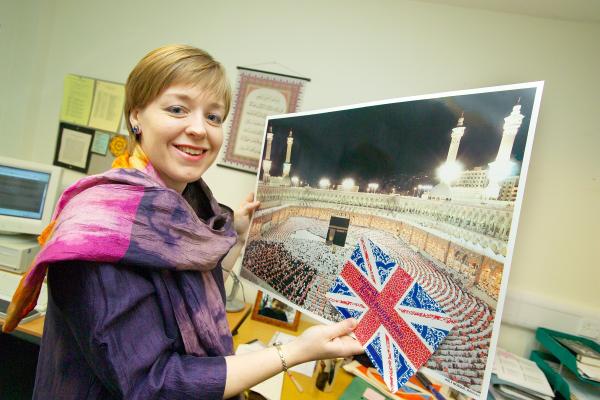
Sophie Gilliat-Ray Director Centre for the Study of Islam in the UK Cardiff University I ended my last blog entry by noting the value of inter-religious relationships formed among students learning about Islam in the higher education environment. Continuing with this theme, one of the consequences of this mixed-faith, or...
Najeeba Syeed-Miller Assistant Professor Claremont School of Theology I write in a time when the study of Islam is of paramount importance. This blog entry focuses on the teaching of Islam in interreligious settings, with an eye toward the notion of pluralism. So often, engaging this tradition starts with the
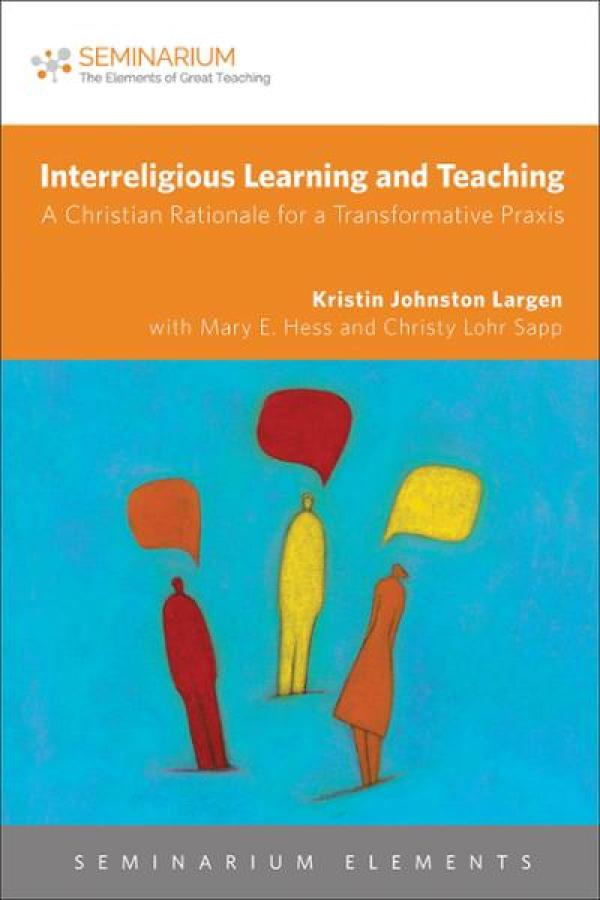
Published in the Fortress Press series, “Seminarium: The Elements of Great Teaching,” this affordable, concise volume is targeted for Protestant seminary professors in particular but will also be of value to those working in Christian higher education and ministry, more generally. The teacher-friendly format features three chapters of text by K. Johnston Largen, punctuated by sequentially numbered, stand-alone text boxes of “Praxis Points” by C. Lohr Sapp, and responses to each chapter and an epilogue by M. E. Hess. The text offers many useful resource references including texts, websites, and video clips. Quick Response codes intersperse the text and the relevant URLs are also provided in footnotes. The first chapter presents four specific examples of interreligious experience relating to Hinduism, Islam, Buddhism, and Judaism, in order to demonstrate the urgent and practical importance of interreligious education and dialogue. The second chapter offers a theological rationale for such learning drawing upon insights of comparative theology. The third chapter suggests expected outcomes and pitfalls, strategies for including interreligious learning within a theological curriculum, and considerations for assessing transformative praxis for students, faculty, and institutions. The format highlights the richness of collaborative work that coheres well throughout the volume yet offers distinct contributions by each authorial voice, modeling the value of dialogue in its overall presentation. Theological references are primarily Lutheran and Roman Catholic but also model dialogue within Christian diversity. A further dialogue which informs all aspects of this text involves pedagogical scholarship, particularly literature associated with adult learners. Each author demonstrates pedagogical depth and writes in a personal, accessible, and occasionally humorous tone. Since the authors emphasize the importance of meeting students where they are and structuring learning opportunities with this in mind, a great deal of attention is paid to resistance and fears some Christian students continue to have toward learning about other religious ways and practices. Readers who are not actively involved in communities or educational settings that reflect this tension and ambivalence may be impatient with the introductory nature of the volume. The authors write to convince and inform those who are beginning or seeking to encourage others to begin this type of transformative praxis.