Resources
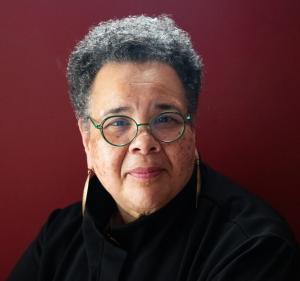
Museums were a significant aspect of my childhood education. Living in Philadelphia, we were a family who regularly visited museums and historic sites. Saturday family activities, summertime daytrips, and adventures when out-of-town relatives visited, would typically involve museum excursions. The spring field trips by George Washington Carver Elementary School, funded in-part by monies raised by the parents’ organization, were, joyfully, to the museums. In the 5th and 6th grades, respectively, my parents enrolled me and my brother in Saturday enrichment classes at the Franklin Institute. By high school, we had regularly visited the: Philadelphia Art Museum, Franklin Institute, Please Touch Museum, Pennsylvania Academy of the Fine Arts, Betsy Ross House, Academy of Natural Sciences, Carpenter’s Hall, the African American Museum, and several neighborhood museums. All this is to say, museums were an integral part of how I learned as a child. Then, in college, graduate school, while serving local churches and while on the faculty of a theological school, I only sparingly incorporated museums into my teaching or research. Yes, I planned the occasional field trip, but museums were not vital to my teaching. Museums were not part of my pedagogical repertoire. With delight! - museums have returned to my awareness. I have had the good fortune to visit the National Museum of African American History and Culture, Washington, DC, twice within the past six weeks. These two visits have given me a renewed appreciation for museums and the ways they can and do nurture our curiosity. While visiting the museum, I experienced the power of exhibits to interpret the stories of people. On both visits, we were hosted by Eric Lewis Williams, Ph.D., Curator of Religion at Smithsonian National Museum of African American History & Culture. Dr. Williams curated the exhibit, “Spirit in the Dark: Religion in Black Music, Activism, and Popular Culture.” The exhibit brilliantly and provocatively suggests the myriad of ways in which religion is a part of the cultural fabric of African American experience. As Dr. Williams designed, the viewer’s imagination is captured through photographs, objects, and depictions which makes the exhibit a marvel. With Dr. Williams’ help, I experienced a kind of magic and majesty in the stories told by the artifacts. I viewed, and sometimes handled, objects, relics, remnants, and fragments. Being able to discuss the exhibit, and its design, with the curator - was riveting. The exhibit prompted new perspectives for even the most familiar cultural story. It was fun. It was intriguing. I was wowed and was led to epiphanies! How, rather than planning courses, might we design learning experiences for our adult learners? Since returning to my desk, I have continued to dialogue with Dr. Williams. I am curious about the ways religion and theological classrooms might be strengthened through partnering with museum educators, curators, and administrators. I want to know more about curating, archiving, conservation, and material culture so I can improve my own teaching. I want to better understand collecting, and the ways storytelling through artifacts might be added to adult classrooms. Dr. Williams and I are thinking together about ways the Wabash Center might engage these kinds of questions: What would it mean for the Wabash Center to support faculties to explore ways of incorporating museums into their undergraduate and graduate level curriculum? What could be the role of museums in theological education for the preparation of congregational leadership; for teaching religion in the public; for more interactive educational experiences? In what ways could religion scholars assist museums in their interpretation and presentation of exhibits? What does it mean that, increasingly, critical interpretation of religion and theology is encountered by the public in museums? What if the work of critical interpretation employed in our classrooms is enhanced and enriched through the storytelling approaches of museums? In what ways can we learn to incorporate archiving, curating, conservating and exhibiting into our course design? What can be learned from museum pedagogies to strengthen religious and theological education? Given the prospects of enhancing teaching through museum education practices and visits, and since many professors spend their summers involved in course planning, I encourage you to consider spending part of your summer in museums and historic sites to: get to know museum educators get acquainted with museum curators and administrators enquire about exhibits scheduled for display in the fall and spring semesters plan for certain artifacts to be brought to your classroom during the semester enroll in a workshop offered by the museum learn the ways museums educate the public on your scholarly interests take notice of the many ways that museums make use of digital interaction in order to tell stories rethink and redesign an upcoming course imagine learning activities, student assignments, and excursions that invite students to become curators, archivers, and create exhibits Find the museums on your campus, in your town or city – and have fun!
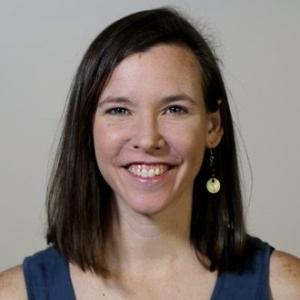
When utilizing embodied pedagogy, I am constantly aware that my own experience and positionality is limiting. I am a white woman from the southern part of the United States who is currently living in Denver. I have traveled some and have lived in several cities around the United States, but I have never lived abroad. I teach seminar-style classes where dialogue is prioritized and my students speak often. When creating my syllabi, I assign readings that represent a diversity of scholars, and which are mostly academic in focus. But even though I prioritize these things, it is impossible to represent all voices and perspectives in one course. I want to bring in stories and experiences of people from around the world, though, and I want these voices to enter the classroom, to be part of our dialogue. One way that I attempt to do this is to assign novels. Through these readings, fictionalized bodies enter the space of the classroom and allow us to broaden our view of various topics. Last quarter, I taught an introductory level course called World Christianities. One of the course objectives was to outline how Christianity grew from a small group of Jesus followers in a specific region of the world into a global religion with devotees around the world. A second objective was to acknowledge how this transition happened through violence, missionary work, colonialization, enslavement, and various forms of manipulation. To cover a topic like this in a 10-week quarter felt overwhelming at first, and I began to think of authors that I could include who could speak to the distinctiveness of Christianity in a part of the world that is distinct from my own teaching context. The novel I chose was A Grain of Wheat by Ngũgĩ wa Thiong’o. The story is set in Kenya in the 1950s and 60s, during the Mau Mau rebellion and the fight for Kenya’s independence from Britain. The main character, Mugo, spends time in a detention camp run by British colonizers, and he struggles inwardly with his interactions with colonizers, even though his village views him as a hero. Through this fictionalized story that is based on historical events, Ngũgĩ reveals the complexity of his own experiences living in a colonized place like Kenya. As Ngũgĩ discusses in this piece, choosing to write in English, the language of the colonizer, is itself a political decision. Ten years after writing A Grain of Wheat, Ngũgĩ decided to only write in Gikuyu, his mother tongue and the language of his community. I encouraged students to read this novel throughout the course, and we discussed it together during two of the final classes. During one session, we focused solely on the experiences of the characters in this novel. We used the narrative to imagine their experiences and also the ways that Christianity impacted their lives. On the one hand, many characters in A Grain of Wheat were impacted negatively by the impact of Christianity, especially as it was entangled with colonialization. On the other hand, some characters embraced aspects of Christianity and were empowered by certain biblical stories. For example, Kihika (who becomes a martyr after his death) carried a Bible with him and underlined passages of importance to him. After his death, the Bible is passed along to his family and friends who reread the passages he underlined. The text becomes a source of hope to the community. I assign novels in other classes as well. In a course I teach called Women, Gender, and the Bible, I give a list of possible novels that the students can chose from in order to follow their interests. For this class, I include novels such as The Handmaid’s Tale, Parable of the Sower, and The Color Purple. When we discuss the novels, I put the students into discussion groups according to which novel they chose. I then dedicate a class session for the groups to introduce their novel to the rest of the class. The goal of their presentation is to “convince” the other students to read this novel. At the end of the class we have a vote as to which presentation was the most convincing. Similarly, when I taught a course on Jesus in Text and Traditions, I assigned The Book of Longings to provide an imaginative view of the ways in which women could have been involved in Jesus’s life and ministry. Assignments like these have been beneficial additions to my syllabi, and they illustrate my pedagogical goal of creating classroom spaces that include a variety of perspectives as a way of encouraging dialogue. Fictional characters are embodied characters. The experiences they bring into the classroom enhance the content of the class in a number of ways. Returning to the example of Grain of Wheat, the students in World Christianities brought this novel up in their final presentations/projects and also in the course evaluations. They appreciated the inclusion of a story from another part of the world. This one novel provided them with multiple viewpoints of how Christianity impacts a community. In the space of the classroom, these fictionalized bodies came to life and spoke to us about their experiences. In a way, characters like Mugo and the novelist Ngũgĩ joined our classroom and dialogued with us, sharing their experiences and listening to ours.
Marcia Y. Riggs, PhD is the J. Erskine Love Professor of Christian Ethics and Ombudsperson at Columbia Theological Seminary. In this Silhouette Podcast Interview, Riggs discusses wanting to be an artist who made statements with her art, the inspiration of Bell Hooks' "Teaching Community: A Pedagogy of Hope," reinventing oneself in the classroom, the value of a position to help manage conflict, the superpower of seeing pattern and connection, and the importance of confronting violence rather than ignoring it as well as believing in the inherent goodness of people.
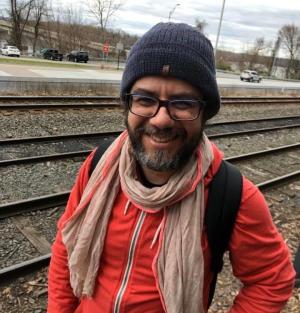
Scholarship through Performance – Part Two When I started to think about a play, I never imagined how hard it would be. To write/perform a play to bring my clown--a new entity--into existence, is a lot of work. I have a theater director working with me and he tells me to think from my body. We talk so much about bodies but we are so often consumed by our brains and mind. My Brazilian teacher, Luis Louis, tells me repeatedly: “Cláudio, you think too much! Do something first, then you can think.” Oh, this process is literally painful. I asked my teacher to be patient with me as I will struggle through this process of learning. I am learning with my teacher that I have to feel what is within me gaining form and shape, life and spirit! I have my clown living within me, but I must give birth to it! In order to do that I have to play with the movements of the body, with images, and with objects, clothes, hats, etc. And my teacher asks me many questions: How does this clown act alive on stage? Does he speak, and if so, in what language? Does he have repetitive body movements? Does your clown have large or small gestures? What is the heart of the clown composed of and what makes the clown alive? My teacher said: You bringing your clown to life is like your clown throwing a bucket of water into a world on fire, believing that you will be successful. Everybody knows that this is impossible, even ridiculous, but your clown does not know that. He wholeheartedly believes he can do it and will do it, no matter what! That is his gift to the world. The portion below shows my thinking process in engaging different forms of knowing, doing, teaching, and performing. This is how the play started to get a form and shape. Main Theme A clown called Pachamama discovers that the Gaia, the earth, is hurting, and goes around the world feeling its pain and struggling with climate disasters. He then discovers that he is Gaia and a part of it. The show is made of several skits that compose a story and a trajectory (still undefined). Everything is yet to be fully developed and needs to go through the test of practice. In each scene I want the clown moving with death and life, disaster and possibilities, sadness and joy, responding to everything with its usual clumsiness, stupidity, awkwardness, sincerity, naiveté, joy, beauty, etc. With this show, I want to help people find courage to go deep into climate disasters and find agency, hope, and faith in the midst of it all, rather than running away from it. In the end I will honor Prof. James Cone and Union Seminary, who shaped me in so many ways. Major Influences My father, Charles Chaplin, Laurel and Hardy, Emmet Kelly, and Slava’s Snow Show A Metaphor Emmet Kelly carrying a bucket of water in a circus on fire. “Seventy-two years ago today, in Hartford, Connecticut, someone photographed a clown carrying a bucket of water toward a fire. It’s a surreal image, haunting in the old black-and-white way. The clown is stepping through an arid landscape littered with what appear to be wooden crates, a lone railroad car, and the suggestion of bleachers. As clowns go, he’s the sad tramp kind, a pained grimace on his face. In front of him, to the left, someone is exiting the frame—a portion of a leg is visible—and the clown follows, gripping his bucket, exuding dread. He’s heading toward something unseen and tragic, something almost ghostly.” - William Browning This show is precisely this: the show is about a clown carrying a bucket of water to help the earth that is already on fire. Place This is a theater play to be performed at Union Theological Seminary in NYC. The chapel has no fixed seating so I hope to have people sitting on two sides of the chapel (or in a U shape) with the play happening in the middle. The space has some lightning that I can use. Here is a picture of the space. How is this all going to be and happen? I have no idea. One thing, and one thing only, I know: this is much bigger than me. It scares me so much! I hope that with practice anxiety will turn into a certain trust and that as my clown starts to move, I will feel more confident. I will let you know how it goes.
Dwight M. Hopkins, PhD is the Alexander Campbell Professor at the University of Chicago Divinity School. In this interview, Hopkins discusses his desire to be a writer as early as kindergarten, the freedom of the teaching life, the superpower of cross-cultural engagement, and the miracle of helping students realize that they much more than they think they are.
2024 Virtual Teaching and Learning Workshop Design Thinking for Religious and Theological Educators Application Deadline: September 27, 2023 Schedule of Sessions All Sessions – 1:00 - 3:00 pm ET Session 1 - January 29, 2024 Session 2 - February 12, 2024 Session 3 - February 26, 2024 Session 4 - March 11, 2024 Session 5 - March 25, 2024 Session 6 - April 8, 2024 Leadership Rev. Stephen Lewis, President, Forum for Theological Exploration (FTE) Participants Julius Bailey, University of Redlands Min-Ah Cho, Georgetown University Liam de los Reyes, Mount Angel Seminary Nick Elder, University of Dubuque Theological Seminary Barbara Fears, Howard University Kishundra King, Iliff School of Theology Andrew Krause, Associated Canadian Theological Schools of Trinity Western University Velma Love, Interdenominational Theological Center Elizabeth O’Donnell Gandolfo, Wake Forest University Divinity School K. Christine Pae, Denison University Kyle Schiefelbein-Guerrero, Lutheran Theological Seminary, Saskatoon Ashlyn Strozier, Georgia State University Jeanine Viau, University of Central Florida at Cocoa Maureen Walsh, Rockhurst University Wabash Center Staff Contact: Gina A. S. Robinson, PhD Associate Director Wabash Center 301 West Wabash Ave. Crawfordsville, IN 47933 robinsog@wabash.edu Description Educators and administrators of higher education are working tirelessly to navigate a rapidly changing environment accelerated by the effects of the global pandemic. Many are discovering how to adapt and design educational models and delivery systems for a changing industry. In a post-pandemic era, what does it mean to be teacher who employs design thinking? In what ways can design thinking help religious/theological educators and administers think, strategize, and implement new and different educational approaches? Please be mindful that participants will be expected to work on their own design projects between sessions. This online workshop invites religious and theological faculty from diverse academic disciplines to learn and experiment with design thinking methods in their work as educators and administrators. The six online sessions, with participants from diverse institutional contexts will: Examine what it means to foster greater design intelligence in their work Reflect on common challenges or constraints in developing new curriculum, educational programs or teaching initiatives Learn, practice, and develop next steps to incorporate design thinking methods in their work Sessions will include plenary and small group discussions as well as assignments between sessions to apply what participants learned. Participants will also pitch ideas for small project grant proposals up to $5,000 in order to develop next steps to practice what they learned in the workshop. After the conclusion of the online workshop, participants may opt to submit their developed grant proposal for consideration of funding. Goals To explore the tasks of teaching through the lens of design To nurture a community of learning and conversation around teaching and design To build confidence in applying design thinking principles to educators and administrators’ work context Participant Eligibility Tenure-track, tenured, continuing term, and/or full-time contingency Teaching religion, religious studies, or theology in an accredited college or university in the United States, Puerto Rico, or Canada. Job description or contract that is wholly for, or inclusive of, developing new curriculum or developing curriculum-related activities such as: degree/non-degree programs, co-curricular programs, new initiatives, new courses, revamping old courses, establishing laboratories or experimentation for teaching Institutional support and personal commitment to participate fully in all workshop sessions Participants must have the time availability to work on their own projects between sessions Application Materials Please complete and attach the following documents to the online application: Application Contact Information form Cover letter: An introductory letter describing:(a) your reasons for interest in this conversation on design thinking; (b) your institutional context and/or the class where design thinking principles could provide leverage and opportunity for enhancing and enriching your teaching and teaching life; (c) a possible curriculum, program, or teaching project for which this conversation might influence, impact or be of help. (250 to 300 words) Brief essay: Describe a recurring challenge or constraint in your institution which affects your work of teaching (beyond personnel/budget) that has hindered your developing or revising curriculum, courses, projects, or programs. Reflect on how the institutional challenge or constraint has impacted your teaching, teaching life, and how you imagine the discipline of design thinking would help address the challenge or constraint. (500-1000 words) Academic CV (4-page limit) A letter of institutional support for your full participation in this workshop from your Department Chair, Academic Dean, Provost, Vice President, or President. Please have this recommendation uploaded directly to your application according to the online application instructions. Honorarium Participants will receive an honorarium of $3,000 for full participation in the hybrid workshop. Read More about Payment of Participants Important Information Foreign National Information Form Policy on Participation
Steed Davidson, Ph.D is Dean of the Faculty and Vice President of Academic Affairs and is Professor of Hebrew Bible / Old Testament at McCormick Theological Seminary. In this Silhouette Interview, Davidson discusses his childhood desire to be a meteorologist and the pride of his family in his profession. Also: surprise at the difficulty of the teaching life with its constant attention, the superpower of mediation and the "Sense of We," surviving violences by writing and community, and the miracle of igniting students' curiosity.
2024 Hybrid Teaching and Learning Workshop Early Career Theological Faculty Craft in the Teaching Life: Sustaining Pleasure throughout the Teaching Life Application Deadline: September 27, 2023 Schedule of Sessions All Virtual Sessions – 12:15 - 2:45 ET Session 1 - February 8, 2024 (virtual) Session 2 - March 14, 2024 (virtual) Session 3 - April 25, 2024 (virtual) In person: June 10-14, 2024 - Wabash Center on the campus of Wabash College Session 4 - August 1, 2024 (virtual) Session 5 - September 26, 2024 (virtual) Session 6 - October 24, 2024 (virtual) Leadership Team Katherine Turpin, PhD, Iliff School of Theology Willie Jennings, PhD, Yale Divinity School Participants Karri Alldredge, Lutheran School of Theology at Chicago Jennifer Aycock, Hood Theological Seminary Adam Bean, Milligan University Yara González-Justiniano, Vanderbilt University Deidre Green, Graduate Theological Union Joelle Hathaway, Bethany Theological Seminary Kathryn House, Meadville Lombard Theological School Emily Jendzejec,Loyola University New Orleans Sarah Kathleen Johnson, Saint Paul University Cody Sanders, Luther Seminary Megan Strollo, Union Presbyterian Seminary Nicole Sarita Symmonds, Columbia Theological Seminary Eric Williams, Duke University Rachel Wrenn, Trinity Lutheran Seminary at Capital University Wabash Center Staff Contact: Nancy Lynne Westfield, PhD Director Wabash Center 301 West Wabash Ave. Crawfordsville, IN 47933 westfiel@wabash.edu Description This hybrid workshop invites participants to explore the craft in teaching. Through conversations, artistic experimentation, and creative expression, we seek to discern how to sustain pleasure in a teaching life. We will consider sustaining pleasure through forming a healthy distance from one’s doctoral formation, gaining a strong sense of agency in one’s institution, engaging one’s discipline on one’s own terms, claiming one’s freedom in the classroom, and attending to the whole person as a teacher. Participants can expect to: Think alongside crafts persons and artisans about their creative process Explore artistic expression in their own lives Experience collegial work in an environment that is relaxing and restorative Imagine ways of teaching and learning that evoke curiosity, joy, and hope The hybrid workshop will gather for six online sessions and an in-person summer session at the Wabash Center in Crawfordsville, IN. Sessions will include small group and plenary discussions, structured and unstructured social time, and time for personal and communal growth, relaxation, restoration, and shared meals. Goals To identify those elements that sustain pleasure in the teaching life To cultivate a strong sense of agency and freedom in the teaching life, the classroom, and the institution To establish a practice of experimentation that aligns with their teaching commitments and values To develop a network of colleagues and co-collaborators as an ongoing resource for their teaching life Participant Eligibility Completed 1-5 years of teaching in a full-time, tenure track or other continuing position Doctoral degree completed by end of Spring 2022 Tenure decision (if applicable) no earlier than Spring 2026 Teaching in an accredited seminary or divinity school in the United States, Puerto Rico, or Canada Job description or contract that is wholly or primarily inclusive of teaching Application Materials Please complete and attach the following documents to the online application: Application Contact Information form Cover letter: Write a cover letter that describes why a Wabash workshop, given the diverse makeup of its participants, would be helpful to you at this point in your career. What role do you see peer colleagues and collaborators playing in your growth as an early career teacher and scholar? Brief essay: In 500 words or fewer, describe moments of pleasure in the teaching life that you hope to sustain throughout your career. Choose moments that bring us into your classroom, your particular discipline, and your institution. Academic CV (4-page limit) A letter of institutional support for your full participation in this workshop from your Department Chair, Academic Dean, Provost, Vice President, or President. Please have this recommendation uploaded directly to your application according to the online application instructions. Honorarium Participants will receive an honorarium of $3,000 for full participation in the hybrid workshop. Read More about Payment of Participants Important Information Foreign National Information Form Policy on Participation
Lisa L. Thompson, Ph.D is Associate Professor and the Cornelius Vanderbilt Chair of Black Homiletics and Liturgics, Homiletics and Liturgics at Vanderbilt University Divinity School. Thompson discusses the childhood dream of being an OBGYN, rejecting the false dichotomy between scholarship and teaching, and the ways in which faculty can be punished for being good teachers. Also: the superpowers of intuition and the facilitation of creativity, community as the key to surviving violence, the miracle of helping people own their voices, and cultivating institutions that facilitate creativity.
Wabash Center Staff Contact
Rachelle Green, Ph.D.
Associate Director
Wabash Center
greenr@wabash.edu