Resources
In the third edition of Understanding and Promoting Transformative Learning, Patricia Cranton provides new insights into the field of transformative learning. Cranton promotes transformative learning, addresses transformative learning theory, and offers strategies for the concept itself. The author examines and promotes transformative learning in multiple contexts: higher education, business industry, government, health professions, nonprofit organizations, and community development. Cranton traces the origin of the concept of transformative learning and then gives a full description of the theory from an integrative perspective. In doing so, she shows the reader that transformative learning takes place both individually and communally. A minor weakness of the book is its use of specialized psychological terminology; the reader unfamiliar with it may lose focus on the overall purpose of the book as they strive to understand the meaning of particular words and phrases. That said, the book is helpful for understanding transformative learning theory, practice, and strategy. These insights alone aid faculty in developing effective teaching strategies to advance student learning. In addition, the author shows not only the importance of the subject, but how it can be used in real life applications. This book is valuable because it focuses on the core of what it means to learn. At the forefront of this learning is an acknowledgement of various ways of knowing and the author provides examples of these. I was particularly drawn to the section that discusses dialogue, discourse, and support. This section of the book resonates with me because it fits into my own theory of critical pedagogy. The student should be impacted by learning in such a way that it transforms not only the learner, but the learner’s society as well. Understanding and Promoting Transformative Learning is particularly valuable for helping educators see their role in the learning process. The methodology described throughout the book leads to self-reflection, critical reflection, and thinking about how one’s teaching may fit into contemporary contexts. Furthermore, it converts the process of reflection into active participation in society. Additionally, the book discusses empowerment and the importance of dialogue to this process. This book is valuable in its demonstration of how dialogue is critical to transformative learning and can help the reader see how this affects student self-awareness and consciousness. Overall, I found this book to be a valuable asset for those interested in social justice and especially for teachers interested in transformative learning.
Editors Cano and Ion offer a group of international voices in their contribution to the Advances in Higher Education and Professional Development Book Series (series editor, Jared Keengwe), with this volume focusing on innovative practices in assessment. The book’s organization structure involves general contents followed by a detailed table of contents with full abstracts for each chapter, then a thorough summary of each of the twenty authors’ works in the preface before turning to relevant chapters. Such a format facilitates pinpointing the reader’s interest in particular methodologies for assessment, measurement, and data-gathering. The volume itself is divided into three main sections: (I) Theoretical Approaches on Students’ Assessment, (II) Research-Based Evidences on Assessment, and (III) Innovative Practices in Students’ Assessment. The editors claim that the purpose of their book is to attend to an international level of assessment innovation with a triple perspective (theoretical, practical, and research-based), that integrates theory and practice to enrich the field of assessment (xvii). Authors have created scenario-specific assessment innovations and practices in each of their chapters so readers have a variety of choices from which to draw ideas. Section I focuses on engaging students in self-, peer-, and professor-based assessment loops. Self-regulated learning that is based on assessment, both in face-to-face and online environments, is addressed in the chapters one through three, and six. Competency-based assessment, where student competencies are measured against standards of performance, is illustrated in chapter four. “Brain-Based Learning” discusses the neuroscience of feedback and application to contexts in chapter five. “Comparative Judgement” is introduced in chapter seven as an alternative assessment domain to counter standardized tasks and test scoring. Section II moves to research about assessment versus testing cultures, beginning in chapter eight with meaning-oriented learning rather than recall and recognition learning. Research in this chapter shows that students will make the effort to succeed when asked to do more complex thinking than is required for standardized testing. Feeding back and feeding forward are discussed as case studies and analyses in chapters nine and ten. Self-direction and student participation are also analyzed in case studies in chapters eleven and twelve, followed by online assessment projects conducted in Portugal and Spain in the remaining two chapters of this section. Section III names innovative practices in student assessment. The remaining chapters in the book (fifteen through twenty) attend to pedagogical approaches to incorporate assessment into the learning endeavor. The chapters include case studies and strategies. Practical applications including project-based learning and formative assessment are outlined by each set of authors. The book is a reference resource, best used by browsing topics and making choices about which innovative approaches to assessment best fit one’s own context. There is some overlap in authors’ experiences, reinforcing the validity of the international research and pedagogical approaches. This resource, filled with illustrations, should be available in libraries for institutions of higher education that are working on self-study and self-assessment. There is much here to aid teachers in honing their attention to assessment excellence as part of the pedagogical task.
Richmond, Boysen, and Gurung’s work provides a much-needed resource for new teachers and is valuable to experienced teachers as well. The text is both concise and comprehensive concerning the current state of the Scholarship of Teaching and Learning (SoTL). The authors are psychologists who include their disciplinary insights, as well as provide important examples and resources from disciplines in the sciences, social sciences, and humanities. Chapters one and two set up the context of the “model teacher.” Rather than providing an essentialist answer to the definition of the model teacher, the authors focus on behaviors that produce consistent ideal results in the classroom. Chapters three through five – focused on teacher training, instructional methods, and student learning respectively – are useful to new teachers. As a text for initiating teachers, these chapters provide a reliable systematic introduction to key ways in which teachers interact with students in the classroom. These chapters should be complemented with discipline-specific examples or readings in graduate school teaching programs. Chapters six and seven on assessment of student learning and syllabus construction are the most valuable to teachers at any stage in their career. The insights into the scholarship on assessment is invaluable for the development of class, departmental, and university-wide curriculum. These two chapters are the most practical chapters for reconsidering the significance and purpose of teaching strategies and assignments. Finally, chapter eight examines student evaluations. There are many important insights in this chapter for new teachers on how to engage meaningfully with student summative evaluations. One point of interest was the authors’ statement on the significance of student satisfaction with a course. The authors could have included a lengthier conversation on how to meaningfully address the question of student satisfaction. In the end, “evidence-based” means that one organizes the multiple resources we employ in higher education in a way that substantiates the claims we wish to make. This text provides concrete advice that is useful for the novice; it is also a helpful aid for anyone wishing to mentor others in the art of teaching. An Evidence-based Guide to College and University Teaching employs an engaging hypothetical dialogue with the reader and an interactive approach. There are self-assessments at the beginning and end of each chapter along with hypothetical case studies for each chapter. An appendix at the end presents the uninterrupted self-assessment scale on sixty-four criteria for model teachers. These elements are excellent resources for group discussion in graduate seminars or faculty retreats. This book presents an accessible synthesis of the SoTL literature. It is successful as a gateway resource to the dialogue from the last forty years on pedagogical best practices. The text is limited in terms of the depth that it covers given the myriad topics it addresses, but it provides a solid beginning to engage the conversation.
This slender volume presents a collection of essays examining concerns for adult education. The first chapter frames the problem with the concept of “liquid modernity,” which is the idea that structures such as family, occupation and career, and social life are fluid in an unprecedented way (12). Education and informal learning serve learners if they teach them how to navigate complex contexts and to recognize and adapt to changing circumstances. The metaphor of “tectonics” is used to describe forces which are sometimes convergent, divergent, and/or transformative in adult learner’s lives (93). This metaphor underscores the paradox that for adult learners, education needs to complement the structures of their lives while at the same time responding to the modern world’s shifting demands. Other chapters explore various contexts of adult learning. Chapter Two discusses the concerns of adults learning English as a second language. As immigrants, these learners are in transition, adjusting to new circumstances and a new culture. In order to make their education meaningful and engage them in learning, the authors describe strategies of using prompts to get students speaking and writing about their lives and their experiences to practice English, to engage students, and make their education meaningful (25). Chapter Three describes the growth of job clubs among communities of African-American women. These clubs are often attached to other institutional social networks in their lives, such as faith-based communities. These networks facilitate informal learning by providing tips and resources for members to update their skills. Chapter Four addresses education for the dissemination of health information, describing interrelated cultural, social, and economic factors that impinge on health education and which in turn impact health care outcomes. Chapter Five takes the digital native versus digital immigrant divide to examine intergenerational differences in approaching education. The challenge for educators is to design educational content which engages natives yet is also friendly and inviting for immigrants, and to shift the mode of adult education from thinking about teaching to thinking about learning. Chapter Six describes the significance of the ancient art of storytelling, not just to preserve culture, but to evoke and shape the meaning of life experiences for adult learners. Chapter Seven begins with the context of a post-recession economy in which low-skilled workers are increasingly vulnerable. This context provides the foundation for a discussion of the role of adult education: to build human capital, to make better citizens, and to enrich the course of learner lives. Chapter Eight outlines problems of delivery, credit, and accreditation that result from the tectonic shifts of the modern digital age. These shifts include such varied educational modes and attainments as badges, MOOCs, and "direct assessment competency-based programs" (87). The book’s strength rests in its ability to point to the concerns that frame contemporary adult education, although it does not describe pedagogical strategies in an equally consistent fashion. The book ends with the important reminder that in adult education, negotiation is key. Adaptability and flexibility complement the issue of fluidity. Good pedagogy meets learners where they are and recognizes their needs and concerns.
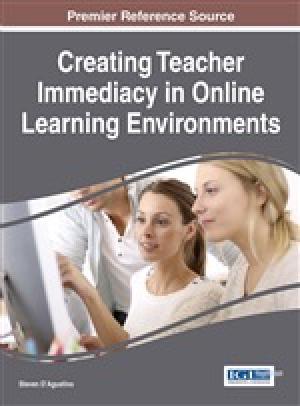
A key issue in distance education is how to establish a vital two-way, personal communication between learner and instructor. Borje Holmberg, among other theorists, argues that the primary role of an instructor is to empathize with the learner; imparting information is a secondary matter. What, then, are the most effective ways to form a dyadic alliance between a learner and instructor? This is the major question that D’Agustino’s Creating Teacher Intimacy in Online Learning Environments seeks to answer. This is a reference work, so it can be read profitably article by article or completely. The volume begins with a helpful detailed table of contents that provides a brief synopsis of each chapter. There is also a useful foreword by Karen P. Kaun which underscores the importance of the human component in teaching and learning regardless of the instructional format. The preface speaks to the impact of the “interactive turn,” the “undesigned remainder,” and the “modelling function” in asynchronous learning. In addition, there is a brief description of each chapter that complements the summaries in the table of contents. Every chapter also starts with an abstract and an introduction. Pedagogy, not technology, is the focus of each chapter. Therefore, this reference is valuable for course designers, media specialists, instructors, and researchers across a range of academic disciplines. That said, there are a few chapters that all will want to read and ponder. Oliver Dreon’s “Building Teaching Presence in Online Classes,” for example, provides an overview of the main issues along with strategies that support learning and interaction. A list of design principles is included, suggestions for future research are indicated, and there is a concise paragraph of conclusions plus an extensive list of references. A central contention made by Dreon is that practices that contribute to high quality, traditional undergraduate instruction also apply to establishing meaningful instructor presence in online classes. Many readers will also want to look closely at Caroline M. Crawford’s “Instructor Immediacy and Authenticity: Engaging in Cognitive Vulnerability within the Instructional Environment.” Often, learner success in an online course – synchronous or asynchronous – will largely depend on the instructor’s efforts to generate worthwhile interactive opportunities. These activities require that the instructor have a clear philosophical belief system united with an understanding of the learner’s cognitive vulnerability in an online environment. Crawford explores these core issues while calling for the development of a “talent propelled” instructional environment. Neal Shambaugh’s “Interactivity and Immediacy in Online Academic Programs” addresses quality issues in higher education distance classes. This is an important theme because, as D’Agustino notes in the preface, “online learning still has a perceived lack of legitimacy” (xxiv). Shambaugh advocates interactivity as a method to counter this concern. He offers a list of best practices for creating and sustaining online immediacy. Then he sketches a series of recommendations for undergraduate, master’s, doctoral, and specialized programs, such as teacher education, certificates, and professional development. There is an extensive compilation of references and notes about the contributors that conclude this collection. The references alone are an excellent guide for further research and course syllabi.

There can be no question that understanding (implicit or explicit) learning theory undergirds effective teaching. This is especially true when instructional topics become confusing or diverge from the common experience of students. Many of the topics students encounter as they study theology and religion fall into this category, and it is for this reason that the collection of Knud Illeris’s works, Learning, Development and Education, has value for teachers of theology and religion. Illeris has spent his career figuring out how learning works and determining how to create authentic, transformative learning experiences. This collection of essays demonstrates the way in which Illeris’s theories developed over time, and shows the breadth of topics that come to bear on the understanding of student learning. Illeris categorizes his selected works into five parts, containing essays that were originally published between the late 1990s and 2015. Some of the essays have not previously appeared in English. The first two sections have the most bearing on the teaching of theology and religion, so they will be the focus of this review. The three essays in Part One succinctly describe Illeris’s comprehensive theory of learning, articulated more fully in his 2007 monograph How We Learn (New York: Routledge). In brief, Illeris argues that learning has two fundamental processes and three dimensions. The processes are “an external interaction process between the learner and his or her social, cultural, or material environment, and an internal psychological process of elaboration and acquisition” (10). Illeris also identifies three dimensions of learning: the content dimension deals with the material being learned, the incentive dimension considers the motivation and energy necessary for learning, and the interaction dimension categorizes dispositions that provide the genesis of learning. Illeris further identifies several barriers to learning (15-17) after recognizing that education is rife with “non-learning and mislearning” (15). According to Illeris, there are four types of learning: cumulative, assimilative, accommodative, and significant/transformational learning. Each of these types of learning is connected to a phase in psycho-social development in Part Two, where Illeris lays out his understanding of lifelong learning (48-55) and gives extended treatment to the function of learning at the youth and adult stages. He argues that education during the phase of youth is typified by a quest for what he calls “self-orientation,” which means the “process where one orients oneself with a view to finding oneself, one’s options, ways of functioning, and preferences” (69). In his view, all educational experiences (inside and outside of the classroom) contribute to and are undergirded by the youth’s quest for self-orientation. The situation is different with adult learners, who have already found their orientation, and so accept responsibility for their actions and their learning. In Illeris’ estimation, this different approach to learning requires different foundations for adult education. Part Three, “Special Learning Issues,” is a compilation of chapters that do not fit in the other sections but provide a theoretical grounding for the arguments Illeris makes in parts one and two. Part Four, “Various Approaches to Education,” includes the oldest of the selected articles, and describes how some of Illeris’s theories were put into practice at Danish universities in the 1970s. The final part concerns learning in working life. Here Illeris applies his comprehensive theory of learning (articulated in Part One) to the workplace. While there is certainly room for criticism of Illeris’s understanding of learning, and in particular, his connections of types of learning with phases of psycho-social development, Illeris’s comprehensive theory of learning is helpful as a foundation for effective theological education. Three observations, in particular, deserve mention. First, his contention that learning is not merely knowledge transfer, or skills acquisition, but includes a variety of psychological, biological, and social factors is worth keeping in mind as we construct learning experiences for our students. Second, Illeris’s observation that youth and adults have a different foundation for learning is significant, especially as there are now more adults students enrolling in college than ever. Finally, it is incredibly important to consider the various barriers students face as they try to learn. While it is certainly the case that students are responsible for their education, Illeris is right to argue that teachers both create and tear down barriers.
2011 Online Course for Theological Faculty Teaching Online Dates May 31 to July 30, 2011 Course Fee: $100 per person (due upon enrollment, after being accepted, in early May) The Wabash Center is increasingly aware of the growing number of seminaries that offer at least some of their curriculum online. The circumstances that lead to the use of online seminary courses are many and complex. The pedagogical challenges and opportunities of online seminary coursework are of particular concern. Therefore, as part of our mission to enhance teaching and learning, we have contracted with the University of Wisconsin-Madison's Distance Education Certificate Program – a nationally recognized leader in instructional design for e-learning environments – to offer an 9 week online class for seminary faculty to learn about and experience effective practices for teaching online. Please direct your questions to the Wabash Center, not the University of Wisconsin program. Eligibility: We invite deans, rectors, or principals at accredited theological schools and seminaries in the US and Canada to nominate a faculty member to participate. This letter of recommendation should accompany the faculty member's application (see "How to Apply," below), and should include a brief description of the seminary's plans to use online learning in its coursework, and the applicant's role in these plans. (Only one applicant from each school.) More About the Course This an introductory course that will present the major elements involved in using the internet for instruction. It will be conducted online to provide hands-on experience with online learning. The course is designed to accommodate faculty with a wide range of online teaching experience. No prior experience is necessary; course material will be valuable to faculty at more advanced levels as well. It will use a "principles-to-practice" approach that presents guidelines and strategies for applying principles of online learning to the practices of individual faculties' online courses. Each week will include resource materials, readings, and online activities to engage participants in active discussion, debate, case studies, mini-projects, and other group or individual work. The course will use threaded discussion forums and an asynchronous format, (meaning you can log in at any time to read and post messages –), although posting early in the week and then later in the week is required for group cohesion. This is a concentrated, resource-rich, learning experience. You must think through what you're hoping to learn, to help guide you in selecting resources most relevant to your situation and context. The approximate time commitment is 8-10 hours per week for reading and activities. To participate, you must be able to log in and post responses at least twice every week. There is no "certificate" that is awarded for successful completion of the course. You will need a computer with a broadband connection to the internet, a browser such as Internet Explorer 6.0 or later, and Flash Player Plug-In (or be able to download the free plug-in). 2011 Online Course Participants Deborah Appler, Moravian Theological Seminary Lee Barrett, Lancaster Theological Seminary Margaret Benefiel, Andover Newton Theological School Donald J Brash, Palmer Theological Seminary - Eastern Univ Thomas Cattoi, Jesuit School of Theology at Berkeley Steven L. Cox, Mid-America Baptist Theological Seminary Suzanne Coyle, Christian Theological Seminary Venita Doughty, Denver Seminary David G. Garber, McAfee School of Theology - Mercer University Craig Hill, Duke Divinity School Denise Dombkowski Hopkins, Wesley Theological Seminary Jamal-Dominique Hopkins, Interdenominational Theological Center Thomas Jackson, Claremont School of Theology Loren L. Johns, Associated Mennonite Biblical Seminary Cindi Beth Johnson, United Theological Seminary of Twin Cities Kent Kersey, Corban College, and Graduate School Hwacha Kim, World Mission University Cindy L Kissel-Ito, Union Presbyterian Seminary Thomas McDermott, Kenrick-Glennon Seminary Ruth A. Meyers, Church Divinity School of the Pacific Christine Mitchell, St. Andrew's College Gilles Mongeau, Regis College Samuel Ogunboye, Harvest Bible College Vicki C. Phillips, West Virginia Wesleyan College Carl Savage, Drew Theological School Vincent Skemp, St. Catherine University Laurie Ziliak, Saint Mary's University of Winona Course Topics 1. Major differences and similarities between online teaching and face-to-face teaching 2. Online course models and best practice principles (including the "hybrid model" that blends distance education and face-to-face education) 3. The role of the instructor and course management issues 4. The role of the learner and motivation 5. Interactive teaching strategies 6. Facilitation and communication techniques 7. Formation, community, and spirituality in the online seminary classroom 8. Application issues and questions in online teaching
2011 Workshop for Hispanic Theological Initiative Fellows Dates January 21-23, 2011 -Catholic Theological Union, Chicago A gathering of Hispanic Theological Initiative (HTI) Fellows to discuss issues about teaching and learning related to syllabi design, professional teaching development, and other issues related to the first years of teaching. Leadership Team Milagros Peña, University of Florida Joanne Rodriguez, Hispanic Theological Initiative David Sanchez, Loyola Marymount University Paul Myhre, Wabash Center Participants Enrique Báez García, Andrews University Victor Carmona, University of Notre Dame Jeremy Cruz, Boston College Rebecca Davis, Presbyterian College Neomi DeAnda, DePaul University Alex Gonzales, Dallas Theological Seminary Cecilia González-Andrieu, Loyola Marymount University Jacqueline Hidalgo, Williams College Néstor Medina, Queen's University Ana Therese Morua Bedard, Loyola University Chicago Adriana Nieto, Metropolitan State College of Denver Gilberto Ruiz, Emory University David Sanchez, Loyola Marymount University
2011-12 Teaching and Learning Workshop for Pre-Tenure Asian & Asian American Religion and Theology Faculty Dates July 18-23, 2011 - First Summer Session at Wabash College January 26-29, 2012 - Winter Session at Mustang Island June 25-30, 2012 - Second Summer Session at Wabash College Leadership Team Kwok Pui-Lan, Episcopal Divinity School (Director) Zayn Kassam, Pomona College Tat-siong Benny Liew, Pacific School of Religion David K. Yoo, UCLA Thomas Pearson, Wabash Center Front Row (left to right): Himanee Gupta-Carlson (State University of New York Empire State College), Keun-Joo Christine Pae (Denison University), Aysha Hidayatullah (University of San Francisco), Karen Yonemoto (Claremont McKenna College). Second Row: *Zayn Kassam (Pomona College), Lily Vuong (Valdosta State University), Martin Nguyen (Fairfield University), Bo Lim (Seattle Pacific University), Courtney Goto (Boston University School of Theology), Patrick Cheng (Episcopal Divinity School), *David Yoo (UCLA), *KwokPui-Lan (Episcopal Divinity School), Tamara Ho (University of California – Riverside). Third Row: Peter Vethanayagamony (Lutheran School of Theology at Chicago), Simon Lee (Andover Newton Theological School), *Thomas Pearson (Wabash Center), *(Tat-siong Benny Liew (Pacific School of Religion), Andrea Jain (Indiana University-Purdue University Indianapolis). *leadership/staff position
2011-12 Teaching and Learning Colloquy for Theological School Deans Dates June 27-July 2, 2011 - First Session at Wabash College March 7-11, 2012- Second Session at Mustang Island Leadership Team Melanie Duguid-May, Colgate Rochester Crozer Divinity School(Director) Efrain Agosto, Hartford Seminary William Cahoy, St. John's University Paul O. Myhre, Wabash Center Eligibility • Full-time chief academic officer in an accredited seminary or theological school in the United States, Puerto Rico or Canada • A minimum of one academic year of service as dean by June 2011 • Commitment to full participation from the opening to closing for both colloquy sessions Description This colloquy will gather 15 deans for two week-long sessions – one in June 2011 and the second in March 2012. It will explore the vocation of a theological dean as an academic leader and the role of the dean as a change agent in the fast changing contours of theological education in the early years of the 21st century. Theological deans are called to be leaders, educators, teachers, administrators, scholars, mentors, church leaders, and managers. Balancing this complex web of roles and tasks requires time for reflection, planning, and self-care, which this colloquy hopes to provide in a collegial and confidential atmosphere among peers. The colloquy will explore such questions as: What are the most pressing issues facing theological education in the next 5 to 10 years? What are the leadership styles and best practices that would enable a theological dean to navigate the realities of the religious landscape? How will theological deans help faculty and institutions engage the competing expectations from the academy, church, and society? How will theological deans address the pressure to provide accessible, short-term preparation, and alternative degrees while meeting the needs of students with divergent backgrounds and ministerial paths in relation to an ongoing commitment to academic integrity and quality preparation in the 21st century? How do deans creatively engage institutional responsibilities such as assessment, accreditation, and curriculum development as a means toward responding to the pressures and challenges of theological education in a changing world? How does the dean serve as leader of and advocate for the faculty in the context of shared governance structures that include the president and board of trustees? How does one find, recover, inspire, and retain joy in the strife of deaning? Workshop Goals To provide an opportunity for professional growth in a collegial and confidential atmosphere among peers To deepen understandings of the interrelatedness of religious and ecclesial ecologies, the vocation of deans, the mission of theological schools, and the purpose of theological education To identify the best practices – skills, strategies, styles – for the dean to strike a balance between vision setting and the day-to-day operations of academic life in a theological school To encourage theological deans to develop specific action plans that nourish their own vocations, nurture relationships with colleagues in leadership, faculty, and external constituencies, and enhance professional capacities To clarify the dean's role as a teacher among teachers who leads faculty development in teaching and learning Front Row (left to right): Lynn Jost (Fresno Pacific Biblical Seminary), Jack Holland (Emmanuel Christian Seminary), Randy Litchfield (Methodist Theological School in Ohio), Arch Wong (Ambrose University College Seminary), and Albert Hernandez (Iliff School of Theology). Second Row: *Paul Myhre (Wabash Center), Leanne Van Dyk (Western Theological Seminary), Robert Alvis (Saint Meinrad School of Theology), Elizabeth Liebert (San Francisco Theological Seminary), *Melanie Duguid-May (Colgate Rochester Crozer Divinity School), *William Cahoy (St. John’s School of Theology Seminary), and *Efrain Agosto (Hartford Seminary). *leadership/staff position.
Wabash Center Staff Contact
Rachelle Green, Ph.D.
Associate Director
Wabash Center
greenr@wabash.edu