Resources

Journal Issue.

Journal Issue.

Journal Issue.
This volume provides the latest recommendations on how to address the needs of students in transition at the collegiate level. Understanding Students in Transition covers transitions affecting recent high school graduates, community college transfer students, older adults returning to education, and students displaced by natural disasters. Addressing the needs of students in the midst of change, particularly those who are part of the "millennial generation" (those born between 1982 and 2003), requires a full understanding of today's students and what they bring to their new college experience. Understanding Students in Transition is designed for practitioners looking to understand the changing landscape of today's college students. Articles present a mix of research and practical issues that will be relevant and useful to various stakeholders on a college or university campus. (From the Publisher)

From the urbanization of the Gilded Age to the upheavals of the Haight-Ashbury era, this encyclopedic work by Glenn Miller takes readers on a sweeping journey through the landscape of American theological education, highlighting such landmarks as Princeton, Andover, and Chicago, and such fault lines as denominationalism, science, and dispensationalism. The first such exhaustive treatment of this time period in religious education, Piety and Profession is a valuable tool for unearthing the key trends from the Civil War well into the twentieth century. All those involved in theological education will be well served by this study of how the changing world changed educational patterns. (From the Publisher)
The history of the Christian spiritual life suggests that those who truly teach the spiritual life have been themselves "taught by God." The phrase "taught by God" occurs in Christian writings across several centuries. This book draws on the teachers and teaching models that animate Christian history, bringing it into conversation with the issues and concerns of contemporary teachers and learners who seek to follow Christ. The authors contend that the various strands of the Christian spiritual and mystical tradition provide continuing guidance for Christian teachers in the cultivation of their own spiritual lives and the lives of their students. They order this book around four aspects of Christian educational ministries: the identity of the teacher, contexts in which we teach, models for teaching, and evaluation of teaching. (From the Publisher)
Now in its fourth edition, this widely acclaimed sourcebook remains one of the most up-to-date and inclusive works on teaching writing today. In this edition, the editors have added twelve new essays and deleted several from the previous edition, making the content as timely as possible. Emphasizing the importance of adapting good pedagogy to multiple environments and audiences, this unique collection features some of the most intellectually exciting and pedagogically sound articles in the field. The Writing Teacher's Sourcebook, 4/e, is the definitive resource for beginning and experienced teachers alike. (From the Publisher)
Within at least the past twenty years, there has been a dramatic "narrative turn" in the humanities and social sciences which finds its source in the understanding of narrative as the primary structure of human meaning making. Researchers and practitioners in psychology, adult development, and education have given increasing attention to the power and pedagogical effectiveness of narrative. The purpose of this book is to apply these insights to our understanding of adults as learners. We know that the telling of the personal experience narrative is a powerful avenue to self-understanding, transformative learning, and personal growth. We explore these and other ways in which narrative can inform the practice of adult education, as well as how we can understand learning as a narrative process. (From the Publisher)
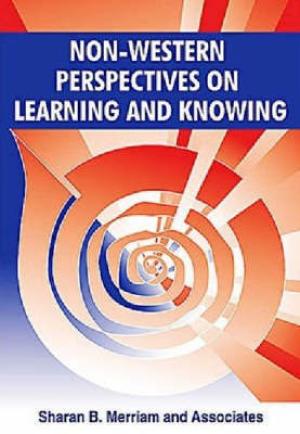
This book introduces readers to systems of knowing and learning different from our familiar Western educational tradition. As with other areas of education, the knowledge base that has developed around adult learning and education has been firmly lodged in Western values and culture. But we need only look beyond our borders as well as to our own indigenous Native Americans to find major systems of thought and beliefs embedded in entirely different cultural values. Chapters on Native American Indigenous Knowledge, Confucianism, Hinduism, Islam, Buddhism, Maori, Latin American Perspectives and African Indigenous Knowledge will acquaint readers with alternative understandings of learning, leading, it is hoped, to a more holistic understanding of adult learning. (From the Publisher)
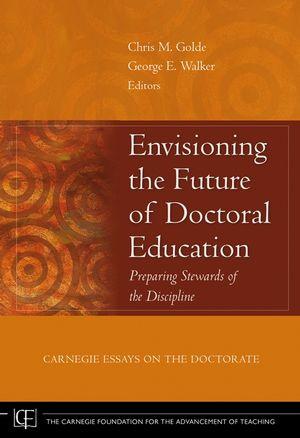
The development of students as “stewards of the discipline” should be the purpose of doctoral education. A steward is a scholar in the fullest sense of the term—someone who can imaginatively generate new knowledge, critically conserve valuable and useful ideas, and responsibly transform those understandings through writing, teaching, and application. Stewardship also has an ethical and moral dimension; it is a role that transcends a collection of accomplishments and skills. A steward is someone to whom the vigor, quality, and integrity of the field can be entrusted. The most important period of a steward’s formation occurs during formal doctoral education. Envisioning the Future of Doctoral Education is a collection of essays commissioned for the Carnegie Initiative on the Doctorate. The question posed to the essayists in this volume was, “If you could start de novo, what would be the best way to structure doctoral education in your field to prepare stewards of the discipline?” The authors of the essays are respected thinkers, researchers, and scholars who are experienced with and thoughtful about doctoral education. (From the Publisher)
Wabash Center Staff Contact
Sarah Farmer, Ph.D.
Associate Director
Wabash Center
farmers@wabash.edu