Resources
Unprecedented, novel, first-time - these are accurate descriptors of the pandemic. This harsh and slowly unfolding, global crisis has triggered: national and international quarantine; all of education simultaneously moving online; re-established family routines to include homeschooling and working from home – sometimes on the same dining room table; elders separated and feeling abandoned in care facilities; rebooted work lives to exclude travel and mercilessly increased digital meetings; recalibrated sense of security to include the uncertainty of not knowing when the “all clear” will be sounded. The imaginary parent manual does not include home schooling for all the children at a moment’s notice. There is no section in the faculty handbook for when students go-missing during crisis pedagogy. There is no research which proves the brain atrophies with each minute of Zoom conferencing. What do leaders do when there is no experience to draw upon? What do we do when we are faced with a challenge never before faced? If, as they say, “experience is the best teacher” - what does one do in this unprecedented societal upheaval? Like most young people, I had little patience when my parents referenced their experiences for my learning. My impatience increased when their recollected stories were utilized as a warning or to point out about my shortcomings. I had little interest in conversations which started with, “when I was a child…” or “back in my day…” Now, I, at the tender age of mid-to-late 50’s, have an appreciation for my parent’s wisdom teachings because I now realize the value of learning from and mining previous experiences. However, this pandemic, in a digital age, is most certainly without precedent. My hunch is that drawing too deeply upon the faux simile of past experience will not equip us to grapple with the current upheaval or the too slowly coming future. By now, we all have participated in conversations comparing this historic moment to 9/11 or comparing this to NYC in the HIV epidemic or comparing this pandemic to the pandemic of 1918 or comparing this moment to the many episodes of “the plague” throughout history. While we can draw comparisons, we already know this is not any of those events. This is significantly different. Those comparisons seem not big enough, not violent enough, of too small a scope or not close enough to home. As we search for previous experience from which to extrapolate for this moment, we come up short. What do you do when you have never had to do for such a time as this? The first impulse is to do …. do something, do anything that provides a flurry of activity that looks like you are in charge, knowledgeable, and making a difference. Leaders begin to organize and strategize in categories such as immediate plans, intermediate plans, and long-range plans. I know I did. The uniqueness of this exhausting pandemic is that it is still unfolding, it is still unfurling. We cannot see around the corner. We cannot see over the hill into the intermediate or into the long term. The first impulse “to do” makes sense, but it is feeble and lacks deep consideration for the current reality. The danger will not pass until a vaccine is made and widely distributed or until a cocktail of medications is approved. What do you do when you cannot, realistically, plan? Perhaps, in unprecedented situations, the better doing of leaders is to pause; not an idle pause, but the kind of pause to rethink, reconceive, reengineer based upon the ever-changing crisis. We tend to think of waiting as being idle or complacent. In this case, I am suggesting taking time to in waiting as time of watching, observing, rethinking, dreaming. Waiting, in unprecedented times, might mean watching the changes, observing the signs, listening both inside and outside of yourself and of your community. Waiting as imagining the next steps, fantasying possibilities, even when it is not clear what is possible. Moving into a mode of waiting is a recognition that adaptation, contingency, or revision will not work for the long haul in this unprecedented time. Waiting, pausing, listening might mean the recognition that what is needed to move forward is new design, newfangled ways, and innovative teaching models. Several deans and presidents are making a three-pronged plan for the fall semester. First, they plan to, as soon as possible, get back to business as usual – face to face education in the fall. Then, if there is a second wave of COVID 19, they plan to move the teaching to online for a prescribed period of time with plans to return to face to face before semester’s end. Third, if the virus wave lasts a long time, they will move the teaching to online for an extended period of time or through the end of the semester. The challenge of the three-pronged plan is that most institutions do not have the where-with-all for such nimbleness. Staffing and teaching, while attempting to pivot between a three-pronged plan, is beyond the institutional capacity of most schools. And, we have learned that moving from face-to-face syllabi to online teaching results in crisis pedagogy and not thoughtful, quality, online pedagogy. A three-pronged contingency plan would need three syllabi. The strategies I hear good administrators planning are simply too simple to meet the complex and vexing times we suddenly are hit by. This strategy will be like a band aid for a gaping wound. It is speculated that viral waves will be active in the future. It is suspected, just like the flu and cold season we are accustomed to, this highly fatal strain of virus will mutate and join the cycle of flu and cold seasons. Based upon this speculation, it would behoove us not to modify education as if the virus will someday go away. We have to design new educational models as if the virus, in some form, is now part of our educational universe. The virus is now our new normal. Rather than responding by tweaking education, suppose we spend this time redesigning education? Most of us are not trained in educational design. The best educational leaders are rarely proficient at navigating ambiguity or guiding faculties, staff, trustees and institutions when we cannot see around corners or over the crest of the hill. The institutions who have made the most radical changes have been due to financial distress. I suspect schools who are financially sound will also need to redesign. The redesign of education might actually be over due and only exacerbated by COVID 19 pandemic. The uncertainty of this moment, if we pause and stop tweaking, can be a time to take stock of the larger uncertainty in our society which affects education. The pandemic has divulged the complexity of societal problems which must be considered if education is to be redesigned. The social complexities which affect education are many and quite dense. Technology is ever changing. The volatility of stock markets and international economic trends are difficult to predict. The groaning of climate change, the strained health care system, the rise in white supremacy, basic democratic practices are stymied by voter suppression and widespread corruption. Student loan debt is crippling. The denominational church has shattered. The industrial prison complex has destroyed countless families. Homelessness and poverty are at an all-time high. Without giving way to nihilism, there is a pervasive, looming and lingering feeling that almost nothing is certain and the tectonic plates of society are rocking and rolling. There are no quick fixes for a new design of education. There is no one answer for this challenge and no one leader to this moment. Redesigning education will need our best minds, our best imagineers, our best teams of collaborators. The Wabash Center, in conversation with colleagues, has begun to think about ways we can support colleagues as we grapple with redesigning theological and religious education. What is possible? What new communal epistemologies will guide us? Who, beyond conventional educational arenas, will we invite into the collaboration? What will it mean to deepen and broaden our digital imaginations? What if the work of education is, as bell hooks has said, to teach transgression? What will the newly reconceived education look it, smell like, taste like, feel like, sound like, be like?
We start where we are! Teach from the disorientation of the pandemic with reliance upon mutuality and interdependence one with another. Our adult learners share in the suffering, as well, they share in the discovery as we learn together. Dr. Nancy Lynne Westfield hosts Dr. Bobbi Patterson (Emory University).
By this time in a semester, the ebbs and flows of a well-designed and well-facilitated class would, in normal circumstances, have allowed a community of scholars to flourish. These learning communities help promote critical dialogue with academic peers and help to foster a pluralism of varied perspectives that ultimately serves to elevate the collective outcomes. But what if this process is arrested before this can be achieved? The on-going pandemic has created a reality unlike anything we’ve seen, but, as educators, it is incumbent upon us to ensure that these features can continue to persist. Synchronous virtual instruction (Zoom, Google Meet, Webex, etc.) aims to take the place of the in-person component of our traditional means of teaching. While there is a distinct pleasure in being able to ‘meet’ as a class, the interpersonal conversations are limited and real connections are more challenging to create. In my experience, one reason for this is that virtual sessions are planned to be delivered in an online reality and not as a virtual representation of a normal reality. The best virtual session I ever planned with my students happened by accident because I did not plan it to be virtual. A sick baby necessitated an in-person session becoming virtual, so I adjusted my completed (in-person) plans to fit a virtual lesson setting instead. Findings from this fortuitous accident--shared below--have helped frame how my fellow faculty and I view online instructional delivery. In the scope of my normal lesson planning structure, I generally aim to promote engagement and discussion via a variety of activities that tend to be relatively short in length (~20-30 minutes). To accomplish this within a Zoom, I plan for small bits of synchronous time balanced against asynchronous tasks and breakout rooms to encourage engagement and to ensure that sessions are not rote or boring. By sharing the time amongst different components, lessons become more natural, and the time goes by quickly. Another hallmark of my instructional planning approach is that I strive to offer students opportunities to engage with one another around critical issues and to leverage their budding expertise to share their thinking with their peers. To translate this to a virtual environment, I rely heavily on Google Slides to build a mechanism whereby students can collaborate and engage with one another. For instance, to replicate a gallery walk or anchor chart presentation, I design a template slide for each group that gives students instructions and frames their work. From there, I share this document with each student and change the sharing privileges to “anyone with the link can edit.” This document then functions as a collaborative space for groups of students to work together on a task that they can then share with their peers. To broaden the social/connection aspects of this activity, I utilize the Breakout room feature in Zoom to assign students to random groups. A final area of focus when thinking about delivering instruction in a virtual way is to fashion opportunities for students to engage with one another on a more personal level. To help with this, I open and close with do now exercises and exit tickets that have less to do with the explicit content of the session, and more to do with promoting the well-being and engagement of students instead. While we always want to maximize the amount of time that students are exposed to instruction, in the unique environment of a Zoom, taking some time for these kinds of activities pay off. When all is said and done, our duty as educators requires us to do what we can to help lead our learners towards achieving their potential. As we continue to learn more about how best to work with our students in these uncertain times, a great first step is to think through planning and delivery using this lens: Plan as though you are delivering your lesson to a full class of students, Incorporate virtual techniques to approximate in-person experiences, and Allow yourself (and your students!) grace to spend time with each other and to value the benefit of social interaction. While learning will continue for many, for some, this transition to a virtual classroom will be crippling. Recreating a learning community in a virtual setting will help those students reestablish connection with their peers and their professors, and hopefully offer an avenue for all to reach higher levels of achievement.
Dr. Nancy Lynne Westfield hosts Dr. Marsha Foster Boyd (Luther Seminary) and Dr. Stephanie Crumpton (McCormick Theological Seminary). Pandemic, crisis, quarantine, homeschooling, working remotely, job loss, grief and sorrow - all experiences of stress, strain and struggle. This conversation will focus upon issues of care for the soul during this time of Covid19. What practices of self-care are needed in this moment?
March, 2020 I looked on the earth, and lo, it was waste and void; and to the heavens, and they had no light. I looked on the mountains, and lo, they were quaking, and all the hills moved to and fro. I looked, and lo, there was no one at all, and all the birds of the air had fled. I looked, and lo, the fruitful land was a desert, and all its cities were laid in ruins before the Lord, before his fierce anger (Jer. 4:23-26, NRSV) Positively Outraged. Hello, COVID-19: Yes. I said, “Hello.” I still have my manners. You, on the other hand, are rude. You burst onto the global scene, rampaging across spaces and time zones, bearing death with you and compelling individuals and entire communities and nations to “shut down,” to become diseased, misaligned, and dis-eased. I am not infected with you. I am affected by your boorish behavior and way of being. I am positively outraged because wherever you reside, physical death or a heightened threat of physical death manifests in the form of social death – “ghost towns” are left in your wake, or in anticipation of your arrival, as visual remains of your invasion. I am positively outraged because you compel internal alienation. You force me to run away from my multiplicity, to become alienated from it and to see it as a threat to my existence. I must retreat from public spaces into private quarters. I am forced into exile, barred from towns and schools and churches and synagogues and mosques and malls and stadiums; from those places and times where the routineness of life intersects with modes and forms of communal art and ritual, with shared affect and accountability, and with corporate play and carnival. And now – because of you, because of your mode of public presence – the burden to secure and nourish the survival of my kind falls on the shoulders of a few – those who provide “essential” services. They must now do their jobs with the added anxiety of knowing that contact with another of us might strike a death nail. Visits to the grocery store are anxiety ridden – should it potentially cost life to go and purchase a loaf of bread and juice? Six-feet separation is the road I must travel, in order to avoid going six-feet under. This pollution, this outrageous burden, that you have unleashed cannot be inhaled. You fouler of the air – which belongs to nobody but which everybody must have – will not permit social intimacy in the daylight and, so, I perform forms of Passover in the night as sheltered existence for survival. You restrict my ability to think BIG in the BIG places and BIG waves that have shaped what until now has been my life. Instead, I must think BIG from behind closed doors, sitting in front of small screens – tv, tablet, phone; technological BIGNESS that shrinks space and time, and puts it all at my fingertips. Do you realize the kind of ideological and epistemological heresy and horror that this can produce? The world at my fingertips? I have learned that this kind of consolidated power is ominous, and can be deadly when put solely, singularly, into the wrong hands. The world is a darkened nervous place, not because we have chosen it but because your presence compels it upon us. I am positively outraged. Nations of people flee robust urban centers to remote urban spaces. But you are the monster inside of we. Already inside of we. A part of the world around me. And you insist on becoming incarnational in the forms of job losses and food insecurity and illness and sudden death, while you also bully us into cramped corners and steal our breath. This offends we. While inside, you take away the things we have learned to depend on, the things that have nourished us: experiencing material interconnectedness with others as a resource, not a risk; celebrating the fleshiness of existence and its modes of fleshy social and communal intimacy; social education from the rich traditions – handed down from our forebears – about sitting under the palm tree or out front on the yard, with large amounts of food and palm wine to feed all – immediate and long distant relatives and friends. Because of your assault on these things, I freak out. I panic. What should I do? And then you force me – us – to take my – our – anxieties and anguish home to secluded places. The moral pandemic that your presence generates ends up lodged in secluded physical, spiritual and social places – the places where the poor and marginalized live. This makes my blood boil. I am too closed-in with family and friends to strike out. If this keeps up many of us might end up permanently lodged in the underside of history. I am positively outraged because you have also attacked our social nervous system and, so, it is possible that we’ll mistake survival for virtue. It is when we make proclamations that detach time from place or that attempt to throw this moment and every moment of communal trauma into social amnesia – as if it didn’t happen, or as if the future belongs only to those who survive this moment unscathed – those who are able to afford the costly price of admission advance into that future. But because that future is deadly costly, you have placed the proverbial tree of the knowledge of good and evil next to the tree of life, forcing nurses and doctors in medical centers to make horrendous choices between saving one life and letting go the other. Because of your seemingly insatiable desire for bodies – your propensity to consume the bodies you infect – the tempting fruit of survival is etched to the austerity and deficiency you represent, and, then, placed next to the tree of lives. You COVID have forced us to create from austerity; you have deprived us of multiplicity, and I resent this trespass! I am told that you have a family and that we have met before. Are you the trunk of your nuclei family tree, or are you its crown? We remember your family visit from the 1918 influenza wave, and – much closer to your genealogical birth date – the HIV/AIDS outbreak in the 1980s. Your visits seem to be happening with greater frequency – or our consciousness of your presence seems to be picking up pace. Over the past 20 years, we have encountered your kin many times: Anthrax in 2001, SARS in 2003, Salmonella and E-coli in 2008, H1N1 in 2009, MERS in 2012 (and 2015), Ebola in 2014, Zika in 2016, to name a few. In fact, since ancient times, your family has made spectacular and spectacularly damaging visits to the human species, sometimes because we ourselves violated the ecosystem, and other times because we chose to abuse your role as virus among breathing creatures. Your arrival in 2019 hit an already sore nerve in our communal body, which is still reeling from the afterlives of your predecessor-kin virus outbreaks. And that soreness reminds us that we will encounter you again. Our bodies have kept the score, as Bessel van der Kolk has taught us. With each return from you, we face the mental pressures that come with uncertainty about who has, and who doesn’t have, a part of you – who you have or haven’t invaded to take. Some have survived your invasion, and may form the basis for our herd immunity. Yet, news feeds have live updates of the increasing number of infections and deaths. Many hospitals and funeral homes are overwhelmed because you – COVID – are quickly relocating many bodies from homes to hospitals to funeral homes or ice trucks and to mass graves. The pace is astounding – and likely underreported. In the process, you are reshaping visual and material representations of our collective psychosocial and communal body. Empty streets, parks, schools, restaurants, churches, houses, mosques, and synagogues; overcrowded hospitals and mortuaries; overworked medical officials and farmers and sanitation workers; mentally and emotionally exhausted friends and kin and neighbors, all trying new and old ways of gathering, searching for lost or broken or abandoned places and neighbors. You have caused many to depart from us. Somehow, in their untimely departures, they have taken parts of us. Their departures have produced something of a new coveting in us. From Positive Outrage to Riposte: COVET THIS Affected by COVID-19, I begin to COVET anew, and desire takes me to back to my future in community. I COVET belonging – the kind that has formed me and formed the things you are taking. Hear me. I am an African descended biblical scholar. This means, among other things, that I tend to think in waves, often from the backside, the other side, of communal survival and flourishing. I am the product of a community of colleagues and parents and friends and children and siblings who have taught me how to covet communal health, how to read and interpret written and oral texts by also paying attention to the cracks of history, and to those who live on the other side of history’s “official” tracks. It is learning from a history and a life of grit and pain and grief and tears, of mass graves and genocide and holocaust and Maafa. It is also learning from a history and life of joy and generosity; a history of the creative side of politics and religion; a history of Ubuntu and its epistemological preference for communal life and wellbeing. Understand we. I COVET meaningful listening. Through our griots and seers, our ancestors and our yet unborn children, the harshness of historical colliding is wrestled and transitioned into tangible imagination. It is not a trick of the mind, a fantastic escape mechanism. No. It is a marshalling of communal attention and focus, a calming of the restless and bitter soul, a tuning of our communal radars, a widening of our peripheral vision, and a listening to the rhythms and rhymes of history and herstory – all in order to distinguish between different kinds of tears running down many cheeks. Are they tears of joy or of sorrow? I have learned that to read the flowing tears of a people without attention to the causes and afterlives of those tears is to misread. That is what one of our brightest minds, Toni Morrison, told us about and named rememory. Rememory me. I COVET interpretation. Great artists, lyrical composers and prophets have taught me how to read your rueful visitation. A Psalmist’s inquiry as to how responses to history’s horrors are etched and coded unto the communal, spatial, epistemological, and spiritual body and, also, unto The Book; Moses and Jeremiah writing the “laws of history” on hard, rocky, and brittle stone tablets, as well as on the rhythmic movements of powerful human heart muscles; Ezekiel speaking and working, like an African medicine-man, trying to transform dry bones into a fleshy-lively-strong community; Miriam in prophetic laboring and ritual chanting to heal a plagued and socially distanced community that is struggling to come to terms with surrounding dead bodies and polluted waters. This interpretive struggle – this coveting of something new – connects liberating genealogy, story and mythology. That is how I understand the ancient biblical Hebrews summoning their warrior and breasted one to address the advent and manifestation of a wave of plagues during their struggle for freedom. I know why the ancient Greeks asked Hephaestus to grapple with similar questions of communal wellbeing. I can follow the narrative of the First Gospel and see Jesus’s healing act of a single uncontrollable man that lived among the tombs, refocused into the quelling of rampaging legions hogged up inside of him. During a period of turmoil, citizens of the medieval kingdom of Old Mali used the epic of Sundiata Keita to ask similar questions about the intersection of deformed bodies, political ambitions, Islamic and traditional African rituals, the powers of griots and the healing powers of a baobab tree. This is what I know; this is how I desire to know. Watch us. Stingy and singular, you – COVID – cannot be my teacher. Survival with you makes space and place and time rare commodities; they are made rarer by political, spiritual, economic and cultural demoniacs who find shelter inside those with compromised immunity or those of different demographic constituencies and, then, jump off the cliff. Decades and centuries of colonialism and racism and xenophobia and ecological abuse taught us how to wash and sanitize and mask against the monstrosity of a singularizing now-moment that manifests as a trauma that doesn’t go away. Vacating our public spaces, we withdraw from a bountiful and crowded world, stilled at last. Then rememory kicks in, and transitions coveting into covenanting. From COVET to COVENANT Are you looking for a ransom? It’s not like we have an option not to pay. Even so, I suspect that you – or one of your kin – will come again. And if we can imagine that future encounter, without succumbing to flights of fancy, we learn how to think and emote with corporeal and communal forms of improvisational solidarity glued together by our treasured rememorances. Those repurposed memories of other places and times are the coin-of-the-realm by which we build multiple forms of presence – sight and sound and prayer and ultimately even touch – that approximate the corporeal forms that have nourished us, and open up vectors for new rituals of gathering. We transition from coveting to covenanting. The great religions of the world have given us many gifts, one of which is to ability to engage the (costly) failure of imagination not with forms of social Darwinism of the survival of the religiously, politically, economically and technologically fittest, but with corporeal and communal forms of improvisational solidarity. Many African philosophers, religious leaders, and epistemologists call this Ubuntu, the notion that the individual is always already the product of the communal, and that that relation is not only bilateral and multilateral; it sustains itself by its ability to be multiple, to be generous and therefore renewable. The ancient Hebrew poets called it Hesed – steadfast love – and described its character as being renewable everyday so that it produces not just a single great all-embracing faithfulness but many daily faithfulnesses (Lam. 3:22-23). The gift is the multiplicity that allows – that compels – us to stand with our differently abled local and global bodies, as they struggle to endure the latest manifestation of erasure, enormous loss and alienation. We have learned some covenanting skills. Some of our communities have given more than others to your high and costly demands. We have already paid heavily for – what? Species survival. What does it mean to inhabit, to somehow survive, and ultimately to demand release from the spaces and places of disposable life, and more importantly from the ideology and mechanisms of disposability? Does one “rise” in the form of dust, rise from the dusty wreckage, as the caged bird sings? Your pervasiveness, COVID, forces us to ask how we can hold all of life together – including the life you have relocated to Sheol, to the Deep. We are told to wash our hands routinely, to keep ourselves from being infected, and in turn infecting others, and worse, being relocated to Sheol. This ritual act of life is healthy only if the water is clean. We have lived with and struggled against water pollution for long – with Flint Michigan as one of many such realities around the world. We have also lived with, and struggled to deal with other forms of water pollution – water polluted by the transatlantic slave trade and genocide, as well as in modern genocides such as Rwanda, where the water became the coroner and custodian of dead bodies. Like Jonah, I have a nagging suspicion of such waters because there’s something fishy about them; they have been made to swallow up bodies and then spit them out on the shores of imperial cities that seem capable of momentary repentance only when threatened with extinction. And so, we connect the physical waves to another form of wave, the epistemological wave. We may or may not swim again in the oceans, but we can produce artistic and ritual activities that simulate our experiences of erasure and alienation, and transition out into openings for new beginnings. We may yet stand beside John the Baptizer, stand between the wilderness and the water, to ensure that weary pilgrims are refreshed and sinking bodies rise from deep seas. This is the work of trauma-hope; the weaving of the fragments of history into new futures. Are closures what you demand? So we shut down, shelter in, stay home, stop shaking hands and say we are strong and in this together. You slow but don’t cease. We wash down and mask up. Sure you wane but continue to wonder to and fro like a thief and where you’ll strike nobody knows. Is it a question of prediction or about divining the future? Prediction juices the sensory organs for an unfolding present-future yet undetermined. But the alerted senses must then do the work of preparation and resilience production. That is how African Americans have developed and used “The Talk” to prepare young men when they go into public spaces. The child who has received that “Talk” from a parent, a mentor, a priest, scholar, counselor, sangoma, or ancestor (living-dead, to quote the late John Mbiti) goes into the public knowing that they are not alone. Their resilience and ultimate survival of the dangerous public space is a function of the fact that they become a multitude, a legion, when they reengage the public space. The ritual character of that “Talk” does more than transfer information from mentor or parent to child; it also shares epistemology and tactic and strategy and even presence. The Talk, the Prayer, the Kiss on the forehead – these become communal shawls that connect the child to their larger family. A model of The Talk is found in sacred scripture: Keep these words that I am commanding you today in your heart. Recite them to your children and talk about them when you are at home and when you are away, when you lie down and when you rise. Bind them as a sign on your hand, fix them as an emblem on your forehead, and write them on the doorposts of your house and on your gates (Deut. 6) And it is this truth claim that underlies the African COVENANTING saying: “If you want to go fast, you go alone; if you want to go far, you go together.” We must go together, for we are Many!

My teaching style has always been a bit on the lighthearted side; I crack jokes, use ridiculous metaphors, draw inelegant pictures on the whiteboard and make my students guess what I’m trying to convey in an odd version of academic Pictionary. Being funny is a great way to keep students engaged! But now that my school, along with everyone else’s, has gone fully online for the duration of the semester, I’ve had to reframe my humor–what I usually think of as a useful teaching tactic, I now see as an indispensable tool for teaching effectively in a global pandemic. It’s already cliché to say that everybody’s stressed out by this health crisis, but the sheer variety of ways to be stressed is staggering, and my students seem to embody every one of them. I teach at a women’s college where traditional undergraduates learn alongside non-traditional working students; about a quarter of whom are parents. We’re heavy on the health sciences, so while lots of our undergrads are suddenly unemployed from their server and retail jobs, those who work in pharmacies, elder care, and hospitals are being begged to pick up extra shifts. My classes are an eclectic combination of the desperately bored and the profoundly overworked. The only thing they all seem to have in common is how badly they need a laugh right now. I can’t cure their anxiety, but I can offer them a momentary opportunity to forget about it while they’re smirking at one of my quips. These little breaks are a big part of how we can cope with our new normal. I usually rely on reading a room for my jokes, so I’ve had to get more creative. I’m terrible at creating dynamic PowerPoints, for example, and I’m now using them for nearly every lecture. To keep things interesting, I insert snarky comments into my slides making fun of my own dismal formatting and don’t call attention to them while I present, leaving them like Easter eggs for the attentive watcher. When I require Zoom meetings, I ask every attendee if they have a nearby pet or small child they can put on screen for the rest of us to coo over before beginning our discussion. I’m still teaching loads of content in the midst of all these less-serious moments, but it’s obvious that the content flows better when I make space to be a little silly. When my students pop up on webcam to talk about their upcoming papers, they’re visibly tense–this disappears almost immediately when I say that I do want to talk about their paper, but I also insisted on this meeting because I’m lonely and want to be reminded that other humans exist. They smile, I smile back, and for a second or two, they feel better–and then are better able to listen and learn. Beyond benefiting my students, prioritizing humor also helps me look forward to teaching and gives me a hint of that refreshing energy I used to get from being in the classroom with so many personalities. Staring at my laptop for hours on end is a little more bearable when I’m also thinking about whether there’s a way I can insert a picture of a chicken into my presentation so it’ll flash on screen at random intervals while I’m talking. Teaching is a haven for me amid my own apprehension, and it feels even more purposeful when I can try to make it haven for my students too. There is no one teaching style that will spell perfect success in this tumultuous time, but for even the most serious professor, I urge you–try for some silliness! Change your Zoom background so you look like you’re lecturing from the middle of the zombie apocalypse, offer pictures of your pet as a reward for students completing required tasks, come up with a rude nickname for your online learning platform (I like to refer to Canvas[1] as “that jerkwad”) and use it whenever part of your haphazardly constructed course site doesn’t work the way you thought it would. Give yourself the gift of being a little ridiculous, and you’ll find that your students’ attitudes–and their work–will benefit from the break. [1] No offense to Canvas. It is a beautiful, elegant system, even when I can’t for the life of me figure out why it keeps taking assignments off of the student to-do list.

The first edition of Film as Religion was one of the first texts to develop a framework for the analysis of the religious function of films for audiences. Like more formal religious institutions, films can provide us with ways to view the world and the values to confront it. Lyden argues that the cultural influence of films is analogous to that of religions, so that films can be understood as representing a “religious” worldview in their own right. Thoroughly updating his examples, Lyden examines a range of film genres and individual films, from The Godfather to The Hunger Games to Frozen, to show how film can function religiously. (From the Publisher)
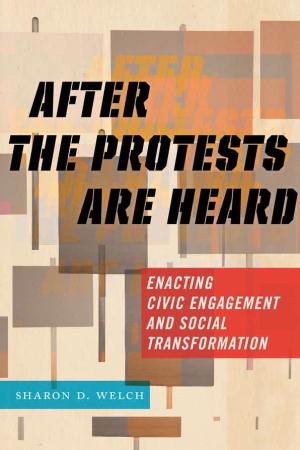
From the Women’s March in D.C. to #BlackLivesMatter rallies across the country, there has been a rising wave of protests and social activism. These events have been an important part of the battle to combat racism, authoritarianism, and xenophobia in Trump’s America. However, the struggle for social justice continues long after the posters and megaphones have been packed away. After the protests are heard, how can we continue to work toward lasting change? This book is an invaluable resource for anyone invested in the fight for social justice. Welch highlights examples of social justice work accomplished at the institutional level. From the worlds of social enterprise, impact investing, and sustainable business, After the Protests Are Heard describes the work being done to promote responsible business practices and healthy, cooperative communities. The book also illuminates how colleges and universities educate students to strive toward social justice on campuses across the country, such as the Engaged Scholarship movement, which fosters interactions between faculty and students and local and global communities. In each of these instances, activists work from within institutions to transform practices and structures to foster justice and equality. After the Protests Are Heard confronts the difficult reality that social change is often followed by spikes in violence and authoritarianism. It offers important insights into how the nation might more fully acknowledge the brutal costs of racism and the historical drivers of racial injustice, and how people of all races can contain such violence in the present and prevent its resurgence in the future. For many members of the social justice community, the real work begins when the protests end. After the Protests Are Heard is a must-read for everyone interested in social justice and activism – from the barricades and campuses to the breakrooms and cubicles. (From the Publisher)
Conventional and online teaching are two options, and competency based theological education is a third option. Adding competency based theological education is a viable response to the COVID crisis in education. Dr. Nancy Lynne Westfield hosts Dr. Kent Anderson (Northwest Baptist Seminary, British Columbia).

Moving abruptly online during the middle of a semester is tough. It requires translating on-ground pedagogies for online environments very quickly. Though, as tough as it is for instructors, we know that this transition is tough for students as well. Students need consistency; they need reassurance and predictability. Students need more than just online course content, they need the full pedagogical weight of the institution behind them. They need the support of institutional mission. Each accredited college or university has one, an institutional mission. This mission, if well implemented, not only structures the institution but also gives meaning to the academic life of the institution. It characterizes the type of community that the institution forms. Mission gives institutional on-ground education a sense, a feel, that is distinctive to that institution. It promotes an ethos and a directionality unique to the institution’s culture. This is particularly the case for confessional academic institutions for whom mission has religious significance. It is now more important than ever for higher education institutions to provide consistency to their students by communicating mission pedagogically in online environments, to keep students engaged with the institutions to whom they entrusted their academic careers. Consider three ways to accomplish this: Draw from institutional symbols. Symbols bring people together to form community, and institutional missions tend to be built on symbols distinctive to the college or university. Your online environment can be enlivened through the process of identifying what these symbols are and evaluating how these symbols can be pedagogically leveraged to invoke your distinctive institutional ethos and culture. Three types of institutional symbols are useful for consideration. 1) academic themes or virtues (such as “social justice,” “service,” “wellbeing,” “hospitality”) that characterize the institution’s expression of academic excellence 2) documentary symbols such as strategic plans, the mission statement itself, student codes of conduct, academic integrity policies, etc. 3) initiative-based symbols such as athletic or wellbeing programs, community engagement programs, institution-based institutes, etc. Institutional symbols are particularly helpful when they are diverse. Diversity gives students multiple entry points into the communal life of the college or university and allows them to express themselves in a way that is most comfortable to their experience. What are some of your institution’s symbols? How can these be incorporated into your online pedagogy to create a more supportive learning environment? How are these symbols diverse? Invite the wider campus community into learning spaces. Modeling mission in online learning environments is one way to communicate the mission to students. This can be done by drawing from those campus-based resources that were able to be moved online. For example, if your college or university librarian is now online, inviting him or her into the online learning space helps students to reconnect with the broader campus community supporting their learning. Similar assistance can be gained from resources such as guest lecturers, diversity and inclusion initiatives, campus ministry, career services, etc. When the larger campus community provides support according to the institution’s mission, the community models its mission for students and expresses a sensibility consistent with their prior on-ground educational experiences. Do you have members of the wider campus community whom you can draw from? How can these persons contribute to your course? How do they model the institutional culture? Engage students in practicing the mission in the online learning environment. The mission is not something that institutional employees “give” to students, but something that the institution as a community enacts together. Once missional symbols and modeling are pedagogically incorporated into their curricula, students are initiated into the mission as active participants. As participants in the mission, it is important for students to develop their own creative take on the mission and what it means in their lives. Formative and summative assessments oriented towards evaluating student appropriation of the mission can help students practice the mission and help them come together as an online community. What could the institutional mission mean to your students? How do students exemplify the mission in their relationships with one another? How can you help strengthen their relationships through the institutional mission?
Wabash Center Staff Contact
Rachelle Green, Ph.D.
Associate Director
Wabash Center
greenr@wabash.edu