Search Results
9323 results found using the following search criteria: .
It is intimidating to write this blog because I am by no means an expert who has all the answers to the toughest questions about teaching in theological education. But I do want to offer these tips and hard truths. Some of what I share is a distillation of wise counsel I have received; all of what I provide is derived from my own striving and stumbling as a teacher.Be both fully prepared and fully present in the classroom. As important as it is to prepare one’s assigned readings, assignments, notes, and outlines, one must be careful to balance preparation with presence. If your only goals are to powerfully deliver your lecture and precisely execute your lesson plan, you may be missing what is actually happening in your classroom. Focus on how your students are learning. In addition to fielding their questions, be attentive to their body language and other verbal and nonverbal cues that signal curiosity, epiphany, confusion, and inspiration. Don’t sweat the small stuff. It often feels like there are a million teaching tasks. We all make a plethora of decisions every day that indicate our priorities. In determining what matters most and what matters least, I have made the conscious decision to care less about editing my teaching materials, such as my syllabi, slides, and handouts. I do not distribute sloppy or unclear documents, but I am unbothered by the occasional typo, glitch, or imperfection. If a word is misspelled or the format is slightly off, I make a note to fix it for future use and then move on to the next task. Prioritize opportunities for students to learn, process, and shine in the classroom. I think we sometimes emphasize the teaching artifacts that we produce, such as handouts and lectures, because we feel as though we can exert more control over the learning outcomes. But the true measure of our teaching effectiveness is found in how deeply our students are comprehending, processing, and growing. I try to cultivate different and diverse opportunities for my students to contribute their insights. One of my practices is the invitation for one or two students to prepare in advance and share a verbal, written, or artistic reflection on an assigned reading during the first several minutes of every class session. The diversity of students within theological education is one of its greatest strengths and one of its deepest challenges. Our schools likely comprise among the most diverse student populations in higher education. Almost every theological school enrolls students of all ages, ranging from their twenties to their seventies. Many of our institutions also educate students across sundry races, ethnicities, nationalities, genders, denominations, and theological viewpoints. It is enthralling to teach in classrooms abounding with such beautiful diversity. Yet it is also challenging because we must navigate pathways of learning amid complex matrices of cultural, generational, and theological differences. Figure out how much teaching matters to you and how much it matters to your institution. Even though the name of the game is theological education, you must discern how heavily teaching is weighted for promotion and advancement at your institution. I take no delight in frankly expressing that some schools only give what amounts to “lip service” to teaching. In some contexts, publishing is prized more than teaching. In other cases, the highest value is service to the institution and the ecclesial tradition to which it belongs. One must still teach adequately, but there are meager external rewards for becoming an exceptional pedagogue. One must therefore balance the internal joy and meaning derived from teaching with institutional realities. To further develop one’s teaching capacities remains a worthy investment, but it is unwise to do so at the expense of other responsibilities. Figure out how much writing matters to you and how much it matters to your institution. One of the strangest things about theological education is how hard it can be to decipher how much research and writing toward publication really matters at an institution. Every teacher engages in research and writes quite a bit, but many schools differentiate between research and writing to enhance one’s teaching and research and writing for the sake of scholarly publication. There is also ambiguity about publishing at some seminaries. For instance, you may be a teacher who carries a heavy instructional load and fulfills many institutional service responsibilities (and writing is rarely discussed in open at your school), but the pathway to promotion and advancement entails an external review in which an array of scholars is given instructions to assess your scholarly record strictly based upon your publications. Teaching and writing are not necessarily oppositional tasks because each practice informs and deepens the other. But there are only so many hours in a workday, and the tasks of teaching and writing are in fact different and doing both well requires intentional self-scheduling. Don’t say yes to everything. I co-teach an interdisciplinary “capstone” course for MDiv students in their final year of study and we have alumni who are exercising religious leadership in various contexts return to the classroom as guest speakers. One pastor recently shared a practical word of advice that was equal parts winsome and wise. The pastor told every student to habitually look at their driver’s license to confirm that the name on it was their own and not “Jesus Christ.” The point was that some people, whether worshipers in a church, patients in a hospital, or coworkers in a nonprofit organization, would make them feel as though their ministry required them to be as available, sacrificial, and indispensable as Jesus. We theological educators must also maintain boundaries to cultivate wellness and wholeness. You can’t say yes to every request of students, colleagues, and administrators. Don’t say no to everything. While it is untenable to say yes to everything, it is also imprudent to say no to everything. It is easier said than done, but I think the key is to keep a disciplined schedule without overcalculating to the extent that one exists in relative isolation. One must make time to mentor students, converse with colleagues, and participate in the broader life of one’s institution as well as in academic, ecclesial, and other communities beyond one’s institution. You can be grateful you have a job without letting your institution take advantage of you. One contradiction within theological education, and higher education generally, is the glaring inattention to the economic injustices within our own systems, such as the inequities of contingent faculty positions. At seminaries like mine, it certainly feels as though we want to address every structural reform in the church and the world except our own. Instead of engaging our injustices, one common refrain across theological education is to tell new faculty with tenure-track or renewable contract appointments that they should feel fortunate to have a job. Some administrators and senior colleagues wield this sense of indebtedness as a weapon when insisting new teachers fulfill this or that task. New teachers should parry this abuse of professional obligation with clear boundaries and a healthy understanding of self and one’s vocation. New teachers can also privately note that the administrators and senior colleagues promulgating the twisted logic of “You should be grateful you have a job” are the very individuals, with their higher compensations, who should be the most thankful to have their jobs. Be a lifelong learner as you continue teaching. I think it is vital to keep learning new things so that we are attuned to the wonder of discovery. Some in theological education engage interests that significantly contrast with our everyday practices in the academy, such as cooking or woodworking. Others acquire new skills and deepen our capacities in disciplines such as creative writing and digital scholarship. There are many ways to go about the journey of lifelong learning so that we retain a posture of humility and foster an unending hunger for growth.

What Listening is NotIt will be obvious to some and painfully invisible to others, but it will lurk in quiet corners of the classroom. And it will grow and stretch and plant roots in many imaginations as being OK. Only some in the classroom will feel the discomfort and stagnation of its growing presence. Only some will notice this phenomenon hardening and forming a new wall that the privileged will be able to hide behind, marking it as their limit, as the end point of their journeys.Though teachers want growth in the classroom, I am not sure we want this type of growth; for this growth mislabels itself. It calls itself progress and progressiveness. It calls itself a sign of maturation and evolving, while what is actually unfolding is quite damaging.Listening as a practice of anti-racism or subverting one’s privilege, especially by white students (though this applies to all students with privilege), breeds a pernicious dynamic in the classroom – one of silence and thus of nonaccountability. It unfortunately encourages concealment. Students can take up a posture of “listening” to avoid the risk of addressing problems as they happen in the classroom.But listening is not silence.Silence is foe. It is not allyship. Silence dressed in the discourse of listening is clever avoidance. True listening is not stagnant; she is always active. She is not perpetually quiet. She emerges and course-corrects and grows into the right stance and posture. Listening is not a means of tapping out of the difficulty of a moment in the guise of passivity; it is to commit to addressing the awkward moments in the classroom in real time. It is a covenant to deal with difficulty.In its true form listening is quite loud.Silence has paraded around as listening too many times in progressive classrooms – and in the process it has harmed more moments and students than it has helped. There are No Silent ExemplarsIf change requires shift and movement, it is safe to assume that correction must be voiced. The right thing to do then, requires making a sound.Because of listening’s misinterpretation, the classroom can be a case study in how opportunities for change are missed. And these missed opportunities become cyclical.It is all too commonplace that a Black student’s white colleague consistently says the right thing about justice, oppression, racism, sexism, queerphobia, and so forth, when the intellectual moment presents itself in class. For the minoritized/marginalized student there is hope! The possibility that this classmate “gets it” first announces itself.But then something devastating happens. Another colleague or – if we are completely honest – sometimes the teacher, does not respond or react if something offensive, disturbing, biased, incorrect, assumptive, ignorant, or somewhat “off” is said or happens. People who are in the impacted group feel it. They feel compelled to correct the error. But they are also tired of defending themselves. They become apathetic, for they know this moment all too well. The silence is awkward; it is not productive but feels deeply regressive.But most importantly, it hurts. And the hurt grows. And grows.With each second that the articulate colleague or teacher allows to pass where the offense is not met with a pedagogical corrective, the wound burrows deeper, cementing itself in memory of the wounded: they will remember this the next time they have hope for those who boast the appearance of understanding in the guise of intellect. Listening as Weaponized IncompetenceWeaponized incompetence is not only a domestic dynamic. The push for majority students to “listen” to their minoritized peers in educational spaces has cleverly become the newest iteration of weaponized incompetence.Listening as a passive, benevolent act can do tremendous work for the moral appearance of change, transformation, and/or righteousness. The majority benefits from it while continuing to inflict harm on the minoritized persons in the learning space.Hearing transgressions and violations against another’s humanity, history, culture, aesthetic, tongue, way of life, or knowing, and settling into silence and inaction is not true listening.Listening must be redefined as practice oriented. It requires immediate and factual correction in and of moments where the incorrect narrative, perception, or action has been directed towards another. Listening demands activity; it means amending the error in real time no matter how challenging the moment.But the elephant in the room of this dilemma must be addressed: it is not only white students and students with privileged identities who employ silence disguised as listening over and against minoritized students. If we are completely honest, it is mainly teachers who do it.If teachers are serious about doing our jobs well with constructive results, we need to create and establish systems of correction and accountability within the classroom that take the pressure and responsibility off of our minoritized and marginalized students.Are we up for the challenge?What modes of accountability might teachers put in place at the beginning of each semester or term that ensures pedagogical challenge and expansion not only for our students, but for us?Might we model listening as active practice instead of a weaponized excuse?I hope we do. The future and efficacy of education depends on it.
My last blog was about the power of immersive classes to foster attention and presence in students. Here I want to focus on another aspect of learning that immersive classes are uniquely suited to produce: a community of learners.Let me set the scene: A group of hungry undergraduates and I have arrived at our campsite for the night and set up camp after ten miles of trekking with full packs. Because they’re perpetually hungry and I believe in luxurious trail meals (ask me sometime about our Mediterranean quinoa and Thai curry dinners), our food bags are full: enough for ten people for five days. And because we are in bear country, we have to hang the bags from a tree limb before we sleep. Not even the most macho of the students can pull the bags up on his own. (He tried. His name was Joel.) We need every person pulling on the rope. Or, on different trip, in an Arizona slot canyon, hanging our food away from bears was not an issue, but sleeping warm on a twenty-degree night was. We all snaked into our sleeping bags and then piled together like puppies snuggling against one another for warmth, never mind that most of us were strangers to each other that first night.Wilderness trips are by nature and necessity participatory ventures. Everyone is essential for a successful trip, at the level of making sure everyone eats and keeps safe as well as at the level of maximum enjoyment and meaning. It’s not unlike the most effective classrooms, where everyone’s voice is essential for everyone’s learning. The reality is just more obvious on the trail where you might genuinely need someone else’s warmth beside you on a cold night.Because of the visceral need for one another in daily chores or while crossing a river, students rely on each other much more quickly than in a classroom, and their physical need quickly becomes a need for one another’s ideas at class discussion around the campfire. Students see each other as human beings, as comrades, as companions, as fellow community members, because of the way of life on the trail. They have had to be vulnerable with one another and recognize their limits, ask for help, and so when they talk with one another, they already have a foundation of some trust. Plus, when we hike with someone side by side or one in front of the other, we can say more meaningful things because we don’t have to look each other in the eye. So students listen to and learn from one another, unthreatened by one another.I saw this on an immersive Jan-term that didn’t involve backpacking too. I took students to a monastery for three weeks for a class on the history, theology, and spirituality of monasticism. There they also had to rely on each other and on the sisters. The need was less immediate, but it was there in the shared work of washing dishes and shoveling snow. Then when a stomach bug ravaged us one by one we needed each other for basic things again. The bug hit me first, and I had to rely on the students too, just as I do on the trail. That example of dependence—of asking for help getting food or reaching out for a hand up a steep embankment—is something my students mark as invaluable. If their leader and professor is willing to throw in her lot with them, they can drop their guards and do the same with one another.Often this reliance on one another not only persists as we return from the trail and finish the immersive course (the rest of the Jan-term) at a monastery or retreat center, but even when students are back on campus the following semester. I see them around campus and hear how they are still talking together about course ideas. This spring my Jan-term group were competing together to see if they could collectively keep their screen time below a three-hour/week average. Building a community of learners on an immersive trip builds a community of learners beyond that trip. Certainly, students in the group are that for each other, but hopefully they are also able to see their next set of classmates as a community and be willing to risk needing them, transforming that classroom and their learning experience into something more than a grade or a checkbox.What kind of risks can you introduce in your classes that require students to need each other and so build a community of learners? Can you create a classroom that is by nature and necessity participatory? Better yet, can you begin class with an immersive experience that does this and binds students to one another in ways that will change their experience of your classroom for the rest of the semester? May you find experiences that do this, and may they transform your students’ learning.
(An audio recording of this blog may be found here.) With people all around the globe, my attention was captured by the Paris 2024 Olympics. I tuned into the TV coverage as often as I could. Watching world class athletes perform their craft is spellbinding. Athletes performing at the highest level, pushing toward new world records and new personal best records—rising to the challenge of being the greatest—all fighting to be number one. Winning the gold! It is riveting.Track and field is one of my favorites, and this year the Olympics delivered high drama. American high-jumper Shelby McEwen along with New Zealand’s Hamish Kerr both cleared 2.36m. In these kinds of moments, the rules of the game allow for a tie. If agreed upon by the athletes, both are awarded the gold medal. If the opponents do not agree to call it a tie, the competition continues until there is a definitive winner—a gold medalist and a silver medalist. The moment was tense. The officials consulted with the athletes. Rather than preferring the tie, Shelby McEwen opted for a jump-off with Kerr. Shelby preferred to continue the competition in lieu of sharing the gold medal.In the end, Kerr of New Zealand took the higher jump to clinch gold, following eleven straight misses from the two finalists. It was a devastating outcome for McEwen, who was left with silver. McEwen went home having clenched second place.For me, McEwen’s decision was one of life’s ironies. When I heard that McEwen opted out of the shared gold medal and wanted the competition to continue, I thought YESSSS! & NOOOO! at the same time …Yeah! That’s right. Don’t settle for second best! You got this! Fight on! There’s no “sharing” on the Olympic podium! Get your medal! Buckle down, concentrate, and win! You’ve trained long and hard for this moment!NOOOO! What are you doing? Take the gold medal! Gold is what you have been training for. It’s what you have been competing for. You earned it! Take it! Share it! There’s no shame in sharing victory! No need to continue the fight! You won … well you and the other guy won, but that’s good enough!I can understand McEwen’s decision, and while I respect his decision, it troubles me. My fear is that we have been taught that a shared victory is a lesser victory, a suspicious victory, a sullied victory.Opting out of sharing a gold medal, and then losing the gold for silver, is not a story we are used to hearing, or the story we like to tell. The silver medal is not “really” a win, and we like winners. If this had been an old Hollywood movie, McEwen, in the final, dramatic round would have taken the gold. The old Hollywood story of winning rather than sharing must be interrogated, contested, reconsidered and rewritten.Doctoral students and faculty are not athletes. But the arena of the academy is highly competitive. We are in rarified environments where, in many instances, competition is prized over cooperation. Our competition includes making arguments, defending arguments, critiquing arguments and doing our utmost at winning arguments. We are trained to compete against one another for awards, jobs, grants, and book contracts. And now, with social media, we compete for TV appearances, influencer status and royalty checks. The academic competition is not fist-to-cuffs, but it can be as abrasive as any athletic bout. Many colleagues are drawn into the academic arena because of their warrior spirit and battle skills. Others had to adapt and hone for the fight. Others, unprepared and unable, have just been beat up. Those in the academy know a fight. Given the lesson of McEwen, can we learn when to share the win?I have no disdain for the competitive spirit. I enjoy friendly competition, especially if the winner buys the beer after the game. What I disdain is the way winning at all costs eclipses the love for what we do. Our passions are more focused on winning than on the practice and art of achieving, creating, and building. Honing collaborative efforts for stronger communities, networks and relationships is more needed than fighting for the individualized win. It is not enough to train scholars to compete. Learning the skills and challenges of partnerships, collaborations, coalition building, and the sharing of wins is the way we create the path into our own future. My fear is that in our unrelenting competitiveness we lose out on or squelch the most brilliant minds or miss out on the far-reaching achievements which only occur in collaboration.As we reshape our educational ecologies, the question of teaching for and with collaboration is a critical question. In your scholarship, do you expect to win while others lose? Do you aspire to be the one-and-only, the star, while seeing little value in partnerships, collaborations and shared accomplishments? Do you pit your doctoral students one against the other for scholarships, grades, and your time and attention? Do you reward faculty colleagues who “win” in their fields with higher salaries and additional goodies while other colleagues are invisibled or ignored? Are your course learning activities and assignments geared to teach competition or collaboration? What will it take to shift our faculty cultures to environs that support and celebrate sharing and the variety of contributions?
For two years I planned my full-year sabbatical, something colleagues said would be a life-changing experience. My sabbatical days were filled with research and art-making. By spring, making art nudged research out of the picture. I was transitioning from an art hobbyist to an art professional. The thought of spending my days teaching made me physically ill, despite the fact that I had poured much of my time into continually improving my pedagogy. This change of attitude was not due to boredom, burnout, or frustration over university politics. I was an artist, full stop, so that’s how I chose to live. Two years later, I took an early retirement package. I have wanted to write a book about these developments, something I might title Zen and the Artful Buddhist: Asperger’s, Art, and Academia. But I don’t have the time, energy, or inclination to write a book. However, creating an illustrated version does appeal to me, and I’ll say more about that in another post. I’m more realistic, and more selective about how I use my time now that I’m retired. A friend commented last week, “I’m not surprised that you have found new things to keep yourself busy.” My days are now spent in my art studio or at my part-time job at a local art gallery and framing shop. Down the hall is my former colleague, who, during a sabbatical, said to herself “I’m done with teaching.” She was my department chair for ten years, and she is my best (artist) friend. We regularly critique each other’s work and go for beer at 3:30 (aka “beer:30”) in the afternoon because we can. Plus, the pub is on the ground floor, two doors down. She moved out-of-state two weeks ago, and there’s now a feeling of loss each time I enter my studio. I’ve started painting a lot of intricate, repetitive patterns lately, something I was doing regularly a few years ago. People often comment that my art and art-making processes must be spiritual and/or meditative. With my pattern-heavy art, I can see what they mean, but I still refuse to use the word “spiritual” in general or in reference to my artwork. Something about the repetition of patterns calls for deep concentration. It’s also very soothing, calming any Asperger Syndrome-related anxiety. I often tune out my surroundings by putting in my earbuds and listening to my “liked songs” playlist. My music is not soothing to most people, but repetitive sounds soothe many folks with Asperger’s. My days are spent either working in a place that is part of the art community, or in my studio making art. As one of my art mentors used to say in figure drawing class — I took a few summer courses — “This is the hardest thing you are going to do today.” Art making is hard work. It calls for constant decisions, corrections, redirections, planning, and more. And then there are all the questions about why you made those choices. It never ends. And I’ve said nothing about all the other aspects of being an artist, like marketing your work, and so on. I suppose I will say more about living as a full-time artist in another post.
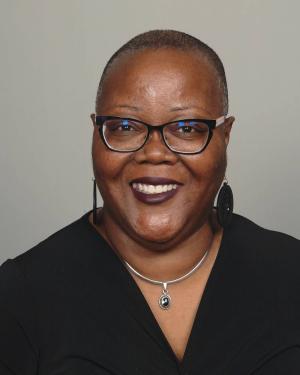
During the week of my fiftieth birthday, I was surprised to receive a letter and membership card from AARP—American Association of Retired Persons. Upon inspecting the envelope and its contents, my mind traveled back to a brief, yet profound conversation I had with my grandmother, who I call Queen Bee, when I was twelve years old. We were having lunch at our favorite fast-food restaurant. We placed our order and the cashier announced the total along with the senior discount Queen Bee received. Excitedly, I exclaimed, “I can’t wait until I am old enough to get a senior discount!” “That’s ridiculous,” Queen Bee vehemently responded, “You don’t look forward to being a senior to pay less.” This was not the message I was trying to express. I simply thought it was “cool” that seniors received discounts, when young people did not. In my twelve-year-old mind, elders earned the discount for having lived a long life. To me, elders were worthy of respect, and I was happy to see McDonald’s acknowledge that.Recently, I revisited these thoughts about senior status when I participated in Auburn Theological Seminary’s Center for Storytelling and Narrative Change’s Healing the Future Gathering. Thirty-five storytellers gathered from around the United States to share their letters to the future. Surveying the storytelling circle, I realized I was one of the older persons present in a group of mostly Millennials and Gen Zers. I remembered my twelve-year-old perspective about respecting elders. I touched my silver sideburns and asked myself, am I becoming an elder? Throughout the gathering, I was respectfully and kindly approached, cared for, and questioned politely. Continuing to contemplate, I pondered retirement, being elderly, and identifying with what it means to be a senior citizen.I am fifty-five years old, and eligible for a senior discount; however, I am not elderly. Nevertheless, my perspective on how I view myself and younger generations has changed. Teaching in higher education for seventeen years places me beyond early-career status and somewhere between mid- and late-career teaching faculty. As a seasoned teacher-scholar, I see myself adding value to conversations and collective engagement, more so than I have in the past. I am not elderly, but I now join the company of elders.Reflecting on the company of elders, I recall the impact another mid-career teacher-scholar had on my younger self. Dr. Katie Geneva Cannon, whose mission was to equip, encourage, and empower emerging scholars in discovering “the work their souls must have,” was my teacher, mentor, and dissertation advisor. Dr. Cannon was a faithful elder and is now a good ancestor. As a teacher-scholar moving toward retirement within the next twelve to fifteen years, Lord willing, Dr. Cannon’s elder legacy still has me asking, “What is the work my soul must have?” To become a faithful elder and a good ancestor.As a child, I was taught to respect my elders, meaning older adults. But age does not necessarily garner respect. So I ask, “Who is an elder deserving of respect?” Based on my knowledge, engagement, exposure, observation, and conversations, I would describe a faithful elder in this way. Faithful elders are usually older, but they are not defined by age. They are recognized because they have earned the respect of their community. Their words are congruent with their actions and teachings. They are containers filled with essential wisdom. They assess situations, carrying collective and communal prophetic and generative knowledge, and offer constructive feedback. Faithful elders practice their culture, impart their culture, and help others find their culture. They are keepers of tradition, rituals, and values. Faithful elders love God, others, and themselves fiercely. Faithful elders tell stories that shape the future with hope.Reflecting on the roles and actions of faithful elders in our families, schools, churches, communities, and society is important work of the soul. While continuing to move forward in one’s career and calling, becoming a faithful elder is vital to fulfilling one of life’s purposes, not only for oneself but for future generations.The exercise at Auburn Seminary of listening to and absorbing hope-filled letters to the future written by younger generations focused my attention on the collective wisdom, vision, and determination presented by the storytellers. I became embarrassed that in recent years I had given so little thought to the future. Called and convicted, I thought about those who made sacrifices so I could have a future with hope. Those “good” ancestors made decisions prioritizing the quality of life for those coming after. What does it mean for me to follow in their footsteps and become a good ancestor?As a faithful elder, I must build on the hope that has come before me. I must preserve and communicate an African-centered value system. As a faithful elder and storyteller, I must discern what to pass on and what not to pass on to the future. As a faithful elder, I must seek and offer forgiveness in the face of inhumane and unjust systems. As a faithful elder, I must tell the stories that help others to shift from a dejected mindset to one of expectancy, showing the way to a future of assurance.Reflecting on Queen Bee, Dr. Cannon, and a future imagined by young storytellers, I recognize that I have stepped into the company of elders. And it is now my soul’s work to take up the charge of becoming a faithful elder telling stories of hope and moving toward being a good ancestor.

Lurking on social media the other day, I listened to colleagues discussing how to respond to a student paper in a philosophy class. The assignment was about our responsibilities towards (nonhuman) animals. The student argued that we can do whatever we want with animals because God has given us dominion over them. Presumably, he had Genesis 1.26 in mind, but none of the course readings mentioned Genesis—or God.People in the social media group had lots of suggestions on how to respond:Tell him that religion has no place in the classroom.Tell him that there should be no theist or atheist premises in academic writing.Just write “Irrelevant” in the margin!That last comment got a lot of likes, hopefully because people found it funny and not because they considered it good advice.The consensus was clear: Tell the student that appeals to scripture are inappropriate in college papers.I don’t think that’s good advice.My colleagues were ignoring something crucial. In this sort of situation, we can do deep damage to our relationship with our student and to the student’s relationship with higher education if we don’t tread carefully. Presumably the student who wrote this paper believes in God and the Bible. His religion will be part of his ethical decision-making going forward, and the Bible will influence his thinking and his actions.Bearing this in mind, let’s not tell this student that his thinking about right and wrong in class must be utterly divorced from his thinking about it outside the classroom.My advice would be: Before writing any comments, identify your larger goals. Here are mine:I want our class discussions to help inform my students’ thinking and actions about ethical issues, and in particular about whether it’s OK to do “whatever you want” with animals.I want students to listen when I try to teach them more things after this and I want other professors to be able to teach them even more things. If I reinforce a student’s likely skepticism about professors and religion, I make that harder.I don’t want my actions to increase the chances that my students go out in the world thinking of higher education as an enemy to religion and God.These goals suggest a different approach. Start by taking the paper seriously:Do you think that’s what the Bible means by ‘dominion’? Some people think so, but I've always thought it meant something more like ‘stewardship.’ I mean, God is the Father, right? So, I think of it like if your parents go out and put you in charge of the family dogs. If they come home and discover that you haven’t fed them or given them water, they’ll be mad at you.What do you think someone who doesn’t believe in God and the Bible would make of your argument? How would you persuade them? For instance, imagine that you’re talking to the author of our second reading or to the other kids in the class.I would count this encounter as a success if the student feels like I’m treating him and his religion with respect and if he realizes two things:“Dominion” could mean “stewardship” instead of “freedom to treat them any way I want,” and I need to think more about which one the Bible meant.I need to talk about this differently or I won’t be able to persuade people who don’t believe in the Bible.That’s a start. Much more has to happen before this student writes at college level. Later, I and his other professors will teach him more.It’s a very small step. Growth and intellectual development takes time. I probably won’t see the result of the learning process that I was part of. But occasionally I do.My greatest success story in this context is a student who came into my Intro to Philosophy class as a freshman, determined to prove that Christ rose from the dead. It was rough going, but by the end of the semester, his sources weren’t cringeworthy anymore, and he was presenting an actual argument. And he still trusted me. He majored in math but took Philosophy of Religion with me as a senior, and he explained that he wanted to continue developing his proof.I braced myself. But during the semester, the class discussed faith and reason extensively, and I was able to ask him (privately): Given that you think about faith as being the important thing, what makes it so important to you to prove that Christ rose? He thought about it for a long time and finally decided that he didn’t need to prove that Christ rose. Instead, he wrote a strong final paper in which he reflected on the meaning of faith, discussing his own experience and the course readings.I rarely get wins that size. But taking my students’ religious views seriously makes them possible.
Breaking the Academic Mold: Liberating the Powerful, Personal Voice Inside You Important Dates Application Opens: January 13, 2025 Application Deadline: March 5, 2025 Event: July 20-26, 2025 Gathering Location Lake Lawn Resort Lake Geneva, WI Leadership Team Sophfronia Scott Director of the MFA in Creative Writing Alma College Donald Quist Assistant Professor of Creative Writing University of Missouri Participants Joseph Gordon, Johnson University Mark Chapman, Tyndale University Joy Ann McDougall, Emory University Adam Bond, Baylor University Wendy Mallette, University of Oklahoma Oluwatomisin Oredein, Brite Divinity School Renee Harrison, Howard University Melanie Dobson, Lutheran Theological Southern Seminary Elissa Cutter, Georgian Court University Courtney Buggs, Christian Theological Seminary Nick Peterson, Christian Theological Seminary Application Closed For more information, please contact: Rachelle Green, Associate Director Wabash Center greenr@wabash.edu Stipend Each participant will be provided with travel expenses, meals, lodging, and a stipend of TBA. Read More about Payment of Participants Important Information Foreign National Information Form Policy on Participation Description This writing workshop is for scholars of religion and theology who have written exclusively or primarily in the scholarly genre for other scholars of religion but long to share their knowledge or personal experience in a more creative way with a wider audience. Many scholars yearn to speak to a broader audience through creative nonfiction, blogs, op-eds, and memoir. Many scholars want to write with more clarity and imagination. Participants in this workshop will develop their writing voice in service to topics they care about, and for which they have passion and curiosity. A combination of plenary, small group and individual instruction, our week together will help scholars free the creative spirit, structure their writing more effectively, and speak on the page in a truer, more engaging voice. Our focus will be on releasing the professors’ voice to the public square, giving permission to be imaginative, and finding new ways of being inspired. No previous experience publishing in creative writing genres is needed. Workshop Goals To create a collaborative learning cohort of teacher-scholarsto expand and deepen scholarly writing To navigate the intersectingchallenges of creative writing as an academic To develop new practices of creative writing in the service of teaching and scholarship of religion and theology To explore strategies for the authentic voice while thriving in institutional,politicaland personal contexts To write and receive feedback while also being in conversation with other creative writers Participant Eligibility Tenure track, continuing term, and/or full-time contingency teaching full time in college, university, or seminary Must be teaching in religion and theology or related fields Job description or contract that is wholly or primarily inclusive of teaching Teaching in accredited college, university, seminary in the United States, Puerto Rico or Canada Personal commitmentto participate fully in workshop with 100% attendance in all sessions Little to no experience with publishing in creative genres, but great interest in learning to write in creative genre