Search Results
9323 results found using the following search criteria: .

Eric C. Smith is Associate Professor of Early Christian Texts and Traditions and Co-Director of the Doctor of Ministry in Prophetic Leadership Program at Iliff School of Theology. What does it mean to create and sustain learner centered approaches for courses in Bible? When Bible courses are not neutral nor benign, but acknowledge a political dynamism in the conversation, what is the role of the teacher? What does it take to develop relevant courses for Bible in this day and time?
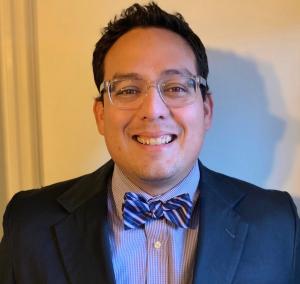
Being Triggered as a ProfessorI have noticed that some students are quick to throw loaded terms without knowing exactly what they mean, or they erroneously assume they know what they mean. Maybe you can relate. For example, I was teaching a Contemporary Theologies course and I was discussing German theologians during and post-World War II. One of my students did not know the difference between fascism and communism. This student basically stated that the Nazis were socialists and by extension communists because their name was the National Socialist German Workers’ Party (National-Sozialistische Deutsche Arbeiterpartei). The student could not get past the “Socialist” in the name and described anything left-leaning as fascist. As you and I know, the fascists and the communists could not stand one another. The only thing they had in common was the totalitarian form of government with strong dictatorships in power. However, their foundation and aim were different. I pointed the student to basic Encyclopedia Britannica articles on the political spectrum, fascism and on Nazism so that this student could better understand the difference between the two.I was taken back by the student’s confidence in his position and his willingness to correct me when he was so sure I had made a mistake. In the end I was surprised by having to endure a student like this who did not want to listen. In this case, this particular student came to the classroom with a mind already made up and not willing to dialogue with different or diverging ideas, or even those based on facts. Rather, this student was there wanting to reinforce preconceived notions of what is right and wrong, and in this case, what was left and what was right.I had another student in a different semester’s offering of the same course that really set me off—I lost it. This student refused to acknowledge racism and the effects of racism in US society. I had students of color who were emailing me of how deeply offended they were from the first day of class until the last day of class. This particular student firmly believed that the US was completely free of any type of racism. Consequently, Black people were lazy, Hispanics/latin@s liked to blame Caucasian people like him for all their problems. The student refused to acknowledge history, of things that happened in the Civil Rights Era, and problems that continue to affect minorities and people of color.I don’t know if you’ve ever been there, but I lost my patience with this student on the second day of class. Oh, my! It was going to be a long semester. I could feel my blood pressure rising. My muscles began to tighten. My heartbeat went up a few notches. It seldom happens, but at that moment I began to ask this student a barrage of questions and making statements about being intolerant and closed-minded to considering the perspectives of others and those from different communities who have suffered under unjust housing practices, and deeply ingrained attitudes and postures from those in power in society.[i] I wanted to say (but thankfully I did not), what in the world are you doing in graduate school if you don’t want to learn anything? What are you doing in graduate school if you already have the answers to life’s great questions?It is not a good place to be, being triggered and going off on a student. It sets a poor example. We are to model hard intellectual reasoning. Also, as a teacher, my vocation is to model a hospitable classroom environment—even with those that do not agree with me. Nothing gets accomplished in the heat of the moment with tense exchanges or when we get angry.As I was wrestling with this student and his lack of engagement, and taking into consideration our students of color in the class, I finally realized that I was not going to change this person. All I could do at this point was not react in the way that this student expected. The student was actually getting pleasure from being the unmovable object in the class. It was reinforcing his victim mentality and it was reinforcing his own belief that he was blessed as he was persecuted.Education is not going into a classroom to reinforce one’s own ideas or point of view. Part of the value of education is observation and the ability to take on multiple perspectives, having the common decency to put oneself in another person’s shoes and having empathy. Education involves some level of contemplation upon the world and my neighbor. It is a continual question included in the Gospels, “who is my neighbor?” in the story of the Good Samaritan (Luke 10:25-37). One cannot help but realize that no matter the ethnic, cultural, or racial origins of my neighbor, that we are interconnected. Humans are spiritual beings and that compassion is one of the core values that we must demonstrate towards one another. There must be empathy, kindness, and humility towards the other. It is on this road that we can establish some kind of spiritual enlightenment about living in an increasingly diverse society. Either we enter with fear defending our way of life to the very end, or we enter with a holy reverence towards the other as a fellow human being in the imago Dei.In the end I also had to examine myself. I had a long day. The class was at night, I was tired. The other issue I had was that I had to try to defuse the situation. I had to model my sense of tolerance even for those who have different perspectives from my own. It is not the first time that this has happened nor will it be the last. Finally, I decided to trust the institution and my colleagues, knowing that through the whole process at any serious graduate-level institution, the student will continually be challenged to have a rational, modern, and well-informed outlook. We are seeking to form individuals who are deeply, spiritually aware of their vertical-horizontal relationships—to God, to others, and the self. In the meantime, I prayerfully continue to teach, knowing that transformation is ultimately not left up to me. So, I tried hard to let the conversations continue to be frank and honest and to let history and hard rational discussion tell the story, ultimately trying to model a positive affective disposition towards the other.Notes & Bibliography[i] See for example, Robbie W.C. Tourse, Johnnie Hamilton-Mason, Nancy J. Wewiorski, Systemic Racism in the United States: Scaffolding as Social Construction (Cham, Switzerland: 2018).
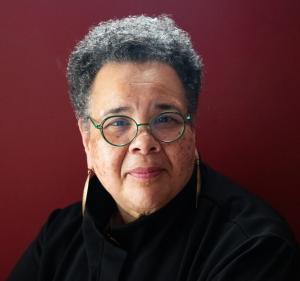
In my family’s tradition, dreams, visons, symbols, and signs are part of our knowing, understanding, and meaning making apparatus. I grew up with nightly dinner table conversation which effortlessly included sharing dreams, seeking out interpretations, then the habit of reordering a decision based upon spiritual in-sight. Our “cloud of witnesses” is a vivid and active part of our spiritual practice. We depend upon prayer, ancestral visitations, angels’ interventions, the protection of guides, and warnings by ancestors.My family’s religious and cultural tradition teaches that the world is more enchanted, magical, whimsical, unusual and unpredictable than typically is made room for by the wider culture’s narrow understanding. And since our classrooms are not siloed away from the world—I think that our classrooms, if we would learn to pay attention, are enchanted spaces. Along with this provocative assertion, I want to also say that I do not know, absolutely, what coaxes adult students into learning. I suspect learning, especially for adults, might be dependent upon enchanted happenings in our classrooms.My grandmother, Vyola White Bullock, was an elementary school teacher in the early 1900s. My grandmother use-to say, “All that is is not visible.” She would say this adage is particularly important in understanding our classrooms and in seeking more effective methods of teaching.If we are to consider the dynamism of the intangible (i.e. enchantment) in our classrooms - what do we pay attention to, respect, and do? In other words, what if more is happening in our classrooms than meets the eye? What if those happenings are more responsible for student learning than we know? What if that which we ignore, or that which we have no knowledge of, is the catalyst for student learning and our successful teaching?Some teaching is known to open doors, create bridges, inspire students to realize and participate-in enchanted endeavors of learning. Equipping students with new ways of meaning making, allowing students to access ideas of freedom, connecting students’ dreaming to actuality and healing, can create sparks of intrigue, can create the fire of imagination and wonder that immerse students in new realities. Sometimes, encounters with new knowledges are so palatable that students are moved, literally, into other spaces and other times. My experience as a student, and more recently, my experience as a teacher, has shown me that from time-to-time, portals open. Some learning causes portals to open allowing brave enough students to step through. I have seen portals open in classrooms.As a student, I have, many times, stepped through portals which opened during my study. I was introduced to the work of bell hooks in graduate school. Studying hooks’ work was like time travel. I had experiences of remembering what I had not previously known. Learning from hooks’ work was a dialogue across the years, across the geographic divide. The first time I read Sisters of Yam I felt as if my bone marrow recognized an ancient truth. I was transported into her world which quickly became our world. I knew what I knew, even more.As a teacher, I have learned that portals do not always invite us into elegant spaces. Some portals offer struggle, fight, confrontation. A vivid encounter happened while teaching my Introduction to Educational Ministry course some years ago. At the beginning of a lecture in the second session, a student raised her hand—interrupting my lecture. She had a scowl on her face, her lips pursed, shoulders tense with anxiety. Seeing her raised hand, I stopped my lecturing, met her glare with a faint smile and invited her to speak. She said that she had read the assigned reading by bell hooks from Teaching to Transgress. As she spoke, her voice was shrill and loud. She said the reading infuriated her. She said the reading was so maddening that she hurled the book against the wall. Her declaration of angst and anger instantly shifted the mood of the other students in the room to one of caution and concern. I heard one student sigh in impatience not wanting to give time for this woman to speak her experience of disorientation and pain.I paused before I answered her. I asked the woman what she had done after throwing the book against the wall.The student said, “I walked over, picked it up, and kept reading until the end.”I shouted, “YES!”My shout startled the class. The student’s sour expression turned to wide-eyed confusion.I said, “We must, even if it breaks a hip, wrestle with these ideas until daybreak in hopes of receiving the blessing. And you did that! You wrestled! You went through the portal and wrestled for your blessing!” (This, for Bible reading students, was a recognition that the woman had had the experience like that of Jacob in Genesis 32:22-32.) I recognized this student’s report as an experience that had taken her into a portal.From the tradition of my family, this student had been transported and blessed and was telling the story of learning through consternation and dismay. Some portals teach through skirmishes and brawls for understanding and growth.Portals operate through words and beyond words, with explanations and beyond explanation, with knowledge of the possibilities and beyond our imaginations. Students yearn for vivid experiences that connect them, make them more voiced and more visible. Stepping through the portals provides an immersive experience where the intangible becomes tangible with clarity and needed purpose.Reflection questions for communal dialogue:How do teachers recognize when a portal opens for learning?What would it take to plan or choreograph a portal to open for learning?If portals cannot be choreographed, what does it take to coax or summon open the doors of the portal?What kind of teaching stops portals, that would open, from opening?What do we do that closes the portals prematurely?