Search Results
9323 results found using the following search criteria: .
Davis argues that post-secondary instructors have to improve their performance in the classroom not only by better understanding how teachers teach, but also how learners learn. He translates recent research on learning into a form useful for college teachers, and then integrates it with current thinking on teaching to construct a framework for effective classroom communication. (From the Publisher)
Teaching and Learning in Higher Education is a ground-breaking contribution to the theory and research in this field. A tribute to the renowned work of John Biggs, the book includes chapters by leading researchers and academics including Ference Martonall of whom have been influenced by his work on teaching and learning. This book is structured around the framework of Biggs 3P model of learning: Presage, Process, and Product. (From the Publisher)
Jack Mezirow's theory of transformative learning has developed over nearly two decades into a comprehensive and complex description of how learners construe, validate, and reformulate the meaning of their experiences. But what exactly is transformative learning? How does it differ from other concepts of adult learning? How can educators actively foster transformative learning with adult learners? In this book, Patricia Cranton describes the theory and process of transformative learning in terms of experiences with which we are all familiar: from the learner who is struck by a new concept or a different way of thinking about something to the learner who changes her personal life on the basis of new insights. Drawing on numerous examples from nearly twenty years of experience as an adult educator and researcher, Cranton relates transformative learning to current adult education perspectives. She describes how learners undergo transformative learning. She examines individual differences among learners, and she presents practical strategies for fostering and supporting transformative learning - including questioning techniques, journal writing, consciousness-raising exercises, and experiential activities. Cranton also describes approaches the educator can use - such as fostering group interaction and encouraging learner networks - to provide support for the transformative learning process and help learners to support each other. (From the Publisher)
There is growing pressure both within and outside higher education to recognize and reward faculty excellence in teaching, as well as in the areas of research and service. In this book, John A. Centra provides faculty members, administrators, and faculty development specialists with the up-to-date approaches they need to evaluate and improve teaching. Greatly expanding his earlier bestseller, Determining Faculty Effectiveness (Jossey-Bass, 1979), Centra underscores the importance of active methods of teaching and the need to evaluate those methods in less traditional ways. He discusses the value and proper use of self-reports and portfolios. And he examines better ways to involve colleagues and students in evaluating and improving teaching. He includes guidelines, time-tested principles, new research insights, and many suggestions that can be adapted by both beginning and experienced teachers, and by those involved in evaluating and enhancing their performance. From the Publisher
This book is meant for faculty searching for new ways to teach, for alternatives to the traditional lecture method we all learned in graduate school. We include chapters on a variety of ways teachers can connect with their students and help them learn: cooperative learning, writing-across-the-curriculum, active learning, learning communities, and so on. Each of these methodologies is described exhaustively elsewhere, in books and journals and at conferences. This book brings brief discussions of them together in one accessible volume, with references to sources where readers can learn more. (From the Publisher)
Geography, borders, time zones - all are rapidly becoming irrelevant to the way we conduct our business and personal lives, courtesy of the communications revolution. According to renowned Economist journalist Frances Cairncross, this "death of distance" will be the single most important economic force shaping all of society over the next half century. In her new book, Cairncross provides a trend-spotter's guide to thriving in the new millennium. Friends, colleagues, and customers could easily be anywhere - around the corner or around the world - and the new ways of communicating will effectively wipe out distance as a cost factor, indeed as a perceptible concept from our lives. Cairncross helps us to recognize the patterns and seize the opportunities in these early days of the death of distance. She describes the ways, now only dimly imaginable, that telecommunications and our altered perception of distance will transform relationships between countries and citizens, companies and employees, parents and children. (From the Publisher)
Today's faculty members, like other professionals, find themselves caught between the pursuit of individual gain and the common good. Society is increasingly demanding that faculty demonstrate social responsibility toward both the institution and the larger community. This book is a practical resource for fostering and assessing faculty achievements in all aspects of their work: teaching, research, practice, and citizenship. Larry A. Braskamp and John C. Ory show that the assessment process can and must be tied to faculty development, and they explain how collegial activity and continuous improvement are important to strong performance. They identify three major elements of faculty assessment - setting expectations, collecting and organizing evidence, and using evidence - and suggest several key goals for the assessment process. The authors also show how multiple perspectives enhance the credibility of assessment, and they describe sources of evidence, including faculty members themselves, faculty colleagues, students, and experts. Specific techniques used to collect evidence are provided, as well as summaries of research on the effectiveness of each procedure. (From the Publisher)
This book discusses the first order principles (FOPs) of college teaching and their role as the easiest route to working happily and successfully in the classroom. Part 1 lists the 10 principles: (1) moderate classroom incivilities with pro-social immediacies; (2) wait actively for the fruits of one's teaching efforts; (3) begin before feeling ready; (4) work and teach in brief, regular sessions; (5) stop a lesson in a timely fashion; (6) moderate over-attachment to content and overreaction to criticism; (7) moderate negative thinking and strong emotions; (8) let others do some of the work, (9) welcome learning and change; and (10) build resilience by limiting wasted efforts. Part 1 also summarizes research showing that FOPs work. Part 2 discusses metacognitions about FOPs for teaching. This section focuses on recognizing society's real objections to efficient teaching; the key elements of efficiency; and mastering efficiency. Some sections contain references. Contains 59 references. (From the Publisher)
Classroom research has evolved considerably in the past few years. This sourcebook explores how classroom assessment techniques (CATs) are now being used to build student learning skills, and examines current research on how classroom assessment has changed both teaching and learning. It also introduces new uses for CATs—to promote effective student teamwork, help institutions answer the call for more accountability, and guide new teachers in developing their teaching philosophies. This is the 75th issue of the quarterly journal New Directions for Teaching and Learning. For more information on the series, please see the New Directions for Teaching and Learning page. (From the Publisher)
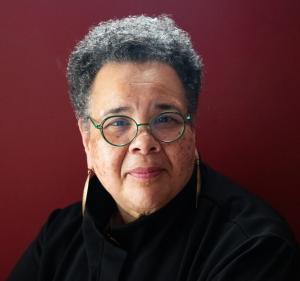
The task is impossible, yet ours to accomplish. Our students need us to shape our classrooms for a future we cannot foresee or anticipate. In the courses we design, our students need us to hone their voices, imaginations, and problem-solving abilities for a future that is unmappable yet will require their navigational skills for survival of our families, neighborhoods, and nation. The world powers are shifting before our very eyes, and we must teach to prepare our students for this change. A call for agency is not a call to act out or act up. Agency has more to do with activating the responsibilities and powers which came with faculty hire when we joined an institution with a commitment to mission. We are bound to the promise of educating – come what may.Typically, the mission of the school has to do with educating for the moment at hand, and with an eye toward the coming future. Faculty, as stewards of knowledge production, have a professional obligation to adapt, pivot, adjust so that education remains future minded – especially in a moment when the future will not look like the past. We are teaching in a moment when we do not have the luxury of thinking that adhering to established traditions will save schools or educate our people into the next fifty years. While we need those with agency to guide us into the new possibilities, the new approaches, the new sensibilities of education, too many school contexts have punished, jettisoned, or abandoned those with agency.Agency, or lack thereof, is one of the perennial themes discussed in gatherings of early career colleagues at Wabash Center. Colleagues invariably bring to the discussion their fears, misinformation, unarticulated needs, desires, and hopes. They disclose their disappointment and misgivings about institutional citizenship and the lack of ownership they feel for their own professional duties. When asked by the workshop leaders why they feel so disregarded, they say:“I assumed that my needs are just like everyone else’s. They (the administration) should know what I need without me asking.”“I don’t ask questions in meetings because I do not want to appear stupid.”“I don’t like to ask too many questions because I am new.”“I really think someone else knows the curriculum better than I do, so I leave it up to the senior scholars.”“I have decided to wait until I am – [tenured, promoted, finished with my book] – THEN I will start speaking up about the workings of the school.”“I do not want to ask for a faculty handbook because they might think I am causing trouble.”“When colleagues ask me to lunch, I say no. I don’t want the department head to think I am colluding with them.”“I say “yes” to every extra assignment. I don’t want colleagues to think I am unavailable or lazy.”“I don’t make use of the teaching center. I don’t want my colleagues to think I do not know how to teach.”“My only mentor is my dissertation advisor who retired three years ago. I do not want colleagues to think I need advice.”“I am going to pitch my idea for a new class after Dr. XXXX retires in two years.”“I do not vote in faculty meetings because I do not want colleagues to think I take sides.”“I wanted to say something, but I did not know how the colleagues would react.”These are the kinds of responses given by the fearful and the distracted. The lack of agency signals that there is a denial of authority, an abdication of responsibility, a giving away of power, a squandering of opportunity. As some of the most educated people on the planet we are asking permission to do the jobs for which we are depended upon. My fear is that now, in this crisis, we are incapable of shaping our classrooms for the unknown future — we might be, as my father would say, “a day late and a dollar short.” As educators, we are in a reckoning moment when we must take agency if our craft of teaching is to be relevant and worthwhile. Moving forward, we know that higher education will need to imagine, invigorate, and conjure up new schools as well as establish new approaches for entire systems of education. Professional timidity will sabotage these efforts. Faculty colleagues who have no agency, no forthrightness, no vision for the new, and who refuse or are unable to take authority for the job will only serve to further compromise the system and foreclose the freedom and creativity needed now and in the future. Leadership that is flexible, resilient, imaginative, and willing to convene open dialogue and struggle with challenging questions is what is needed as we press onward through the fog! Reflection QuestionsWhat are the obstacles to your own agency?How has your agency grown with the seasons of your career?What is at stake should your leadership go unvoiced?Who are your conversation partners for discussing this moment of crisis and the ways it is affecting teaching?Where are the open dialogues that address the new possibilities for the coming future?