Resources
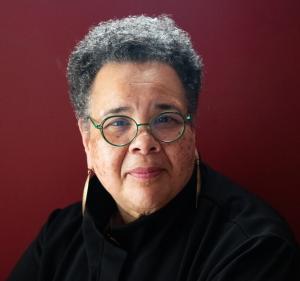
for Rebecca Badertscher What’s your superpower? The question is playful. It invites imagination. It flirts with the extraordinary. It asks us to consider who we might be if we were not so bound by the ordinary limits of time, fear, gravity, or flesh. It is a contemplation of freedom. Common answers come easily. Flight. Speed. Mind reading. Super strength. Time travel. Invincibility. The question suggests that we long for capacities beyond ourselves. It suggests that we are weary of constraint. It suggests, too, that power is something we add on, something we acquire, something that dazzles. We yearn to be more. But some superpowers are not imagined. They are practiced. They are learned early. They are honed in ordinary spaces where fear lives quietly and persistently. Invisibility is one of those kinds of real superpowers. The ability to make oneself invisible is often imagined as magical. A sudden disappearing. A body present then vanished—moved to the unseeable realm. In classrooms, invisibility is neither magical nor sudden. It is deliberate. It is disciplined. It is a survival strategy.I learned invisibility in elementary school. I do not remember a single lesson on how to do it, yet I mastered it quickly. I learned to still my body. I learned to avoid eye contact. I learned to quiet my breath and fold myself into the smallest possible version of who I was. If I did all of this well enough, the teacher’s gaze would pass over me. I would not be called. I would not be exposed. I would not be required to speak. This invisibility protected me. I was shy. I was anxious. Speaking felt risky. Answering incorrectly felt dangerous. I learned that when another student answered a question wrong, the room changed. The air tightened. Time became prickly and slowed. Mistakes lingered longer and thicker than they should have. I learned that invisibility could carry me safely through those moments. I could disappear until the tension passed.This is how classrooms teach. Not only through curriculum and standards and objectives, but through atmosphere. Through tone. Through what happens when someone gets it wrong. Through what happens when fear enters the room and no one names it or ushers it out. We often mislabel invisibility as disengagement. As lack of interest. As laziness. As absence. As passivity or disinterest. But invisibility is effortful. It requires attention, control, and constant monitoring of the environment. It is hard work. Frequently it is exhausting work. For many adult students in our classrooms the practice of invisibility is their work. They sit in seminar rooms, lecture halls, and Zoom squares, perfecting disappearance. They keep cameras off. They speak only when required. They offer safe answers. They avoid drawing attention. Like me, they learned invisibility early, and like me, they learned it because learning spaces did not feel safe. Too often learning spaces were harmful, painful, even violent. A superpower is needed for survival. Educators often misread student silences. Silence is wrongly judged as deficiency. Quiet becomes lack of preparation. Invisibility becomes a problem to be corrected rather than a strategy to be understood. We ask students to participate without asking whether participation feels dangerous or is an invitation into violence. We celebrate visibility without interrogating the conditions that make invisibility necessary. Participation is not politically neutral. Visibility is not innocent. Who can risk being seen, heard, corrected, or misunderstood is shaped by race, gender, class, language, past schooling, and accumulated harm. Some students speak because they trust the room. Others disappear because they do not. Many classrooms are not trustworthy. Invisibility, then, is not a student’s failure. It is intelligence. It is the body remembering what it needed to do to survive learning spaces. When we label it as resistance or apathy, we miss the story it is telling. We miss the work of teaching all the students in the room rather than simply teaching the complying students. Good teaching requires listening for what is not said. It requires noticing who disappears and when. It requires asking not Why won’t they speak? but What makes silence feel safer than voice?If we are serious about education, we must teach against invisibility—not by forcing students into the light, but by changing the conditions of the room. We must slow down. We must treat mistakes gently. We must create multiple ways of being present. We must make fear discussable rather than disciplinary. I suspect it is a superpower of the highest caliber to invite students to reappear. Making learners visible again is worth the effort. Perhaps the better question for the teaching life is not What superpower do you have? but What powers did you develop to survive classrooms? And then, more importantly, What would help you no longer need that ability?Teaching is not about exposing students. It is about making it possible for them to reappear. At their own pace. On their own terms. In rooms where invisibility is no longer necessary.