Resources
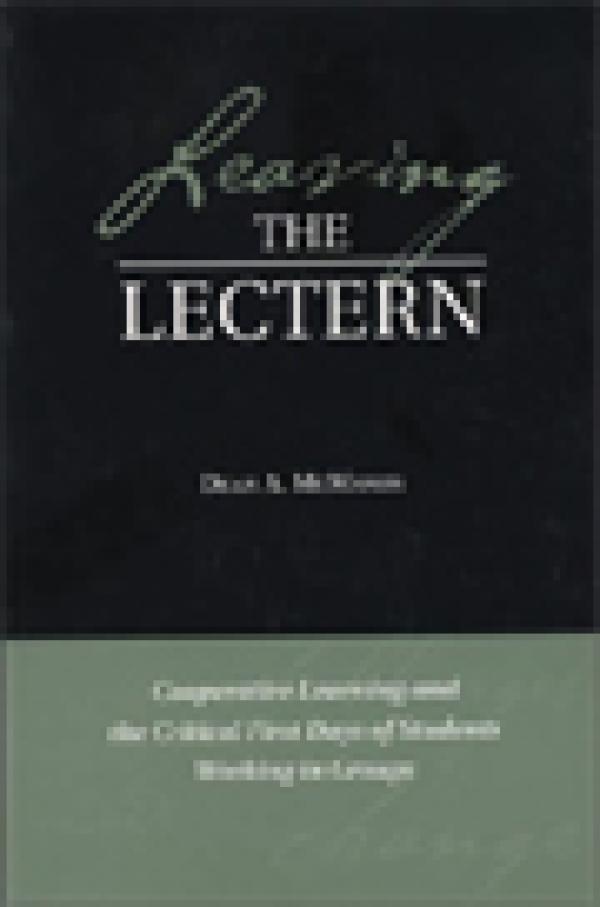
This book records the story of how one professor at a research university used a form of active learning to change the way he taught— from traditional lecture and examinations to cooperative learning and student projects. Drawn from teaching notes, conversations with students, student evaluations, and annual reports, readers will learn the kinds of risks, assumptions, and decisions they will face as they change their teaching to emphasize student learning, particularly during the critical first days of change. Engagingly written, Leaving the Lectern offers an honest and insightful look at the challenges and rewards of achieving change in the classroom. This book: * Motivates faculty and graduate students to visualize what changing their teaching to enhance student learning will be like by illustrating through narration how a professor much like them made the change * Provides reflective questions at the end of each chapter to help readers use the information in the chapter * Enhances the readers' preparation for the change by citing references to pedagogical precepts, strategies, and tools * Summarizes the seven themes found in the book to help bring about the change (From the Publisher)
In this new book, the authors of Creating Learning Communities advance the exploration of this important innovation in undergraduate education. They address issues involved in enhancing, sustaining and expanding learning communities, such as campus culture, curriculum, pedagogies, and faculty development. (From the Publisher)

Learning Communities is a groundbreaking book that shows how learning communities (LCs) can be a flexible and effective approach to enhancing student learning, promoting curricular coherence, and revitalizing faculty. Written by Barbara Leigh Smith, Jean MacGregor, Roberta S. Matthews, and Faith Gabelnick¾acclaimed national leaders in the learning communities movement¾this important book provides the historical, conceptual, and philosophical context for LCs and clearly demonstrates that they can be a key element in institutional transformation. (From the Publisher)
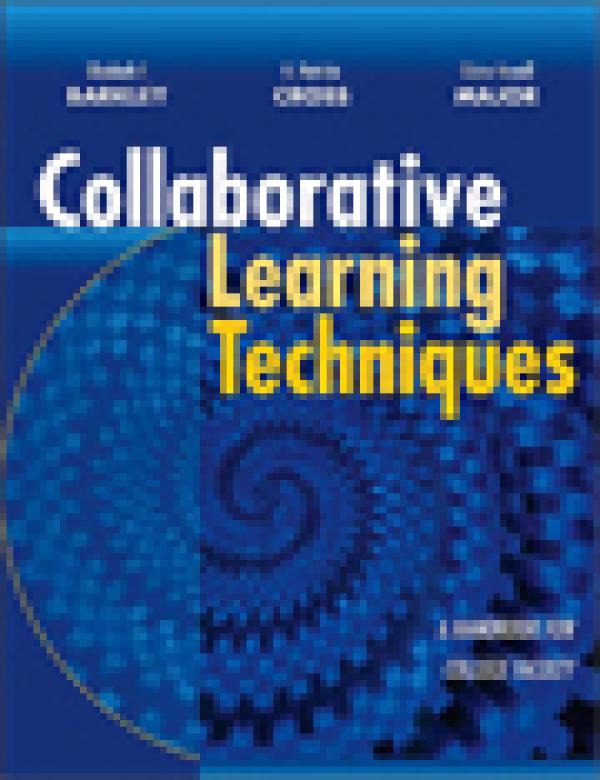
Engaging students in active learning is a predominant theme in today's classrooms. To promote active learning, teachers across the disciplines and in all kinds of colleges are incorporating collaborative learning into their teaching. Collaborative Learning Techniques is a scholarly and well-written handbook that guides teachers through all aspects of group work, providing solid information on what to do, how to do it, and why it is important to student learning. Synthesizing the relevant research and good practice literature, the authors present detailed procedures for thirty collaborative learning techniques (CoLTs) and offer practical suggestions on a wide range of topics, including how to form groups, assign roles, build team spirit, solve problems, and evaluate and grade student participation. (From the Publisher)

Collaboration is interwoven in the writing process in both obvious and subtle ways--from a writer using the language that he or she inherited, to referring to the works of other writers both explicitly and implicitly, to writing together with a colleague. In this book, the author explains that collaborative writing can be a useful pedagogical tool professors can use to help students actively learn about the subject matter and about themselves. (From the Publisher)

This innovative book provides a range of models for undergraduate student-assisted teaching partnerships to help faculty, faculty developers, and administrators make learning more student-centered, more effective, and more productive. Each of the 31 models included in this volume is supported with practical details and focuses on four main aspects of a specific peer-assisted learning environment: 1) implementation, 2) evidence of effectiveness and learning benefits, 3) analysis of time and cost expenditures, and 4) suggestions for replication. The chapters present a range of approaches, applications, disciplines, institutions, and contexts, and demonstrate that student-faculty partnerships can be adapted to meet diverse needs in a variety of situations. Extensive appendices aid implementation by providing concrete examples of hiring documents, training syllabi, teaching materials, and evaluation methods. (From the Publisher)

Howard Hills' Team-Based Learning shows how the ability to learn lies at the heart of effective working in teams. His book identifies the ingredients that turn good teams into teams that improve. (From the Publisher)
Argues that online collaboration among students does not need to follow the same forms as traditional interaction in face-to-face classrooms. Reviews pioneering and imaginative ways of helping students learn with one another in virtual space – ways that multiply the advantages of extended access with the strengths of enriched learning environments.
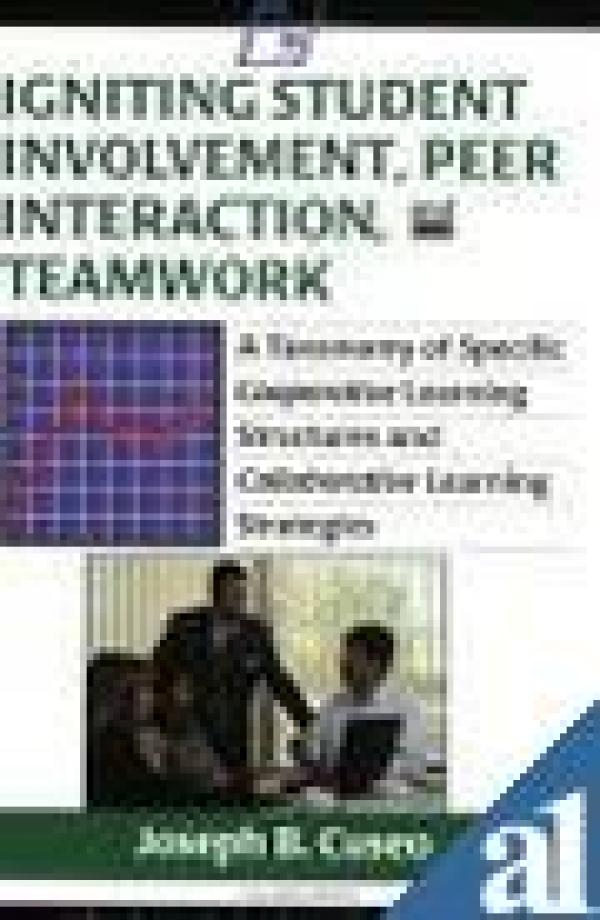
The student-centered pedagogical practices of cooperative learning, collaborative learning, and team learning can be united and defined inclusively as two or more learners who work interdependently toward a common goal, on a common task, that culminates with a consensual decision or creation of a common product. The purpose of this monograph is to provide a description and rationale for a taxonomy designed to delineate and categorize itself is included as a separate unit, with the intention that it may serve as a stand-alone "user’s manual" or "procedural index file" containing specific, step-by-step practices that can be accessed conveniently and implemented expeditiously. (From the Publisher)

This book focuses on the terms "collaborative learning," "cooperative learning," and "learning community" in which they have been bandied about in American higher education with great frequency and enthusiasm. One primary purpose of this monograph is to provide a more precise delineation of postsecondary practices that are subsumed or assumed to be embraced by the umbrella terms, collaborative learning, cooperative learning, and learning community, and organize these practices into a coherent classification system or taxonomy. Other major objectives of the taxonomy are to: (a) create a common language for improving the clarity of communication and discourse about diverse forms of collaboration in higher education; (b) articulate a strong, research-based rationale for greater use of collaboration practices in postsecondary education, (c) provide a panoramic overview of, and a convenient catalogue for, the wide range of collaborative initiatives that have been imp! lemented at colleges and universities; and (d) serve as a stimulus for triggering wider use of collaborative practices in higher education. (From the Publisher)