Resources
(Part Three of a Five Part Serialized Blog) Pivots or shifts in our thinking away from western and colonially oriented epistemologies are hard. The academy is a colonial entity. It is invested in colonizing us, thoroughly and into generations; colonization of thought processes and embodiments, the way we collect knowledge, our communal epistemologies, and the way we assess for learning. For BIPOC this is especially painful because we are familiar with these processes of systematic and structural erasure. We know intimately the violence of colonial erasure on our bodies, our tongues, our names, and even our food. The colonial academy, as an extension of supremacist ideologies everywhere, strives to domesticate our expression ourselves and our experiences, the way we analyze those experiences, the way we believe, create, and recreate the same tools that keep us bound up. The academy has convinced us that measures and rubrics can help us determine if what people create holds meaning or value. Meaning and value for whom? I’m not saying we need to throw away all the rubrics. I don’t hate rubrics. I am saying, we might consider that there are other ways to reflect back to students and ourselves how and what we are learning. However, the shift away from what we’ve asked ourselves and students to do from our earliest school years requires a lifetime of undoing. Often, we are learning and unlearning along with the students in our classrooms. The good news is that we can practice that cultural classroom shift together. Art can help us pivot if we let it. Our artists found the pivot from a reading and writing classroom to a maker’s classroom, disorienting at first. We could tell students felt like we would pull the rug out from under them at any moment. We were shifting from accountability to rubrics and grading scales to accountability to community and relationships. We practiced showing up for one another in vulnerability where one person’s art was not better than another person’s art, but just as meaningful, even if differently expressed. We were shifting from ordered time where we scrunched learning into one week after another with posts and responses as proof of learning, to a more suspended understanding of time and internal and external processing and contemplative time as work At first, this type of conversation occurred frequently: Artist: “I don’t have to write a research paper on this material?” Professors: “No, it’s there to inspire your creativity and challenge you. Show us what you’ve learned through your art and in your check-ins.” Artist: “So, I only have to purchase art supplies? There’s no booklist?” Professors: “Yes. Only art supplies. You are going to read, listen, and watch things in class, but we will provide them.” Artist: “I’m not a real artist, so does that mean I won’t do well in this class?” Professors: “You are a real artist. Did you do the piece? Did you colleagues and co-artists learn from your piece? Did you learn from their pieces? Show us how you are growing and being challenged. Push yourself and you’ll do well.” As they started each piece, we asked artists to reflect on themselves, the tangle of pain and joy in their lived experiences, the world, current events, and what Spirit was saying to each of them through the work of their heart and hands. How was what emerged as a work of art both of them and of the divine presence? How was it both meant for themselves and for the community beyond them? Students started making art in their comfort zones, many of them started the course leaning on familiar mediums, sketching or painting. By the end of the course, artists had pressed themselves into using other mediums. At the conclusion of the semester, we had digital art, sculptures, wire art, woodwork, poetry, and photography. We incorporated oral storytelling in small and large group synchronous sessions. Artists told us the stories that inspired their work, their daily experiences, their theological reflections on the world, and even shared ancestral wisdoms with one another. Sometimes, in response to the stories and the histories, there was only silence. We silently and carefully held one another through our little zoom boxes on the screen. Silence also teaches. Silence is also part of the process.
During the past year and a half of the pandemic, the uprisings for racial justice, the continued fight for LGBTQIATS justice, the struggle for the rights of immigrants, and the global impact of climate change, I discovered an urgency in myself to create and to grow things as a way to resist and refuse the death dealing all around us. The realization of so many lives lost, generations cut off, and futures extinguished weighed heavier each day. As a coping mechanism, I feverishly planted things in my garden, from herbs to vegetables, and grew green things in my home. I willed each and every plant to thrive and flourish, even as I felt rage and, at times, despair about the state of the world. I wondered if others felt the same. If colleagues and students felt weary, depleted by the constant weight of white supremacy pressing down on every inch of our lives. I started asking myself if what I was teaching even mattered anymore. Did what I was assigning students to read and write speak back to the now? Did the topics we were discussing speak truth and do the work of witnessing the rage and anguish of the past and present? Did my lectures also speak into the creation and necessary intentionality of embodied joy as an act of refusing oppression in our lives? Did the classes I designed speak into the flourishing futures we were trying to co-create? Here’s the pivot. Once our institution was entirely online and I realized that as educators, we had collectively reached a level of exhaustion and depletion that would continue into the future, I craved bringing the practice of creation and spirituality back into the classroom in a tangible way. I wanted to bring back the spiritual practice that art had been in my life. In sum, not only the act of creating a piece of art, but the process that undergirds that creation. The work and discipline of noticing the big and small things in daily life and in the world as a response to so much death—death meted out by white supremacy, anti-Black racism, anti-Asian violence, heteronormativity, bigotry, and ableism, to name just some of what we were are living through. I was also sick of words. Words can be full, but they can also be rather empty. People asking, “Hi, how are you?” without actually wanting to know. Sometimes there are things you feel, things you know, things that are ancestrally grounded in you that are unspeakable because they are so real and so incredibly meaningful. Sorrows and joys too deep to speak about in any coherent or fulsome way that an outsider could understand. There are things we experience that can’t and won’t be spoken about on demand. The days that we were living in felt heavy in this way: there weren’t enough words to carry the weight of it all. I began to wonder if there was a different way to teach and participate in the expression of community and lived experiences without centering words, to instead allow the unspeakable things within to guide us in a semester-long online class. I invited Rev. Darci Jaret, a local artist and theologian in Atlanta, to teach with me and we started working on creating our dream classroom. A space where students might use visual art to think theologically about art as a spiritual practice and a necessity for doing ministry and pastoral care in today’s world. As part of planning for this course, now dubbed, Spirituality and the Arts, we decided there would be no graded written work and instead we would focus our time on accountability through shared process and artwork. Students would create six pieces of visual art which moved from their personal journey to their theological understanding of the Divine presence, to pieces inspired by artists like Gabriel Garcia Roman’s Queer Icon series and Alvin Ailey’s Revelations. We would paint, sketch, and sculpt. The pieces were connected to one another, spiraling out from self, back to community and the world, and back to the self. The final project would be a gift and blessing for another student in the class, a sending back into the world equipped to mend through a deeper appreciation of how the practice of making and praying through making changes our thinking, our theologies, and how we embody ourselves in the world. A major shift we made for this class was to let go of weekly assignments. We would take space and time for each piece of art. Instead of having pieces due each week, we gave students two full weeks to complete each piece. They were asked to manage the time as they saw fit but to remain accountable to sharing their process with the group. Each week, students were given relevant material to read and watch, ranging from scholarship on spirituality and pastoral care through art to watching documentaries about the decolonization of societies and neighborhoods through art making. We thought of the scholarly material for each week as a place for grounding and growing inspiration, raising significant questions, and challenging bias. Art and creativity do not occur or appear on demand but like any living thing, are nurtured into being through acknowledgement, trying this or that, and deep contemplation of what we encounter in the world, in ourselves, and in others. We encouraged our artists to think about and wrestle with the course material and provide video updates on their process at the end of the first week of each project. We asked them to cheer one another on as some projects were easier or more difficult for people depending on what was being worked out through each piece. We often repeated that is ok to just read and think, and to start and start over. The only thing to submit for a grade was the piece of art at the end of each two-week period. Everything that occurred up to that point was part of the practice of learning to be in community through accountable process.
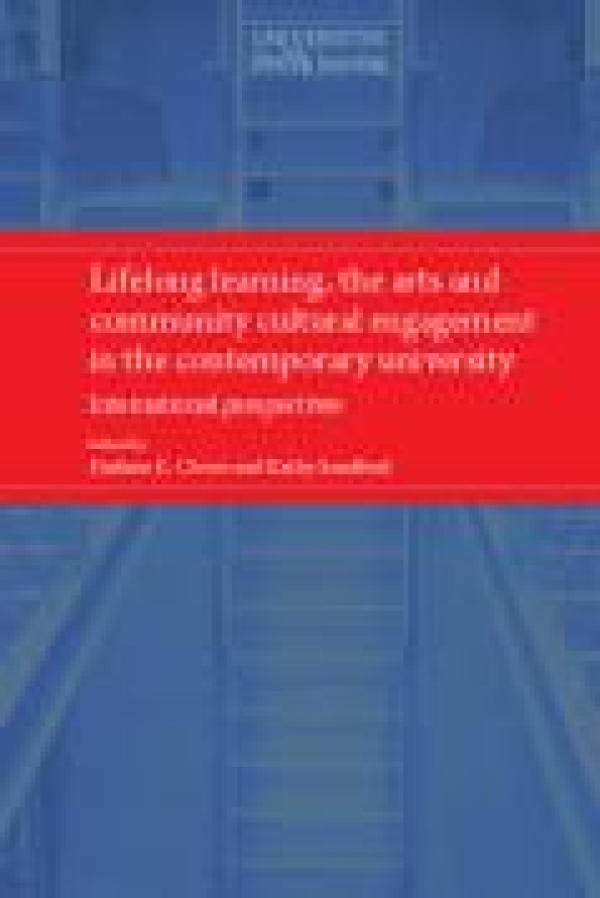
How might arts-based teaching, learning, and research transform education? This question is explored by demonstrating that arts-based methods and aesthetic pedagogies critically and creatively communicate, teach, make meaning, uncover, and involve students in learning activities. While prevailing attention in the academy is placed on science, math, business, and technology, the collective aim of this volume is to highlight the imaginative practices and creative voices that address the potentials, tensions, and challenges that educators face in working through and within the confines of higher education (7). The editors, Clover and Sanford, draw on the expertise of educators from North America, Europe, and Africa who work in areas as diverse as religious conflict, civic engagement, teacher education, literacy, theater, museums, dance, and diversity training. The authors demonstrate through varied examples and commonly held convictions that arts-based methods, grounded in social relevance and educational theory, prepare and engage students to develop self understanding and attend to pressing political issues. The twelve, primarily co-authored, essays are organized into three sections: “Arts-based Teaching and Learning”; “Arts-based Research and Enquiry”; and “Community Cultural Engagement.” Part One begins with five chapters highlighting examples of arts-based teaching within university settings. Noting the weight placed on traditional assessment and evaluation, the ubiquity of text-based learning, and the stress on technical rationality at the expense of other ways of knowing, the authors convincingly illustrate how the arts provide alternative spaces for learning that can expand student learning rather than diminish it. Skills for engaged citizenship in connection with global and local debates are explored through shared art making, while music is examined as a mobilizing force for activism. Story drama facilitates embodied ways of learning and imaginative writing “turns the gaze” outward to help marginalized student “speak.” Arts-based pedagogies address real problems, help students ground concepts with their own lived experiences, and build communities of learners, while performance-based results synthesize knowledge. The three chapters in Part Two discuss how arts-based research, which makes use of the arts in the collection, analysis, and dissemination of data, provides researchers with a broader palette of investigative and communication tools with which to garner and relay a range of social meanings (82). For example, theater and drama action-based research is employed by university researchers to assess stress among staff within their work place. Doctoral candidates use collage to tap into extra-rational ways of knowing in order to enhance and clarify their research projects. Dissertation advisors act as midwives supporting the use of arts-based research demonstrating that it is both rigorous and evocative in that its purpose is often to raise consciousness and compel, rather than simply to convince or persuade. At the heart of arts-based inquiry is a radical politically-grounded statement about social justice and control over the production and dissemination of knowledge (81). Part Three explores community cultural engagement and the arts. Issues related to racism and diversity awareness in Canada, religious conflict in Northern Ireland, and lifelong learning and cultural engagement in a museum in Scotland are examined through arts-based methods. In these varied examples boundaries between academy and community, practitioners and experts, access and privilege, are diffused. Instead, the authors point to the benefits of working beyond disciplinary silos in order to dismantle elitism, classicism, and notions of art for art’s sake. This book is written for all who would like to work beyond normative structures of higher education by using creative arts-based methodologies and practices. It is for those who wish to collaborate with community artists and cultural institutions and for those who seek ways to unite affective and cognitive learning by engagement with and through the arts. As the editors assert, the arts have potential for augmenting the human aesthetic dimension, rupturing categories of how the world is seen, and imagining the world as it might be.