Resources
Understanding the Working College Student: New Research and Its Implications for Policy and Practice
How appropriate for today and for the future are the policies and practices of higher education that largely assume a norm of traditional-age students with minimal on-campus, or no, work commitments? Despite the fact that work is a fundamental part of life for nearly half of all undergraduate students – with a substantial number of “traditional” dependent undergraduates in employment, and working independent undergraduates averaging 34.5 hours per week – little attention has been given to how working influences the integration and engagement experiences of students who work, especially those who work full-time, or how the benefits and costs of working differ between traditional age-students and adult students. The high, and increasing, prevalence and intensity of working among both dependent and independent students raises a number of important questions for public policymakers, college administrators, faculty, academic advisors, student services and financial aid staff, and institutional and educational researchers, including: Why do so many college students work so many hours? What are the characteristics of undergraduates who work? What are the implications of working for students’ educational experiences and outcomes? And, how can public and institutional policymakers promote the educational success of undergraduate students who work? This book offers the most complete and comprehensive conceptualization of the “working college student” available. It provides a multi-faceted picture of the characteristics, experiences, and challenges of working college students and a more complete understanding of the heterogeneity underlying the label “undergraduates who work” and the implications of working for undergraduate students’ educational experiences and outcomes. The volume stresses the importance of recognizing the value and contribution of adult learners to higher education, and takes issue with the appropriateness of the term “non-traditional” itself, both because of the prevalence of this group, and because it allows higher education institutions to avoid considering changes that will meet the needs of this population, including changes in course offerings, course scheduling, financial aid, and pedagogy. (From the Publisher)
More first-generation students are attending college than ever before, and policy makers agree that increasing their participation in higher education is a matter of priority. Despite this, there is no agreed definition about the term, few institutions can quantify how many first-generation students are enrolled, or mistakenly conflate them with low-income students, and many important dimensions to the first-generation student experience remain poorly documented. Few institutions have in place a clear, well-articulated practice for assisting first-generation students to succeed. Given that first-generation students comprise over 40% of incoming freshmen, increasing their retention and graduation rates can dramatically increase an institution’s overall retention and graduation rates, and enhance its image and desirability. It is clearly in every institution’s self-interest to ensure its first-generation students succeed, to identify and count them, and understand how to support them. This book provides high-level administrators with a plan of action for deans to create the awareness necessary for meaningful long-term change, sets out a campus acclimation process, and provides guidelines for the necessary support structures. At the heart of the book are 14 first-person narratives – by first-generation students spanning freshman to graduate years – that help the reader get to grips with the variety of ethnic and economic categories to which they belong. The book concludes by defining 14 key issues that institutions need to address, and offers a course of action for addressing them. This book is intended for everyone who serves these students – faculty, academic advisors, counselors, student affairs professionals, admissions officers, and administrators – and offers a set of best practices for how two- and four-year institutions can improve the success of their first-generation student populations. (From the Publisher)
147 Practical Tips for Teaching Sustainability: Connecting the Environment, the Economy, and Society
The stone age didn't end because of a lack of rocks! one educator is fond of stating. While there were certainly an abundance of rocks available, stone age people moved on to a new era because it become possible for them to envision and create a different and more useful way of organizing life. Many believe that we are currently at a similar juncture and can begin to imagine and construct new ways to live on our planet. We are the first generation capable of determining the habitability of the plant for humans and other species, writers Anthony Cortese in the introduction. Teachers at every level can play an important role in helping us find a sustainable path. Exploring ideas about sustainability is appropriate for all disciplines, plus community groups, business and industry. The diverse backgrounds of the authors of this volume demonstrate exciting situations in which sustainability is critical. (From the Publisher)
DIVERSITY IN HIGHER EDUCATION both in the student body and the faculty is an idea much heralded in academia. But how do committed institutions, faculty, and staff plan for diversity, teach it, and find opportunities within courses to expand on the canon of their discipline? How can diversity issues be dealt with in a sensitive and yet exciting manner? The contributors to this volume asked themselves those questions, joined together with like-minded colleagues, and met as a team--exploring their own experiences, sharing what their lives had taught them, and trying to make sense of difficult and sometimes conflicting ideologies. Together, the faculty and staff at Colorado State University created environment for each other to search, question, and then take their new awareness out into the greater community. This is a compilation of their thoughts and struggles as they explored the complexities of a diverse world and institution. It is a search for ways in which identify is preserved and celebrated, a search that supports integrity for all. This volume shares a portion of what they learned and shared. It can serve as a starting point for discussions on other campuses eager to move forward with diversity initiatives. (From the Publisher)
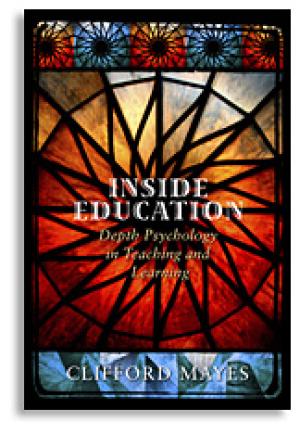
Education has to do with the mind and spirit of both the learner and the teacher. Those who teach know this instinctively. Yet many of the processes and mandates required in education, at all levels, fail to consider this most basic condition of the learning environment. Mayes, as an educator and therapist, examines the teaching/learning project through the lens of Depth Psychology because he believes that it offers the best possibility for examining the non-quantifiable dimensions of the student/teacher/learning situation. Depth Psychology, rooted in the work of Carl Jung, offer the educator a very human and humane way to frame interactions with learners. (From the Publisher)
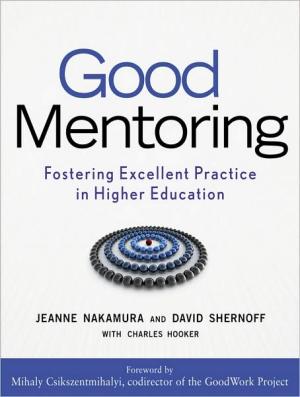
We pass on our traits through our genes but our cherished values, beliefs, and practices are transmitted through those units of meaning called memes. This remarkable book provides an authoritative account of how 'good work' endures in the sciences—and has profound implications for the quality of work across the professional landscape. This book should sow the seeds of greatness for protégés and mentors alike, and well beyond the discipline of science. Mentoring lineages are the hallmark of disciplines that endure and have impact, a reality that the authors powerfully communicate. Good Mentoring is a landmark study with implications for the continued vibrancy of any discipline. This is a fresh, eye-opening perspective on the social transmission of professional lineages. (From the Publisher)
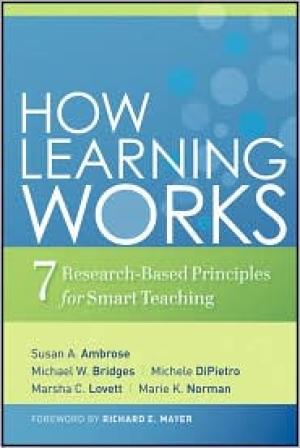
Click Here for Book Review Praise for How Learning Works How Learning Works is the perfect title for this excellent book. Drawing upon new research in psychology, education, and cognitive science, the authors have demystified a complex topic into clear explanations of seven powerful learning principles. Full of great ideas and practical suggestions, all based on solid research evidence, this book is essential reading for instructors at all levels who wish to improve their students' learning. This book is a must-read for every instructor, new or experienced. Although I have been teaching for almost thirty years, as I read this book I found myself resonating with many of its ideas, and I discovered new ways of thinking about teaching. Thank you Carnegie Mellon for making accessible what has previously been inaccessible to those of us who are not learning scientists. Your focus on the essence of learning combined with concrete examples of the daily challenges of teaching and clear tactical strategies for faculty to consider is a welcome work. I will recommend this book to all my colleagues. As you read about each of the seven basic learning principles in this book, you will find advice that is grounded in learning theory, based on research evidence, relevant to college teaching, and easy to understand. The authors have extensive knowledge and experience in applying the science of learning to college teaching, and they graciously share it with you in this organized and readable book. (From the Publisher)