Resources
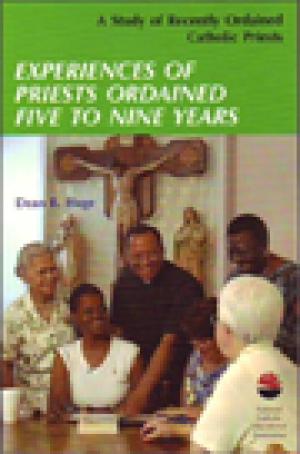
"This is a valuable study, following up on Dean Hoge's groundbreaking study on priests ordained 1 to 5 years. This is a critical study of a critical time in a priest's life and, as always, Dean Hoge makes a critical contribution to our understanding, offering a solid basis beyond anecdotal impressions, for t he formation of helpful policies and programs to assist these servants of God." Rev. Dan Danielson, pastor, Diocese of Oakland (From the Publisher)
Journal Issue.
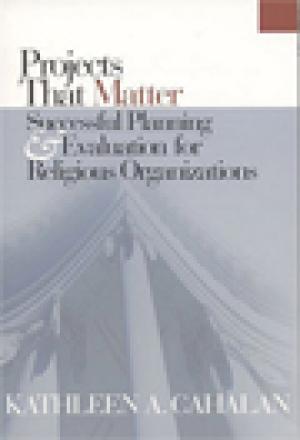
Projects That Matter introduces project leaders and teams to the five basic elements of project design and describes in detail a six-step process for designing and implementing a project evaluation and disseminating evaluation findings. Written for the nonexpert, leaders in religious settings will find Cahalan's guidance clear and invaluable. Presenting evaluation as a form of collaborative inquiry, Cahalan show how leaders can use evaluation design to develop effective project plans and prepare case statements for donors or grant proposals for foundations. She introduces project planning and evaluation as mission-related practices and invites leaders to consider how their tradition's particular mission and beliefs influence the way they plan and evaluate. Cahalan concludes the book by making explicit her own theological presuppositions—that the virtues of discernment, stewardship, and prudence are essential for good project planning and evaluation. About the Author Kathleen A. Cahalan is assistant professor of Pastoral Theology and Ministry at St. John's University School of Theology & Seminary in Collegeville, Minnesota. She served as evaluation coordinator for Lilly Endowment's religion division from 1996 to 2000. (From the Publisher)
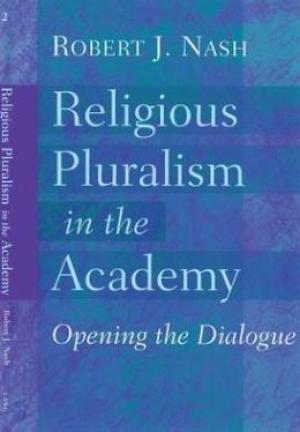
This book argues that American colleges and universities need to enlarge their understanding of pluralism and multiculturalism by sponsoring open, challenging, spiritually and educationally revitalizing conversations among students about genuine religious difference. Although religious difference is a pivotal component of cultural pluralism, too often today it gets ignored, marginalized, or sugar-coated in higher education. Together administrators, faculty, and students must take the initiative to tranform the academy into an exciting space for robust and respectful religious dialogue throughout the campus. This book offers a number of concrete examples and strategies in each chapter for achieving this objective. (From the Publisher)
What is actually happening on college campuses in the years between admission and graduation? Not enough to keep America competitive, and not enough to provide our citizens with fulfilling lives. When A Nation at Risk called attention to the problems of our public schools in 1983, that landmark report provided a convenient "cover" for higher education, inadvertently implying that all was well on America's campuses. Declining by Degrees blows higher education's cover. It asks tough--and long overdue--questions about our colleges and universities. In candid, coherent, and ultimately provocative ways, Declining by Degrees reveals: - how students are being short-changed by lowered academic expectations and standards; -why many universities focus on research instead of teaching and spend more on recruiting and athletics than on salaries for professors; -why students are disillusioned; -how administrations are obsessed with rankings in news magazines rather than the quality of learning; -why the media ignore the often catastrophic results; and -how many professors and students have an unspoken "non-aggression pact" when it comes to academic effort. Declining by Degrees argues persuasively that the multi-billion dollar enterprise of higher education has gone astray. At the same time, these essays offer specific prescriptions for change, warning that our nation is in fact at greater risk if we do nothing. (From the Publisher)
Does education have any relation to theology? How do the educator's worldview commitments speak to his or her practice of education? James Michael Lee brought a definite answer to these questions -- a firm no to the relations question, and an advocacy for empirical findings over and against any speculative or theoretical positions in reply to the commitments question. Lee claimed to have a universal, neutral metatheory for all religious education, a theory that would apply to all religious educators in any and every religion. But in proposing his theory he overlooked the way that empirical facts express worldviews. This book is a detective story, tracing commitments that lay underneath empirical "neutrality." In the process the reader will see avenues that unmistakably link education to theology. Education turns out to be a thoroughly worldview - conditioned process. This new work is essential reading for professors and students in both religious and general education. (From the Publisher)
The complete uplifting guide for every teacher to enrich each day and a career in teaching! All teachers need encouragement, affirmation, support, and to be reminded that they are part of a noble profession. Best-selling author Robert D. Ramsey has been an avid collector of inspirational quotes, notes, anecdotes, reflections, testimonials, and tributes for educators, and his new collection provides potentially career-saving homework for the soul of every teacher. This easy-to-read, but hard-to-forget anthology is full of powerful reminders that there is no such thing as "only a teacher." The contents of this uplifting resource have been carefully harvested by an educator for educators and are designed to: * Help belabored and beleaguered educators jump start their careers * Reclaim their professional pride * Rekindle their passion for teaching * Get the grit to press on against all odds Inspirational Quotes, Notes, & Anecdotes That Honor Teachers and Teaching makes a strong unified statement all teachers need to hear! (From the Publisher)
From the Publisher Most teachers have experienced some kind of formal mentoring or induction program. What these programs can miss is the meaningful daily interaction with peers that builds mutual trust and instructional collaboration-the organic, coachable moments that boost professional learning. Based on a unique investigative study of nearly 300 teachers, this powerful new resource provides informative teacher perspectives of informal, naturally occurring, teacher-to-teacher professional development. Jo and Joseph Blase use this research to identify the following five teacher behaviors that can positively influence other teachers’ morale, teaching skills, and professional growth: * Building healthy relationships by communicating, caring, and developing trust * Using five guiding principles for structuring learning experiences * Planning and organizing for learning * Showing and sharing * Guiding for classroom management This excellent resource helps school leaders promote a culture that encourages lasting professional development. Each chapter presents practical concepts and strategies that can occur in and out of the classroom. Educators share specific experiences and examples, showing each skill in action. School leaders will learn what strong teacher peer "consultants" actually do that leads to improved teacher confidence and motivation, enhanced trust and mutual respect, and reflective instructional behavior among their colleagues. These cost-effective, authentic strategies will build camaraderie and leadership in your school, engaging colleagues as a team in the vital mission of all schools-educating our youth.
Dalke brings together a collection of accounts written by herself, students and colleagues. These are incorporated into seven chapters corresponding to the seven stages of Dalke's reflection about teaching and learning in the liberal arts classroom. The text explores the evolution of Dalke's approach to teaching; Dalke's decision to redesign her classes using the model of the Quaker Meeting for Business; difficulties she faced when trying to apply such a model, including the complexities which silence and desire contribute to the classroom; and Dalke's attempt to describe "a vision of the paradise that my classroom might be as well as the unending labor and prayer needed to maintain such a space." (From the Publisher)
Reflecting a national movement that seeks to create a more holistic model of learning and teaching on college and university campuses, Education as Transformation is a collection of twenty-eight essays written by a wide range of educators - including presidents, chancellors, deans, faculty members, administrators, religious life professionals, students, and other leaders in the field of education - on the themes of religious pluralism and spirituality in higher education. These essays provide scholarly analysis, practical information, and inspiration for those who agree that higher education can combine both head and heart in the teaching and learning process and in campus and community life. In seeking to articulate a new vision for higher education in America, the authors explore the possibility that both scholarship and spirituality are essential to fostering global learning communities and responsible global citizens who can address the challenges of a diverse world. (From the Publisher)
Wabash Center Staff Contact
Sarah Farmer, Ph.D.
Associate Director
Wabash Center
farmers@wabash.edu