Resources
PDF includes 13 essays by faculty at the University of Colorado who participated in a Faculty Teaching Excellence Program. Faculty in various disciplines wrote essays with specific teaching tips addressing particular forms of diversity. Those essays were collected into this volume.
Discusses five aspects of creating an inclusive classroom: course content choices; awareness of assumptions; course planning; getting to know students; and awareness during the process of teaching.
Summer 2013 article in AAC&U’s journal “Diversity and Democracy.” Uses survey data to argue for the importance of inclusive learning environments and incorporating diversity into teaching and learning.
(Essays on Teaching Excellence, Toward the Best in the Academy Volume 19, Number 5, 2007) Short article that argues "One of the reasons role-play can work so wellis because of the power of placing oneself in another’s shoes. This provides opportunities for learning in both the affective domain, where emotions and values are involved, as well as in the cognitive domain." But to be effective role-playing must have clear objectives and intentional debriefings. where experiences are analyzed
Overview of How and Why to Use Role-Playing, Including a collection of role-playing scenarios
A simple "How to Use Role Playing Guide" that includes Define Objectives, Choose Context & Roles, Introducing the Exercise, Student Preparation/Research, The Role-Play,Concluding Discussion and Assessment
Focus is on using Role-Play to help historical figures come alive.
Handy 1-page summary of difference between grades and assessment, from the Duke University website.
In “Reacting to the Past” courses students learn by taking on roles, informed by classic texts, in elaborate games set in the past; they learn skills—speaking, writing, critical thinking, problem solving, leadership, and teamwork—in order to prevail in difficult and complicated situations. That is because Reacting roles, unlike those in a play, do not have a fixed script and outcome. While students will be obliged to adhere to the philosophical and intellectual beliefs of the historical figures they have been assigned to play, they must devise their own means of expressing those ideas persuasively, in papers, speeches or other public presentations; and students must also pursue a course of action they think will help them win the game.
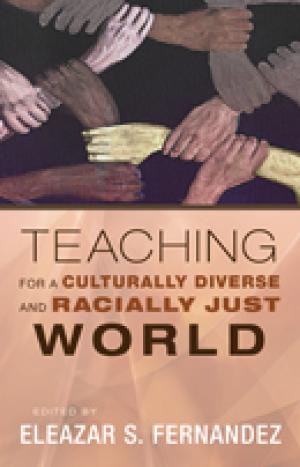
Click Here for Book Review Abstract: Cultural and ethnic diversity is the reality of our world, and much more so in this age of heightened globalization. Yet, do our ways of doing theological education match with our current reality and hopes for a colorful and just tomorrow? How shall we do theological formation so it helps give birth to a culturally diverse, racially just, and hospitable world? This edited volume gathers the voices of minoritized scholars and their white allies in the profession in response to the above questions. More particularly, this volume gathers the responses of these scholars to the questions: What is the plight of theological education? Who are the teachers? Who are our students? What shall we teach? How shall we teach? How shall we form and lead theological institutions? It is the hope of this volume to contribute to the making of theological education that is hospitably just to difference/s and welcoming of our diverse population, which is our only viable future. When we embody this vision in our daily educational practices, particularly in the training of our future religious leaders, we may help usher in a new, colorful, and just world. (From the Publisher)
Wabash Center Staff Contact
Sarah Farmer, Ph.D.
Associate Director
Wabash Center
farmers@wabash.edu