Resources

Higher education is a by-the-book, highly structured reality. From syllabus design (written for students as well as for administrators) to navigating the tenure track process; from classroom lesson planning to student assessments; as well as the preconceived even contrived ways articles and books are selected for publication – those of us who teach in the academic world participate in a rigid reality. For a scant few colleagues, this rigorous reality creates spaces for thriving and the production of new knowledge. It is the promise of this constructed reality. Dangerously, the same austere reality creates ease and opportunity for those who are harbingers of racism, sexism, classism, and heterosexism to have tremendous platforms of harm against colleagues and students of color. The strata of oppressive, hegemonic forces in the larger politic of U.S. society are duplicated in the reality of higher education with too few opportunities for checks-and-balances of justice and equity. Subtle and blatant acts of dehumanization go unchallenged. Gestures of ignorance and insensitivity are commonplace. Those colleagues who routinely wield their biases, prejudices, ill wills, and ignorance toward people of color and non-white cultures are too often gatekeepers in this reality. Challenged to navigate this strange reality and stymied to negotiate with persons who would see us fail, there is little sanctuary for us unless we create it for ourselves. While scholarship is my passion and joy, I never feel at home. My experience of displacement/up-rootedness is neither unique nor rare. For African American women and other colleagues who are othered and systemically marginalized, the reality of education is designed so that we remain strangers, even in the familiarity of academic spaces. Our outsider status is galvanized by the white feminist patriarchs, also known as patriarchs-in-drag, who refuse to do critical reflection on relationships with othered women and people of color. Elisabeth Schussler Fiorenza dubbed this experience of oppression in its many forms as kyriarchy. While naming the experience does not alleviate the circumstance, it does make me feel oriented…known. To never be at home is to contend with the accusations that we cannot do “classical” scholarship while at the same time reeling from the critique that our ethnic/cultural approaches are quaint, interesting…exotic. Our work and scholarship is othered along with our personhood. This constant confusion sends firm messages that we are not safe, not welcomed to be authentic or real. In the midst of this zero-sum experience of hostility, we are expected to be grateful for posts designed for occupation by white men. In this environment students quickly clue into those who are unwelcomed and deemed to be without authority, making our classrooms spaces unnecessarily conflictual and contentious. We are not at home. I have often heard othered colleagues describe this reality as the experience of being erased. Surely, as those who are Imago Dei, made in the image and likeness of God, we cannot be summarily negated. I am not sure when I started this habit, but it helps me survive/cope. Each spring, after commencement, I bring a laundry basket to my campus office. I gather up those personal items that adorn my office. I pack up the family photos, artwork, cards, and gifts given by students and friends throughout that year. I pack up my coffee mug, teapot, and the snacks in my desk. I balance my potted plants on the very top so they do not get damaged or squished. With heaping laundry basket in-hand, I move out of my office. Once at home with my laundry basket, I incorporate those items into the décor of my home. My office plants are nestled among the other plants in my living room, home office, and bedroom. The artwork and other items find a place on the shelves and in the bookcases. Then, in late summer, as the fall semester approaches, I make the decision to move back into my office – or not. If I move back in, I go around my house picking and choosing those art pieces that will adorn my campus office and assist my work in the coming year. I discuss with my plants and ask for volunteers to come to my campus office. Once back in my office, I carefully place the photos, paintings, sculptures, and plants. I move back in, only for the year. Knowing I will move out gives me strength and courage. Each year, this ritual helps me navigate the death-dealing space that is the academy. It reminds me of my choice and my freedom. This ritual rekindles my own agency and intrinsic power. I move back in because of my own choice and not out of obligation, confinement, nor to stave off erasure by these institutions. Those political practices designed to divide and conquer, which are meant to keep us feeling unwelcomed, are weakened when I exercise this agency. Moving out of my office each spring lets me know I am free to leave the institutions that do not nurture me or my kind. Knowing I have a choice helps me keep my rage in check. Moving into and out of my office reminds me that I am not homeless. The confusion, disarray, and disturbance that would reasonably result from being unwelcomed has little sting and warrants only momentary guile when I remember that our particularity is our gift to the world from the Divine. We are a people for whom this racist, sexist, homophobic, kyriarachal academic world is a reality that requires the skills of ornery-ness and imaginative cunning—skills for which we are quite adept. The knowledge and belief that the love, sacrifice, and values of our ancestors and wisdom-kin are steadfast provides hope. Audre Lorde wrote, “In our work and in our living, we must recognize that difference is a reason for celebration and growth, rather than a reason for destruction” (Oberlin College Commencement Speech, 1985). A Luta Continua.
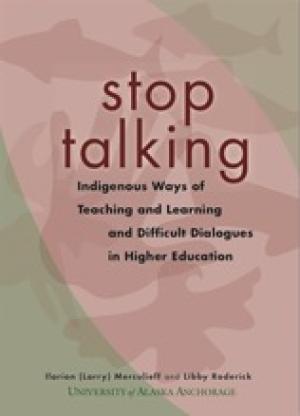
In 2009, authors Ilarion Merculieff and Libby Roderick participated in the second of two higher education projects sponsored by the Ford Foundation’s national Difficult Dialogues initiative. This project was designed to “turn the tables” on traditional academic professors so that Alaska Native people would become their own teachers (iii). This book, Stop Talking, tells the story of the second project, laid out in a format that parallels the experience gained in a faculty immersion workshop with Alaska Native teachers, followed by an ongoing community of inquiry (chapters 1-5). The final chapters show the nature of change in pedagogy designed by faculty participants for one academic year and the assessment of the entire project, reflections, and strategies for changing higher education through indigenization (chapters 6 and 7). The goal of this project was to instill deeper understanding of traditional indigenous worldviews, issues, and pedagogies by fostering respect for different ways to be teachers and learners (x). Sixteen faculty members participated in experimenting with Native ways of teaching and learning and introducing “difficult dialogues” regarding Alaska Native concerns during a week-long intensive workshop. The flow of the intensive time together is outlined in the first four chapters. The format for teaching during the workshop included much silence, a slower pace, and no note-taking. Learning occurred by non-verbally internalizing that which was important because words, in the Aleut tradition, are considered a constraint on intelligence, getting in the way of living in the present; therefore, ground rules for the intensive workshop included paying attention to being part of a whole through deep connection, often wordless, thereby making one a “real human being.” Participants learned that Native pedagogies occur out of teaching practices such as slowing down to be in relationship with each other and the Earth, close observation and emulation, use of all senses in silence, storytelling, dance, and games. Participants used these practices throughout the week during daily workshops, and were invited to think about the courses they normally teach in light of such practices. The difficult conversation topics followed later in the week, when faculty participants began to deal with the institutional racism and the Western methodology of science and research used in institutions that ignores or devalues Native ways of learning and teaching. During the intensive, faculty began to integrate the particularity of their course material with a wider, deeper pedagogy. Afterward, the group agreed to meet monthly for one academic year to continue their community of inquiry. They conducted formal assessment of their work, and engaged in deep reflection together. Roderick’s call to this indigenizing of higher education is important: “If we can do these two things – learn from these ancient cultures fresh ways of approaching the tasks of learning while simultaneously working to overthrow the ongoing legacy of colonization that still plagues modern indigenous peoples – we will have accomplished a great deal” (ix). Indeed, such work is essential for equitable, deep education. This work is our future. This book, filled with story and wisdom, is our guide.
If you are a librarian or educator engaged in student learning, and are satisfied with the sameness and predictability of current methodologies, read no further. However, if you have need of developing strategies that are up-to-date, relevant, and promote shared perspectives, read on. Emerging Strategies for Supporting Student Learning equips the reader with an arsenal of educational approaches, geared for higher education. They are field-tested, validated by case studies, and include both North American and European perspectives. Like many other researchers focusing on emerging trends in education, Allen echoes the common refrain that today’s rapidly changing society necessitates “new approaches to support student learning” (1). Where this volume finds its niche and wields special power, is its ability to connect across disciplines – amongst librarians, information workers, and classroom instructors. It can also be utilized with students from undergraduate to doctoral level, and in varied settings. Among the trends included in this text are: student digital literacies, learning and teaching activities, designing face-to-face, blended and online courses, assessment, and issues of lifelong professional development. The chapters are divided into sections that include a concise introduction, subject content, summary, and references. Allen brings to her research an acute awareness of the challenges faced in higher education, having worked for several years in varied educational settings in the United Kingdom. She might even be faulted for showing too much concern when covering certain settings in minute detail. For example, she reminds us that because educators have so little choice about room allocation, “it is worth visiting it beforehand to check the facilities….This double checking could help you avoid being in an embarrassing situation” (126). This relentless attention to detail can also be viewed as her way of ensuring that such strategies are successfully executed. Throughout the text, we are encouraged to ask critical questions that will help inform the decisions we make about education strategies. When examining formative and summative assessment, the author offers a multitude of questions that might be asked beforehand, including: Why am I assessing? What type of assessment is better served? And where is the best place to do the assessment? (91-92). The strategies Allen offers are never dogmatically presented. They are, rather, offered in a smorgasbord manner. They are easily constructed and user-friendly. She encourages the use of ice-breakers, informational graphs, and e-posters at academic gatherings and as a way of allowing material “to be presented in a colorful and imaginative way” (87). Pedagogic models like flipped classrooms are viewed as a way of maximizing student engagement and which runs counter to conventional approaches to teaching and learning. Traditionally face-to-face classroom time is spent by a tutor explaining or presenting new ideas, and this may be followed by some activities. In a flipped classroom, students explore the material outside the classroom and then spend time with the tutor clarifying and developing deeper knowledge through discussion and activities. (116) Keeping up-to-date with professional skills is a high priority for this author. She suggests several digital resources across the spectrum to help make that happen, including the American Library Association (ALA), Flickr Creative Commons, MERLOT, and the National Digital Learning Resource (NDLR) – a “collaborative educational community in Ireland…. interested in developing and sharing digital teaching resources and promoting new teaching and learning culture” (110). The emerging strategies included in this book bear testimony that education is both evolving by the day and in need of constant need of revision. This book helps us move a little toward embracing good educational practice and relevancy.

The blizzard of the world has crossed the threshold and it has overturned the order of the soul. -Leonard Cohen[1] I still remember vividly the fear and frenzy swirling around my graduate school the days and weeks after September 11, 2001. As the blizzard of physical and spiritual violence and their inevitable outcome of war blew around campus, classes went on. Sitting in a classroom for two hours at a time and listening to lectures on systematic theology seemed--to me, at least--pointless. I can remember only two of my professors mentioning in class the terrorist attacks and their aftermath. One professor stormed into the classroom the morning of September 12, in a fury, declaring: “We need to bomb ‘em!” He then uttered something about holy wrath. When the US eventually did bomb Afghanistan on October 7, another one of my professors openly wept in class. She was concerned, as was I, about the number of innocent lives that would be lost in the ensuing war. In a move deemed controversial around the Theology Department, she hung a poster on her office door entitled “Death Toll,” which she updated daily to reflect the current count. It was to her office hours I went when I was trying to find my way through the storm of confusing thoughts and emotions. So many people around me were indifferent to the suffering of others. So many seemed to be separated from their souls. “What’s the point of going to class anymore?” I remember asking her. I had been thinking that my time would be better spent dropping out of school and becoming an activist. Actually, I had a similar crisis of conscience during my undergraduate studies, I told her when I almost quit school for what seemed like a nobler cause. Now a professor myself, when I reflect back on these difficult moments during my student years, I can identify what annoyed me so much about so many of my theology classes: they were irrelevant and disengaged from the serious events surrounding us; their aim was to transfer content. No one seemed to care, except for the one professor from whom I sought guidance, about teaching us to apply the knowledge we learned to the context around us. That education entails not just knowledge, but also attitudes, skills, and practices may seem to be a universal pedagogical value. But, if it is, it is not universally carried out. For example, in the Catholic neck of the woods in which I teach, formation is understood to entail four pillars: intellectual, spiritual, pastoral, and human. Seminarians, permanent diaconate candidates, and lay students preparing for ministry are to be formed across these pillars in order to emerge from graduate theological programs as integrated, healthy ministers in their churches and communities. So often though, these pillars operate as mutually exclusive silos. In many programs, I have seen, for instance, theology professors are responsible for intellectual formation, while field educators and priests are in charge of the other three pillars. Sometimes little to no conversation happens across those responsible for each pillar. The student moving through such a program is the sole agent of integration between the four pillars. As I know from my student days, this doesn’t work very well. The soul feels separated from the intellect and the conscience, and the feeling of disintegration is heightened, and becomes too much to bear, when living in times of war, amidst racial and economic injustice, ecological ruin, political deceit, and greed, etc. The importance of integration and integrity have been made clear enough in the current US presidency. To take just one example: consider the foolishness of the POTUS (President of the United States) delivering a speech on the responsibility of Twitter to millennials during his visit to Saudi Arabia. When our world leaders act in such a way, demonstrating a separation between intellect and soul, or a wholescale overturning of “the order of the soul,” to use Cohen’s words again, we need to help the students in our classrooms make their way through “the blizzard of the world,” lest they be lost, too, in the madness. Course syllabi and outlines need to be revised. Term assignments need to be rethought. Discussions in class need to be redirected. All of this needs to happen so that we give students the time and space in our classes to learn how to apply knowledge to context and practice. In a brainstorming session of my “Classics of Christian Spirituality” course I taught last semester, I was edified deeply when one of my students had the idea to apply the Spiritual Exercises of Ignatius of Loyola that we had read for class that day to a community night of reflection for peace and discernment during politically turbulent times. I have also learned that students need the chance to receive feedback on their efforts because it is far more difficult to apply the information they learn in class than it is to memorize it and regurgitate it back to a teacher on a test or in paper. Giving them opportunities to act across the four pillars, or simply place their knowledge in the service of praxis, is critical for their formation as engaged citizens in church and society. If we are concerned about the declining registration rates in theological and religious education programs in North America, we might need to step up our game in terms of formation. If it weren’t for the teacher I had in the Fall of 2001 who kept things real and relevant for me, I doubt I would have registered for any more classes either. [1] Leonard Cohen, “The Future” © 1992 by Sony Music Entertainment, Inc.

Click Here for Book Review Buddhist studies is a rapidly changing field of research, constantly transforming and adapting to new scholarship. This creates a problem for instructors, both in a university setting and in monastic schools, as they try to develop a curriculum based on a body of scholarship that continually shifts in focus and expands to new areas. Teaching Buddhism establishes a dialogue between the community of instructors of Buddhism and leading scholars in the field who are updating, revising, and correcting earlier understandings of Buddhist traditions. Each chapter presents new ideas within a particular theme of Buddhist studies and explores how courses can be enhanced with these insights. Contributors in the first section focus on the typical approaches, figures, and traditions in undergraduate courses, such as the role of philosophy in Buddhism, Nagarjuna, Yogacara Buddhism, tantric traditions, and Zen Buddhism. They describe the impact of recent developments-like new studies in the cognitive sciences-on scholarship in those areas. Part Two examines how political engagement and ritual practice have shaped the tradition throughout its history. Focus then shifts to the issues facing instructors of Buddhism-dilemmas for the scholar-practitioner in the academic and monastic classroom, the tradition's possible roles in teaching feminism and diversity, and how to present the tradition in the context of a world religions course. In the final section, contributors offer stories of their own experiences teaching, paying particular attention to the ways in which American culture has impacted them. They discuss the development of courses on American Buddhism; using course material on the family and children; the history and trajectory of a Buddhist-Christian dialog; and Buddhist bioethics, environmentalism, economic development, and social justice. In synthesizing this vast and varied body of research, the contributors in this volume have provided an invaluable service to the field (From the Publisher)
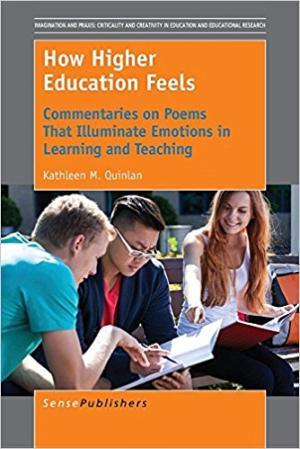
Click Here for Book Review Teaching and learning in higher education can evoke strong feelings, including confusion, anxiety, boredom, curiosity, surprise and exhilaration. These emotions affect students’ learning, progress and overall success. Teachers’ emotions affect how they teach and their relationships and communication with students. Yet the emotional dimensions of teachers’ and students’ experiences are rarely discussed in the context of improving higher education. This book addresses that gap, offering short, evocative case studies to spark conversation among university teachers. It challenges readers to reflect on how higher education feels, to explore the emotional landscape of courses and programmes they create and consider the emotional effects of messages embedded in various policies and practices. Following the student lifecycle from enrollment to reunion, each of the main chapters contains 10 to 15 accessible, emotionally-engaging poems that serve as succinct case studies highlighting how some aspect of learning, teaching or development in higher education feels. Each chapter also contains an expert scholarly commentary that identifies emergent themes across the cases and establishes connections to theory and practice in higher education. The poems-as-case-studies are ideal for use in faculty or educational development workshops or for individual reflection. A variety of theoretical perspectives and associated reflection prompts provide lenses for variously interpreting the poems. An appendix offers suggestions for structuring case discussions as part of educational development activities. The book promotes a person-centered discourse, giving voice to previously neglected aspects of higher education and reminding us that education is essentially a human endeavor. (From the Publisher)
This is just some text in here to test the post.
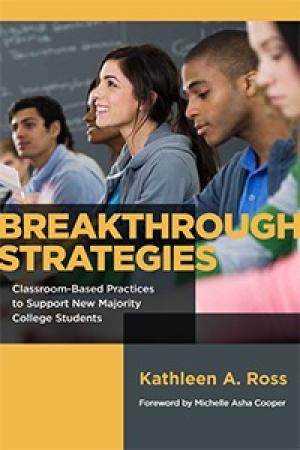
This book is about preparing for a future already dawning on North American college campuses, a future belonging to “New Majority” (NM) students. Ross describes NM students as Latino/a, African-American, Southeast Asian, Pacific Islander, first generation, and low income. Evidence of NM students is statistically demonstrable, as with the 50% rise of Pell Grant applicants between 2002-13. Demographic surges suggest a “majority-minority” U.S. by 2050. These students often have an educational disadvantage, met in some places with "bridge programs" or other efforts to bolster their success. But is more needed? Are faculty aware and equipped enough to serve NM students, or will faculty continue to be befuddled when students do not speak up in class or react to assignments and grades in unexpected ways? This book addresses these issues by introducing professors to NM students so that they can better understand the cultural cues and expectations these students bring. Part I, "Strategies for Engagement," assesses ways of keeping students engaged, but with special attention to issues NM students face. Chapters begin with classroom vignettes that set up the problem the chapter addresses. Students may disengage because of “stereotype threat,” a socio-psychological phenomenon described in chapter four. Professors best confront this stereotype by bolstering self-confidence while pushing students to engage subject matter more deeply. Students are reluctant to ask questions in class not because they are uninterested, but because they fear sounding ignorant or come with cultural traditions of deference that discourage public questioning. This mismatch of expectations between teacher and students can be confronted through strategies presented in chapter five. Taken for granted as a privileged space with its own practices, the college classroom is strange new territory for NM students. Six chapters in parts II and III introduce strategies that build inclusion and confidence. For instance, NM students benefit from classroom cultures built around interdependence and teamwork rather than individual achievement, which can be perceived as selfish and disloyal in some minority communities. Journaling is another strategy that invites NM students to deeper reflection on a subject and builds connection with the instructor. It helps to overcome the assumption that learning is simply mastery of information delivered through lectures, as opposed to personal discovery and evaluation. Journaling is an important ingredient in the wider purpose of creating leaders for minority communities who produce personal observations, share insights, and opinions with confidence, contributions which are valuable not only for minority communities but also for the wider society in which they will participate. NM students will graduate and enter a workforce where they will continue to face debilitating stereotypes (the final chapter’s opening vignette is about Gabriela, a Latina architecture student who faced negative stereotyping on her first day). College classrooms should be spaces of empowerment for these students so they can begin building a professional identity during their educational experience. Professors can facilitate this with frank discussions of stereotypes NM students will face, by sharing stories of role models, and by cultivating good practices in communication and self-presentation. This book will sensitize faculty to the needs of this growing part of the student body. However, much of the information is applicable to students from all backgrounds, and will improve college teaching for all involved.
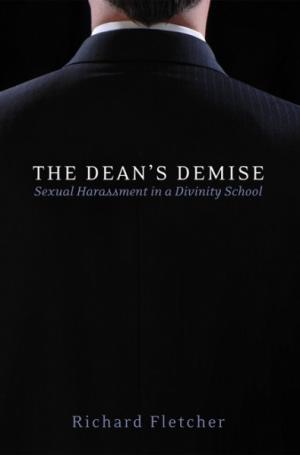
The Dean’s Demise offers a disturbing reminder that seminaries and the church are not exempt from the abuse of pastoral powers to coerce sexual demands from colleagues, students, and even children entrusted to their spiritual care. With over fifty years of experience in theological education in the roles of minister, professor, and dean, Richard Fletcher crafts a compelling fictional case study of Dean Karl Wolf and presents comprehensive viewpoints from the perpetrator, the victims and their families, and the school administrators. Fletcher starts the book by describing young Karl Wolf as a promising scholar while foreshadowing his potential liability by alluding to his insatiable need for admiration and power. Fletcher then takes the reader through Wolf’s academic rise to become the dean of a prominent divinity school, all the while sketching his sexual hunts. Wolf is indeed a predator. The reading experience feels almost voyeuristic at times. Fletcher evokes a complex range of emotions in the reader with the secret intimate details of affairs and their aftermaths. Wolf’s blatant disregard for the wellbeing of his victims and his self-serving lies fuel an emotional response and at the same time demand that one thinks through one’s feelings with regard to the physical, emotional, and spiritual damages inflicted on the victims and their families. In addition to providing a profile of the mind and actions of a sexual predator, in The Dean’s Demise we confront the response of seminary officials, including their theological and moral deliberations, and the process of how the school ends up resolving, or rather settling the sexual harassment case against the dean. In light of the multiple stakeholders presented in the unfolding narrative, this book is a rich resource for generating discussions on many fronts, including theological reflections on power and the brokenness of humanity, justice issues and accountability, personality and mental health issues in seminaries, and practical legality around sexual harassment cases. A limitation to the helpfulness of this book is that the content is outdated. Although the book was published in 2016, the accounts of the events are recorded from 1979 to the early summer months of 1993. The content of the book, the nature of Wolf’s sexual predatory behavior, and the ways the school administration respond, are consistent with the time period in which the book is set. Since the early 1990’s, sexual harassment awareness and training initiatives in workplaces and schools have increased. As opposed to the blatant predatory behavior of Wolf detailed in the book, now there are specific definitions and criterion of more nuanced behaviors which constitute sexual harassment. With concrete definitions, guidelines, and policies in place, today’s academic administration’s deliberation and handling of such cases is very different than the deliberation portrayed in the book that relied on collective wisdom. The school administrative demographics are another aspect which date the book – being all men, presumably white. With increasing female and minority faculty members, deans, and presidents in academic institutions, different understandings and experiences shape how power, abuse, and sexual harassment are defined and handled. Whereas all the victims in Fletcher’s book are female, in today’s reality there are more women in power positions that blur and render more complex binary and stereotypically gendered depictions of perpetrator and victim. As sexual predatory behaviors occur within the context of relationships of power and privilege, gender and cultural influences must be considered when deliberating sexual harassment cases.

Why do so few Hispanic males enroll in and graduate from institutions of higher learning? Why are Latinas, by contrast, enjoying so much more success than Latinos? Moreover, why is there a dearth of research addressing these questions? This book, which includes twelve chapters written by leading Latin@ scholars, addresses these questions with the goal of broadening readers’ contextual understanding, deepening their comprehension of the specific challenges faced by Hispanic males in higher education, and securing their commitment to Latino success. The book’s contributors adroitly explore the complex challenges that Latino males face in the context of American society and higher education. The book’s first two chapters discuss many of the socio-economic factors contributing to the current Latino “crisis” in higher education. They carefully examine the Hispanic gender gap and the ways in which it is manifested along the educational pipeline, alternate life pathways for Latino males (such as military, low-paying labor, prison), and factors that frequently hinder Latinos from enrolling in college (such as lack of financial aid literacy and inadequate academic preparation). Multiple chapters investigate key cultural factors that significantly impact Latino experiences in higher education. Chapters Four, Five, and Eleven, for example, focus on Latino identity and intersectionality, probing complicated issues (for example, relationships between caballerismo, Latino persistence, and high attrition rates) and introducing humanizing nuances (such as the Latino male privilege paradox). Chapters Two, Seven, Eight, and Nine pose critical questions about the role that familismo plays in hindering and promoting Latino academic success. Those chapters also address other relevant topics such as the unique features of Mexican sub-culture and various forms of Latin@ cultural wealth. The final section of the book calls on academics to more thoroughly research the crisis pertaining to Latinos in higher education. Chapter Ten describes research on college administrators’ levels of awareness about the challenges faced by Latinos in academia. Their findings, namely that administrators’ awareness not only varied widely, but also that some administrators resisted acknowledging problem areas altogether, underscore the urgent need for more research. Chapter Eleven suggests that studies which compare and contrast the experiences of Latinos and Latinas might yield much fruit, while the authors of Chapter Twelve advocate for a strengths-based, data rich, interdisciplinary approach to research on Latinos, an approach which is successfully modelled throughout the book. In conclusion, educational leaders and researchers are sure to find this book – and especially the new research that it presents – a valuable and generative resource. The book’s contributors helpfully shift the research focus from Latino students’ resiliency and deficits to exploration of the social and cultural factors that shape their educational experiences. While the authors do not offer many substantive recommendations for educational programming and practice or directly address issues pertaining to Latinos in graduate education, they do make a strong case for “ensuring that the success of Latino males in higher education” becomes a national imperative. After reading the book, one also hopes that educators will wholeheartedly embrace Latino success as a moral imperative.
Wabash Center Staff Contact
Rachelle Green, Ph.D.
Associate Director
Wabash Center
greenr@wabash.edu