Resources
Intensive mode teaching involves classes on fewer days and for longer on each day than is traditional in the discipline. The mode is used increasingly in universities in Australia. In a national research project, we developed an Intensive Mode Teaching Guide based on a survey of 105 coordinators of intensive mode units at 26 universities, and investigations in 8 intensive mode units at 4 universities. The guide was reviewed by 161 university staff members at 10 workshops, and 27 students in a survey. Threshold capability theory and threshold concept theory were used. We found that intensive mode offers opportunities including a retreat-like focus; development of learning communities; and time and flexibility for interactive, practical, and authentic activities that provide exposure to practice and/or practitioners. However, intensive mode also increases risks such as students falling behind. We recommend that teachers intentionally design to optimise the benefits and mitigate the risks.
In this study we explored faculty and student experiences of accelerated learning. We conducted interviews with faculty members who had delivered the same course in 12 and 6-week timeframes, and we analysed a student survey. Students reported overall positive experiences in the accelerated courses, particularly in the social aspects of learning, higher than usual motivation, and confidence in their learning. However, both faculty and students raised concerns about the scope and timing of assessment tasks, student workload expectations, faculty workload, and administration of courses. We offer recommendations regarding implementation, assessment practices, and management of learning in an accelerated timeframe.
This guide is designed to support academic staff at the University of Canterbury teaching in time-shortened settings. The process of transitioning standard semester-length courses to intensive or summer school formats requires more than the compression of lectures and teaching and learning resources. The following guidelines have been developed following an extensive review of the most recent research literature with respect to course compression. Subsequent to a brief summary of the benefits of course compression, we will address five main areas. These are: 1. approaches to teaching, 2. course design, 3. the classroom setting, 4. the blended/online environment, and 5. assessment. For each area we highlight relevant issues and what staff can do to address those in the context of their own teaching.
How is PhD pedagogy conceptualised in contemporary discourse? Doctoral pedagogy is usually figured as supervision, often, in particular in literature and popular culture, in the traditional dyadic form. Like other kinds of teachers, supervisors seem to hold a fascination, particularly for writers of novels and television dramas. In research literature, the attention garnered by supervision stems from another goal, a sense of needing to be more reflexive about it as a form teaching, usually by showing supervision at work through transcripts of supervisory meetings or through student and supervisor accounts of their experience of supervision. This examination of what is (or was) essentially a private form of teaching has operated in tandem with an increased scrutiny on supervision by institutions, as articulated in institutional policies, and a fostering of self-induced scrutiny through manuals on supervision. Both of these trends are suggestive of a perception at the end of the twentieth century, aided by studies showing high attrition rates and lengthy times to submission, that supervision was often not going well.
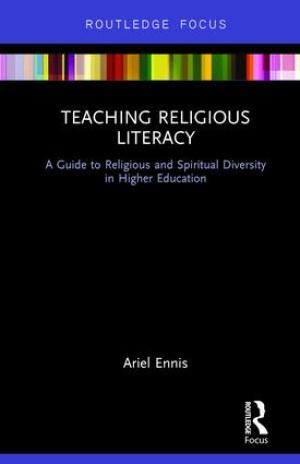
Click Here for Book Review Offering resources and initiatives on religious and spiritual diversity in higher education, this book describes the conceptual foundations for teaching religious literacy and provides a sample curriculum with a facilitator's guide and assessment tools needed to evaluate its development among students. With a clear understanding of the diversity of religious and spiritual experiences found on college and university campuses, Ennis offers a much-needed framework for facilitating conversations about religion and spirituality in colleges and universities. By working from a comprehensive overview of NYU’s award-winning Faith Zone training program, this book breaks down the methodology and tools required to create religious literacy training curricula at campuses around the world.
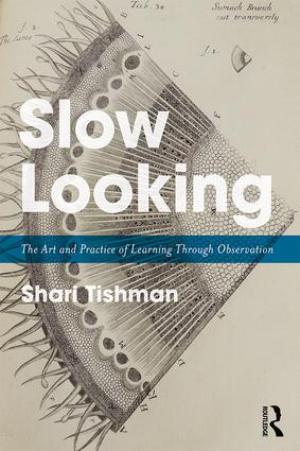
Click Here for Book Review Slow Looking provides a robust argument for the importance of slow looking in learning environments both general and specialized, formal and informal, and its connection to major concepts in teaching, learning, and knowledge. A museum-originated practice increasingly seen as holding wide educational benefits, slow looking contends that patient, immersive attention to content can produce active cognitive opportunities for meaning-making and critical thinking that may not be possible through high-speed means of information delivery. Addressing the multi-disciplinary applications of this purposeful behavioral practice, this book draws examples from the visual arts, literature, science, and everyday life, using original, real-world scenarios to illustrate the complexities and rewards of slow looking.
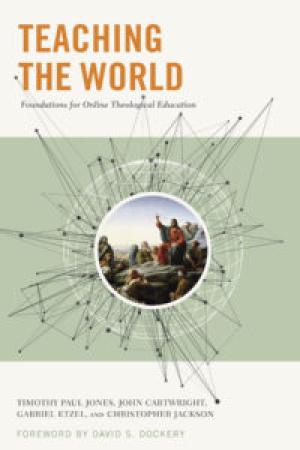
Click Here for Book Review More and more seminaries, Christian universities, and Bible colleges are opting to train future ministers and missionaries online.What happens when the movement toward online education is shaped by pragmatic or financial concerns instead of Scripture and theology? Ministry training can be reduced to a mere transfer of information as institutions lose sight of their calling to shape the souls of God-called men and women in preparation for effective ministry.How might online ministry training look different if biblical and theological foundations were placed first? Teaching the World brings together educators from a wide range of backgrounds and from some of the largest providers of online theological education in the world. Together, they present a revolutionary new approach to online theological education, highly practical and yet thoroughly shaped by Scripture and theology.
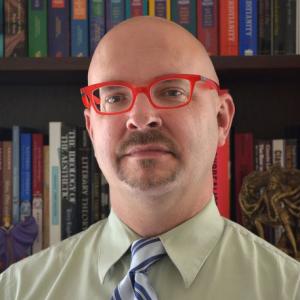
Is there a pedagogical responsibility to traumatize our students? I’m not thinking of some unbridled notion of “tough love” in grading, or an exaggerated insistence that actions have consequences, or even routine attempts to challenge assumptions and perspectives. Rather, is there a pedagogical responsibility to make students feel less safe, less secure, less stable, to insist that the world is more sinister, more dangerous, more potentially harmful than they might at first suspect or admit? I grapple with this question in many of my courses. For example, I teach a course focused on cinematic representations of Jesus that strives to enable students to read such films rhetorically, in conversation with their own historical and cultural moment as well as the current one. To do this well, we have to tease out the ways in which the films support (and resist) anti-Semitism, nationalism, misogyny, racism, homophobia, erotophobia, and Christian imperialism. In a general education course that explores American histories of race, gender and sexuality through horror films, we grapple with very similar issues. Students resist ideological critiques of these films claiming that such analyses read too much into them or make too much out of minor details or simply exaggerate the importance of “mere entertainment.” Students also emphasize their historical distance from these films—racist and sexist imaginaries may have infected the forties, fifties, sixties, seventies . . . even the early aughts, but those problems have been resolved, and we occupy a more enlightened moment. Part of my work in these courses is to push back, gently but persistently, against these defenses and resistances and force an encounter with ugly, painful, dehumanizing energies. Part of my work is to help students see what they might be unwilling to see about the ways various cultural representations try to prevent them from seeing. Questions about confronting students with potentially traumatizing material are often resolved by appealing to students’ identities. In a recent Facebook conversation, a group of colleagues discussed whether it would be appropriate to screen video of the white supremacist rally in Charlottesville in class. There was a concern about protecting students of color and a desire to confront white students. While these priorities made—and make—sense to me, they aren’t fully consonant with my experience as a teacher. I have had female students challenge claims that an argument or analysis is sexist, had queer-identified students champion fairly optimistic assessments of the presence of religious homophobia, and had students of color contest of racism in representations. By no means am I suggesting that my assessment of the cultural, political, and ethical dynamics of materials is always correct—and I certainly try to create classroom spaces where students can respectfully challenge interpretations offered by course materials, their classmates, and me—but it seems important to note that it may very well be those students who are most likely to be targeted by certain systems of unjust and injurious power—i.e., those students who we worry most about (re-)traumatizing—who may be least willing to acknowledge their vast reach. These challenges were most pronounced in a course I co-taught a couple of years ago entitled “The Violence of Hope.” This course interrogated the ways in which discourses of progress, restoration, healing, and redemption—in politics, ethics, and religion—disguised, perpetuated, or intensified violence. The course pressed the notion that we are all inevitably and inextricably implicated in and complicit with systems of violence and that our attempts at amelioration are often mechanisms of acceleration. Many of our students had deep activist commitments. Most of our students confessed feelings of hopelessness and frustration as the course progressed. Ultimately, what I think made the course work—what I think makes my film courses work, my Queer Theory coursework, my courses focused on sexuality and religion work—is that there was an acknowledgment of the enormity and seriousness of the questions raised by the materials under consideration and a genuine, patient attempt to grapple with them. In my teaching, I heed the call to traumatize my students. I work to make them more paranoid—or paranoid in new keys. But this is never the goal of my courses. By the same token, it is never my goal to solve the problems I raise, answer the questions I pose—or even offer palliative care for the injuries I may inflict. Instead, I seek to help students develop the skills, the habits, and the dexterity to negotiate the fraught, uncertain, and ever-shifting terrain that comprises their world. Consistent with my sense of responsibility, the only way to develop such capacities is to enter hostile territory.
Teaching-learning is often a perilous process. Occasionally, in the midst of delivering carefully structured lectures, facilitating balanced yet critically engaging discussions, or working with students one-on-one, life intervenes in a dramatic and direct fashion. Three years ago, I was teaching a summer course on Methodist church history for Master of Divinity students pursuing ordination at Perkins School of Theology at Southern Methodist University. Right after we began the section on Black Methodism, Dylann Roof walked into a Bible study class at Emanuel African Methodist Episcopal Church in Charleston, South Carolina and killed nine people, including the pastor. The world was rife with shock and grief. We, ourselves church leaders, Bible study teachers, and ministerial workers, were actively engaged in crafting understandings of ecclesiastical history in order to refine vocational skills. Students (and instructor) processed painful emotions derived from a current event that hit close to home. Empathy with the victims and their families mingled with rage, disbelief, and ultimately, compassion for the tormented assailant. Socrates reportedly once said, “I cannot teach anybody anything. I can only make them think.” For me, as instructor, a pedagogical opportunity had arisen. I found myself addressing a contemporary demonstration of the societal and cultural terror that necessitated the original founding of Black Methodism while teaching a section on Black Methodism in a Methodist history class. In that moment, critical analysis of the broader sweep of church history and its convergence within the present was essential. It was important to help students utilize the historical information they were acquiring in light of current events. Balancing both sets of data, the historical record and the contemporary event, opened the way for collective inquiry, sharing, and judging right there in the classroom. This experience reveals a wider view of pedagogical method. By allowing students to ask and respond to critical questions, underlying assumptions are revealed. Students are then invited to further examine the nature of their assumptions. Have key events and concepts been adequately accessed? Does other relevant information exist that may shed light on these assessments? What are the logical implications of this view? Are there alternatives? If so, are they just as reasonable? Thus, one of the ways student-learners develop critical thinking skills is through the facilitation of teacher-learners who ask questions and respond to answers with more questions. While acknowledging the contributions of students equitably (and encouraging all to participate) facilitators move the discussion forward by engaging questions that maintain focus on the stated goals of the course. This includes summarizing the status of reflections, critical points, and remaining questions. However, it is also crucial to keep in mind that students may harbor feelings of trauma and stress sparked by the evaluation of historical knowledge and associated current events. Creating a classroom that nurtures the student voice through affirmation of shared experience fosters safe space. The use of critical thinking in analyzing history, which is oftentimes quite troubling, engenders the technique of practical engagement with personal and social traumas. And, sensitivity to cultural diversity, religious difference, and doctrinal belief is paramount in cultivating a healing environment. This includes the overt recognition and appreciation of differing and conflicting opinions. Paying attention to the energy of the class, body language of students, and other contextual signs will determine choice of direction that a teacher-learner may take, even while encouraging rational analysis of stated views. Taking a synergistic approach, that is, dialectical interaction among teacher-learners and student-learners, therefore allows room for reasoned critique of hypothetical assumptions as well as the emotional processing of potentially painful experiences. Effective execution requires heightened attention to the needs of students and patience with the flow of communication. This can be challenging, particularly when unexpected realities shatter benignly anticipated teaching moments carefully structured by course design. Instructors must, therefore, be gentle with themselves and practice flexibility in meeting the demands of challenging and/or controversial teaching moments. Although teaching does involve the transmission of knowledge, the ultimate goal of teaching lies in the cultivation of tools that allow students effective engagement in critical discernment of the world, leading to reasonably based decision making. In our Methodist History course, the shootings by a crazed supremacist at the historic Mother Emmanuel Church were a sobering occasion that offered the chance for systemic appraisal of institutional structures in church and society that continue to perpetuate racial violence. This unfortunate and deeply traumatic event provided context to evaluate broadly how various interlocking systems lead to experiential sufferings that are typically passed down generationally. As we grappled with the pain enkindled by this senseless act (which will reverberate in the annals of traumatic historical events) insightful theological and practical observations, deduced by critical analysis, were honed. Like the rest of the world, our class did not emerge emotionally unscathed by facing the horrors of history alive and well in today’s world that mournful day. We did, however, incorporate pedagogical tools, that, with repeated and improved use, are designed to foster growth and empowerment in teaching, learning, and living as responsible citizens.
Video. Pedagogy & Theatre of the Oppressed, Inc. (PTO) supports people whose work challenges oppressive systems by promoting critical thinking and social justice through liberatory theatre and popular education. Our vision is to create global access to popular education pedagogy and liberatory theatre of the oppressed methods to support a world based on radical love and social justice in stead of oppression and violence.
Wabash Center Staff Contact
Rachelle Green, Ph.D.
Associate Director
Wabash Center
greenr@wabash.edu