Resources
Students increasingly appear anxious, risk‐averse, and worried about getting things “wrong.” They may appear to lack intellectual curiosity, and be unwilling to engage in independent study. This essay explores how teaching and assessment in theology and religious studies might help students learn to take intellectual risks, and increase their resilience. One approach is to encourage students to experiment and “fail safely,” to increase their confidence that they understand what is expected of them, and to help them begin to understand learning as more broadly formational, not always directed toward a grade. I suggest three strategies: more formative assessment; a stronger narrative about the purpose of formative assessment; and an appeal to values, virtue, and the cultivation of character. Via these approaches, students might be encouraged to understand assessment in less utilitarian terms and increase their resilience for a world characterized by volatility, uncertainty, complexity, and ambiguity, prepared both critically and dispositionally to thrive and contribute positively to society.
Many courses in higher education rely on the hierarchical organization of Bloom's taxonomy to categorize and sequence learning. Introductory courses on scripture often emphasize remembering content and background as a basis for applying the sacred text to one's life. However, a review of the literature demonstrates little support for the widely assumed hierarchical nature of Bloom's taxonomy. Furthermore, this study examined the performance of traditional and non‚Äêtraditional students in a New Testament survey course on a comprehensive exam (a Remember task) and an application assignment (an Apply task) and found no correlation between the two. Furthermore, students struggled most with the interpretation portion of the application assignment, prompting the realization that interpreting a sacred text is a complex hermeneutical enterprise incorporating multiple levels of the taxonomy. Thus, introductory scripture courses may be better organized around the central, integrating practice of interpretation supported by needed information and application skills.
Site visits provide an irreplaceable learning experience to students in both religious studies and the emerging field of interfaith studies. The conceptual core of this thesis is the claim, drawn from feminist epistemology, that an embodied pedagogy – a pedagogy which engages students not only intellectually, but as embodied beings who inhabit a space, engage in physical activities, and undergo various sensory experiences – is ultimately more enriching than a pedagogy centered exclusively in the classroom. Factors that make a site visit a successful instance of embodied pedagogy include the provision of sufficient context to students in advance for them to understand and appreciate the experience, an opportunity afterward to reflect on this experience in an intentional way, ensuring the site and the community whose space it is are treated with proper respect, and ensuring that the religious sensibilities of one's students are also similarly respected.
2016Graduate Program Directors and Deans Conference Dates October 30-November 1, 2016 Alexander Hotel, Indianapolis Purpose: To increase the ability of Ph.D./Th.d granting schools to include sustained conversation about teaching and learning as a part of the doctoral student experience. Agenda Participants: Jennifer Davidson, American Baptist Seminary of the West Miguel Astor-Aguilera, Arizona State University J. Eugene Clay, Arizona State University Lalsangkima Pachuau, Asbury Theological Seminary James D. Nogalski, Baylor University Mikeal C. Parsons, Baylor University Bryan P. Stone, Boston University School of Theology Joretta Marshall, Brite Divinity School at TCU Sheryl A. Kujawa-Holbrook, Claremont School of Theology Marvin A. Sweeney, Claremont School of Theology Gerhard Bode, Concordia Seminary (MO) Beth Hoeltke, Concordia Seminary (MO) Richard A. Taylor, Dallas Theological Seminary Susan Kendall, Drew Theological School J. Ross Wagner, Duke Divinity School Elizabeth Agnew Cochran, Duquesne University Marinus Iwuchukwu, Duquesne University Joyce Flueckiger, Emory University Kathryn Reklis, Fordham University Eugen Matei, Fuller Theological Seminary Charles Cosgrove, Garrett-Evangelical Theological Seminary Luis R. Rivera, Garrett-Evangelical Theological Seminary Theresa M. Sanders, Georgetown University Nili S. Fox, Hebrew Union College - J I R Richard Sarason, Hebrew Union College - J I R Pamela Eisenbaum, Iliff School of Theology Sarah Emily Imhoff, Indiana University Richard Kalmin, Jewish Theological Seminary of America Shuly Rubin Schwartz, Jewish Theological Seminary of America Robert L. Masson, Marquette University Joseph Mueller, Marquette University Garth W. Green, McGill Faculty of Religious Studies Charles A. Ray, New Orleans Baptist Theological Seminary Rose Ellen Dunn, Princeton Theological Seminary Gordon S. Mikoski, Princeton Theological Seminary Brian K. Sholl, Saint Louis University Charles Quarles, Southeastern Baptist Theological Seminary Jonathan T. Pennington, Southern Baptist Theological Seminary Philip Arnold, Syracuse University William Alden Robert, Syracuse University Bradley H. McLean, Toronto School of Theology Craig Ott, Trinity Evangelical Divinity School Andrew Gow, University of Alberta Aaron T. Hollander, University of Chicago Divinity School Teresa Owens, University of Chicago Divinity School Annette Stott, University of Denver Diana Cates, University of Iowa Lauren Leve, University of North Carolina - Chapel Hill Randall G. Styers, University of North Carolina - Chapel Hill Todd Walatka, University of Notre Dame Joseph Wawrykow, University of Notre Dame Anthea Butler, University of Pennsylvania Kathryn E. Lofton, Yale University Wabash Center Staff: Nadine Pence, Wabash Center for Teaching and Learning in Theology and Religion Paul Myhre, Wabash Center for Teaching and Learning in Theology and Religion Thomas Pearson, Wabash Center for Teaching and Learning in Theology and Religion Tim Lake, Wabash Center for Teaching and Learning in Theology and Religion Mary Stimming, Wabash Center for Teaching and Learning in Theology and Religion
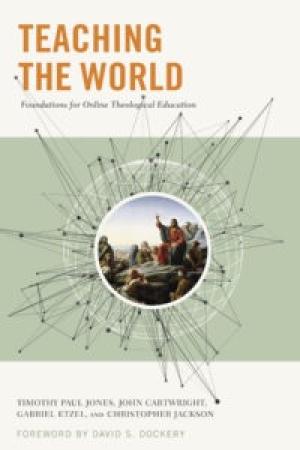
Teaching the World is a welcome volume on online theological education that seeks to ground educational practice with a theological foundation. The work is a critically needed guide that directs leaders and administers in developing online education programs. Readers will find practical insight on program development on three levels: framework, faculty, and classroom. An introductory chapter entitled, “Past Patterns and Present Challenges in Online Theological Education,” describes the delivery of theological education from the early days of correspondence in the eighteenth century to the current practice of providing multimedia curricula fully online. After advocating the legitimacy of online theological education, the authors maintain that educational institutions have often not built their online programs on theological foundations. Instead, they have unwittingly overlooked this step in their rush to launch programs for primarily pragmatic reasons – increased enrollment and profitability. The balance of the book is divided into three sections. Section I, “Better Foundations for Online Learning,” examines the role of the Pauline Epistles in theological education, ministry preparation, and spiritual formation from a distance. The authors argue that Paul's Epistolary practice provides biblical support for theological education from a distance and an example of how to deliver it. Subsequent pages integrate “social presence theory” with Paul's epistolary practice, resulting in a conceptual framework for online program development. Section II, “Better Faculty for Online Learning,” provides theological guidance for faculty roles in online programs. Here the authors argue for faculty who: (1) emphasize the spiritual formation of students over the mere transfer of knowledge, (2) demonstrate the ability to leverage the medium of online education to accomplish the desired outcomes for students, and (3) model the theological and professional standards for ministry. In such an environment, online faculty members embody the values of the institution and effectively facilitate the desired outcomes of programs. Section III, “Better Practices in the Classroom,” maintains that the students’ ministry contexts make effective online learning possible. Students in online programs are typically older and engaged in some form of ministry. Consequently, online programs should incorporate adult learning theory and facilitate learning in the student’s ministry context – the local church serving as an active partner in ministry preparation. A concluding chapter, “To Teach, to Delight, and to Persuade,” argues that online programs are not a replacement for residential programs, but are a means for developing stronger partnerships for ministerial preparation. This book’s emphasis on using theology as a conceptual framework for online theological education is its conspicuous strength. Teaching the World: Foundations for Online Theological Education presents a grand vision for online theological education that is particularly valuable for leaders of theological schools who seek to develop online programs that are effective in fulfilling the educational outcomes of their institutions.
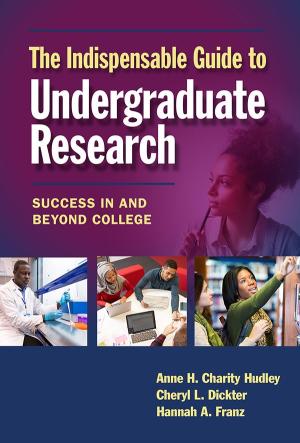
This brief handbook and reference work was designed for college and university students interested in doing research. Charity Hudley, Dickter, and Franz present scholarly research as an exciting way for undergraduates to make the transition from students who learn to scholars who join an ongoing conversation as “masters of knowledge and challengers of the status quo” (5). The authors purposely construct the guide to serve not only as a resource but also as a model of a research-based approach to scholarly writing; they frequently comment on their own working methods and the research process that went into the composition of this text. The resulting book effectively demystifies the world of academia and the work of scholars, making research approachable and appealing. Throughout the guide, the authors encourage students to pursue their academic and personal interests by becoming researchers, and they provide an impressively comprehensive roadmap for the research process. The book takes a special interest in guiding first-generation college students and students from historically underrepresented populations. The tone is collegial, and the text abounds with concrete advice about navigating the concomitants of scholarly research, from how to email a potential research mentor (80) to how to identify and access campus resources that can assist with time and energy management (49). Chapter 2, devoted to getting started, describes what research looks like across several academic disciplines and details ways different schools support and reward undergraduate research. Personal accounts from student scholars provide additional relatable voices and create the sense of a broad academic community into which readers are invited. The authors also emphasize the importance of sharing research results with a variety of audiences; Chapter 5, “Writing and Presenting Research” (91-116), describes different venues for written and oral communication that increase the impact of a student’s project, including conferences, articles, books, and social media. A particularly valuable contribution of this book is its focus on empowering students from underrepresented populations. In addition to devoting a chapter to describing challenges that students from minority populations face and some tools for overcoming those challenges (“Underrepresented Scholars in the Academy: Making a Way,” [117-142]), the authors consistently highlight the value of diverse voices and backgrounds, and especially of the new questions such diverse viewpoints can generate. They frame the importance of greater academic inclusiveness and equity in a larger conversation about the powerful impacts researchers can have on their communities, emphasizing the value of interdisciplinary scholarship and community-based research. Although the book is addressed directly to an audience of undergraduates who are or who seek to become researchers, the authors also model numerous ways to offer such students practical support. Therefore the text may also serve as a valuable resource for teachers, mentors, and advisors who assist student researchers and ensure their success.
Recently, my burden, challenge, and task was to write my father’s obituary. Obituaries typically allow 800 to 1,200 words to depict and describe a person’s entire life. As a writer, this was a daunting task. As a daughter, it was impossible. How to proceed? After reading the obituaries of other family and friends - noting their style and form - I decided my challenge was to cover my father’s 90 years on planet Earth by giving facts and data. I wrote and then checked the accuracy of dates and spelling. The draft read like a file for a candidate for the witness protection program. I scrapped that version and launched into version 2. I soon stopped myself. My flowery prose and long sentences sounded like a rejected Hallmark card. Finally, I sat and considered my father and those mourning him. In this time of homegoing and celebration of life, what did I want to assure my family and community about my father? I decided, with resolute conviction, that I would write Lloyd R. Westfield was a noble man – because he was. The final obituary emphasized his courage, strength, and fortitude of care and concern – all traits of nobility. I told people about his life-long journey as a musician, special education teacher, school psychologist, and churchman. Mostly, I wrote about his passion for his family and for our African American community, and the many ways this love was steadfast. I wrote a good obituary – one that described my daddy as a man who was earnest, dignified, generous, and loving. I knew I was writing a narrative that rarely appears in racist America about Black fathers, yet it is a story that was my every-day, family experience. I wrote his obituary as a gesture of resistance against the distorted portrayals which slot all Black men into a few, flimsy, stereotypic categories assigned to them. Writing Daddy Lloyd’s obituary was an act of compassion for the un-named African American men whose stories of unwavering commitment to their families is un-appreciated, overlooked, or ignored. Writing dad’s obituary has made me consider how I write lectures. I do not often lecture in my courses, but when I do, how do I write what I write? Do I give the data and basic concepts, and then expect students to resonate with cold facts? Do I tell them “my version/my answer” to the question at hand without considering their perspectives, contexts, and situations? Do I spend time choosing vernacular which will invite them into deeper thought and heightened resonance, or simply rely upon the stilted, obsequious vocabulary of the religious academy? Do I lecture to my students the same way I would lecture to colleagues, and then wonder why students are lacking understanding when, in fact, it is my communication skills that are sub-par? Relying upon facts and data as lecture material is thwarted by the adage “Content is cheap.” In the digital age, students have as much or more access to data than the person who is lecturing. It is commonplace for Siri and Google to know more facts with greater accuracy than the person lecturing and for students to consult Siri and several search engines during the lecture. Learning to write lectures which resist multiple un-contextualized definitions, lists of statistics, and block quotes is a challenge worth attempting. The challenge is to design a lecture whose argument is not based upon a contrived or universalist understanding. We must lecture to demonstrate and expose our own modes of epistemological creativity and scholarly meanderings. In other words, lectures are more valuable to students if they are works of art rather than mundane spreadsheets set to words. Writing a good lecture takes time, as it is as much engineering and architecture as it is poetry and prose – a complex enterprise, indeed. My best lectures are those that have been given several times and have the benefit of re-consideration and rewriting after questions, answers, conversation with my students. Like my father’s obituary, any topic warranting the writing of a lecture will be much too large and expansive to be satisfied by one lecture. It behooves the writer to contemplate the needs of the students who will hear, witness, and glean from the lecture. Clarity about the viewpoint of the lecture is as important, or more important, than writing the thesis statement for the lecture. Students do not want the delusion of neutrality; they want to hear your opinion, consider your “take,” and then have the opportunity to resonate and align or disagree, question and debate. Good lectures are evocative, provocative, and able to bring complexity to the learning journey without befuddling the learners. When I consider the better/best lectures I have heard, the lecturer has exposed, claimed, and shared their own thinking rather than hiding behind a mask of non-committal to the material at hand. The lecturer made their own social location clear in the stance they took, rather than claiming some kind of generic essentialism to the work. And the lecturer worked at the craft of words, which helped me know what they were saying while they were saying it. Dense materials can be lectured, but the words to convey the density must be carefully chosen so the listeners, the students, can hear and access the materials. This is not a dumbing-down of material. This is the craft of writing in such a way that there is flow, synergy, and wide thresholds of encounter and discovery. Listeners must be able to see the pieces as well as the whole of a lecture. I suppose it is possible to elevate a poorly written lecture into a good lecture by the way it is performed; however, most of us cannot rely on our performance. Drawing the listener in, locating them in new worlds, challenging them to new perspectives, providing a previously unconsidered rationale – this is the “work” of a well-written lecture. We must not doubt that students are seeking disruption of, and a counter-narrative to, the hegemonic imagination that has been reveled as moral bankrupt at this moment in history. As I have learned from my beloved teacher, Katie Geneva Cannon, the best lectures seek to debunk, unmask, and disentangle so students might have the where-with-all to change the world toward justice. Writing an obituary is not easy. Writing a lecture is not easy. Each, in its own way, asks that we not ignore the tender fragility of our souls, but speak our souls into the room. Each written piece is the work of healing – us and them. The writing is simultaneously truth-telling, soul-speaking, and hegemony-challenging. I exhort you not to write lectures or obituaries if your goals are any less.

I’ve been in higher education just long enough to warrant a sense of déjà vu. My lips and tongue stretch in a pattern too familiar for comfort. My ears know the buzz of silence that follows the words now oft spoken. Despite the lack of novelty, every time I’m shook; the surprise never fails—the call, the response-- they stir every time. It goes down like this. I’m sitting with a colleague or a student. Sometimes I’m on a panel or giving a workshop. Maybe I’m standing before a mirror. Whoever is across from me begins to tell me about some crisis happening at their institution and how much it is weighing on them and those they care about and how they’re trying to find the solution. And then I say the thing that catches them off guard. It’s the same thing that catches me off guard, even though it shouldn’t. “Maybe it’s not your job.” Then there’s the silence, the loud, unmistakable silence when thought gives way to understanding. In my contributions to this series on “Teaching and Traumatic Events,” I’ve tried to offer preparatory resources for those educators seeking to rise to the occasion. What needs to be said though is that it’s not always your job to do anything. You don’t have to unfurl a rapid response protocol, roll out a diversity initiative, lead the revolution, or assert what no one else has confessed. I don’t know your situation. But, teacher-to-teacher, I’m pretty sure that “fixing” isn’t in your job description. I’ve tried to speak pretty generally about trauma in terms of its various meanings. But to clarify, I will call out the stressors that can precede the compulsion to fix. Why must you be the one to lead the charge? Sometimes the reasons simply aren’t good, but the voices peddling them are insistent. Here are few reasons for you to remember why “maybe it’s not your job.” “It directly effects ‘people like you.’” This line of thinking betrays a Horatio Alger/bootstraps myth to hardship. Because an event or circumstance impacts you, your efforts to rectify the situation can lead to glory. What doesn’t get mentioned is that those efforts can make you more vulnerable to the pain and suffering that will keep you from doing your actual job. In my opinion, you’ve just been given an opportunity to inquire what the institution is going to do to equip you to do your job effectively given the trauma’s impact on employees. This isn’t selfish. This is contractual. “Your expertise is a natural fit.” I think this line, perhaps more than any other, is a disenfranchising play, especially for those in religious studies and theological education. It assumes that some subject domains, by nature, lend themselves to relevance. Were this the case, then why not send a link or bibliography to those in need and check on them in the morning? Our expertise is in the connections we make between critical observations, creative analysis, and methodical application. None of that work is natural. No one comes to that without practice, training, and focus. And even if you find that you have the first two, your job description likely doesn’t afford the third one—especially if you’re teaching. If anything, your expert opinion may lead you to recommend that the concerned locate someone who can do the requested task better than you. Reluctance on their part to do so speaks volumes about their take on you and the trauma at hand. “People look to you for . . . “ This may be true, but take some time to ask why. Early in my teaching career, a friend shared some great advice. She said that you can’t develop a good teaching strategy without understanding how your students see you. Often students fall back on socialized models to inform their interaction with professors (for better, and too frequently, for worse). Even when encountering the same instructional situation, we each might choose different teaching tactics because she, as a petite, African American woman, would be read differently than I would as a large, African American man. Amado Padilla put such readings in institutional terms when discussing the “cultural taxation” carried by faculty of color paid in undue burdens of service—especially on issues of diversity and inclusion. Some people benignly and naively will use any resemblance you bear to a stamp-worthy activist to make the devastating assumption that you should take up a similar mantle. That choice is on you. The institutional responsibility for that burden is not. “You’re effective.” Just because you are good at a task doesn’t mean other people shouldn’t be, nor does it mean you should do the task. You have a job to do and if that task is not part of it, that task can keep you from it. We never occupy one role or responsibility, but when I come across students inclined to activism, I remind them that ultimately their job in higher education is to graduate. As faculty, I wonder whether we remind each other about what we are here to do. I’m not going to presume to know what that is for each of you, but I don’t think your effectiveness at a task should be an excuse for others’ lack thereof. People love to opine about the shortcomings of teachers. Press them on their rationale and you quickly realize they think we’re here to be tutors, social workers, counselors, and campus security. To paraphrase Michael Jordan’s words to a rising generation of basketball players, maybe we make this education thing look easy. Or maybe too many are using us as an excuse. Let’s not let them use trauma to do so.

Persons new to the office of the Dean may soon discover the need to acquire a new set of skills to effectively carry out the job. Those skills range from supervision, pastoral care (yes, more than you imagined!), educational administrative planning, curriculum design and planning, political acumen, budgeting and financial management, and assessment. Of these, none seems to puzzle novice deans more than educational assessment. While it can seem daunting, as I sometimes tell deans asking for help in this practice, "It's not rocket science, but it helps if you know what you're doing." There are six types of assessment practices, which, used together, will provide the dean a multifaceted and holistic view of student learning outcomes. These will provide deans, and Faculty, the data needed to evaluate the effectiveness of the curricula and to make wise and appropriate adjustments. Good data, rigorously derived, make for better decision-making than hunches, good-sounding ideas, predilections, or fads. As well, these assessments will provide the information needed to demonstrate rigorous academic practices to accrediting bodies. The Six Types of Assessments DIAGNOSTIC Diagnostic assessment measures a student's, or a class of students', strengths, weaknesses, knowledge, and skills prior to an instructional set (a course), or prior to starting a program of study. Examples of diagnostic assessments used in theological schools include the TOEFL language proficiency exam given to international applicants, and the GRE. Some schools may administer writing assessments to evaluate the need for remedial work in preparation for academic writing in a degree program. Some DMin programs use the MAT as part of their admissions requirements. Some schools administered the MMPI personality inventory as part of their application process (which, upon taking, the seminary intake counselor suggested I should not go into ministry; advice I ignored and went on to have a successful ministry career. So there.). FORMATIVE Formative assessment practices give evidence of a student's performance during instruction, during a learning experience, or in the midst of a course of study. Formative assessments are applied regularly at intervals throughout the instruction process. An example is a multi-faceted "mid-course" assessment with a faculty adviser to review academic performance and progress through a degree program course of study. This can include a student's self-assessment about their progress in formation goals. For students, formative assessments is an opportunity to receive feedback on academic performance and other goals. SUMMATIVE Summative evaluations measure a student's achievement at the conclusion of an instructional set or course of study. The most obvious course level summative assessment are final exams and the final grade a student receives in a course. At the program level, summative assessments can include a grade distribution analysis, program retention and completion rates, graduating class profiles, and, a grade point analysis of graduating students (highest, lowest, median, average). NORM-REFERENCED This assessment practice compares a student's performance against a national or other "norm" group. Some denominations require candidacy and ordination exams that demonstrate competencies in areas such as biblical exegesis, theology, polity, and worship and sacraments. These denominations can provide comparative data to show your students' placement in norm-referenced evaluations and exams. Due to the loose and broad interpretation of accreditation standards, the wide variety of theological school cultures and contexts, and the range and amorphous nature of what constitutes effective ministry practice or pastoral competencies, norm-referenced assessments are a challenge in theological schools. CRITERION-REFERENCED This assessment practice measures a student's performance against a published goal, specific objectives, or standards. In theological schools the most common criteria are interpretations of accreditation standards in program goals and the derivative student learning outcomes embedded in courses and program components. The application of well-designed assessment rubrics aid in the assessment of criterion-referenced evaluations. BENCHMARK Benchmark evaluations are similar to some of the above. These practices are used to evaluate student performance at periodic intervals, or at the end of a grading period. They can be used to predict student performance on end-of-course summative tests, or, end-of-program competencies evaluations. Benchmark evaluations can also be used to predict student performance post-graduation. The use of alumni surveys evaluated with alignment with degree program goals can help in benchmark assessment. Again, the range ministry contexts in which alumni serve, and the amorphous nature of what constitutes ministry competencies, provide a challenge for theological schools to establish benchmarks. The increasing attention to competency-based programs will likely require schools to identify "benchmarks" as indicators of levels of competencies. How many of these six assessments do you apply in your evaluation practices in your school? Which might you need to implement to provide a richer and more balanced assessment profile for your school? How, for whom, and where will you publish the results of your assessments? For information? For accountability? For reporting?
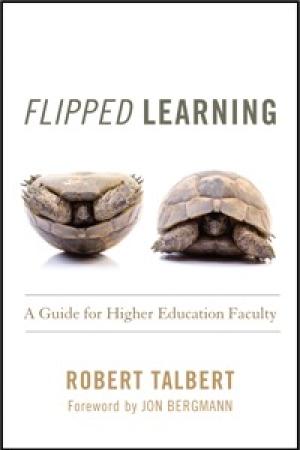
Robert Talbert’s Flipped Learning: A Guide for Higher Education Faculty is intended for three separate categories of instructors engaged in the process of flipped learning in higher education. He intends his monograph to appeal to “the curious,” “the newbies,” and “the veterans,” otherwise known as those first investigating flipped learning, those experimenting with flipped learning and looking to fix or expand on their early forays into it, and those who have taught at least one fully flipped class and want to “hone their craft” (xviii-xix). He divides the monograph into three sections. The first, “What Is Flipped Learning?” offers definitions and histories of flipped learning, and models of what flipped learning looks like in the classroom. The second section, “Flipped Learning Design” provides guidelines for designing a syllabus, lessons, and classroom activities using flipped learning. Finally, the third section, “Teaching and Learning in a Flipped Learning Environment” addresses variations on the flipped classroom and common student complaints about the method. While Talbert intends his book for use by all higher education instructors, it is probably most useful for those in STEM, business, or social science classrooms. Talbert uses his initial chapter, “What Is Flipped Learning, and Why Use It,” to work through definitions and misunderstandings of flipped learning. While flipped learning is commonly believed to consist of assigning videos of lectures for students to watch before class time, Talbert explains that flipped learning is a methodology rather than a specific technique. Flipped learning, he asserts, aims to ensure that students first encounter the new material on their own, outside of class, and then work to nuance their understanding and build skills around that material in the classroom. In this way, students develop the ability to access new material independently and then do the more challenging work of integrating and developing that information in the classroom with assistance from both classmates and the professor, or “expert.” The second chapter, “The History and Theory of Flipped Learning,” traces the method’s history to establish that it is neither new nor a fly by night fad, but rather a sensible pedagogical strategy built on a solid base. Chapter three, “Models of Flipped Learning,” offers a range of examples from math, business, and economics to demonstrate flipped learning approaches. In each example, Talbert draws from largely mathematics-based courses, suggesting that students read and watch videos about concepts before coming to class to work together on problem sets, the opposite of a traditional STEM course in which concepts are introduced in lecture and students then depart to work on problem sets on their own. (It is noteworthy that although Talbert argues in the earlier chapters that flipped learning is more than watching videos before class, this is, in fact, a primary method that he demonstrates.) As a religious studies professor, it was hard to see how this method would change the basic format of my humanities classes, in which student read material ahead of time, usually guided by discussion questions, and then come to class for a brief lecture that fills in details and group conversations or a class discussion, informed by their reading. While I have no objection to a book providing instruction on pedagogy for the STEM/business classroom, Talbert’s apparent inability to acknowledge the different structure of the humanities is significant. In failing to recognize that his methods would not significantly change the traditional structure of humanities classes, he has failed to properly acknowledge his book’s disciplinary scope and to correctly identify the audience to whom it would be the most useful. In these fields, flipped learning makes a notable difference from traditional pedagogical methods in which students first encounter new concepts in class. In the humanities, however, students traditionally encounter new material through reading assignments before class. That material is then elaborated upon and explored in classroom lectures, discussions, small groups, and activities. It is difficult, even with one or two humanities-based examples, to see how Flipped Learning dramatically would change my humanities classroom. Chapters four, five, and six address the nuts and bolts of how to flip a class. Here, Talbert offers both many more specific guidelines and, in a couple of instances, he draws examples from the humanities classroom. For instance, in chapter four, he suggests providing students with a list of reading questions that guide students toward increased complexity of thinking, gradually moving from reading comprehension and synthesis questions to conceptual and analytic questions. Chapter five offers insight into how to construct the activities. Throughout this chapter, Talbert offers cogent summaries of key theories on learning and course design, and while he rarely suggests a technique with which I am unfamiliar, his explanations of how and why they are effective are certainly likely to help me refine my technique. Chapter seven provides adaptations to the flipped learning model, primarily for low technology educational environments. It also addresses a number of student objections to the flipped classroom, ranging from student complaints about having to teach themselves to gripes that flipped learning takes too much time outside of class. On a practical note, Talbert also addresses the risks of participating in a flipped-learning classroom while untenured or in a contingent position. In each of these situations, he offers concrete advice for mitigating the risk of pedagogical experimentation, particularly reactions from students who are adjusting to a new line of teaching. These chapters were, perhaps, the most useful, as they provided language for addressing student dissatisfaction with new methods and were, perhaps, the most applicable to non-mathematically oriented classrooms. Throughout the book, I was struck by Talbert’s dry tone. Although I am accustomed to academic writing I found this to be a bit of a slog, which is a less than ideal model for a book dedicated to methods of teaching and learning. More importantly, while the author claims the book will be useful for all of the divisions of higher education, it is constrained by the author’s primary orientation and expertise, and most (though not all) of his examples are drawn from STEM, business, and mathematically oriented social sciences such as economics. Nonetheless, Talbert provides background research that will allow readers to refine and justify some of their existing techniques, helping them engage student learning both within the classroom and beyond it.
Wabash Center Staff Contact
Rachelle Green, Ph.D.
Associate Director
Wabash Center
greenr@wabash.edu