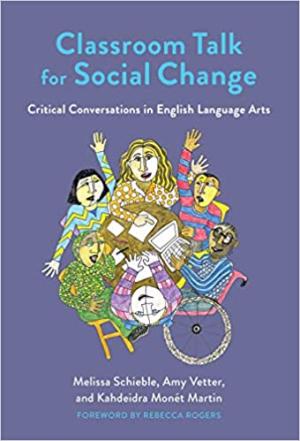
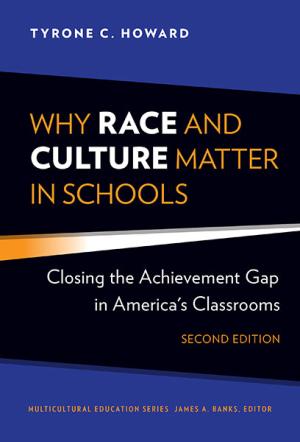
Resources
“Write your name, for me, please,” she asked, a sturdy index finger tapping on a piece of paper, on the table at my aunt’s house. She was my paternal grandmother, Johanna, or Teacher Kate, as many people called her, and she was visiting her family in Toronto from Guyana. She would have been in her sixties then, a compact Black woman with flawless skin, a kind, steady gaze, and a resonant alto speaking voice. You could hear the mixture of crisp and precise British-influenced English that would have been expected of schoolteachers of Teacher Kate’s generation, born before World War I, in a corner of Amazonia and at the edge of the British Empire. You could also hear the rhythms of Caribbean creole speech, reflecting Guyana’s cultural legacy of majority populations descended from enslaved Africans and indentured folk from the Indian subcontinent and China, among others. Teacher Kate’s work in classrooms with children began before 1930 as a pupil-teacher, a form of teaching apprenticeship of young teenagers that was regularly practiced in the English-speaking Caribbean, in the early decades of the twentieth century. “Write your name, for me, please.” It was a directive, an invitation, and a question all rolled into one as we gathered around my aunt’s dining table. This was the late 1970s, pre-Internet, and I was in my early teens and already in high school. At that point, I had attended school for almost a decade split between Antigua and Canada, having spent my infancy in England, the country of my birth, as a child of the Windrush migration. The late 1970s was a magical transitional time in Black musical cultures as it was the era of the earliest commercial hip hop recordings, disco, funk, and R n’ B. We also listened to reggae, dancehall, calypso, and soca, Caribbean popular musical genres as well, new wave, punk and pop and rock n’ roll on AM and FM radio—our musical choices reflecting our transnational existence between recent Caribbean memories, the larger social context of a rapidly changing Canadian cultural landscape, contemporary Black Toronto realities in the Caribbean diaspora with close sonic and familial ties to major urban centres in the US and England to which Caribbean people had migrated. My friends and I emulated the look of the Pointer Sisters, The Emotions, or women lead vocalists in Chic. In our stylistic ambitions, we existed on a continuum of retro 1940s, church, and our imagined Studio 54. Our looks were achieved through making our own clothes with Simplicity and Butterick patterns, and reworking and mending heavily discounted seconds (discarded mass-produced clothing with what we considered minor and correctible mistakes like crooked seams and missing buttons) purchased cheaply in the garment district in downtown Toronto. That day I wore a belted, light beige, cap-sleeved dress in a shimmery fabric. My hair was still natural, a few years away from its 1980s curly perm, and picked out into a ‘fro. This was the late 1970s and in Black diasporic girl stylistic cultures in my corner of Toronto afros, cornrows, and other natural styles still reigned supreme with the occasional hot comb pressed straight styles for special occasions. I wondered why Teacher Kate would want me to write my name as an introduction to who I was as a student and her granddaughter. Why not ask me to read out loud or to recite memorized passages of poetry, bible verses, or dramatic plays? I had already had lots of practice in public speaking at school and in church, in Canada, where my first recitation was Langston Hughes’ poem “Freedom.” I remembered the church assembly in the Jamaican Pentecostal congregation that met in the basement of a mainstream Protestant church in our Toronto neighbourhood, now called Little Jamaica. We were Anglicans but my mother insisted that we go to the church down the road and around the corner from our house that we could reach without crossing a major intersection, and where our friends from school, recently arrived kids from the Caribbean, also went to church. “Write your name for me, please.” So, I picked up the pen and I wrote my first name in cursive and print. “Write your whole name.” I wrote my first and last name. My grandmother inspected my writing and complimented it while also giving some pointers to improve the cursive. “Write it larger,” she said. I wrote my name several times and each time I did so with more confidence than earlier versions. Now, I wrote my name every day in school on assignments and had done so for years. My friends and I even practiced our autographs. I had written my name years ago in my British passport as an elementary school student. This occasion, however, felt different. In the analog world of the late 1970s, just a few years before the launch of the digital age, my grandmother was inviting me to come to the table of knowledge, to take up space, and to write myself into the narrative in my own hand, boldly and confidently and with style. Words mattered. I got it. I created my signature in that moment with its large cursive letters. Teacher Kate lived for over three decades after that night, in total just over a hundred years. By the late 1970s she had already taught several generations doing the hard work in the post-slavery and British colonial era of the first half of the twentieth century of teaching literacy. Many had entered Guyana and other Caribbean territories as transports of empire through the forced migrations of the slave trade and indentureship, without signature—perhaps an “x,” or even a thumbprint for the latter. I was only Teacher Kate’s student for that one evening but I learned a crucial lesson of accepting the invitation to take my place and to write my name and write myself into being. Photo by Kat Stokes on Unsplash
Like higher education in general, religious or theological education also pursues forming and informing not only religious leaders but also responsible citizens. The concept of citizenship here is not necessarily understood in legal terms. In this time of globalization, we need to consider what global citizenship means. While globalization brought interconnectedness and benefits through economic and technological developments to our world and into our homes, it also heightened inequality—especially in the Global South—since the 1980s. The classroom concerned with social justice and civic engagement should stretch beyond the classroom to the global dimension. When I came to the U.S., I realized my theological training in South Korea had been thoroughly “Western.” I did not arrive in a “new” world. Instead, what was new was my arrival, signifying otherness. Such dissonance began to reveal how distant I am from such West-centered knowledge. As a person from a geographically non-Western world and a non- English speaker, I often feel that Western knowledge is limited and tells only one side of the story or one of many truths. I was fortunate to have a doctoral advisor who helped me seek not only alternatives, but also an “alternative thinking of alternatives.”[1] I count myself lucky for having taught at a theological school that welcomes such thinking, as well as a global perspective in my teaching. The first course I created was the Global Read of the Bible. The main purpose of this class was ambitious—it explored how the Bible has been received and read not only in the West but also in the Rest. I wanted to introduce students to other ways of reading in global Christian communities, as well as in racial/ethnic minority Christian communities in the U.S. When a professor teaches this kind of course, she may be overwhelmed by the amount, scope, and weight of potential course materials. Contrary to Westerners’ presumption that the non-Western world is void of theological and biblical knowledge, one can’t possibly approach the wealth of knowledges that the Other has produced. An alternative way of thinking can emerge when perceiving globalization’s impact on the university system or higher education. Under neoliberal capitalism, universities have been privatized and corporatized. The commodification of universities has facilitated the global disparity in academic and education systems where scientific knowledge can be easily appraised for its market value. Some notice that the humanities decline because they have no market worth. What about disciplines such religion and theology? I am amazed, in these circumstances, at dominant biblical scholarship’s claim of scientific value-neutrality of interpretation. Biblical scholars who identify themselves as historians value the original texts in the ancient languages and their objective meanings. Early Christian studies has particular significance because Western civilization is founded on ancient Greece, the Roman Empire, and Medieval Western Christendom…; the list goes through the Reformation on to liberal democracy. We are fascinated with the Dead Sea Scrolls, but few are interested in the Chinese ancient scrolls, a seventh-century reconstruction of the historical Jesus as the Sutras. What about the Mughal Jesus in India? One may be surprised by the richness of Asians’ portrayals and biographies of Jesus produced in Asian soils of Taoism, Confucianism, Jainism, Hinduism, Buddhism, and minjung, let alone the historical presences of ancient Christianities in Northern Africa such as Egypt, Nubia, and Ethiopia from the first century on. I do not intend to degrade the significance of the text, interpretive tradition, and the authority of Western scholarship. However, alongside Santos’ concept of the “epistemologies of the South,” I wish to challenge the assumption of the “Eurocentric epistemological North as the only source of valid knowledge,” in contrast to the South as “the realm of ignorance” or absence.[2] While racial justice demands acknowledging the white privilege of white people, our teaching promoting global justice and civic engagement should likewise recognize the epistemic privilege of the West or the Global North, and plurality of knowledges. Global learning has been available for universities and theological schools with resources in developing international outreach programs, but since the pandemic, our teaching and learning is even more accessible to global, indigenous, and vernacular traditions and knowledges. How do we alternatively think of alternatives to West-centered, capitalist, and elitist educational environments? We must embrace cultural humility, practice deep listening, and being open to solidarity with those struggling for a more just global world. [1] Boaventura de Sousa Santos, The End of the Cognitive Empire: The Coming of Age of Epistemologies of the South (Durham, NC: Duke University Press, 2018), viii. [2] Ibid, 7.
How are you? The response to this question can be weighty during the COVID 19 pandemic. What we teach can be disturbing. What adjustments in our syllabi and teaching practices might aid in care? What could go wrong while attending to the needs of students? Why are classrooms never to be spaces of therapy?
When I began my first full-time professor gig in 2008, I quickly learned to be fiercely protective of my own time. I understood that the long game of an academic career necessitated the publication of my first book. I loved teaching, but I intentionally restricted my own preparation and grading time in order to turn my thesis into a book. This protection of time was particularly difficult as a new faculty member embodied as a Korean American, and facing the faculty service minority tax. Over time, I published that first book, received tenure, and eventually promotion to full professor. With the security of tenure, I was more open to paying the minority tax, but not out of burden. I would happily serve in ways that are generative for Asian American communities, while protecting the time of junior scholars. I understood this service as an expression of my vocational call as a theological educator and biblical scholar. In 2020, I accepted a position at a new institution in Atlanta. In the midst of pandemic, nearly all of my classroom and service interactions were online and via Zoom. These circumstances severely limited my visibility to the dynamics of my new school. Accordingly, I deliberately planned to spend my first-year learning and acclimating to the institutional culture. But the horrific events of the March 16 Atlanta spa shootings forced a pivot. All of a sudden, my institution had to confront this terrible tragedy within our city limits that symbolized anti-Asian racism, patriarchy, Orientalization, and class oppression. I no longer had the option to sit back, learn, and acclimate. With my vocational call and protection as a mid-career faculty member, I pivoted to accelerate my own service to the community. In the ensuing days, I made sure to mention the shootings in each of my classes, if only to allow students to see my own grief and anger. I recognized that many of these students had limited exposure to AAPI perspectives. This tragedy begat a commensurate responsibility at the institutional level. I was grateful to be part of diverse faculty with several fellow professors of Asian descent. I ended up doing quite a bit of public and private care in the week following the shooting. I had speaking events on three consecutive days: recording a sermon for a future chapel, giving the devotional message at a prayer vigil of remembrance, and participating in a panel discussion on anti-Asian racism with over four hundred participants. Of course, I was also teaching a full-time load. By the end of the third event, I was exhausted. The weekend after the panel, a national organization held a major AAPI rally in Atlanta to address the shootings in the context of the surge of anti-Asian violence. A friend flew in from Chicago to speak at the event. Another friend was driving in from Nashville to attend. The rally was held fifteen minutes from my house. I did not attend the rally. If you are anticipating that I used this time to catch up on grading or work on my research, then you are going to be disappointed. I did none of those things. I used the time to rewatch episodes 7 to 9 of Star Wars and cook Korean pork belly for the family. I needed that time to restore my emotional and physical strength. A pivot is not a 180 degree turn. Rather, a pivot is merely a shift. Although the shootings compelled an urgent commitment to service, I did not abandon my commitment to a vocational life that is centered and sustaining. I have tried to honor these values from the beginning of my career. I plan to continue to honor them in the future when I pivot to senior scholar. This is how I commit to the long game.
What is at risk for those teachers who teach about the connection between religion, the siege on the Capital Building and racial progress? What kinds of evaluations are levied against the professor whose work is noticed for its impact upon the public? What happens when administrators do not know how to respond to assaults on faculty whose work is contested by those beyond the school? What is the toll of societally transformative teaching upon the faculty person?
When the student body becomes majority people of color - what is the response? Who are the leaders capable of grappling with intersectionality? What is public accountability?, who wins?, and what is lost?
For the past twelve months, I have made several pivots in my teaching to meet what Dr. Martin Luther King, Jr. identified in his 1967 speech on the war in Vietnam at The Riverside Church in New York City as “the fierce urgency of now.” Dr. King began by affirming the activists from Clergy and Laymen Concerned About Vietnam for their moral vision in organizing people together with the following call: “A time comes when silence is betrayal.” Dr. King then connected the organization’s call with his own challenge to act for peace in Vietnam and join in the global struggle against poverty and racism: “We are confronted with the fierce urgency of now. In this unfolding conundrum of life and history, there is such a thing as being too late.” In addition to teaching through a global pandemic, we are tasked with the responsibility to educate toward racial, social, and intersectional justice. We teach in different disciplines and at diverse institutions, but we inhabit the same world. We live in a world where millions marched to protest the killings of George Floyd and Breonna Taylor, anti-Black racism, and police brutality in May, June, and July. We all witnessed the violent insurrection and mob violence at the U.S. Capitol on January 6. More recently, we grieve and rage at the horrific murders of Soon Chung Park, Hyun Jung Grant, Suncha Kim, Yong Ae Yue, Delaina Ashley Yaun, Xiaojie Tan, Daoyou Feng, and Paul Andre Michels across several spas in metro Atlanta on March 16. In meeting “the fierce urgency of now,” my teaching pivots, as an historian of Christianity in the United States, to reveal that the scourge of hate and violence against Black, Indigenous, and other Persons of Color and the sins of white supremacy and misogyny have roots in Christian traditions with long records and unjust legacies of nativism, settler colonialism, sexism, and slavery. I have pivoted to share honestly with students about how my education at a predominantly white and theologically conservative seminary left me unprepared to confront the challenges before us because of several pedagogical imbalances and gaps. The pedagogies of my professors overemphasized the courageous ministries of Christian heroines and heroes who strove to combat injustice and underemphasized the complicity of Christians in perpetuating discrimination and hate against women, persons of color, and LGBTQIA+ persons. These pedagogies also elevated white men by treating their perspectives as normative and either erased women, persons of color, and LGBTQIA+ persons or reduced the presence of “diverse” voices to recommended (versus required) readings or one isolated lesson under a mishmash of topics. With this pivot, I am implicitly prompting students to assess what they are learning in my classroom as well as in the classrooms of my colleagues at our seminary. Is my pedagogy as a teacher better than what I experienced as a student? Does the teaching and learning at my seminary connect in meaningful ways with the congregations and ministry contexts our students inhabit? In reflecting with my students over the past year, I can offer two insights. The first insight is that pivots to address anti-Black, anti-Asian, and other forms of racial injustice are most helpful when they reinforce and strengthen existing course content. When a course syllabus already contains multiple lessons about communities of color with assigned readings from many scholars of color, pivots to cover urgent events are organically integrated to the foundational structure of the teaching and learning. When a pivot requires the introduction of different lessons or a sudden detour to new assigned readings, it may reveal a larger imbalance or gap in the course syllabus specifically and teaching philosophy more broadly. The second insight is that pivots are generative and effective when they cultivate collaboration in the classroom. In other words, a pivot works best as an invitation to learn together with students rather than an opportunity to be the “sage on the stage” with all the prescriptions to the world’s most pressing problems. One of the most useful prompts in my pivots is to ask students to share what is happening in their families and communities of faith and to discuss together how certain religious beliefs in our diverse Christian traditions have shaped different responses to racial, social, and intersectional justice in the forms of righteous activity, passive inactivity, and hateful violence. Heeding Dr. King’s message, we seek to confront “the fierce urgency of now” through genuine, vulnerable, and collaborative dialogue engaging the challenges, prejudices, and opportunities in our communities of faith.
All of us are experiencing the pandemics differently; the shifting and changing varies. Yet, gaging the classroom and the learning by our students is integral. The losses, responses, and disruptions of COVID 19 has dulled skills and left many teachers feeling as if we are simply muddling through. What does it mean to learn to recalibrate? How do we respond when there is no one right way? Dr. Nancy Lynne Westfield hosts Dr. Sarah Azaransky (Union Theological Seminary).
The narration below is my recollection of a typical interchange between my mother and my father when I was a child. Be mindful that we lived in a large home and invariably during these conversations my father would be on the first floor and my mother would be on the second floor. So, as you read their exchange imagine loud voices between two people who cannot see one another. “Nancy, where is the wah-wah-wah!” said my father standing at the bottom of the staircase. My mother, likely sewing, or making beds, or doing some household work on the second floor, answered, “Look in the kitchen; in the drawer under the cabinet with the water glasses; it’s on the left-hand side.” Dad goes to the kitchen, opens a drawer, and rummages around the drawer, but cannot locate the wah-wah-wah. Dad returns to the bottom of the stairs to ask to my mother again. “Nancy, I don’t see it. It is not there.” “Yes, it is! Look in the drawer – the one with the red handle; the wah-wah-wah is on the left-hand side.” said my mother. Dad returns to the kitchen. He checks to see if he had previously opened the correct drawer. He had not. This time he locates the drawer with the red handle, opens it and rummages around in the drawer, but does not see the wah-wah-wah. A third time, he returns to the bottom of the stairs and in a louder, frustrated voice says, ‘Nancy! It’s not there. I can’t find the wah-wah-wah!!!” My mother, in a calm, and loud voice replies, “Keep looking!” My father, convinced my mother is mistaken about the location of the wah-wah-wah, gives up. Acquainted with my father’s sensibilities, my mother stops the work she is doing, and goes downstairs to the kitchen. Hearing my mother’s movements on the stairs (and our dog running ahead of her as she walks), my father waits in the kitchen for my mother – glad she has come to find the wah-wah-wah for him. My mother walks past my father, pulls open the drawer under the cabinet with the water glasses, the drawer with the red handle. Seeing the jumbled contents of the drawer she makes a mental note to reorganize the drawer at dinner time. She reaches into the drawer, near the left-hand side, and pulls out the wah-wah-wah. Shocked, my father takes the wah-wah-wah and contritely kisses my mother on the cheek as a thanks for finding it for him. My question for reflection is not so much about my mother’s skills of household item curation, but about my father’s inability to see. Why could my father, even with the most specific directions, not see that for which he was searching? Or, why cannot our students, even with detailed syllabi, thick instructions for assignments, accomplish assignments? In other words, what does it take to see when searching? One answer is perseverance. Keep looking! My experience is that adult students want to Google once and call it research. Or they want to read once and expect to understand dense materials. When my mother instructed my father to keep looking! she was calling for skills of perseverance. “Keep looking!” means that even if it is not in your experience or imagination, (or the drawer you are rummaging through) it is in the imagination and knowledge of your teachers, so endure until you get to the end. As teachers, providing opportunities for our students to develop perseverance – the ability to keep looking until you can see it, find it, know it, understand it, get insight from it - is invaluable. The inability for students to see is often vividly expressed in introductory classes. Teaching introductory courses often means that newly matriculated students’ conveyance of what they know and the ways they approach the course is primarily through life experience or learnings from other degrees in other schools. New students grappling with new materials, new approaches, new vocabulary, and new praxes often make for frustrated learners and fearful adults. Adult learners, for the most part, do not like attempting the new. They prefer being affirmed for what they already know. For some, learning anew feels insulting, uncomfortable – as if it is personal judgment for not knowing what they should know. Studying religion and theology exacerbate these feelings of judgement – woulda’ known, shoulda’ known’, and coulda’ known - are haunting experiences which free float in classrooms. For students who come from traditions steeped in particularly exacting ways of knowing sacred texts and sacred ways, the experience of not knowing can be devastating. There were semesters I would assign one critical essay to be written over the duration of the entire semester. Incrementally, students would need to turn-in drafts of the essay. Without assigning a grade, I would edit the draft then return for further research, thinking and rewriting. At the end of the semester, the essay, now polished by the drafting process, would be submitted for grading. Many students let me know that this iterative process was emotionally very difficult. They did not want to keep “re-doing” the essay. They saw little value in moving from a weak version to a stronger version, especially if each version did not receive a grade. They found it challenging to keep looking for the same thing until it was found, created, written - well. This assignment exposed the narrow edges of their skills of perseverance. At the risk of overworking an illustration, the previous scene of my parent’s typical conversation has its limits concerning teaching and learning. Consider that my parents, as spouse of one another, did not have the contract of teacher and learner. A contract between student and teacher is a different contract than between husband and wife, parent and child, employer and employee. The contract between teacher and learner has its own distinctiveness. The contract between teacher and learner is meant to create space so the learner can disclose, be vulnerable, expose their curiosity, and their want to expand and find insight. In return, the teacher provides opportunities for new knowledges, and maturity. So, here is the judgement call unique to the teacher/learner contract and the notion of perseverance. In the moments before sight (understanding) by a learner, in the moments of frustration when what is searched for cannot be located or seen, the teacher has got to allow the learner the honor of the moment of not-knowing – the moment of struggle. For the teacher to rush in with the answer (rush in to rescue) is to deny the learner the moment of ah-hah! The ah-hah! moment of magic, achievement, and growth when what was searched for is found is why, in part, students want to learn. Teachers must be willing and able to stand in the moment when the student is frustrated and not act. In this moment it is easier to simply rescue them from the pain of learning, but resist. This is a truly difficult moment for teachers to hold. In these moments, we must learn to persevere.
Teaching as a focus of institutional change might be a lynchpin in creating sustainable schools. What if we free faculty to teach, then redesign institutional shifts around their teaching? What would it mean to collaborate beyond the seminary walls and into the neighborhoods? What would it take to suspend judgement of institutional mistakes long enough to experiment for change? Dr. Nancy Lynne Westfield hosts Dr. Ben Sanders, III (Eden Theological Seminary).
Wabash Center Staff Contact
Sarah Farmer, Ph.D.
Associate Director
Wabash Center
farmers@wabash.edu