Resources
Dwight M. Hopkins, PhD is the Alexander Campbell Professor at the University of Chicago Divinity School. In this interview, Hopkins discusses his desire to be a writer as early as kindergarten, the freedom of the teaching life, the superpower of cross-cultural engagement, and the miracle of helping students realize that they much more than they think they are.

2024 Virtual Teaching and Learning Workshop Design Thinking for Religious and Theological Educators Application Deadline: September 27, 2023 Schedule of Sessions All Sessions – 1:00 - 3:00 pm ET Session 1 - January 29, 2024 Session 2 - February 12, 2024 Session 3 - February 26, 2024 Session 4 - March 11, 2024 Session 5 - March 25, 2024 Session 6 - April 8, 2024 Leadership Rev. Stephen Lewis, President, Forum for Theological Exploration (FTE) Participants Julius Bailey, University of Redlands Min-Ah Cho, Georgetown University Liam de los Reyes, Mount Angel Seminary Nick Elder, University of Dubuque Theological Seminary Barbara Fears, Howard University Kishundra King, Iliff School of Theology Andrew Krause, Associated Canadian Theological Schools of Trinity Western University Velma Love, Interdenominational Theological Center Elizabeth O’Donnell Gandolfo, Wake Forest University Divinity School K. Christine Pae, Denison University Kyle Schiefelbein-Guerrero, Lutheran Theological Seminary, Saskatoon Ashlyn Strozier, Georgia State University Jeanine Viau, University of Central Florida at Cocoa Maureen Walsh, Rockhurst University Wabash Center Staff Contact: Gina A. S. Robinson, PhD Associate Director Wabash Center 301 West Wabash Ave. Crawfordsville, IN 47933 robinsog@wabash.edu Description Educators and administrators of higher education are working tirelessly to navigate a rapidly changing environment accelerated by the effects of the global pandemic. Many are discovering how to adapt and design educational models and delivery systems for a changing industry. In a post-pandemic era, what does it mean to be teacher who employs design thinking? In what ways can design thinking help religious/theological educators and administers think, strategize, and implement new and different educational approaches? Please be mindful that participants will be expected to work on their own design projects between sessions. This online workshop invites religious and theological faculty from diverse academic disciplines to learn and experiment with design thinking methods in their work as educators and administrators. The six online sessions, with participants from diverse institutional contexts will: Examine what it means to foster greater design intelligence in their work Reflect on common challenges or constraints in developing new curriculum, educational programs or teaching initiatives Learn, practice, and develop next steps to incorporate design thinking methods in their work Sessions will include plenary and small group discussions as well as assignments between sessions to apply what participants learned. Participants will also pitch ideas for small project grant proposals up to $5,000 in order to develop next steps to practice what they learned in the workshop. After the conclusion of the online workshop, participants may opt to submit their developed grant proposal for consideration of funding. Goals To explore the tasks of teaching through the lens of design To nurture a community of learning and conversation around teaching and design To build confidence in applying design thinking principles to educators and administrators’ work context Participant Eligibility Tenure-track, tenured, continuing term, and/or full-time contingency Teaching religion, religious studies, or theology in an accredited college or university in the United States, Puerto Rico, or Canada. Job description or contract that is wholly for, or inclusive of, developing new curriculum or developing curriculum-related activities such as: degree/non-degree programs, co-curricular programs, new initiatives, new courses, revamping old courses, establishing laboratories or experimentation for teaching Institutional support and personal commitment to participate fully in all workshop sessions Participants must have the time availability to work on their own projects between sessions Application Materials Please complete and attach the following documents to the online application: Application Contact Information form Cover letter: An introductory letter describing:(a) your reasons for interest in this conversation on design thinking; (b) your institutional context and/or the class where design thinking principles could provide leverage and opportunity for enhancing and enriching your teaching and teaching life; (c) a possible curriculum, program, or teaching project for which this conversation might influence, impact or be of help. (250 to 300 words) Brief essay: Describe a recurring challenge or constraint in your institution which affects your work of teaching (beyond personnel/budget) that has hindered your developing or revising curriculum, courses, projects, or programs. Reflect on how the institutional challenge or constraint has impacted your teaching, teaching life, and how you imagine the discipline of design thinking would help address the challenge or constraint. (500-1000 words) Academic CV (4-page limit) A letter of institutional support for your full participation in this workshop from your Department Chair, Academic Dean, Provost, Vice President, or President. Please have this recommendation uploaded directly to your application according to the online application instructions. Honorarium Participants will receive an honorarium of $3,000 for full participation in the hybrid workshop. Read More about Payment of Participants Important Information Foreign National Information Form Policy on Participation
Steed Davidson, Ph.D is Dean of the Faculty and Vice President of Academic Affairs and is Professor of Hebrew Bible / Old Testament at McCormick Theological Seminary. In this Silhouette Interview, Davidson discusses his childhood desire to be a meteorologist and the pride of his family in his profession. Also: surprise at the difficulty of the teaching life with its constant attention, the superpower of mediation and the "Sense of We," surviving violences by writing and community, and the miracle of igniting students' curiosity.
2024 Hybrid Teaching and Learning Workshop Early Career Theological Faculty Craft in the Teaching Life: Sustaining Pleasure throughout the Teaching Life Application Deadline: September 27, 2023 Schedule of Sessions All Virtual Sessions – 12:15 - 2:45 ET Session 1 - February 8, 2024 (virtual) Session 2 - March 14, 2024 (virtual) Session 3 - April 25, 2024 (virtual) In person: June 10-14, 2024 - Wabash Center on the campus of Wabash College Session 4 - August 1, 2024 (virtual) Session 5 - September 26, 2024 (virtual) Session 6 - October 24, 2024 (virtual) Leadership Team Katherine Turpin, PhD, Iliff School of Theology Willie Jennings, PhD, Yale Divinity School Participants Karri Alldredge, Lutheran School of Theology at Chicago Jennifer Aycock, Hood Theological Seminary Adam Bean, Milligan University Yara González-Justiniano, Vanderbilt University Deidre Green, Graduate Theological Union Joelle Hathaway, Bethany Theological Seminary Kathryn House, Meadville Lombard Theological School Emily Jendzejec,Loyola University New Orleans Sarah Kathleen Johnson, Saint Paul University Cody Sanders, Luther Seminary Megan Strollo, Union Presbyterian Seminary Nicole Sarita Symmonds, Columbia Theological Seminary Eric Williams, Duke University Rachel Wrenn, Trinity Lutheran Seminary at Capital University Wabash Center Staff Contact: Nancy Lynne Westfield, PhD Director Wabash Center 301 West Wabash Ave. Crawfordsville, IN 47933 westfiel@wabash.edu Description This hybrid workshop invites participants to explore the craft in teaching. Through conversations, artistic experimentation, and creative expression, we seek to discern how to sustain pleasure in a teaching life. We will consider sustaining pleasure through forming a healthy distance from one’s doctoral formation, gaining a strong sense of agency in one’s institution, engaging one’s discipline on one’s own terms, claiming one’s freedom in the classroom, and attending to the whole person as a teacher. Participants can expect to: Think alongside crafts persons and artisans about their creative process Explore artistic expression in their own lives Experience collegial work in an environment that is relaxing and restorative Imagine ways of teaching and learning that evoke curiosity, joy, and hope The hybrid workshop will gather for six online sessions and an in-person summer session at the Wabash Center in Crawfordsville, IN. Sessions will include small group and plenary discussions, structured and unstructured social time, and time for personal and communal growth, relaxation, restoration, and shared meals. Goals To identify those elements that sustain pleasure in the teaching life To cultivate a strong sense of agency and freedom in the teaching life, the classroom, and the institution To establish a practice of experimentation that aligns with their teaching commitments and values To develop a network of colleagues and co-collaborators as an ongoing resource for their teaching life Participant Eligibility Completed 1-5 years of teaching in a full-time, tenure track or other continuing position Doctoral degree completed by end of Spring 2022 Tenure decision (if applicable) no earlier than Spring 2026 Teaching in an accredited seminary or divinity school in the United States, Puerto Rico, or Canada Job description or contract that is wholly or primarily inclusive of teaching Application Materials Please complete and attach the following documents to the online application: Application Contact Information form Cover letter: Write a cover letter that describes why a Wabash workshop, given the diverse makeup of its participants, would be helpful to you at this point in your career. What role do you see peer colleagues and collaborators playing in your growth as an early career teacher and scholar? Brief essay: In 500 words or fewer, describe moments of pleasure in the teaching life that you hope to sustain throughout your career. Choose moments that bring us into your classroom, your particular discipline, and your institution. Academic CV (4-page limit) A letter of institutional support for your full participation in this workshop from your Department Chair, Academic Dean, Provost, Vice President, or President. Please have this recommendation uploaded directly to your application according to the online application instructions. Honorarium Participants will receive an honorarium of $3,000 for full participation in the hybrid workshop. Read More about Payment of Participants Important Information Foreign National Information Form Policy on Participation
Lisa L. Thompson, Ph.D is Associate Professor and the Cornelius Vanderbilt Chair of Black Homiletics and Liturgics, Homiletics and Liturgics at Vanderbilt University Divinity School. Thompson discusses the childhood dream of being an OBGYN, rejecting the false dichotomy between scholarship and teaching, and the ways in which faculty can be punished for being good teachers. Also: the superpowers of intuition and the facilitation of creativity, community as the key to surviving violence, the miracle of helping people own their voices, and cultivating institutions that facilitate creativity.

Due to a snow delay, my seven-year-old daughter came with me to class the other day. I teach an honors’ version of our intro Religions of the World course in the morning. She sat at a desk in the back corner of the room, working on a story about, I think, vampires. She nibbled on peanuts. She was the world’s cutest TA. At the end of class, as we were walking back to the car, she said, “Mom, I noticed that the students didn’t laugh at any of your jokes.” A pause. “Was this EMBARRASSING for you??” I laughed and told her, “No, not really, I’m used to it.” I like being a silly willy,” I said, “and it doesn’t really matter to me if they like it.” Most of my students don’t get my sense of humor. They don’t know the references that some of my jokes depend on; I once made mention of the TV show Friends in a class and all I got back were blinking eyeballs. This was not a high point. We don’t share much these days, me and my students. I constantly feel like that Steve Buscemi gif (“How do you do, fellow kids?”). Or maybe my students do get my jokes and they simply don’t think the jokes are all that good. Oh well. ¯_(ツ)_/¯ Silliness can be tricky (and is often presented as inappropriate) in professional contexts. Obviously, people don’t always find the same jokes funny. We may worry about offending. Enough self-deprecating digs and we may start to inadvertently undermine ourselves. There are definitely risks to making light of certain topics—or even being perceived as doing so. (Though some of the sharpest social critiques come in the form of satire, like The Onion simply reposting the same story about gun violence every time a mass shooting occurs in the United States.) But I also sense a resistance to silliness (and playfulness and jokes and levity and all the like) in certain corners of academia, specifically. There seems to be an association between being serious and being taken seriously. That somehow our intellectual cachet or credentials are tied to big words and furrowed brows and the cult of busyness. Certainly we academics have a reputation for humorless stuffiness, paired properly with a tweed jacket and a pocket watch, of course, even if it isn’t true. I do worry sometimes that people think I’m light on substance simply because I’m quick to laugh. Some scholars have written about how incorporating humor into the classroom can have benefits for students and their learning. I would like for this to be true in my classroom too—at the very least, I don’t want my jokes to HARM anyone—but this isn’t mainly why I deploy humor. It’s not some savvy or strategic teaching technique. I do it because this is a part of who I am—an important part of who I am—and I do not want to have to become a different, fragmented, or shell of a person when I teach (or do any other part of my job). I want to be whole—as whole as I can possibly be—when I show up in the classroom. There is enough emotional labor involved in teaching (and I’m using this term in the way Arlie Hochschild actually meant it) to tire even the best of us out. Not being authentic during the hours I teach requires additional levels of effort and exhaustion that I simply do not want to exert, if I can help it. And I want students to witness this wholeness, even if it turns out not to be their cup of tea. (Not unrelated, this is part of the reason I brought my kid to class. I’m a mom…and I refuse to pretend I’m not in order to be “professional.”) My self is not there to please students—or to conform to what (I assume or can discern) they might find pleasing. Who I am is not (or should not be) up for others’ approval or adjudication. Maybe there is a lesson in that for them too. Now, as I’ve written before, there are obviously risks to disclosing who we really are in the classroom, especially depending on the identities some of us hold. (And there are aspects of our whole selves that do not deserve to be shared with people like students who haven’t necessarily earned our trust.) But being silly is an aspect of my personality that feels genuine and low-stakes enough to bring into the classroom space. It feels good to be me, for as many hours of the day as possible. For what it’s worth, my daughter doesn’t think I’m very funny either. She’ll get me some day. Or she won’t. It doesn’t matter. ¯_(ツ)_/¯
Peter T. Cha, PhD is Professor of Church, Culture and Society at Trinity Evangelical Divinity School. Cha discusses his childhood desire to be an architect and how that love of design informs his teaching and class creation. He also talks about the demands of institutional citizenship, the superpower of distillation, and the joy of the 'aha' moments.
Rolf Jacobson is Professor of Old Testament and the Alvin N. Rogness Chair of Scripture, Theology, and Ministry at Luther Seminary. In this Silhouette Interview, Jacobson discusses early thoughts of a career in finance, bafflement at the pace of technological and societal change, being a musician, dogged persistence of his students and colleagues in a world filled with violence, as well as the superpower of sarcasm--one of the gifts of the spirit Paul didn't get a chance to enumerate!
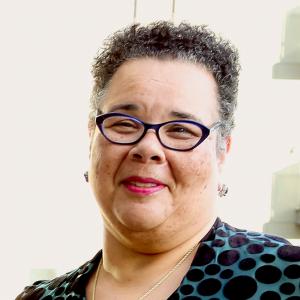
Preface It is my pleasure to co-author this blog with Dr. Roger Nam, Professor of Hebrew Bible, Candler School of Theology, Emory University. Dr. Nam and I have been a part of the Wabash Center project for over twenty years. We have had the opportunity to hear, as participants and as participant leaders, the kinds of questions and concerns early career colleagues pose over meals, while canoeing or during the late-night hours in Clifford Lounge. Invariably, issues of thriving, surviving, and knowing “what to do” as an early career person navigating the academy are at the forefront of the concerns and conversations. We understand that questions about the teaching life are just as important as questions about the craft, praxis, and art of teaching. Generative teaching requires a life that is healthy, whole, and resilient – especially in the early stages of any colleague’s career. Roger and I have recorded a series of podcast conversations which engages the questions we heard regularly posed by early career colleagues. These conversations are not meant to give advice to particular situations or specific people, nor are they intended to provide guidance for opportunities. The conversations are intended to suggest the kinds of issues, questions, and curiosities needed to frame moments of discernment, decision making, mentoring, and dreaming. Further, Roger and I are not claiming expertise in any particular situation. Our expertise is in the many conversations we have had with colleagues and the many years we have had as leaders in our own fields of endeavor. Flourishing in the Teaching Life Series Personal Finance and Planning: Roger Nam Healthy and career stability includes planning for the financial future and managing personal funds. Understanding 403B retirement accounts investments, and estate planning is part of faculty wellness. Understanding Institutional Finances: Roger Nam Learning to read institutional budgets, understand endowments, and be knowledgeable about financial reports will assist faculty persons. Being informed about your school’s financial picture is an aspect of personal wellness. Negotiating Job Offers: Roger Nam What is possible as you accept a new job? What kind of agency is needed to feel like you belong at hire? What does it mean to know your worth and value? Charting the Course of a Scholarly Career: Roger Nam Scholarly careers are not linear or tidy. Hear about helpful tools for career management like: creating a map/plan for tenure process and promotion (6 year plan), having more than one mentor, knowing when to leave the first job and when to stay, finding conversation partners for career decisions. Entrepreneurial Ambitions and Insights: Roger Nam What scholarly skills are transferrable to other enterprises? What does it mean to consider an executive position like a deanship or presidency? How do I manage speaking engagements, book deals, and other kinds of opportunities? What is an LLC and do I need one? Negotiating Once you are given a job offer, then it is time to negotiate your needs for hire. Negotiating your contract presumes you have agency concerning your career decision-making and that you have, in depth, researched the institution from which you have received an offer. Negotiating requires that you are not ambivalent about the job. You must have clarity about your needs, the needs of your family and the kinds of provisions you would need to thrive in that specific environment given the geographic location, kind of institution, and your hoped-for career trajectory. Negotiation is context specific – there is no “one size fits” every situation. Be mindful, that while we have heard of each of these items listed below having been negotiated, we have never heard of all these items in any one contract. When negotiating for a job offer, you must consider the context of the school, know your own value to the institution, and consider what you will need to thrive in that location. Your requests should not be capricious and, as in any negotiation, compromise must be part of the engagement. Salary is too often the only consideration of negotiation. Most schools have a determined entry-level salary for early career colleagues and/or the institution has established bans of salaries for the entire institution, which cannot be ignored nor changed. Many starting salaries are not negotiable. That said, even a 1% increase can accrue into a significant amount of money over 10, 20, 30 years of employment. Beyond salary negotiation, it is likely that your ability to thrive depends more on the kinds of items in the list below. Consider negotiating toward these kinds of needed aspects of the job: Title and Status Housing Short term or long term / rent reduction/ mortgage support Equipment (computers, and other technologies) Teaching resources Office location and office furnishings Funds and Funding (access to funds is typically not taxable as they are not part of salary) Moving Funds (Since 2018 moving expenses are not tax deductible except for military members). Often funding amounts are pre-set and moving funds are always considered salary and thus taxable. Consider that if you do not need to move to take the job, ask that these funds be considered a hiring bonus or accessed for some other purpose. Research Funds Travel Funds Student Loan relief Startup costs to help establish a research trajectory (e.g., library funds, index services) Eligibility for tuition remission for children Access to institutional credit card so you do not need to “front” expenses Membership to or use of school’s membership in local institutions (e.g. country club) Classroom resources Scheduling and Timing Course release Course timing and flexibility in mode of teaching Tenure Clock and Sabbatical Clock Committee Relief or Committee Assignment Delay or reduce administrative obligation (e.g., will not chair department until after tenure) Junior faculty sabbatical (leave in preparation for tenure or promotion, year 3, 4, or 5) Staff Support Research Assistant Teaching Assistant Publishing Assistance for: content editing, copying editing, indexing, footnote verification, etc. Access to administrative assistant services Hire of coach for administrative role and responsibilities Grant writing assistant Creation of a center or other institutional project of your own scholarly interest Bottom Line Negotiation depends upon your own agency. Your agency, exercised for your own wellbeing, begins when you submit your job application and continues throughout your career. Too many colleagues accept a job offer without negotiating or without having read the Faculty Handbook, the benefits package, or knowing enough about the culture of the faculty. Learning about the job begins with your preliminary research on the institution before making application, continues with posing your questions at the interviews, includes conversations with knowledgeable mentors and colleagues at other schools. By the time you are offered the position, you should have a clear sense of what is possible for the position you are considering and what you would need from that institution to thrive, flourish, and be well in your work.
Wabash Center Staff Contact
Sarah Farmer, Ph.D.
Associate Director
Wabash Center
farmers@wabash.edu