Resources
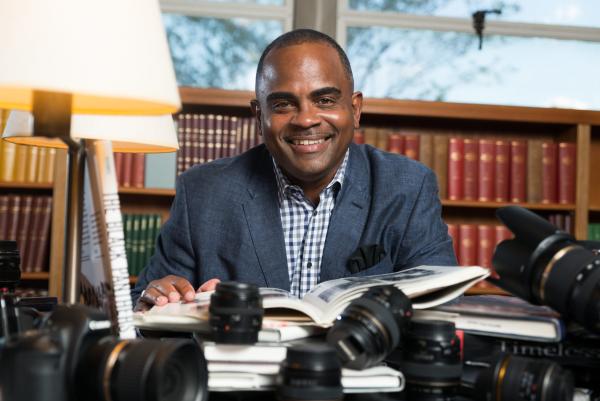
In 2015 my wife, Dr. Vanessa Watkins, took a trip with National Geographic to Cuba led by one of their photographers. One of the things I love about National Geographic trips is that the tour leader lectures in the hotel prior to going out to engage the culture. This leader lectured, but what blew my mind was that he never put a word on the screen. Throughout our fourteen-day trip, he always lectured with a computer, projector, screen, and images. Still images were his language of choice. He showed us what he was talking about and it was powerful. The images he shared were his images, he was a professional photographer, but that wasn’t what made the images work, it was his pedagogical decision to use the screen to project pictures. He would talk around the image; the image became the center piece of his comments and it worked amazingly well. Those images are still with me, five years later. What does this say to us as pedagogues? [caption id="" align="alignnone" width="2560"] Vanessa and Ralph Watkins in Cuba 2015[/caption] We have the big screen in our classrooms, in Moodle and Canvas, but how are we using this real estate? Are we using the screen to project words, words that we are re-reading to our students? Are we using the templates designed by engineers in Power Point who have no artistic or pedagogical training? Are we using the screen to show our students what we are talking about so that they can see it? I would suggest that we think about how we might use the screen as a pedagogical tool to show the students what we are talking about, to engage the creative centers of their brains, and to embrace the old saying, “a picture is worth a thousand words.” I would rephrase that old saying, “a picture saves us from saying a thousand words.”To use photographs in the powerful way they can be used, we have to understand why a photograph works. Better yet we have to learn to read photographs. Lets go to Cuba: This is my favorite image from Cuba. Why? This image is rich and full of information. When you read an image, you first read it from left to right. From left to right we see the juxtaposition of the old cars, a new car that is a taxi, a school bus with the backdrop of the capital. Smack dab in the middle of the image behind the newer black car is a street sweeper’s trash can. The image offers clarity, negative space (open space), and the beauty of Cuba’s sky. From the far-left bottom of the frame you see a blue car and that is put in conversation with the far-right of the frame where you see a white car. Sandwiched between these two cars is the complexity of Cuba. The capital stands as a monument under reconstruction; a symbol of Cuba’s determination to live, build, rebuild, reconstruct, and embrace its rich heritage of rugged survival. You also read an image from front to back. In the foreground we have this old blue car. The car’s headlights shine in the morning rising sun. You can vaguely make out the people in the car. The blue car greets you and it says, “Good morning Cuba!” As you move one layer back to the middle ground of the image, you see the black car, the street sweeper’s garbage can, the woman walking on the side of the school bus, the school bus, the capital, and the beautiful morning sky. The streets are clean and the streets speak of the beautiful blackness that is Cuba. This is an image that could be the opening for a lecture about my trip to Cuba. Why put words on the screen when I can put this picture on the screen? This picture takes you to Cuba. No words needed. This is an image you can talk around as you share with your students the complexity that is Cuba. When it comes to using images in our classes we need to use powerful images that tell stories and read well from left to right and from front to back. You are looking for images that speak to what you want to say, and say it in a way that brings to life the argument you are making. You have to ask what does this image say? What’s in the edges of the frame? Where does the eye go and where does it wander? What thousand words does this image say that I don’t need to say? Images speak if we look at them and listen. What are your images saying in your lectures? Here are some more pictures from my Cuba trip. I present them for your consideration to practice reading images. Start from left to right, then read the image from front to back, look at the edges of the frame and then ask, where does the eye go and what does this image say? [caption id="" align="aligncenter" width="1000"] Picture #1: The City View of Havana[/caption] [caption id="" align="aligncenter" width="1000"] Picture #2: The Fruit of Cuba[/caption] [caption id="" align="aligncenter" width="1000"] Picture #3: Walking and Talking[/caption] [caption id="" align="aligncenter" width="1000"] Picture #4: Time for Dinner[/caption] To view all my photos from Cuba: https://www.flickr.com/photos/ralphwatkins47/albums/72157652605129753
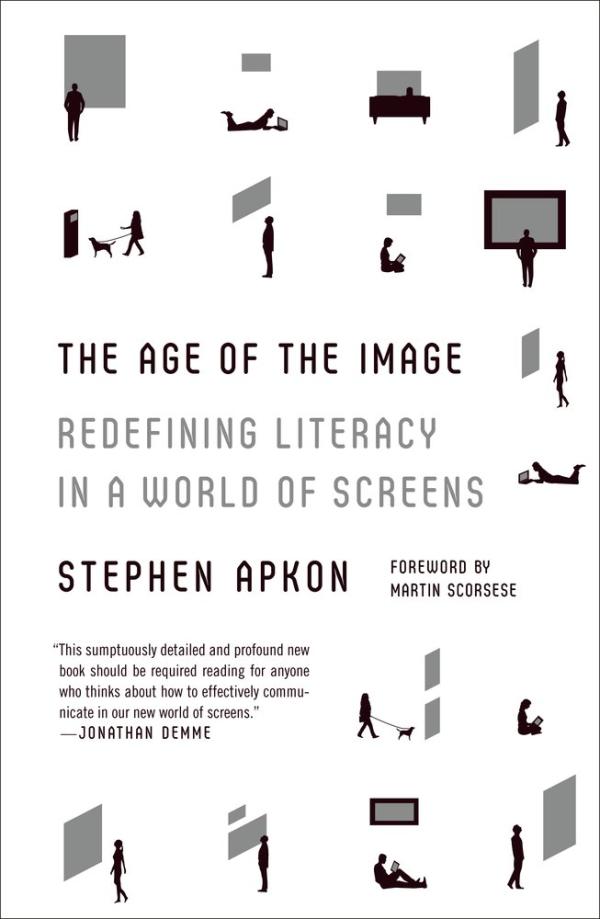
Teachers routinely complain that students do not read well or enough. What they mean by this is that students do not know how to analyze written texts, in part because they fail to engage regularly with written texts. Stephen Apkon’s book challenges this traditional focus on verbal literacy to advocate strongly for visual literacy, particularly in K-12 education. In a world saturated with screens and images to be decoded, Apkon, the founder and executive director of the Jacob Burns Film Center, argues that we ignore visual literacy at our peril. Few would argue with Apkon that we live in “the age of the image,” and in response to our situation Apkon argues for the importance of understanding the grammar of the visual. He does so by examining several interrelated perspectives on images and visual storytelling, such as brain science, advertising, and film techniques. He also provides a history of visual literacy that parallels in many ways the development of visual literacy. Rather than buy into the common parental and academic moral panic over “screen time” used by digital native “screenagers,” he encourages his readers to embrace screens and images by learning intimately how they work. This will benefit both producers and watchers, he argues, and can help classrooms function more seamlessly in our screen-obsessed culture. This book will be useful to teachers who want food for thought but not direct guidance. Apkon notes early on that “As new literacies emerge, they don’t negate more traditional forms of literacy, but rather embrace them wholly” (10) but then goes on to champion what sound like fairly vapid if contextually apt viral videos as examples of visual literacy achieved. Apkon’s bias is understandable, but it seems to leave other literacies in the dust, despite the author’s claims that he’s not doing just that. The chapter devoted to teaching is full of information, including a sketch of the history of technologies in education, but it does not detail how one might go about this in a classroom or curriculum. In Apkon’s favor, he calls for a high school graduation requirement of a five-minute film that illustrates key visual grammatical skills and incorporates written work as well. That kind of balance seems appropriate and necessary. This review will be published in the traditional written format (although if I were to follow Apkon’s prescription I should probably submit a well-edited video). I am wary of Apkon’s overwhelming enthusiasm for visual storytelling, placed in his analysis as top of the hierarchy of types of communication. Phrases such as “the unstoppable rise of visual expression as a popular means of conveying truth” seems remarkably optimistic: images, like words, can be used for powerfully negative propaganda as much as they can for “truth.” In sum, this book would have been more useful had it presented a more balanced view of the many literacies and illiteracies made possible by today’s technologies.