Resources

One exercise that has sustained me throughout these last three years of a global pandemic has been writing letters to my Beloveds. As a child who was always on the move, inhabiting la frontera, physically and intellectually, writing to friends in my home country was a way to remain grounded while sharing glimpses and shifts in my inner landscapes in embodied ways. Epistolary practices have connected peoples across space, time, and geographic divides for millennia. So ancient and so distant, this tradition remains so close, so potent, and so alive. Several religious traditions are quite familiar with this form of expression. Think of the Apostle Paul, who wrote to many communities in response to specific urgencies. I believe such a poetic-prophetic exercise has helped generations of our kin to be reassured, connect to their roots, and move through many dangerous crossroads. As I write these words, I am reminded that it is election day in my home country of Brazil. I don’t take the right to vote for granted as it was an impossibility some six decades ago. Paulo Freire, from whom we have all learned a lot about education, shared reflections in his A Pedagogy of Hope (1992) on what it was like to be forced into sixteen years of painful exile following the 1964 coup d’état. Letter writing was essential to him during those treacherous years. A lot of what later became known as the core of his teaching philosophy and praxis was developed in dialogue with distant friends, communities, and home country, many of whom he communicated with via letters. In his Profesora Sim, Tia Nao: Cartas a Quem Ousa Ensinar (1993), Freire indicates in the very title of the book that he would be communicating with his audience through letters to those who dare to teach. I suspect that Freire chose such a mode of communication precisely because of the impact phrases such as “Dear Comrades, Dear Co-conspirators” may have on readers. These words have the power of disarming us, conjuring a type of openness to our sensorial and embodied experiences. More than academic, abstract, and conceptual knowledge, those who dare to teach know that accessible, clear, and heartfelt content is not necessarily simplistic or superficial. On the contrary, it is drenched with histories, as Freire put it. He often wrote about how one never arrives alone in any context, whether to exile, a classroom, or the reading of a letter. Our bodies are, indeed, drenched in history, carrying an overlay of feelings, desires, memories, cumulative knowings, worldviews, longings, saudades, frustrations, trauma, and tensions that live at the threshold of our texts and contexts. For Freire, writing letters while in exile was a way to preserve his identity while inventing new ways of living and being and loving in unknown, and often strange, countries. Letter writing became a way to educate his affections, as he put it, and of coping with the insurmountable challenges of his geopolitical condition while resisting the urge to succumb to naive optimism. This fall semester, I have the immense pleasure of co-teaching an online class on spiritual formation with Dr. Aizaiah Yong at the Claremont School of Theology. As we began thinking of how to “Bless the Space Between Us,” between the weekly assignments, among the diverse time zones and geographic locations, an idea emerged of incorporating epistolary practices in what we named SpiritLetters. At the end of each week, we take turns writing a reflection on how our weeks have been, what kinds of spiritual practices have sustained us, and what types of literature, art forms, prayers, and blessings have given us nourishment as our lives unfold. These experiments with letter writing in the context of our teaching-learning community are intended to share a kind of presence that enacts, embodies, and evokes a sense of deep regard and warmth that only this medium can radiate. The Irish teacher and poet John O’Donohue is responsible for inspiring and inspiriting both our SpiritLetters and this blog post’s title. His book To Bless the Space Between Us (2008) offers readers insights, comfort, and company in our spiritual journeys. He reflects: The commercial edge of so-called “progress” has cut away a large region of human tissue and webbing that held us in communion with one another. We have fallen out of belonging. Consequently, when we stand before crucial thresholds in our lives, we have no rituals to protect, encourage, and guide us as we cross over into the unknown. For such crossings, we need to find new words. And these new words that slide from our minds to our hearts, spilling into the pages as SpiritLetters, are offered as blessings and invocations that hopefully can accompany teacher-learners in their academic journeys. In what follows, Aizaiah Yong shares a bit of the impact SpiritLetters have had on him. As a teacher and scholar who is deeply influenced by the Christian contemplative tradition as understood by Raimon Panikkar and Julian of Norwich, it is important for me that the practice of intellectual learning be deeply tethered to the practice of embodied living. The practice of writing a weekly SpiritLetter to our learning community has supported the intention of harmonizing intellectual learning with embodied living in two important ways: (1) providing an opportunity to slow down and be more fully present to the insights and ruminations offered from within the class and (2) inviting a deeper and more profound integration of them in our global social witnessing, which is an important element necessary when tending to collective trauma. Through the practice of SpiritLetters, I have found that slowing down is less about the speed by which I perform a task, but rather the level of intensity in which I engage. In this sense, to slow down allows one (for me as the teacher-learner and co-facilitator) to be more fully aware of the precious and invaluable insights offered by each person in the class through a stance of curiosity and compassion. Here, I am disciplining myself to avoid prematurely entering into critical analysis but instead choosing to contemplate first, allowing for their words, assignments, and questions to unfold within me. A process of slowing down invites a more embodied awareness of how the class is flowing and also informs a more holistic response, which in turn becomes the words written through the SpiritLetter. SpiritLetters ultimately then become a moment of mirroring back to the whole learning community what I am hearing and then asks those wisdoms to be more deeply integrated in the class journey’s forward. SpiritLetters offer a space to reflect back what is arising and to allow for a finer-tuned calibration that guides our collective responses as persons and communities. I consider this a contemplative and trauma-informed approach to teaching which Thomas Huebl describes as “resilience building as collective coherence.” Huebl writes, “Resilience building means that I am not just a cognitive participant of the communities I am part of, it is that I feel it. When we are aware of each other we create collective coherence. That is especially important when we go through disturbing times.”[*] As we continue to invite more diverse and geographically-distributed learning communities into our classrooms of higher education, I hope that we continue to practice emergent pedagogical approaches that allow us to slow down, be more fully aware of the relations that support us, and invite a deeper collective integration of the wisdom revealed. It is our hope that these reflections will invite you to inhabit these spaces of co-learning and co-teaching with an invitation to cultivate your own pedagogical practices of being and becoming, even in the face of multiple crises and impossibilities. May we remember to laugh, rest, regenerate, and seek tenderness so that we can continue to bless the spaces between us. In togetherness, Aizaiah and Yohana [*] https://thomashuebl.com/what-is-global-social-witnessing/
Teaching and learning in academic settings can sometimes appear contrived or artificial in relation to the “real” world or professional contexts for which students prepare. However, this does not always have to be the case. One of the things that has surprised me about teaching in theological education is the spontaneous emergence of holy moments or sacramental spaces in the classroom. These serendipitous occurrences have transpired despite carefully constructed lesson, lecture, and discussion plans. The intrusion of grace-filled moments in the midst of linear, rationally focused pedagogical agendas remind me of the synergistic power of the Divine that never leaves us alone, even in our best efforts and intentions. Addressing trauma through pedagogy as a form of educational and professional development can be an integral part of the teaching and learning experience. Pain is a part of life. In fact, pain is a constant, albeit varied, component of what it means to be human. There is great value in developing ways to gradually face pain directly, as opposed to shrinking or retreating from its reality. Part of a quality classroom education is helping students negotiate methods of confronting pain. Knowledge-based and contextually-driven learning enables students to acquire applicable models for dealing with pain and trauma in other settings. One way of thinking about teaching and traumatic events in the classroom is to envision instructional and experiential sacramental spaces. Sacraments are outward, visible signs and symbols of invisible, interior spiritual graces. They are gifts of the Divine. Although primarily viewed as specifically dogmatic and rites-based, sacraments can also be understood in terms of the varied means by which God manifests transcendental grace. Opening pathways for the intrusion of the holy, through multiple iterations, into learning spaces mirrors the healing process and thus becomes a viable way in addressing trauma. Historically, Roman soldiers took an oath of allegiance, or sacramentum, declaring a vow of obedience to their militaristic superiors. Similarly, adherents of ancient religious cults ritualistically declared service to the gods or mottos heralded by those societies. By pledging devotion and loyalty, participants bonded to the values and beliefs exemplified by the institution. Christians adopted this system in response not only to the allegiance believers swore to the Divinity of Christ, but also in recognition of the gift of Christ’s own suffering. The solidarity of God with humanity in pain formed the nucleus of a movement. Swearing the sacrament of faith to God was indeed, as in the other systems, a rite of membership. But it was also a means of acknowledging the work that God had done and was doing on their behalf. This deeply reflective theological method is relatable to teaching trauma in the classroom. Teachers and learners bring their best efforts in terms of preparation, study, and participation. That is, they do the work. Yet, they also make room for the work of God. Teachers can allow for this to happen through the cultivation of listening moments in the classroom. For example, the traditionally contemplative method of lectio divina is organized by study, prayer, reflection, and meditation. These steps allow for holy listening to the Spirit in the midst of the rational, exegetical process of biblical learning. Balancing the logical processes involved in classroom learning with short breaks of reflection, problem-solving, and simple quiet nurtures a sacramental atmosphere. In so doing, awareness is distilled that God embraces our best efforts with the unmerited grace that transforms.
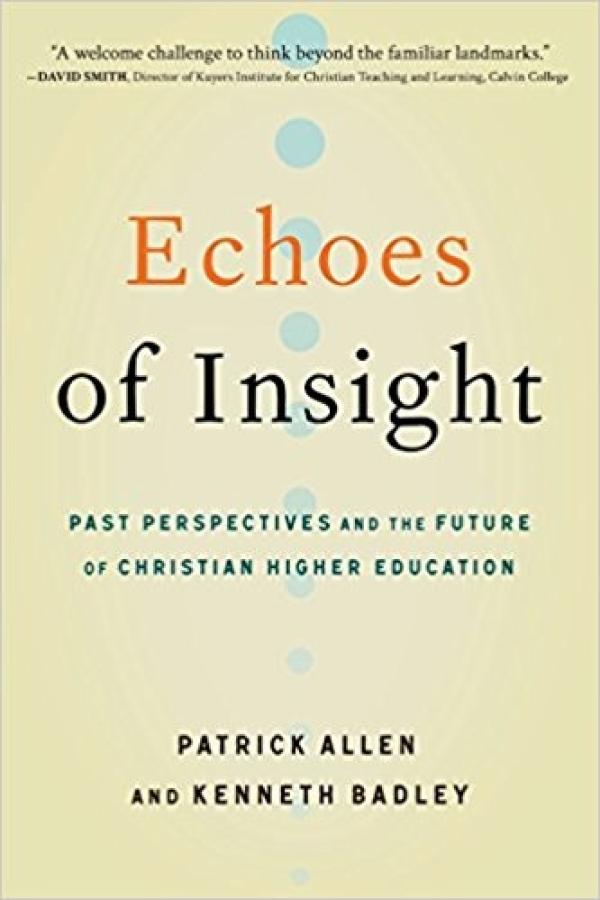
In Echoes of Insight: Past Perspectives and the Future of Christian Higher Education, co-authors Patrick Allen and Kenneth Badley mine voices from the past for fresh wisdom to assist Christian universities in their efforts to balance programming (glitz), the pursuit of truth (glue), and the goal of being transforming institutions “for the sake of the Kingdom (300)” (hope). The text is a response of hope, intended to refocus the mission, identity, and curriculum of Christian universities on its well-being and its ultimate purpose, which is "to provide a clear and rigorous program of instruction, spiritual formation, and vocational preparation (255).” The text, therefore, proposes a distinct move away from the sometimes exclusive, albeit important, conversations around money, branding, and jobs for graduates. To do this work, the authors examine eleven influential thinkers of education. Using a format that very closely resembles the multiple editions of Daniel L. Pals’s Theories of Religion, each chapter in Echoes of Insight offers a brief biography, a synopsis of classic and relevant works, a discussion of applicable ideas, and questions for reflection. Part One: “The Classroom and the Student Instruction, Formation, and Vocation,” introduces five thinkers and attempts to connect their ideas with the perceived “challenges faced by Christian higher education in the twenty-first century (18).” Part One begins with Alfred North Whitehead, but the works of Dorothy Sayers, Hannah Arendt, Flannery O’Connor, and Maria Montessori, via their respective chapters, come alongside to help to facilitate a larger discussion on the human experience and the current challenges faced by Christian universities. Cooperatively, these works support Whitehead’s claim that “all parts of a student’s education should fit together epistemologically and should connect to the student’s day-to-day life (29).” In other words, how faculty members treat students, how colleagues convey mutual respect, or where the roots of authority lie all contribute to the students’ learning experience. Part Two: “The Faculty and the Administration: Mission, Vision, and Values,” examines the work of John Henry Newman, Abraham Flexner, Thorstein Veblen, Jose Ortega y Gasset, Robert Maynard Hutchins, and Karl Jaspers. Unlike Part One, the thinkers included in Part Two are those who had a vested interest in higher education and maintained distinct ideas about the university and the pursuit of truth. Allen and Badley found that all agreed that a common mission, a strong academic program, an emphasis on learning, and the freedom to pursue truth were essential. Overall, the text is an enjoyable read. In fact, although it is written for a scholarly audience, the authors’ often tongue-in-cheek humor makes the manuscript a rather accessible and entertaining page-turner. More importantly, the authors’ passion and genuine interest in the success of Christian higher education makes Echoes of Insight both engaging and insightful. Echoes of Insight is an important work and a valuable addition to this area of scholarship. Thankfully, the authors are already planning a more inclusive and diverse second edition, because the current text falls short in these areas. Indeed, the glaring absence of writers, theologians, or philosophers of color is problematic. Such an omission not only silences and makes invisible select people groups, but it also disregards the distinct experiences of minority students on predominantly white Christian campuses. Consequently, this text, whose argument is predicated on integration, connection, and the unhindered pursuit of truth, failed to take seriously just how much race and racism in American education and American Christianity unjustly impacts people of color and negatively informs their day-to-day life and learnings experiences. Thereby rendering many of them grossly untouched by Allen and Badley’s vision of a transformational institution. Given the philosophical and theoretical emphases of Echoes of Insight, graduate students and specialists (namely faculty and administrators) with scholarly interests in this subject matter would benefit most from reading this text.
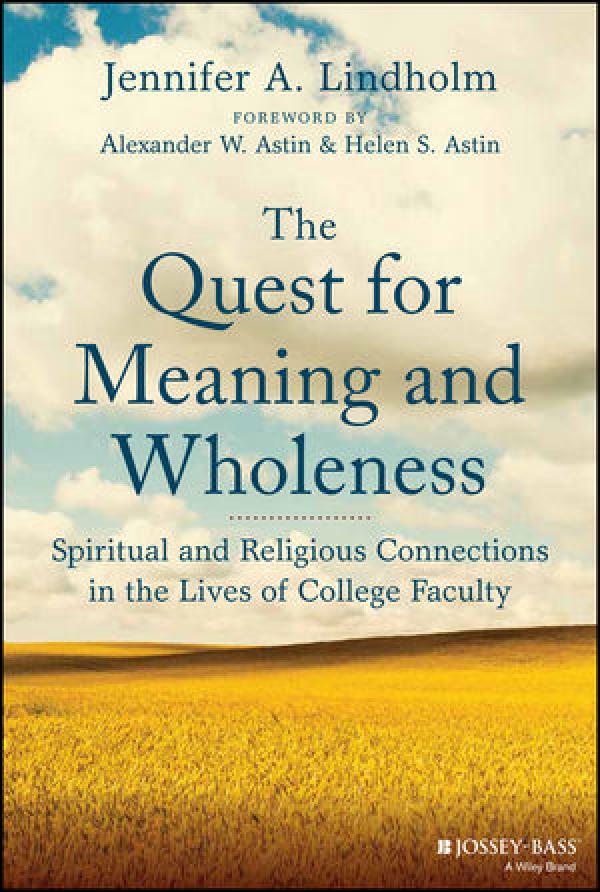
Jennifer A. Lindholm begins her work on the spiritual proclivities and religious perspectives of college faculty in the United States by noting that they teach in a “spiritually engaged nation” where nine in ten adults profess belief in God or a Universal Spirit (1). Religion is ubiquitous in American life – 80 percent of Americans consider religion as important to their lives – but it is also a complex and contested matter that fosters community and generates conflict across the country. Although college students are no different than other Americans in their spiritual and religious seeking – three in four college students are “searching for meaning and purpose in life” – Lindholm argues that they are not receiving sufficient instruction and mentoring from their professors. Two-thirds of college students report that their professors “never” encourage discussion of religious topics and nearly half are dissatisfied with how their college experience has provided opportunities for spiritual reflection (212). Yet Lindholm astutely demonstrates that college professors are no less spiritual or religious than their students. Drawing upon a 2012 survey of 8,447 tenured and tenure-track faculty from 264 diverse colleges and universities, the author finds that 19 percent of faculty self-identify as “not spiritual and not religious,” a figure only four percentage points higher than the general American population (50). Students are still disappointed in the lack of religious dialogue on their campuses in part because their professors experience competing tensions in their own attempts to incorporate their spiritual and religious lives into their work. In the second chapter, Lindholm uses faculty perspectives to provide helpful delineations of what is meant by self-identifying as “spiritual” or “religious.” She interprets her data in the following five chapters to illumine the substantial challenges faculty face when seeking to connect the spiritual and religious dimensions of their lives in the academy. Although faculty who are able to freely and openly express their spirituality are “more likely to view themselves as being authentic in their work and personal lives,” respondents often stated that they encountered overt hostility in the form of religious discrimination from colleagues and stumbled over more subtle obstacles like institutional expectations to be available to work on weekends (ix). One of the many fascinating points in Lindholm’s study shows how faculty from all faiths and in every kind of educational institution – public, private, and religious – experience these tensions. Evangelical faculty at public schools reported the highest levels of occasional discrimination (39 percent), but faculty from other religious traditions, such as Buddhism, Islam, and progressive Christianity, explained how they felt no less like outsiders at work (126-146). Lindholm accomplishes her primary purpose successfully and presents a rich, data-based account of the spiritual and religious lives of college faculty in the United States, and also articulates several cogent and compelling prescriptions to create “valued space for the spirit within the academy” so professors and their students can more fully connect higher education with human wholeness (216). Theological educators will also benefit from this book. Lindholm’s call for greater consideration of spiritual and religious diversity within the scope of collegiate intercultural development applies equally to seminaries with student bodies that are increasingly becoming more ethnically, racially, and theologically diverse.