Resources
I remember dial-up modems and the exhilaration of logging onto AOL.com as a teenager. A few years later, I experienced the novelty of Facebook. Duke Divinity School (DDS) advised all of its masters’ students in the 2008 incoming cohort to create Facebook accounts so we could stay connected and support one another through the first year of our graduate program. DDS recognized that this would be a time where students begin to deconstruct presupposed understandings of religion, Bible, and the theologies that we had received from our families of origin and church contexts. Reflecting back on that time, I feel as if the beginning of my deconstruction was wed to the rising age of social media. Now as a professor of the New Testament in the age of social media, what should some of my best practices entail? While difficult to define, the term “social media” identifies the various internet applications that allow users to construct their profiles while also creating content that connects and networks various groups of people. While social media is supposed to be about “connection,” I imagine that we all have experienced “internet trolls,” folks who try to bait and upset readers with disturbing comments. As professors of religion and theology, I would argue that we are the prime targets for internet trolls just by virtue of the nature of our work at a time where there seems to be rising White Christian nationalism in the United States. So, I often ask myself questions about the role of the professor in the age of social media. For example, in my context, our Director of Outreach and Alumni Relations requests that faculty increase their social media presence as a way to connect with alumni who are out working in the world. Can I carefully curate my social media presence to let those alumni know that I support them from afar? As a professor, what content can I create that allows alumni to be refreshed as they do the difficult work of leading congregations and parachurch ministries? Moreover, can social media serve as a way for faculty to connect with prospective students as we all experience the feelings of scarcity in theological education? Is this another area of “service” that faculty can add to their tenure portfolios (assuming one has a job with tenure!)? While I am not sure of the proper answers to the above questions, I certainly try to be cognizant of what the next generations of theological students may look like. Gen Z, for example, born between 1997 to 2012, is the first generation to have grown up with ALL THE TECHNOLOGY. Further, they will buy products from social media sites more than any other generation. Is there a way for Millennial, Gen X, and Boomer faculty to capitalize on connecting with Gen Z through social media? I think that is a conversation that must be had in our various theological faculties. I started @BoozyBibleScholar on TikTok and Instagram, providing segments called “One Minute Womanism” and “Scripture Through Womanist Eyes” as a way to show my growing community that there are other voices besides the conservative right-leaning interpreters of scripture. Now, I will definitely not be keeping up with the latest TikTok dance trends, but I will add my own particular voice to the ever-growing vacuum of social media to provide a brave space for the folks who may be feeling left behind and kicked out of Christianity. Just as in the opening of this reflection I recognized my own deconstruction during the rise of the social media age, I imagine that Gen Z experiences similar deconstruction(s). As I peruse social media, it seems to me that the loudest voices in Christianity today tend to be destructive voices. If you have pondered a desire to help silence those destructive voices, I implore you to act now. Find ways to make your scholarship available to the public. I wholeheartedly believe that one of the professor’s jobs in the age of social media is to be a transformative voice in contrast to those who will try to tear people down. Instead of letting John Piper, John MacArthur, or Voddie Bauchaum be the loudest voices in public religious discourse, professors of religion and theology owe the American public counter voices in the age of social media. My hope is that my social media presence will at least point some to believe that there are other ways to be “Christian” in a world that has vastly devalued such an identity. TikTok: @BoozyBibleScholar and Instagram: @BoozyBibleScholar
What is happening in the world is happening to each of us. On May 3, 2023, Dr. Vivek Murthy, United States Surgeon General, released an advisory calling attention to the public health crisis of loneliness, isolation, and lack of connection between people in our country. Disconnection fundamentally affects mental, physical, emotional, spiritual, and intellectual health. Even before the COVID-19 quarantine, approximately half of the U.S. adults reported experiencing measurable levels of loneliness and isolation. Since the quarantine, we can imagine the sharp increase in isolation and fear. We, students/faculty/administrators, are part of this affected demographic. Newspapers, in small towns and major cities, provided news that fed democracy and linked people overwhelmed by otherness and isolation. In the recent past, print, and digital news provided a “watchdog” service aimed at holding our civic institutions accountable. The newspaper industry has reported a period of immense disruption and financial distress leaving news deserts across the country. Public service journalism that spotlighted the major issues confronting communities has shrunk. This leaves residents without the information they need to discuss and to solve their problems. Whether delivered over the internet, airwaves or in print, the lack of vitality in local news coverage exacerbates our feelings of isolation. Our loneliness is further compounded by the dichotomized assumptions promoted through social media. People depend upon memes, soundbites, and social media threads for facts, storylines, and information on complicated issues. Students/faculty/administrators, like the public, are immersed in social media culture. The rhetoric of “us versus them” has saturated our thinking and has become a presumed framework of discourse. The barrage of loss, hatreds, separation, grief, and rhetoric of division is affecting us – all of us. We are living in an extended and deepening national moment of blaming, clinched fists, gritted teeth, and suspicion for people beyond our chosen tribes, beyond our chosen communities, beyond those people with whom we agree and have chosen political affinity. There is growing suspicion of difference. There is a feeling that “the other shoe is about to drop,” without knowing when or what the shoe will be. Here is the strangeness. While the country becomes more polarized and less informed - our daily lives and routines are relatively unchanged. How can it be – business as usual? Our everydayness continues relatively unscathed. We shop in the same grocery store. Go to the same big box stores. Perform the activities of employment. Participate in the same schools, churches, and mosques. Use the same online streaming services. While we suffer from profound loneliness, our everydayness has not changed much. We are simultaneously uninterrupted and fractured. Division and social upheaval are smoldering while we operate in the relative customary school year start. School has begun. Teachers/students/administrators are re-convening with the same rituals, rites, and routines as always. Syllabi have been distributed. Lessons have begun. Committee meetings are back in swing. At-a-glance, we look fine. Yet, fear and uncertainty are palpable. We must be aware that loneliness, fear, and isolation tend to manifest, not where it is easily seen in our daily activities, but in our interior spaces. Our fears are performed in relationships. Our isolation becomes apparent when we are with one another. Our trouble, pain, and turmoil are witnessed when we are working together and with others. The start of school makes us vulnerable to seeing and being seen. We are, when we gather-back, reconstituting our relationships while we are knee deep in our loneliness. Our relationships expose our fears, isolation and mental unwellness. Conflicts will soon arise. My caution is that, given the effects of the wider political climate, the veneer of calm and routine will soon dissipate. Are your classrooms ready for conflict? The most vulnerable people are those who bring diversity and difference into the faculty/student body/administration. For those faculties and student bodies who have, recently or over a very long period, accepted the challenge of diversity – this is potentially a very troubled moment for teaching. Diversity (race, class, political, gender, nationality, creed) is precisely what is not tolerated in the growing USA climate and yet diversity is what is needed to move us away from isolation and toward conversation, toward peace, toward community. The lack of tangible conflict, or the absence of specific dispute, does not mean that institutional fissures are not forming along the lines of diversity. Unaltered routines, unexamined practices, and undiscerning leadership will miss the hushed emerging crisis in community. Do not wait until difference turns into intolerance, vindictiveness, expressions of hatred, and war to invite your school into meaningful conversations. There are no recipes, formulas, or roadmaps for this brittle moment. Your school must engage its own communities as they are unique in the world and as you live together in this uncharted malaise. Gladly, there are some big ideas to which we can attend to help us make sense of the places where you teach and learn. Now, during the beginning of the semester, find ways to collectively reflect upon these kinds of questions in anticipation of conflict: What are the consequences of difference? What are the effects of difference? What meaningful project can we work on together? What sustains us through conflict? What is a good conflict and how are disputes processed with fairness, justice, and for maturity of community? Consider facilitating these kinds of habits and practices in your school or in your classroom: acknowledge the diversity and celebrate it; make the community aware of the diversities which exist; demonstrate how diversity strengthens the mission of community; attend to creating cultures of respect and regard for difference; create conversation groups across diversity to listen to one another; construct institutional processes and protocols before there is conflict; create an ombuds position; message into the community that difference is a strength and not a weakness; design new rituals and rites that support and honor diversity; facilitate conversations on the nature of hatred and the detriment of animosity; create policies of zero tolerance for hate speech; work on practices of solidarity; make a communal project of peace, empathy, compassion and forgiveness; admire courage and bravery; award truth telling; create artwork and expressions which honor difference; complexify dichotomous thinking; find ways for people to work together against divisiveness, objectification, and authoritarian assumptions. When, not if, the ugly expressions of hatred and entitlement bubble up in your community – be ready. You will not have the luxury of feigning surprise. Conflicts, subtle or violent, will arise along identity fault lines and your institution must be ready so that those targeted by the dispute are not severely hurt, ostracized, or killed.
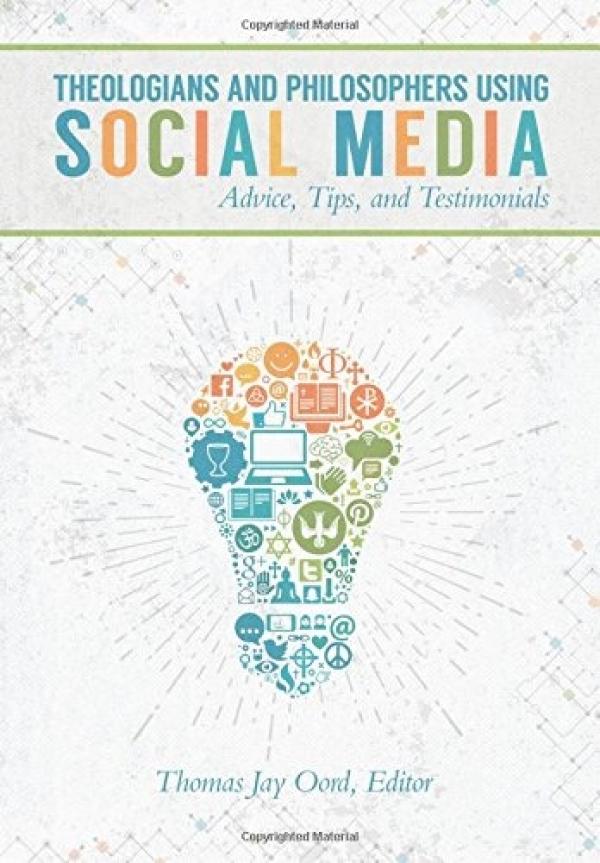
The insights in these 90+ essays are nothing short of inspiring! Their tips on best practices for social engagement, time management, social media as a resource for scholarship or creativity, technology and pedagogy, etc. will help readers tremendously. The contributors are diverse. They include.... - Public theologians like Ben Corey, Brian McLaren, and Richard Rohr - Younger scholars like Tripp Fuller, Jory Micah, and Alexis Waggoner - Biblical scholars like Michael Gorman, Joel Green, and Daniel Kirk - Philosophers like Helen De Cruz, Aaron Simmons, and Kevin Timpe - Establish scholars like James Crossley, Kwok Pui-lan, and Amos Yong - Scholars outside North America like Deane Galbraith, RT Mullins, Hanna Reichel, and Atle Sovik - Pastoral theologians like Patricia Farmer, Len Sweet, and Kurt Willems - Historical theologians like Kim Alexander and Christine Helmer - Science and religion scholars like Ron Cole-Turner, Karl Giberson, Lea Schweitz, and Jim Stump - Constructive theologians like Oliver Crisp, Grace Ji-Sun Kim, and Jason Lepojärvi - Ethicists like Miguel De La Torre, David Gushee, and Michael Hardin ...and the list goes on! Whether the reader is an armchair theologian, a professional scholar, a graduate student, or simply interested in how social media is changing religious and philosophical studies, that reader will find Theologians and Philosophers Using Social Media of great help.

Recently I was working with my IT colleague, Dr. Justin Barber, on a project to use machine learning to gather data about student experience in our hybrid classes from our LMS (Learning Management System). Big data comes to theological education! Our curriculum committee was testing a common perception that our distance students felt better about their experience in the classes after they had been together on campus. To test this assumption, we asked Justin to do something called “sentiment analysis” on the discussion forums to see how the emotional tenor of their interactions changed once they had been together in space and time. Full disclosure: Justin is brilliant, and I often have no idea what AI (Artificial Intelligence) magic he has rendered. So, we always have to sit down for him to explain the results to me. Before performing the sentiment analysis, we summarized the aggregate posts of each discussion with three keywords to get a sense of the content of each discussion (excluding the common words that occur in almost every post like "the", "a", etc.). Then these three words would be analyzed before and after the campus visits to see if they were, on the whole, more positive after the students had been together. The three word combinations were often just the topic for the week and two key related terms. Hilariously, a colleague’s class in “Ancient and Emerging Practices” came up with the trio: church, tickle, sexuality. I had to explain to Justin who Phyllis Tickle was when he became concerned about what on earth was going on in that class. But as we scrolled through data from hundreds of forums over five years of data, week by week, the main word that showed up again and again was “thanks.” Thanks. As we scrolled, I was reminded of so many student posts that began with that word. “Thanks for sharing that story.” “Thanks for bringing up that topic, because I was wondering about it, too.” “Thanks for making that clearer, because when I read it I was totally confused.” While the results of the sentiment analysis were largely insignificant, this moment of realization of the function of gratitude in our online classrooms has stuck with me. It drew together something in my lived experience, but it was still surprising how often that it made the top three. Thanks. Not only in classes where emotional intelligence and personal sharing is expected, such as pastoral care courses, but in history classes, Bible classes, comparative religion classes. Many faculty fear a loss of relationality in online classes. They worry that peer-to-peer learning is diminished, that learning becomes a form of correspondence course between students and faculty. In my doctoral pedagogy class, students worry that conversations in online forums will mimic the trolling vitriol of Twitter comments. But here was dispassionate evidence that an attitude of respectful engagement was the overwhelming norm in all of our classes. In simple list form, we discovered over and over again the simple acknowledgement of indebtedness to another student: Thanks. As Justin and I processed this surprising result, we talked about how some of this polite deference might be a reflection of the somewhat tenuous nature of online community. Perhaps in situations where relationships aren’t reinforced by regular embodied interaction, a level of additional respect becomes a habitual marker of conversation in order to maintain connection and compensate for the way text doesn’t communicate body language, tone, or attentiveness. More cynically, this profusion of thanks might be a signal of perfunctory niceness, something that both our majority white female student population and church-related vocation students are socialized to perform. I like to think of this habit of gratitude as a way that students hold one another’s stories and learnings as gift. The esteemed religious educator Dr. Anne Streaty Wimberly once led a retreat in a church that I later served as youth minister. Even years later, the young people in that community remembered her as the “thank you for sharing lady” because she had taught them to receive every word spoken into the circle as gift, which required verbalized gratitude. Opening up a laptop in a faraway city to re-enter a challenging class alone can be a difficult discipline, particularly for students who already have very busy lives. Finding colleagues there who hold your contributions with respect and gratitude makes that space more gracious and inviting. And so our students, without our prompting, learned together to say thanks.
My most recent tweet (of almost ten thousand) was 40 weeks ago. My most recent Facebook status update (except for a brief "thank you" for birthday wishes in July) was 46 weeks ago. The previous three years, however, I have taught my main introductory course, "Introduction to the Hebrew Bible," as an open, freely-available, online event built almost entirely on social media, especially Twitter, WordPress blogs, and Google Docs. This was the Open Old Testament Learning Event, or "OOTLE." My use of social media in higher education was based on a belief in the power of making for learning, and on a utopian vision for the internet that was based on my own experience. Eventually, the failures of the major centralized social-media platforms to proactively account for systemic abuse of marginalized users led me to abandon our pioneer outpost of open learning, and to retreat with my students back into the familiar confines of "the devil I know," the closed learning management system or "LMS." Many educators will have some familiarity with the learning theory "constructivism" (sometimes "constructionism"). According to this model, learners do not simply "acquire" knowledge, but rather always "construct" knowledge by synthesizing their existing understandings with new information or insights. Less well known, however, is that according to a constructivist model, this knowledge-making is more likely to occur where learning happens socially and where learners collaboratively build artifacts that are publicly shared. As the internet age took hold, and learners began increasingly to build their knowledge in a world of information excess rather than a world of information scarcity, it was often remarked that content on the internet was composed by perhaps 1% of internet users. Perhaps 9% of users interact with this content, and some 90% only passively consume content. This is sometimes called the "1% rule" or the "90/9/1 rule." From computer science to the humanities, educators began to embrace the power of "maker culture" to unleash the potential of constructivist learning in individuals, and to remake the internet in the image of the whole body of its users. It was in this context that the use of social media in higher education began to spread like fire: classroom Twitter "back channels" or weekly synchronous "Twitter chats"; blogging assignments on open web platforms like WordPress; presentation or digital storytelling on YouTube; and Facebook groups and pages. Then in 2014 came "Gamergate," a campaign of organized harassment against female game designers and game enthusiasts, including frequent credible threats of sexual violence and murder. Gamergate provided a playbook for white supremacist organizations and eventually, it seems, even for Russian interference via "troll farms" in 2015-16 U.S. political discourse on Twitter, Facebook, and YouTube. ("Trolling" describes skillful, media-savvy practices in derailing or redirecting discourse, whether for pleasure, malice, or profit.) Even among social-media users apparently uninvolved in these large events, in became clear that the codes of conduct and anti-harassment policies dictated by the young, white "tech bros" of social media (Jack Dorsey of Twitter, Mark Zuckerberg of Facebook), could not provide marginalized users anything like the safe environment enjoyed by privileged users less likely to be targeted. This remains the case, skewed as these policies are toward favoring "free speech" in an absolute sense and leaving users to block malicious actors as best they can . . . only possible, of course, after the malicious acts have occurred. Even we relatively privileged users became accustomed to weary acknowledgements that "of course Twitter is a cesspool, but . . . " Eventually, "But. . . “ became for me, and for many educators in my circles, "But what?" and then "But nothing." It had become impossible to offer my learners a reasonable guarantee that they would enjoy equitable social-media experiences, regardless of how they chose to present their race, gender, sexual self-understanding, class, or other differences. As I consider shepherding learners again into the social-media space ("not yet, not yet"), I remain optimistic about decentralized platforms like Mastodon. It is clear that the "one size fits all" approach to codes of conduct and anti-harassment policies (as on Twitter and Facebook) is untenable. On Mastodon, a radical free-speech, no-holds-barred community can have its minimalistic code of conduct, while a more proactive, highly-moderated community can choose to federate with that group, or not. I have not given up on a commitment to learning via collaborative construction of publicly available artifacts, but I am once bitten . . .and will twice be shy of any monetized, centralized platform.
Medhi Khosrow-Pour, editor; four associate editors; and over forty authors contributed to the volume Social Media in Education: Breakthroughs in Research and Practice. The authors teach and research in various contexts around the globe and as such the book provides insight into a multiplicity of learning contexts. Although much of the book reflects K-12 learning environments, there are several chapters specifically focused on the use of social media in higher education. Despite not focusing on higher education, many chapters have applicability for teaching with and through social media in higher educational contexts. The book is rooted in extensive research and organized into five sections: Curriculum Development and Instructional Design; Higher Education; K-12 Education; Language Education; and Reading, Writing, and Speech. Each section covers topics relevant to teaching and social media in a range of classrooms, online teaching and learning, and specific student learning issues related to the use of social media. Faculty teaching in theological school and university contexts will find sections one and two to be the most helpful (Curriculum Development and Instructional Design; Higher Education). The use of social media in everyday life is ubiquitous and this is underscored throughout this volume. The authors of Chapter 1, “Examining the Benefits of Integrating Social Media into the Classroom,” cite a helpful definition for social media by Bryer and Zabattaro as, “technologies that facilitate social interaction, make possible collaboration, and enable deliberation across stakeholders. The technologies include blogs, wikis, media (audio, photo, video, text), sharing tools, networking platforms (including Facebook), and virtual worlds” (2). The authors of the first chapter examine various pedagogical theories in relation to social media in the classroom and conclude that connectivism theory is perhaps the most helpful. Their outline of principles of connectivism indicates that learning and knowledge rest on a diversity of opinions; learning is a process connected to varieties of information sources; learning may reside in non-human appliances; capacities to learn is more critical that what is known; continual learning is necessary; the capacity to make connections between fields, ideas, and concepts is a core skill; up-to date knowledge is vital; and decision making itself is regarded as a learning process (3). None of these conclusions are new. However, the focus on student continual learning and knowledge development through social media constitutes a new direction for thinking about what connotes knowledge, the acquisition of knowledge, and how teachers might foster student learning. One claim that this book asserts often is that social media facilitates active learning and collaborative learning. Resource and information sharing become a democratized project rather than being dependent on the authority of the teacher. In addition, the learning process can be more personalized and active. Co-created learning environments provide degrees of student buy-in that may have been somewhat absent prior to the introduction of social media in contemporary classrooms. The authors contend that creating communities of learners around shared interests fosters continuous learning and the potential for more positive learning environments overall. The authors of Chapter 2 also critique the current gaps in the literature around social media as an instructional tool. They claim there is a lack of information about how social media is utilized in classrooms, a lack of comparative research studies about best practices to develop and design social media strategies for classroom applications, and an overall need for alignment between social media use and assessment practices in classroom teaching (27). Yet, despite gaps in the research they claim, “by facilitating active learning, promoting affective learning outcomes, inspiring creativity and innovation, supporting team-based work, and creating a community of learners [sic], social media enhances [sic] students’ learning” (28). Chapter 3, “Utilizing Social Media to Engage Students in Online Learning: Building Relationships Outside of the Learning Management System” offers a foundational understanding of the history and role of social networking in student learning and provides specific insights about the benefits of social media use and instructor’s roles in relation to it. In addition, the chapter provides a couple of case studies for further reflection about the benefits and challenges associated with the use of social media in teaching. Areas of concern include: access to social media; privacy; time commitment for students and teachers; distraction and lack of focus; and integrity of the materials/content. The question of reliability or integrity of content and its quality requires teachers to help students gain capacities to differentiate content so as to discern what is reliable versus what is not. Social Media in Education also attends to the topic of social media and multi-literacy. It is concerned with understanding the varieties of learning domains that make up student’s learning matrices. The semiotic codes that make up multi-literacies are considered as variant domains of knowledge acquisition and construction. The book’s authors are aware of the multiple identities with which contemporary students navigate social media environments. Adapting and creating social media tools to meet student learning needs is also addressed. TeacherTube is one such example; developed to mirror YouTube and yet focusing exclusively on educational uses for classroom learning. It also indicates the learning level for which the videos might be applicable (K-12 or college). As the authors of Chapter 6, “Incorporating Students’ Digital Identities in Analog Spaces,” contend, “The advent of social media ushered in a time where multi-literacy became increasingly important, as social futures might ultimately be defined by one’s (in)ability to exist in both digital and analog worlds simultaneously” (98). As with any multi-authored volume on a given topic, there are many overlaps between the various chapters that can be repetitive. That said, the book provides a wealth of information about social media in relation to student learning and teaching practice in K-12 and higher educational contexts. One insight that surfaces throughout concerns how teacher intentionality about the use of social media for advancing student learning in any instructional context has a direct correlation with positive student learning outcomes. Aymerich-Franch and Fedele in Chapter 8, “Students’ Privacy Concerns on the Use of Social Media in Higher Education,” affirm that “undergraduate students generally accept the use of social media in the classroom but only when their use is justified and not linked to compulsory activities… students tend to use social networks to organize classroom work among themselves… Students are reluctant to use this social network [Facebook] for activities that involve interaction with faculty or to carry out subject activities organized by faculty” (142). Hence, there is a need for teachers to carefully select and navigate social media spaces in order to both recognize student’s private social media spaces as carrying certain learning capacities that may be outside of the teacher’s domain and to create social media spaces for specific learning activities that may be either teacher or student generated. One way by which teachers may discern what is appropriate for the use of social media in their classroom involves a brief questionnaire that interrogates their own use of social media in the classroom and that of the student’s experience with social media in the classroom (164). This can help teachers discern student familiarity with various types of social media in their own learning experience and aid teachers in discerning what might best meet student learning needs for their desired student learning outcomes. Perhaps one of the greatest strengths of this edited volume are the lists of references at the conclusion of each chapter. They constitute a gold mine for further research into the topics addressed and can widen and deepen one’s understanding of the use of social media in contemporary teaching practices for advancing student learning. Professors of religion and theology will not find any articles directly related to their respective fields of study. However, the book does provide a wealth of ideas that could be modified for teaching in theological schools and higher educational contexts. For example, issues related to the use of iPhoneography could have resonance with questions about hermeneutics and perception in general. In addition, the cost of this volume may encourage faculty to ask their libraries to purchase the book instead of adding it to their personal collection.
I was recently talking with my former doctoral advisor about a new position I accepted with the university where I teach. His seminary is exploring innovative ways of delivering courses, and I wanted his counsel as I investigate moving my programs completely online. As we were talking, he simply said, “The educational landscape has changed, and we must change with it if we are to survive.” This is something that I am fully aware of and advocate for. However it meant something more profound coming from someone who I respect, someone who has been at the forefront of practical ministry education and yet often concedes that keeping up today is more difficult than ever. It is time to change. And not just our feelings on distance or online education, for that is now simply a question of location. Education occurs in the classroom, and that classroom may be in a traditional face-to-face format or an online format or both. In short, distance or online education is here to stay. The challenge that is before us remains a consistent two-fold challenge: what content will we deliver, and how will we deliver that content. This two-fold challenge is both a matter of content and context (or community). It is because of this essential nature of education that constructivism has maintained such a central theory of education. Originally devised as an educational theory by John Dewey and provided a psychological foundation by Jean Piaget, constructivism is a process where a learner constructs meaning based on their subjective perception of objective reality. Briefly stated, constructivism is an active process where learners construct meaning together in a learning community through their shared experience rather than simply receiving processed information from an expert. Content is gauged against the individual and shared experiences of the learning community as meaning is generated out of conversation, collaboration, conflict, and consensus. All of this is essential to understanding the profound nature of this short collection of essays which is the focus of this review . Stabile and Ershler, the editors, have gathered together a team of educational constructivists to assess the theory’s continued validity in this social media era. By their own admission, “Social media is constructivist” because it “embodies constructivism itself as the users engage in the development of their own meaning” (1). While this volume tackles the enormous complexity that is the digital village, the technical use of social media is not the focus here. It is assumed that faculty are tweeting, instagramming, snapping, and pinning along with their students (or, at least, are aware that this is how people communicate today). No, the focus is on whether constructivism remains a viable option for engaging the learning process. Each of the authors seems to give a shared assent, then, to two assertions: (1) the social media era is inherently invested in crafting meaning through the shared experience of community engagement; therefore (2) constructivism remains a (if not the) viable learning theory because of its focus on crafting meaning through shared experience of community engagement. If we who teach undergraduate, graduate, doctoral, and post-doctoral students are going to remain relevant, then we must no longer see ourselves as experts who disseminate information to our paying customers. We must see ourselves as conversation partners, community facilitators, and wise mentors. We must begin constructing the classroom around a workable theory that respects our current digital age. Thankfully, for those who are unfamiliar with learning theories, Stabile and Ershler offer a timely and thoughtful collection of essays to introduce the reader to an essential theory that is still as useful today, if not more so due to the connectivity of the social media age, as it was when crafted nearly a century ago.
This volume is designed more like a handbook than a piece of prose. Aside from the preface that details how the volume is arranged and how each successive chapter is outlined, each chapter (twenty-five in total) represents a stand-alone essay that describes how an instructor can integrate a piece of social media into her or his curriculum and assignment portfolio. The essays are divided into four parts. The essays in Part 1, “Research, Writing and Information Fluency,” focus on applications of social media that challenge students to develop effective research and writing skills. The essays on “sharing” sites are of note because they offer instructors insight on how to use social media sites that students are already using to share research through bookmarking cultural artifacts. Part 2, “Communication and Collaboration,” is divided into two sections. The first section focuses on instructional communication through social media. Each social media outlet examined in this section is a communicative tool (for example, Wimba or YouTube) that can be re-allocated for educational purposes. The second section of Part 2 concerns issues of collaboration in terms of students working together on educational projects through social media tools such as Google Docs, study blogs, and group-designed wikis. Part 3, “Critical Thinking and Creativity,” is also divided into two sections. The first section considers how students can demonstrate critical (and, I might add, culturally perceptive) thinking through social media outlets such as Tumblr and Facebook. Students are challenged in these sections to examine social trends and personal expressions offered by users of these social media outlets to ascertain how persons learn and demonstrate social ethics or personal and professional development. The second section focuses on creative final course projects such as digital storytelling or video streaming presentations. Part 4, which concludes the volume, focuses on integrative learning, on integrating research, communication, collaboration, critical thinking, and creativity into one social media project. The final essay is of note here because it describes how students conducted a “social media campaign” through Twitter (xxvii). The students researched a client, communicated with opinion leaders in the client’s field, and promoted the client’s cause through critical reflection and creative engagement. The Plugged-In Professor clearly articulates that learning can be promoted in a host of ways through the use of social media. Therefore this is a valuable resource. The social media savvy instructor will be able to wade through the technical language with ease and find projects that he or she can use in class. However, the digital immigrant or digital alien may be overwhelmed at first. This volume can be read straight through, but one is likely to get bogged down in the various approaches and creative projects. It may be more helpful to read this volume like a tasting menu, sampling this Twitter-based exercise or that exercise for Google Docs. Perhaps it could be seen in a similar light as the Teaching Theology & Religion “Teaching Tactics.” Regardless of how one reads the material, the instructor should be careful to assess each project’s usefulness before implementing a social media project. The only real limitation to this volume is that the field of religious studies and theology was not represented, but religion and theology faculty can adapt these projects for their courses. For example, I was challenged by some of the essays in Part 1 to develop a wiki group project for my Pentateuch course. That said, it would be have useful and encouraging to see at least one sample of how social media has been used in a religious studies or theology course.