Resources
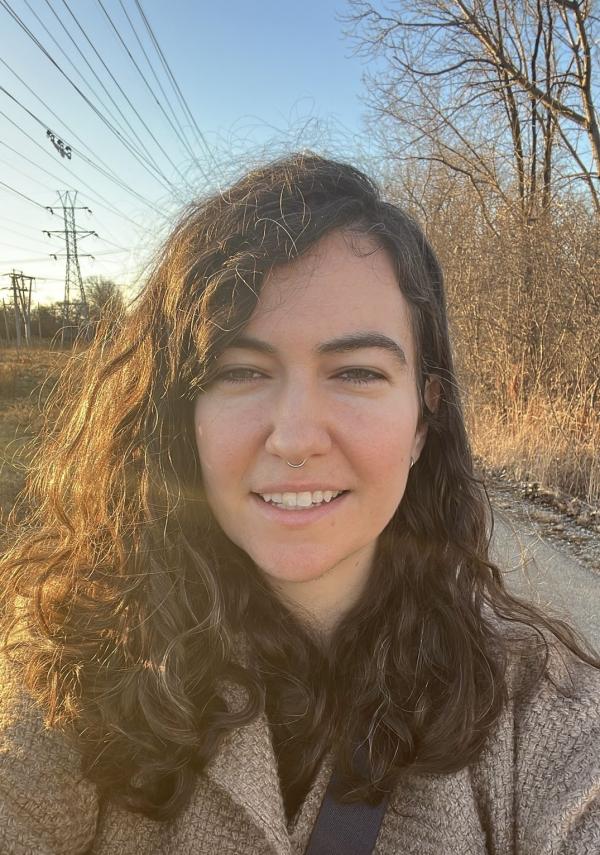
It doesn’t sound nearly as poetic when I try to recount Louis Armstrong’s famous line about authentic self-expression after I return home from the week-long Creative Writing Roundtable hosted by the Wabash Center for a group of fourteen professors, preachers, and researchers. We spent the time deeply immersed in ourselves and each other—learning, chatting, eating, writing, and revising at a utopian biophilic retreat house in the Chattahoochee Hills of Georgia. Donald Quist, one of the writing mentors, had played us a recording of Louis Armstrong in a morning session on Style and Voice, sharing this line—“You Blows Who You Is”—while encouraging us to lean into narrating our visions of how the world works. The intimacy of being coached on the genre of creative nonfiction is inescapable; you are trying to hone skills in writing, “true stories well told,” and this means narrating the moments of your own life that have made the biggest impressions on you.[i]“You blows who you is” becomes “blow yourself” in my partial recall of the feeling the phrase evoked in me. I can’t remember the AAVE grammar structure of Armstrong’s words, and my translation sounds crude, sexually suggestive, maybe even like an insult. I laugh as the words come out of my mouth, tired from the plane ride back home after an intensive week. My spouse’s eyes widen with a smile as they turn their head. Their eyes say, “Oh, really!?”My foible transgresses a structure of dialect and a politics of sexual respectability; in this way, it is sort of like jazz, playing with form and exploring beyond the confines of racialized purity culture. This is not to say that my rendering conveys anything close to Armstrong’s original wisdom. But it does demonstrate a real-time example of how the same universal idea can pass through the fleshly vectors of another tongue, showing more ways of being while resonating with something much larger than a single speaker. This mistake made me reflect on some of the most powerful takeaways from a week of mentorship that helped a room full of academics recover their voices from the confines of academic writing in vulnerable, poignant, messy, and creative ways. I can only imagine how these skills may bleed into our classrooms, encouraging our students to find their own air flow and creative voice as we model more fully finding our own.Louis Armstrong’s sentence helped me clarify my own struggles trying to complete my PhD a couple years back. My own style of swirling storytelling that wanted to draw connections between anything and everything crashed against the dialect of linear, argumentative, academic writing. I frequently felt an intensifying squeeze in my throat being in conversation with Roman Catholicism, especially as someone who started identifying as queer and non-binary during my degree program. Writing against can sometimes reinforce the walls you’re trying to break down: women, be silent + same-sex attraction is a sin + the trans and non-binary people you are attracted to don’t exist + you don’t exist became an equation that loudly sent the message: be silent, sinner, you don’t exist. Adopting an academic voice to gain legitimacy was tempting, but something that I seemed unable to measure up to. I felt like I was shooting arrows in the dark, trying to hit an undefined target that others in my field seemed to perceive without the same struggles. During this week, I wrote about my partner’s gender transition, the magic of writing words that spark through the body, as well as witnessing a conflict with counter-protestors at a pride parade in San Salvador. The writing workshop helped restore my trust in my own voice, and gave me confidence to speak, even when such words might challenge the very norms of legitimacy we must navigate in the church, academy, and society.One of the great joys of this workshop was getting an intimate window into the air streams of other participants, seeing their creative writing voices emerge through vulnerable storytelling, hilarious observation, and heart wrenching reflection on themes that touched universal experience through the particular. Birth, death, grief, loss, illness, family feuds, leaving home, returning to a life that was once familiar, now different were themes that resonated deeply with me. One of the first things I wrote down from the workshop was Sophfronia Scott’s invitation to play with words through this creative writing genre. My colleagues shared their life wisdom through playful experiments of the written and spoken word, all the while encouraging each other to grow in our own unique forms of self-expression. On the final night when Lynne Westfield, Stephen Ray, and Rachel Mills joined us to hear people’s work in a final performance set up, we got to see each other blow who we are.I think of one time a few months ago when my bandmates were laughing about a scene from the movie I Heart Huckabees. One of the main characters repeats over and over, “How can I NOT be myself?” in an existential breakdown—or breakthrough. In academic writing, in the classroom, in our creative writing, it is important to remember that even if we are trying to sound different than our souls, or maneuver our air through instruments not designed for us, there’s a way that we actually have no choice but to blow ourselves, so to speak, if we are to attempt to show up and create in this world at all. This goes for our students as well: though we may give them formats, resources, or frameworks, when the deadline hits, we receive the resounding echoes of someone searching for themselves through the avenues we have made available. After a week with the Wabash Center, I am encouraged to open those avenues wide, for myself and my students, to make space to hear who we really are amidst the music of life’s swells and silences.Notes & Bibliography [i] Lee Gutkind, You Can’t Make This Stuff Up (Boston, MA: Da Capo/Lifelong Books, 2012), pp. 60.

On March 1st, the Wabash Center released a new volume of its Journal on Teaching centered on the theme of "Changing Scholarship." The issue features a multi-media essay called, "The Mother of Teaching, Ms. Earlene Watkins: A Real Mother for Ya," by Dr. Ralph Basui Watkins. The piece explores how Watkins' mother modeled for him a transformative, holistic approach to teaching. Accompanying the essay is a playlist on Spotify: Click Here to Listen. Below, Watkins walks us through his song choices and how he cultivated the soundtrack for his recent contribution to JoT.
2022 JoT Writing Colloquy: January 9-12, 2022 (Digital Format) Re-Booting Journal on Teaching! The Wabash Center is rebooting the Journal on Teaching (JoT) into a multimodal academic journal which will boast a collaborative peer review process. The collaborative peer-review process incorporates the JoT Writing Colloquy and is intended to strengthen writers and writing about teaching and the teaching life. In 2022, JoT will publish two volumes. We anticipate accepting submissions of scholarly articles, fiction, non-fiction, short-story, poetry, op-ed, etc. - based upon our volume theme. For a full description of the collaborative peer-review process, please see Journal on Teaching section of our website HERE. Description of JoT Writing Colloquy The JoT Writing Colloquy, scheduled for January 9-12, 2022 will be our debut for creating a cohort of writers for a particular volume. Participants in this first colloquy will be encouraged to submit articles for the fall 2022 issue entitled “Changing Scholarship.” The time in the January 9-12, 2022 writing colloquy will be a combination of plenary sessions, small group interactions, individual instruction and workshopping of in-process writing. All participants are asked to submit an article to the fall 2022 issue entitled “Changing Scholarship” on or before August 1, 2022. Participants in the JoT Writing Colloquy will receive a stipend in the amount of $1500 plus up to ten hours of writing coaching before article submission or by July 30, 2022. Goals To refine the emerging collaborative peer review process for JoT; To create conversation space for scholars who yearn for collaboration as they write to share their knowledges or personal experiences; To develop voices of scholars for more authentic expression of their knowledges and voices; To expand the genre of scholarly writing into multimodal expressions; To support writers as they play with accessible writing genres for a broader audience through creative nonfiction, blogs, op-eds, and memoir, etc.; To liberate the scholarly voice for access by a wider audience in society To unlearn the worst academic habits, free the creative spirit, structure your work more effectively, and speak on the page in a truer, more engaging voice. Leadership Team Sophfronia Scott – Director of the MFA program at Alma College (Sophfronia.com) Donald Quist – Program Director, MFA in Creative Writing, Vermont College of Fine Arts (https://vcfa.edu/faculty-staff/donald-quist/) Instructions for Leaders Dates of Sessions (via Zoom) Sunday, January 9 3:00 PM to 6:30PM Eastern Monday, January 10 10:00AM to 9:30 PM Eastern Tuesday, January 11 10:00AM to 9:30 PM Eastern Wednesday, January 12 10:00AM to 1:00 PM Eastern For More Information, Please Contact: Nancy Lynne Westfield, Ph.D. Director Wabash Center westfiel@wabash.edu Invited Participants Anne Carter Walker, Phillips Theological Seminary William Yoo, Columbia Theological Seminary Sarah Farmer, Indiana Wesleyan University Steed Davidson, McCormick Theological Seminary Joseph Tucker Edmonds, Indiana University-Purdue University Indianapolis Rich Voelz, Union Presbyterian Seminary Ralph Watkins, Columbia Theological Seminary Brian Bantum, Garret-Evangelical Theological Seminary Debra Mumford, Louisville Presbyterian Theological Seminary Courtney Bryant, Manhattan College Parkway Monique Moultrie,Georgia State University Rodolfo Nolasco Jr.,Garrett-Evangelical Theological Seminary Lynne Westfield, Wabash Center for Teaching and Learning in Theology and Religion