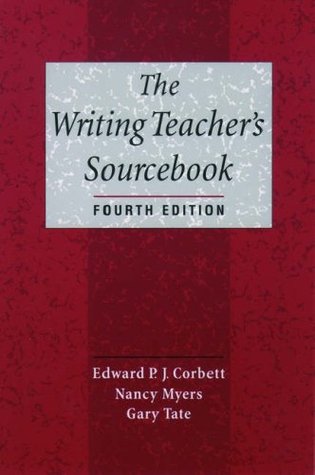
- Author
- Corbett, Edward P.J., Nancy Myers, and Gary Tate
- Publisher
- Oxford University Press, New York
- ISBN
- 9780195123777
- Table of Contents
-
Preface
Part 1 The Contexts Of Teaching
ch. 1 Perspectives
Four Philosophies of Composition (Richard Fulkerson)
Rhetoric and Ideology in the Writing Class (James Berlin)
Rhetoric, the Enabling Discipline (Edward P.J. Corbett)
The Problematic of Experience: Redefining Critical Work in Ethnography and Pedagogy (Min-Zhan Lu and Bruce Horner)
ch. 2 Teachers
Embracing Contraries in the Teaching Process (Peter Elbow)
The Listening Eye: Reflections on the Writing Conference (Donald M. Murray)
Reading Students, Reading Ourselves: Revising the Teacher's Role in the Writing Class (Lad Tobin)
Ethical Issues Raised by Students' Personal Writing (Dan Morgan)
ch. 3 Students
Diving In: An Introduction to Basic Writing (Mina P. Shaughnessy)
Strangers in Academia: The Experiences of Faculty and ESL Students Across the Curriculum (Vivian Zamel)
The Persistence of Difference in Networked Classrooms: Non-Negotiable Difference and the African American Student Body (Todd Taylor)
ch. 4 Locations
The Risky Business of Group Work (Hephzibah Roskelly)
The Rhetoric of Technology and the Electronic Writing Class (Gail E. Hawisher and Cynthia L. Selfe)
Talking in the Middle: Why Writers Need Writing Tutors (Muriel Harris)
ch. 5 Approaches
Redefining the Legacy of Mina Shaughnessy: A Critique of the Politics of Linguistic Innocence (Min-Zhan Lu)
Conversations with Texts: Reading in the Teaching of Composition (Mariolina Salvatori)
A Place for Literature in Freshman Composition, Gary Tate Experience as Evidence: Teaching Students to Write Honestly and Knowledgeably about Public Issues (Carolyn Matalene)
Part 2 The Teaching Of Writing
ch. 6 Assigning
Remedial Writing Courses: A Critique and a Proposal (Mike Rose)
A Comment and Response on "Remedial Writing Courses" (David Peck, Elizabeth Hoffman, and Mike Rose)
The "Research Paper" in the Writing Course: A Non-Form of Writing (Richard L. Larson)
Teaching Argument: A Theory of Types (Jeanne Fahnestock and Marie Secor) Beyond Argument in Feminist Composition (Catherine E. Lamb)
ch. 7 Responding And Assessing
The Components of Written Response: A Practical Synthesis of Current Views (Brooke K. Horvath)
The Study of Error (David Bartholomae)
Learning How to Teach: A Progress Report (Jerry Farber)
ch. 8 Composing And Revising
Between the Drafts (Nancy Sommers)
Writing and Knowing: Toward Redefining the Writing Process (James A. Reither)
Collaboration and the Pedagogy of Disclosure (David Bleich)
ch. 9 Audiences
The Meanings of "Audience" (Douglas B. Park)
Audience Addressed/Audience Invoked: The Role of Audience in Composition Theory and Pedagogy (Lisa Ede and Andrea Lunsford)
Closing My Eyes as I Speak: An Argument for Ignoring Audience (Peter Elbow)
ch. 10 Styles
Static Abstractions and Composition (Robert J. Connors)
Teaching Style: A Possible Anatomy (Winston Weathers)
Revitalizing Style: Toward a New Theory and Pedagogy (Elizabeth D. Rankin)
Use Definite, Specific, Concrete Language (Richard Ohmann)
Now in its fourth edition, this widely acclaimed sourcebook remains one of the most up-to-date and inclusive works on teaching writing today. In this edition, the editors have added twelve new essays and deleted several from the previous edition, making the content as timely as possible. Emphasizing the importance of adapting good pedagogy to multiple environments and audiences, this unique collection features some of the most intellectually exciting and pedagogically sound articles in the field. The Writing Teacher's Sourcebook, 4/e, is the definitive resource for beginning and experienced teachers alike. (From the Publisher)