Home » Resources » Scholarship on Teaching » The Plugged-In Professor: Tips and Techniques For Teaching With Social Media
Scholarship
March 29, 2017
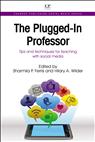
The Plugged-In Professor: Tips and Techniques For Teaching With Social Media
- Author
- Ferris, Sharmila Pixy; and Wilder, Hilary Anne, eds.
- Publisher
- Chandos Publishing, Oxford
- ISBN
- 9781843346944
- Table of Contents
-
List of tables and figure
List of abbreviations
Acknowledgments Preface
About the editors
About the contributors
Part 1: Writing, Research, and Information Fluency
ch. 1 Writing for Wikipedia: co-constructing knowledge and writing for a public audience (Lori L. Britt)
ch. 2 Organizing with Pinterest and Delicious (Melanie L. Bufington)
ch. 3 Students' inadequate exposure to learning technology: overcoming the pedagogical challenge using wikis (Linzi J. Kemp)
ch. 4 Collecting and analyzing primary sources (Lisa M. Lane)
ch. 5 Unraveling the research process: social bookmarking and collaborative learning (Caroline Sinkinson, and Alison Hicks)
Part 2: Communication and Collaboration
ch. 6 Using Wimba Voice Board to facilitate foreign language conversation courses (Silvia U. Baage)
ch. 7 Web conferencing and peer feedback (Kevin Garrison)
ch. 8 Learning through YouTube (J. Jacob Jenkins, and Patrick J. Dillon)
ch. 9 Wiki-workshopping: using Wikispaces for peer writing workshops (Hans C. Schmidt)
ch. 10 Using persistent wikis as a pedagogical resource (Evan D. Bradley)
ch. 11 Social media and public speaking: student-produced multimedia informative presentations (Paul E. Mabrey III, and Juhong "Christie" Liu)
ch. 12 Collaborative presentations using Google Docs (Michael S. Mills)
ch. 13 Cooperative study blog (Amanda Evelyn Waldo)
Part 3: Critical Thinking and Creativity
ch. 14 Using Facebook to apply social learning theory (Michelle Kilbum)
ch. 15 Technology as a tool to develop problem-solving skills in general chemistry (Madhu Mahalingam, and Elisabeth Morlino)
ch. 16 Communicating experimental learning through an online portfolio in Tumblr (Aaron J. Moore)
ch. 17 The Biology Taboo Wiktionary: a tool for improving student comprehension of key terminology in introductory biology courses (Jeffrey T. Olimpo, and Patricia A. Shields)
ch. 18 Mobile digital storytelling in the second language classroom (Apostolos Koutropoulos, David Hattem, and Ronda Zelezny-Green)
ch. 19 Creating a video dialogue with streaming video clips (Sandra L. Miller)
ch. 20 Remix as an educational activity (Christopher Shamburg, Kate Mazzetti-Shamburg, and John Shamburg)
ch. 21 Using Twitter to assist students in writing a concise nut graph (Tia C. M. Tyree)
Part 4: Integrative Learning
ch. 22 Using simulation, video sharing, and discussion threads for practice-based skills (Lindsay B. Curtin, and Laura A. Finn)
ch. 23 Using Facebook Mobile as a tool to create a virtual learning community for pre-service teachers (Erkkie Haipinge)
ch. 24 Using social software tools to facilitate peer e-mentoring and self-reflection among students on practicum
ch. 25 Using opinion leaders on Twitter to amplify PR and marketing messages (Sarah H. VanSlette)
Index
Click Here for Book Review
Abstract: Provides a cutting-edge resource for academics and practitioners in effective ways of reaching today’s students through the use of their favorite tool, social media
Outlines a range of strategies taking advantage of the unique learning styles and habits of net generation learners
Exposes students to ways in which these technologies can be used in their professional and personal lives
Reinforces students' growth as productive, reflective, and involved twenty-first century citizens
New technologies are transforming the way students work. The Plugged in Professor provides a timely and exceptional resource for using social media and other new technologies to help college students meet both general and discipline-specific objectives. The title covers techniques built around well-known social networking technologies, as well as other emerging technologies such as mobile phone and tablet apps. With a practical focus and reader-friendly format, this book shows educators how to apply techniques in each technology, and includes clear student learning objectives, step-by-step directions, observations and advice, and supplemental readings and resources. Twenty-five chapters by leading contributors cover key aspects of new technologies in education, in four parts: Writing, research and information fluency; Communication and collaboration; Critical thinking and creativity; and Integrative learning.
Readership: Educators in higher education, academics, teachers, and all those who wish to develop their techniques to more effectively reach the Net Generation will find this book useful. (From the Publisher)
Abstract: Provides a cutting-edge resource for academics and practitioners in effective ways of reaching today’s students through the use of their favorite tool, social media
Outlines a range of strategies taking advantage of the unique learning styles and habits of net generation learners
Exposes students to ways in which these technologies can be used in their professional and personal lives
Reinforces students' growth as productive, reflective, and involved twenty-first century citizens
New technologies are transforming the way students work. The Plugged in Professor provides a timely and exceptional resource for using social media and other new technologies to help college students meet both general and discipline-specific objectives. The title covers techniques built around well-known social networking technologies, as well as other emerging technologies such as mobile phone and tablet apps. With a practical focus and reader-friendly format, this book shows educators how to apply techniques in each technology, and includes clear student learning objectives, step-by-step directions, observations and advice, and supplemental readings and resources. Twenty-five chapters by leading contributors cover key aspects of new technologies in education, in four parts: Writing, research and information fluency; Communication and collaboration; Critical thinking and creativity; and Integrative learning.
Readership: Educators in higher education, academics, teachers, and all those who wish to develop their techniques to more effectively reach the Net Generation will find this book useful. (From the Publisher)