Home » Resources » Scholarship on Teaching » Teaching about Race and Racism in the College Classroom: Notes from a White Professor
Scholarship
February 10, 2020
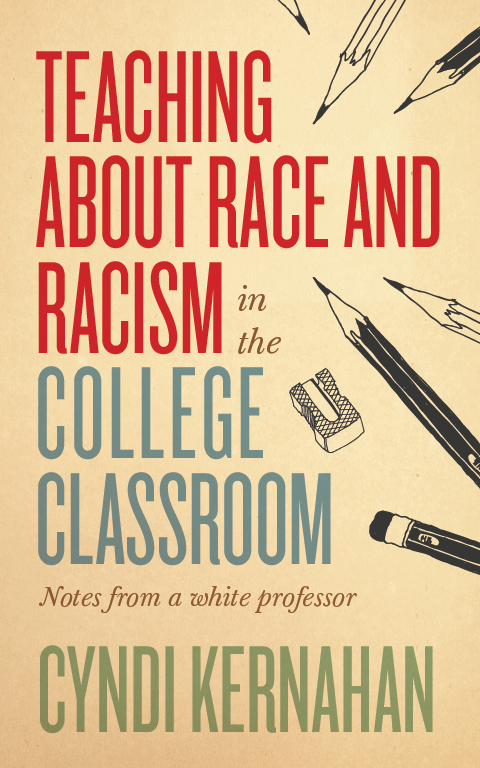
Teaching about Race and Racism in the College Classroom: Notes from a White Professor
- Author
- Kernahan, Cynci
- Publisher
- West Virginia University Press
- ISBN
- 9781949199246
- Table of Contents
-
Acknowledgements
Introduction: Why Is It So Hard?
Ch 1. Naïve Understandings: How We Differ from Our Students
Ch 2. Struggling Students: How and Why Resistance Happens
Ch 3. Getting Yourself Together: Developing a Secure Teacher Identity
Ch 4. Belonging in the Classroom: Creating Moments of Positivity and Connection
Ch 5. Expectations: From Ground Rules to Growth Mindsets
Ch 6. Course Content: Problems and Solutions Conclusion and Summary of Ideas
Appendix: Suggested Reading for Historical Understanding
References
Index
Teaching about race and racism can be a difficult business. Students and instructors alike often struggle with strong emotions, and many people have robust preexisting beliefs about race. At the same time, this is a moment that demands a clear understanding of racism. It is important for students to learn how we got here and how racism is more than just individual acts of meanness. Students also need to understand that colorblindness is not an effective anti-racism strategy.
In this book, Cyndi Kernahan argues that you can be honest and unflinching in your teaching about racism while also providing a compassionate learning environment that allows for mistakes and avoids shaming students. She provides evidence for how learning works with respect to race and racism along with practical teaching strategies rooted in that evidence to help instructors feel more confident. She also differentiates between how white students and students of color are likely to experience the classroom, helping instructors provide a more effective learning experience for all students. (From the Publisher)
In this book, Cyndi Kernahan argues that you can be honest and unflinching in your teaching about racism while also providing a compassionate learning environment that allows for mistakes and avoids shaming students. She provides evidence for how learning works with respect to race and racism along with practical teaching strategies rooted in that evidence to help instructors feel more confident. She also differentiates between how white students and students of color are likely to experience the classroom, helping instructors provide a more effective learning experience for all students. (From the Publisher)