Home » Resources » Scholarship on Teaching » Leading Academic Change: Vision, Strategy, Transformation
Scholarship
October 10, 2018
Leading Academic Change: Vision, Strategy, Transformation
- Author
- Maimon, Elaine P.
- Publisher
- Stylus Publishing, Llc.
- ISBN
- 9781620365687
- Table of Contents
-
Foreword—Carol Geary Schneider
Preface
Acknowledgments
Ch 1. Transformation in Higher Education
Ch 2. A Vision Without a Strategy is a Fantasy
Ch 3. Braiding Together Equity and Quality
Ch 4. Across the Curriculum and Across the Campus: The Infusion Model
Ch 5. Exploding the Hierarchical Fallacy: The Significance of Foundation-Level Courses
Ch 6. Rethinking Remediation
Ch 7. Seamless Pathways From the Community Colleges to University Graduation
Ch 8. A Structured Four-Year Undergraduate Program
Ch 9. Putting Students First Is the Best Business Plan
Ch 10. Liberal Education and the Search for Truth in a Post-Truth World
Appendix
About the Author
References
Click Here for Book Review
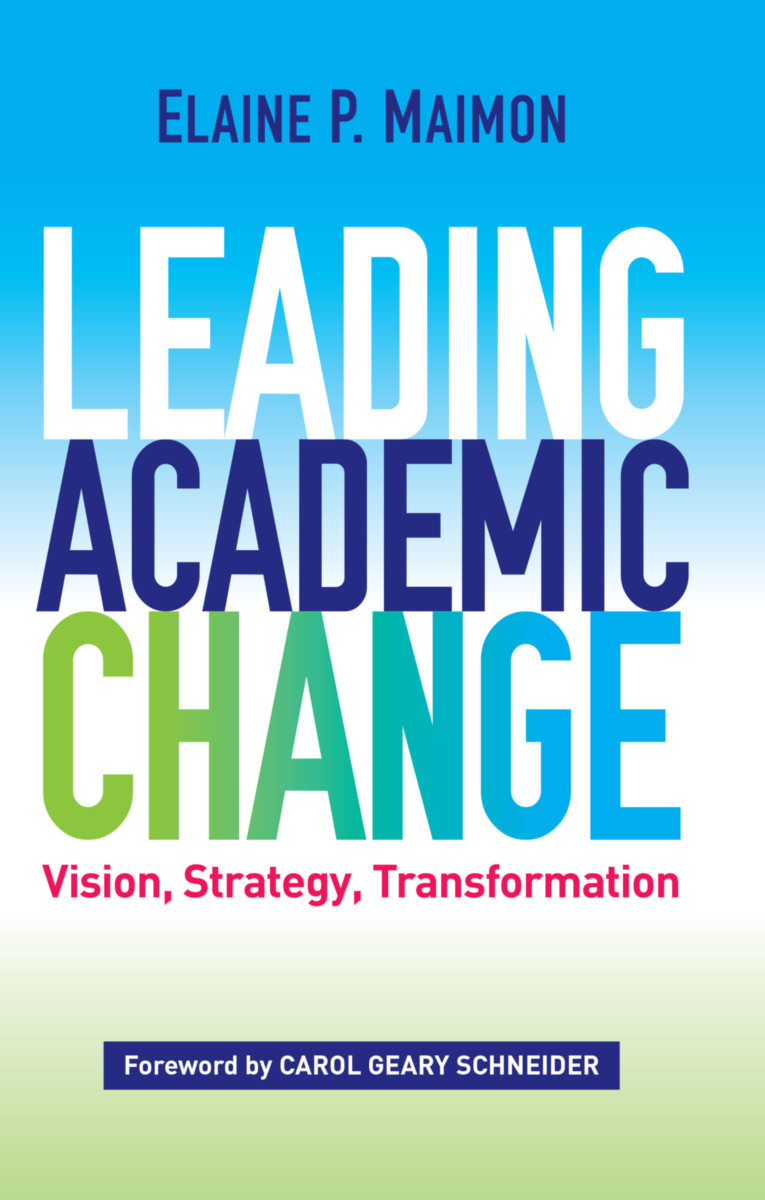
Written by a sitting college president who has presided over transformative change at a state university, this book takes on the big questions and issues of change and change management, what needs to be done and how to do it. Writing in a highly accessible style, the author recommends changes for higher education such as the reallocation of resources to support full-time faculty members in foundation-level courses, navigable pathways from community college to the university, infusion rather than proliferation of courses, and the role of state universities in countering the disappearance of the middle class. The book describes how these changes can be made, as well as why we must make them if our society is to thrive in the twenty-first century.
Written by a sitting college president who has presided over transformative change at a state university, this book takes on the big questions and issues of change and change management, what needs to be done and how to do it. Writing in a highly accessible style, the author recommends changes for higher education such as the reallocation of resources to support full-time faculty members in foundation-level courses, navigable pathways from community college to the university, infusion rather than proliferation of courses, and the role of state universities in countering the disappearance of the middle class. The book describes how these changes can be made, as well as why we must make them if our society is to thrive in the twenty-first century.