Home » Resources » Scholarship on Teaching » Journal Keeping: How to Use Reflective Writing for Learning, Teaching, Professional Insight, and Positive Change
Scholarship
March 29, 2017
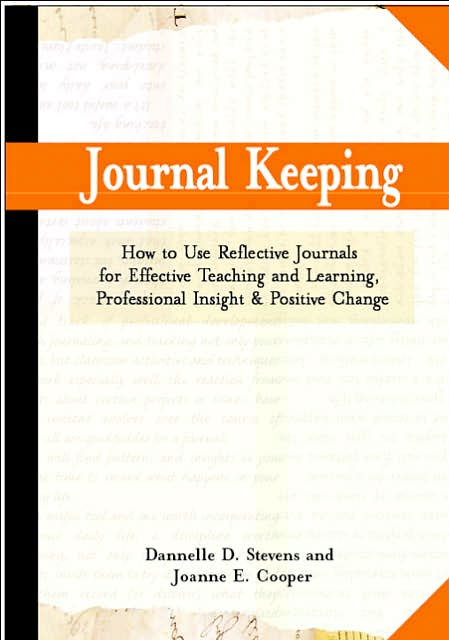
Journal Keeping: How to Use Reflective Writing for Learning, Teaching, Professional Insight, and Positive Change
- Author
- Dannelle D. Stevens and Joanne E. Cooper
- Publisher
- Stylus Publishing, LLC., Sterling, VA
- ISBN
- 9781579222161
- Table of Contents
-
Tables and Figures
Acknowledgements
Preface
Part One
Journal Writing and Its Theoretical Foundation
ch. 1 Journal Writing: Definition and Rationale
ch. 2 Reflection and Learning from Experience
ch. 3 Reflection and Adult Development Theory
Part Two
Using Journals in Classrooms and Professional Life
ch. 4 Introducing and Structuring Classroom Journal Writing
ch. 5 Classroom Journal-Writing Techniques
ch. 6 Grading Classroom Journal Writing
ch. 7 Journal Writing in Professional Life
ch. 8 Journal Writing in the Computer Age
Part Three
A Collection of Case Studies
Teaching with Journals and Keeping Journals in Professional Life
ch. 9 Case Studies: Teaching With Journals
ch. 10 Case Studies: Journal Keeping in Professional Life
Afterword
Appendices
A. Journal Writing Techniques
B. Contributor Contact Information
References
Index
** By the authors of the acclaimed Introduction to Rubrics
** Major growth of interest in keeping journals or diaries for personal reflection and growth; and as a teaching tool
** Will appeal to college faculty, administrators and teachers
One of the most powerful ways to learn, reflect and make sense of our lives is through journal keeping.
This book presents the potential uses and benefits of journals for personal and professional development-particularly for those in academic life; and demonstrates journals' potential to foster college students' learning, fluency and voice, and creative thinking.
In professional life, a journal helps to organize, prioritize and address the many expectations of a faculty member's or administrator's roles. Journals are effective for developing time management skills, building problem-solving skills, fostering insight, and decreasing stress.
Both writing and rereading journal entries allow the journal keeper to document thinking; to track changes and review observations; and to examine assumptions and so gain fresh perspectives and insights over past events.
The authors present the background to help readers make an informed decision about the value of journals and to determine whether journals will fit appropriately with their teaching objectives or help manage their personal and professional lives. They offer insights and advice on selecting the format or formats and techniques most appropriate for the reader's purposes. (From the Publisher)
** Major growth of interest in keeping journals or diaries for personal reflection and growth; and as a teaching tool
** Will appeal to college faculty, administrators and teachers
One of the most powerful ways to learn, reflect and make sense of our lives is through journal keeping.
This book presents the potential uses and benefits of journals for personal and professional development-particularly for those in academic life; and demonstrates journals' potential to foster college students' learning, fluency and voice, and creative thinking.
In professional life, a journal helps to organize, prioritize and address the many expectations of a faculty member's or administrator's roles. Journals are effective for developing time management skills, building problem-solving skills, fostering insight, and decreasing stress.
Both writing and rereading journal entries allow the journal keeper to document thinking; to track changes and review observations; and to examine assumptions and so gain fresh perspectives and insights over past events.
The authors present the background to help readers make an informed decision about the value of journals and to determine whether journals will fit appropriately with their teaching objectives or help manage their personal and professional lives. They offer insights and advice on selecting the format or formats and techniques most appropriate for the reader's purposes. (From the Publisher)