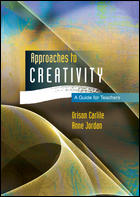
- Author
- Carlile, Orison; and Jordan, Anne
- Publisher
- Open University Press, Philadelphia, PA
- ISBN
- 9780335243761
- Table of Contents
-
Acknowledgements
ch. 1 Introduction
ch. 2 Constructs of creativity
ch. 3 Genealogy of creativity
ch. 4 Creativity in a social context
ch. 5 Creativity and the environment
ch. 6 Creativity and culture
ch. 7 Creativity and technology
ch. 8 Creative curriculum planning
ch. 9 Assessing creativity
ch. 10 Collaborative creativity
ch. 11 Creativity and the domains
ch. 12 Talent, expert performance and creativity
ch. 13 Creativity, innovation and entrepreneurship
ch. 14 The creative teacher
ch. 15 Managing creativity
ch. 16 Tools for creativity
ch. 17 The creative learner
ch. 18 Creativity and cognition
ch. 19 Creativity as expression
ch. 20 Developmental theories and creativity
Author Index
Subject Index
This book offers an accessible introduction and a comprehensive guide to a range of ideas on creativity in education. The book provides an overview of the major theories related to creativity and explores the implications for policy and practice.
The popular topic of creativity has given rise to a large number of theoretical positions, sometimes contradictory or contested. This book clarifies and organises these approaches so that teachers understand where particular pedagogical and curricular practices originate and can develop them coherently. Topics covered include:
Creativity in a social context
Creativity and technology
Creativity and curriculum planning
Assessment and creativity
Group creativity
Managing creativity
Tools of creativity
The creative learner
Creativity and cognition
Creativity as expression
Approaches to Creativity is an invaluable resource for those who wish to reflect on creativity and explore and engage in the modern discourse of education. It will be of value in teacher education, postgraduate studies, curriculum design and administration. (From the Publisher)
The popular topic of creativity has given rise to a large number of theoretical positions, sometimes contradictory or contested. This book clarifies and organises these approaches so that teachers understand where particular pedagogical and curricular practices originate and can develop them coherently. Topics covered include:
Creativity in a social context
Creativity and technology
Creativity and curriculum planning
Assessment and creativity
Group creativity
Managing creativity
Tools of creativity
The creative learner
Creativity and cognition
Creativity as expression
Approaches to Creativity is an invaluable resource for those who wish to reflect on creativity and explore and engage in the modern discourse of education. It will be of value in teacher education, postgraduate studies, curriculum design and administration. (From the Publisher)