Home » Resources » Scholarship on Teaching » about Museums, Culture, and Justice to Explore in Your Classroom
Scholarship
June 10, 2021
about Museums, Culture, and Justice to Explore in Your Classroom
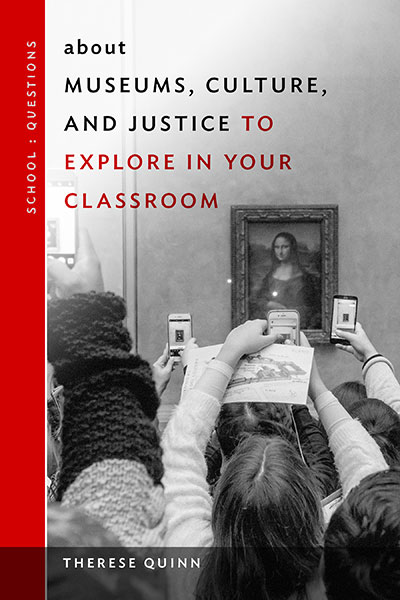
- Author
- Quinn, Therese
- Publisher
- Teachers College Press
- ISBN
- 9780807763438
- Book Review Link
- https://serials.atla.com/wabashcenter/article/view/2912/3662
- Table of Contents
-
Singing in Dark Times: A Series Introduction
Foreword‚ÄÉ
1.‚ÄÉIntroduction: Are Museums for Everyone? ‚ÄÉ
Museums Delight and Surprise‚ÄÉ
Museums Also Disappoint‚ÄÉ
Museums Want Us—Do We Want Them? 
Museums and Cultural Justice‚ÄÉ
Museums and Social Movements‚ÄÉ
Teaching Museums‚ÄÉ
Learning Museums—Chapter Topics
2.‚ÄÉWho Made the First Museum? ‚ÄÉ
A Woman Made the First Museum‚ÄÉ
Origin Stories Reveal and Create Value‚ÄÉ
Looking Back to Look Forward‚ÄÉ
3.‚ÄÉWhy Do Museums Collect?‚ÄÉ
A Collection in Every Classroom‚ÄÉ
Collections, Science, and the Privilege of Curiosity‚ÄÉ
Sciences and Other Ways of Knowing‚ÄÉ
Museums for the Future‚ÄÉ
Our Full View‚ÄÉ
4.‚ÄÉWhat Have We Learned from the Past and About the Present That Can Help Us Shape the Future? ‚ÄÉ
Museum Revolutions‚ÄÉ
Return Wakanda’s Artifacts! 
Decolonize Is a Verb‚ÄÉ
5.‚ÄÉHow Can Museums Welcome All Bodies? ‚ÄÉ
Access and Experience‚ÄÉ
Designing to Include ‚ÄÉ
Nothing About Us Without Us!‚ÄÉ
Creative Access‚ÄÉ
6.‚ÄÉHow and When Should Museums Respond to Everyday Events? ‚ÄÉ
Museums Are Not Neutral‚ÄÉ
Collecting and Archiving as Action‚ÄÉ
Museums Taking Sides‚ÄÉ
Exhibits as Agents of Change ‚ÄÉ
Rethinking Museums‚ÄÉ
7.‚ÄÉWhat Is It Like to Work in a Museum? ‚ÄÉ
People Make Museums‚ÄÉ
Museum Work Is Work‚ÄÉ
What Makes a Good Workplace?
8. How Can Museums Celebrate LGBTQ People’s Lives and Contributions?  
Holding Hands at the Museum‚ÄÉ
Centering Queer Lives ‚ÄÉ
9.‚ÄÉWhat Can Museum Practices Teach Us About Collaborating and Sharing Authority?‚ÄÉ
Becoming Leader-Full ‚ÄÉ
Collaborators and Co-Curators‚ÄÉ
Resist Curation ‚ÄÉ
Making Exhibits to Build Community‚ÄÉ
10.‚ÄÉWhy Do We Pay to Visit Museums?‚ÄÉ
Museums Belong to Us‚ÄÉ
The Burden of Fees‚ÄÉ
Free Museums‚ÄÉ
Conclusion‚ÄÉ
Index‚ÄÉ
About the Author‚ÄÉ
Museums are public resources that can offer rich extensions to classroom educational experiences, from tours through botanical gardens to searching for family records in the archives of a local historical society. With clarity and a touch of humor, Quinn presents ideas and examples of ways that teachers can use museums to support student exploration while also teaching for social justice. Topics include disability and welcoming all bodies, celebrating queer people’s lives and histories, settler colonialism and decolonization, fair workplaces, Indigenous knowledge, and much more. This practical resource invites classroom teachers to rethink how and why they are bringing students to museums and suggests projects for creating rich museum-based learning opportunities across an array of subject areas. (From the Publisher)