Attention as Method: Everyday Art, Everyday Life

Most days, I no longer think of “studio time” as a separate block on the calendar. The work has spread into everything else. I might be rinsing dishes, arranging pens that have finally unclogged, or making notes about the day’s errands when a line or pattern catches my attention. Art no longer begins with a blank page; it begins wherever I happen to be paying attention.
2025 Mini #17, 2.5x3.5 in., ink on paper
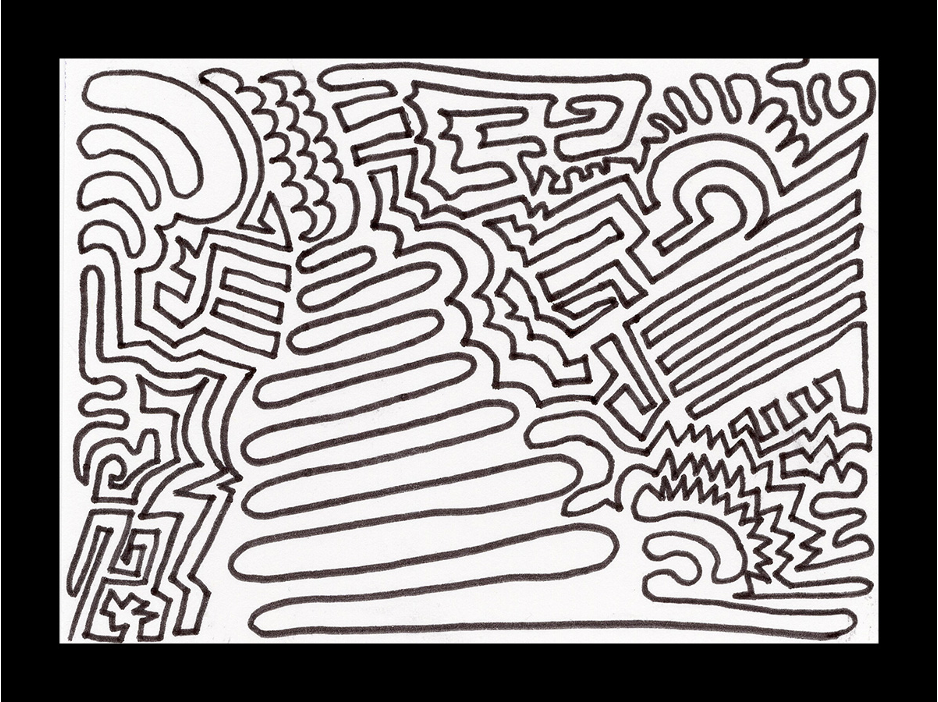
That recognition has altered my perspective on creative practice. Drawing, cooking, walking, and cleaning all rely on the same capacities: observation, repetition, and adjustment. Each activity requires focus within its constraints. A 2½ × 3½-inch drawing forces choices about scale and composition; a dinner deadline forces decisions about timing and sequence. What unites them is method—a disciplined, almost research-like approach to noticing how perception works in real-time.
When I was teaching, I used to describe scholarship as the craft of paying sustained attention to ordinary things until they disclose more than we expected. I find myself doing that again, only now the medium is ink instead of text. The page becomes a field site. I observe, record, and revise. The variables are pressure, speed, and rhythm rather than citation, argument, and evidence, but the logic is the same: careful description produces understanding.
Constraint is part of that method. Limited tools, limited time, limited space—these boundaries clarify what matters. My favorite pens clogged months ago, so I switched to a set of colored pens I’ve hardly used. The change altered everything about my process: the rhythm of the line, the speed of line-making, even the way I breathe while drawing. Limits become data. They show how attention behaves when conditions shift.
2025 Mini #19, 2.5x3.5 in., ink on paper
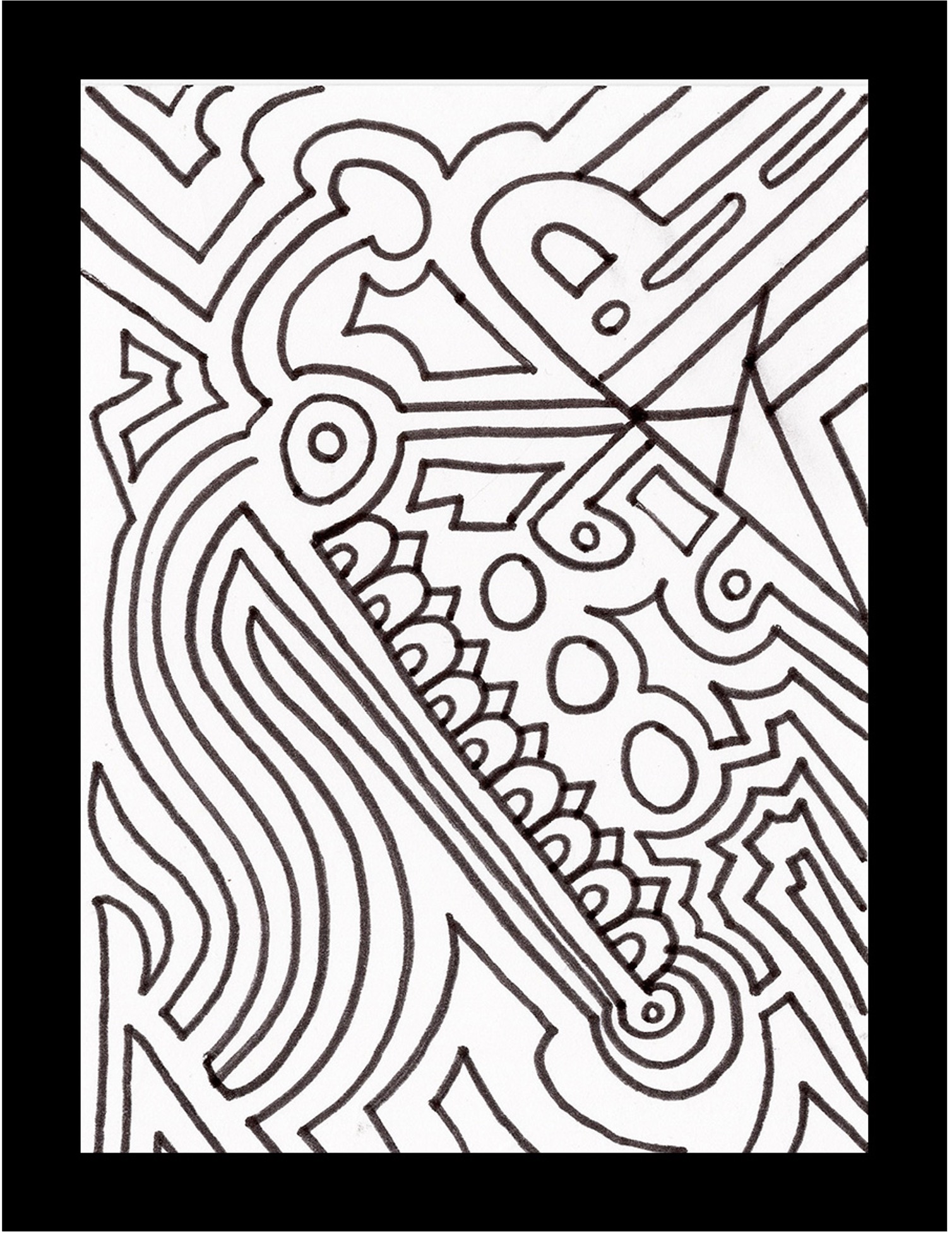
What I learn on paper transfers elsewhere. The pause before overworking a drawing becomes the pause before overexplaining or overreacting in conversation. The ability to stop, look, and reset—to acknowledge that I’ve gone too far or not far enough—is the same skill across contexts. Art, in that sense, functions as a training ground for perception.
There’s nothing mysterious about this. It’s simply the repetition of noticing. The more I repeat, the more subtle the distinctions become: between one kind of line and another, between habit and genuine seeing. Practice sharpens the instrument that makes both art and life intelligible—the mind paying attention to its own process.
2025 Mini #20, 2.5x3.5 in., ink on paper
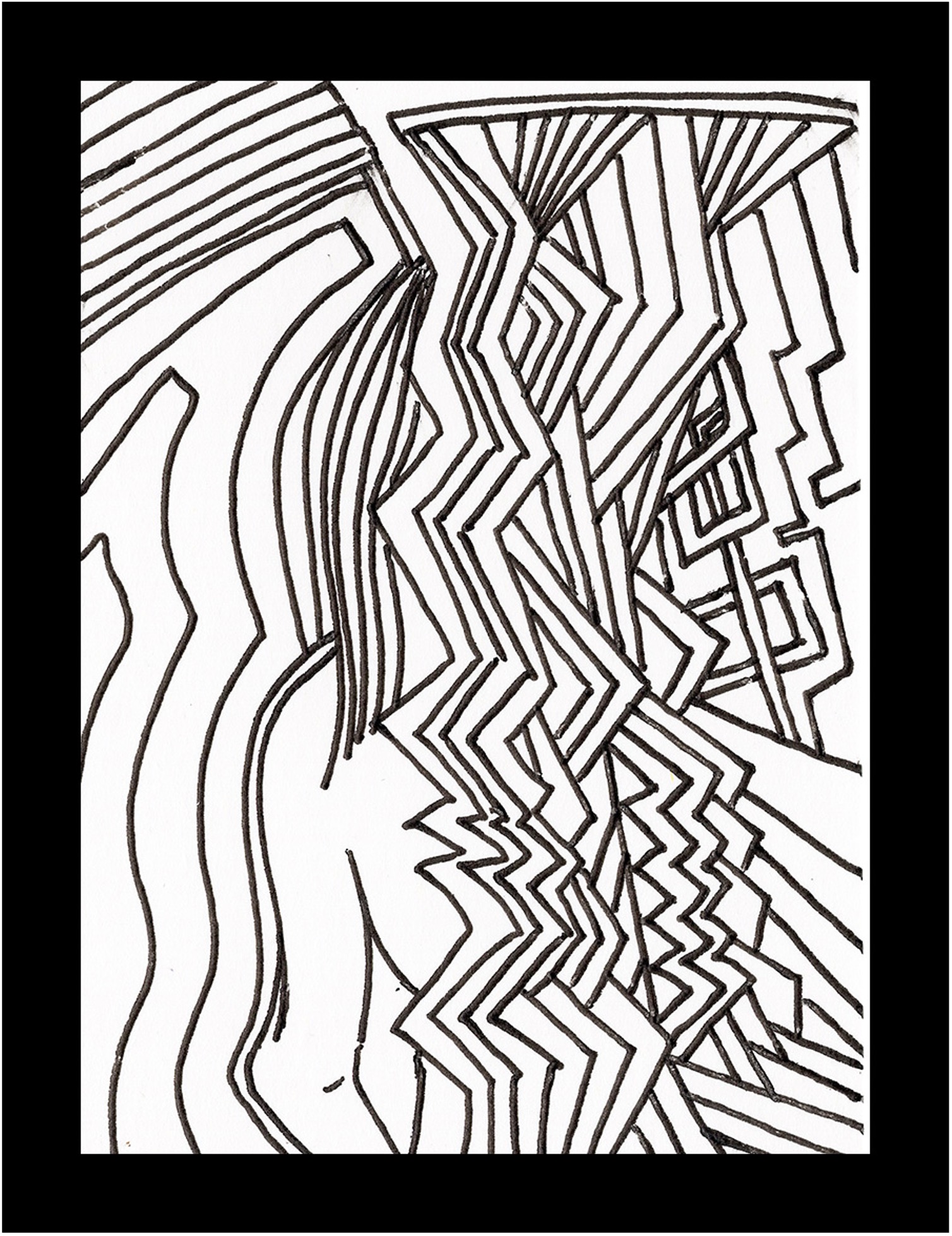
The daily drawings have become a kind of record of this experiment. Some succeed; others collapse halfway through. Collectively, they form a logbook of perception under constraint. They also remind me that consistency matters more than inspiration. A single drawing rarely tells the story; the accumulation does.
I sometimes think this is what I was always teaching, though I didn’t frame it that way at the time. In the classroom, I asked students to slow down with a text or a film, to observe structure before interpretation. The goal wasn’t belief or agreement; it was precision of attention. I’m still pursuing that, only now the syllabus is shorter and the outcomes are measured in lines rather than pages.
If there’s a thread connecting these activities—art, writing, caregiving, cooking—it’s the refusal to separate them. Each demands the same thing: presence with material conditions as they are. Ink runs out; recipes fail; conversations drift. The task is to return, adjust, and keep looking. Over time, that practice forms its own kind of stability.
2025 Mini #22, 2.5x3.5 in., ink on paper
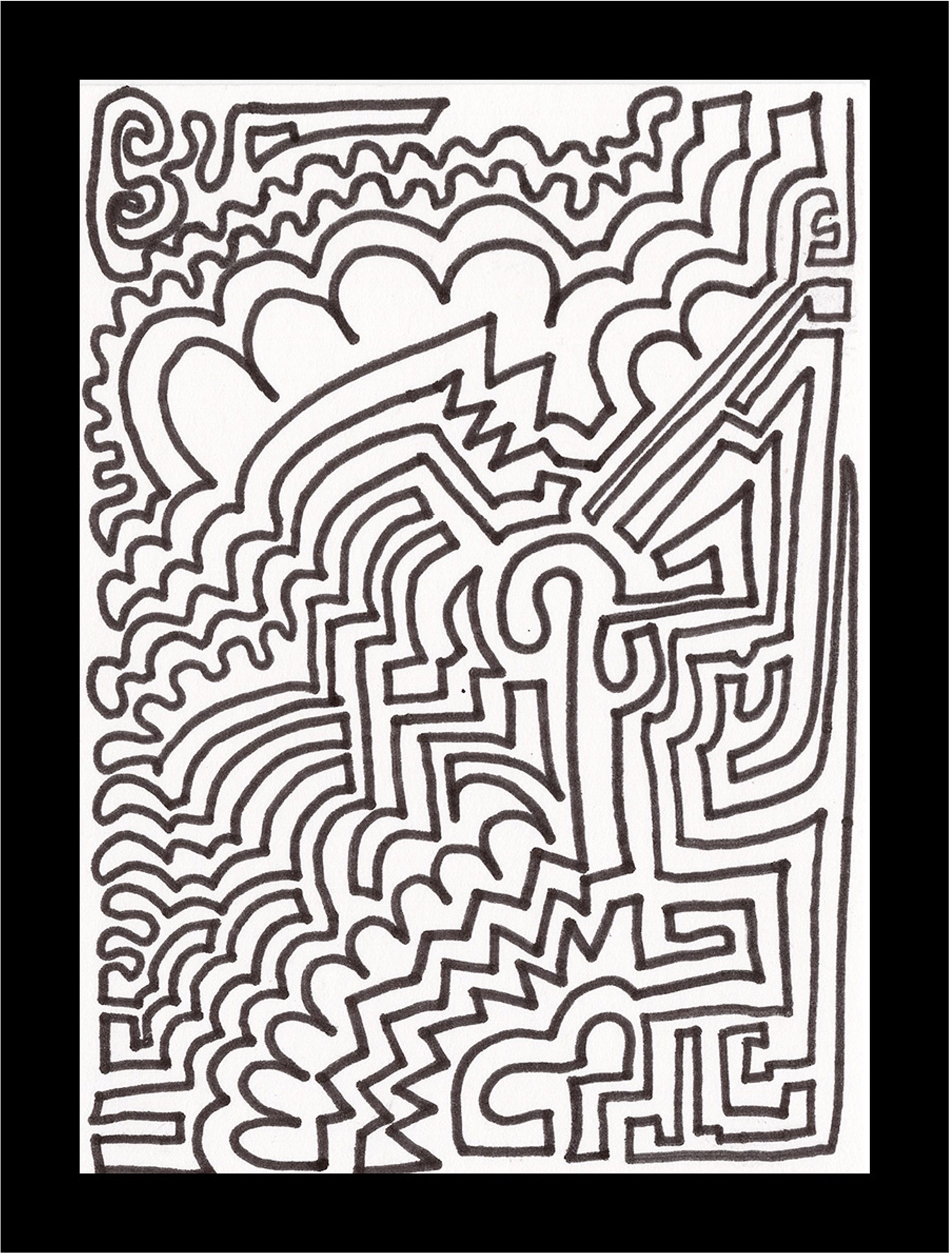
Attention, then, is not a virtue or special personality trait. It’s a method—a way of being attuned to experience. It asks, “What’s actually happening right now?” and waits for the answer. The drawings are simply evidence that the question was asked. These pieces will also soon form the basis of a new Patreon project—a space to share process, sketches, and reflections each month. Like the drawings themselves, it’s less about product and more about tracing attention over time.
Maybe that’s the point of this stage of my work: not to produce enduring artifacts, but to refine perception itself. To keep training the eye and hand to register the world with slightly greater accuracy, whether on paper or in the course of an ordinary day.
About Jeffrey M. Brackett
Jeff Brackett is a former professor of religious studies who now works full-time as an artist and writer. His current projects include Aspie Art Journey, Dating App Diaries, an illustrated memoir titled Lines on the Spectrum, and a forthcoming online course called Art as Spiritual Practice.