Resources
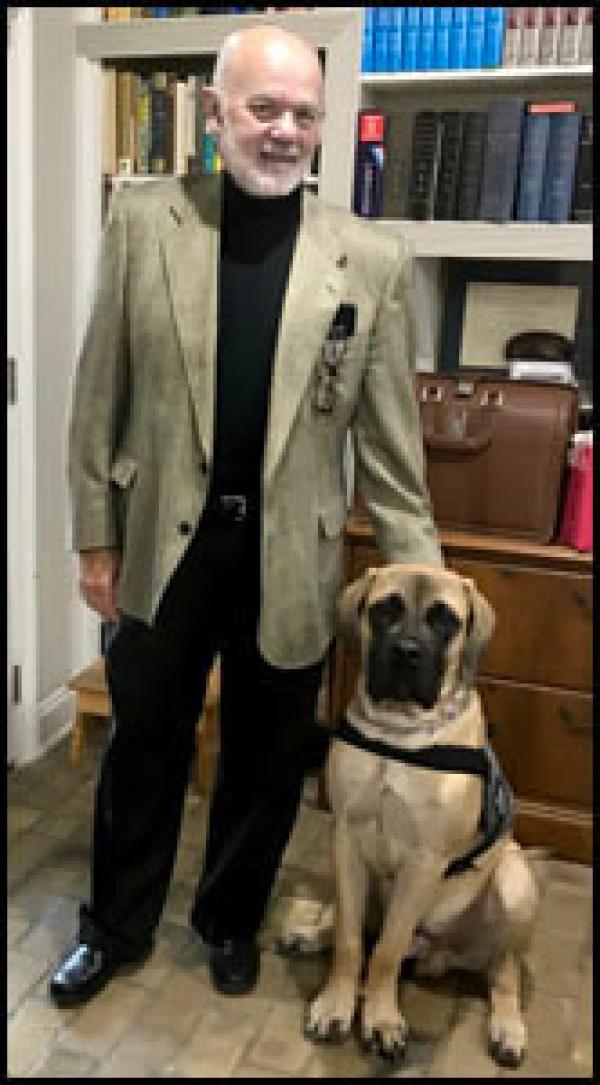
As the Jewish Studies Professor for my department, I teach an undergraduate course in the Holocaust (Sho’ah) every other school year. The remote format of the course now consists of weekly assigned readings and the edited version of class lectures gleaned from earlier years of in-class instruction. Students submit short weekly responses to the readings, including personal viewpoints and questions requiring additional information. The enrollees are a good Louisiana gumbo of Black, Brown, and White, male, female, and “other.” Two weeks ago, I received responses to essays on “The Medieval Treatment of the Jews” (book burnings, forced baptism, conversion sermons, blood libel, host desecration). Their responses largely expressed surprise that they had never been taught about these specific modes of mistreatment meted out to Jews in Europe. But there was one component that surprised and touched me personally. Although we had never discussed it, they seemed to sense how emotional Yom ha-Sho’ah (Holocaust Memorial Day, Jan 27) would be for me, and many expressed words of kindness and consolation. Their gesture moved me to respond with the following email of thanks. The national motto of Israel is lo’ ‘od, Hebrew for “Never again.” As Jews, we read and study a version of history that is not the same as the version other school children in America study. We don’t sing, “In 1492, Columbus sailed the ocean blue.” For us, the events of 1492 are singled out as a cause for mourning, a year during which we learned that not even conversion to the dominant Christianity of our world was enough to transform us into persons whose value is equal to that of our fellow citizens. It is understandable that the typical history curriculum in most of our schools does not focus on these matters of life and death to a tiny portion of the population. They are matters of no serious consequence to anyone other than the minority group of Jews. But if we watch in horror the slow and agonizing death of George Floyd or the senseless murder of Alton Sterling in our own beloved Baton Rouge, our responses can be either-or. Either we turn away and try not to think of what happens, or we vow to join the effort to create a world in which such evil can no longer be tolerated. In this struggle, the human capacity to empathize is essential. If the only persons who understand the pain of a class of people are those who themselves are in that category, hatred and pain never cease. Only the victims care, and their cries go unheard. Small, insignificant acts of meanness somehow morph into large and debilitating experiences. Over time, the world becomes darker and more frightening, for we have learned that we must fear each other. What is the answer? I cannot be other than who I am. But if I can only sense and react to treatment that is harmful to Jews, or old professors, then bad stuff done to “Others” floats by me right in front of my face—and I do nothing to combat it. This must not happen! Even at this later stage of my own life, I must daily renew my determination to expand my vision ever wider, to open my heart to the conditions of life that all people face, not just folks like me—old, white, male, Jews – all people. “To see” must also become “to perceive.” “To hear” must be “to understand.” I must be responsible not just for myself alone, but for everyone who is part of my human family. Here is a major part of my reason for entering into dialogue with people like you who are young, probably majority Christian, and cool. In other words, nothing at all like me. Yes, I need you to be “woke” about Judaism and our unfathomable experience during a truly awful period of history. But I also believe that it is incumbent on me to learn about all of you, to care about you as if you were my own family, because that is exactly what you are. Indeed, if Judaism teaches only one lesson, it is that we are all from the same father and mother and thus a single family destined either to live and care for each other or, God forbid, to hate and destroy each other. I choose life and caring, and I ask all of you to join me. Ken yehi ratzon. “May it be God’s will.”
University of Washington colleagues and scholars Beyer, Taylor, and Gillmore began their work in assessment with a rather simple – but important – question: “Without external pressure to do so, do faculty make changes to their teaching?” (17). To answer this and the subsequent follow-ups (“If so, what changes?” and “Why?”), they engaged in an extensive, qualitative study that drew from a sample of fifty-five male and female faculty members and eight graduate students of various ethnicities and in different stages of their professional careers. The findings of their study, they argue, challenge the prevailing image of professors as disengaged from anything other than their research, and show that faculty remain deeply engaged simultaneously with both their research and with current pedagogical methods, best practices, new and emerging technologies, and – above all – the development of critical engagement for their students with their respective disciplines. Perhaps most surprising, they argue, is that the findings of this study demonstrate that professors exhibit a desire for improved teaching even though most have not received teaching-training and even in the absence of external pressures. Then why change? A faculty member makes it through the semester, notes intact; what, then, stimulates the need for any change at all? Beyer, Taylor, and Gillmore’s findings reveal that even with increased interest in the development of “best practices” among faculty at institutions of higher learning (91), change in the classroom is driven by interaction between faculty and their students (91), and generally takes one of two forms: internal or external. In the case of internal change, faculty work to introduce methods that encourage greater, earlier, and deeper engagement with their own course content. This type of change is often induced by assessment, observation, or conversation between faculty and student. External changes, on the other hand, are introduced as a result of workshop activity, collegial conversation, and observation. It is worth noting that external change accounts for the smallest percentage of reasons for change, a mere 12 percent (105). This book is valuable for revealing in quantifiable terms what many in this field already know; that teaching is a dynamic and malleable activity. But what it also reveals is that the greatest changes in the classroom occur when professors are tuned into the intimate voice of their own discipline, within the context of their own classroom. External influences and opportunities are important, but what appears to be more important is the willingness of a professor to pay rigorous attention to the needs of particular groups of learners, at particular moments in time. And though it should not be necessary to provide evidence of how hard professors work and how much they care, it is nice to have this study as evidence.