Resources

How can theological education help students deepen their empathy for people who lack permanent homes even while a pandemic makes face-to-face conversations on streets and in shelters unsafe? Dr. Mitzi J. Smith of Columbia Theological Seminary and I have reflected on that question together with Drs. Marcia Riggs and Mary Hess as part of a small grant project funded by the Wabash Center. This post contributes to our answer by reviewing another resource that Dr. Smith employed effectively in her August 2020 intensive course on African American Interpretation and the Gospel of Luke.[1] The resource is Lost Angels: Skid Row Is My Home, a 72-minute documentary directed by Thomas Napper in 2010 and available on YouTube.[2] Based on students’ survey responses, this film was very effective in deepening students’ empathy for people experiencing homelessness (ave. rating of 3.9 on a scale of 1 to 4, n=14). It also effectively informed students about homelessness, including its causes, consequences, and possible solutions (ave. rating, 3.7). The documentary describes the Skid Row neighborhood of Los Angeles through interviews with eight residents interspersed with video footage of those residents negotiating life on the streets. Also included are interviews with researchers who have studied the neighborhood and with leaders of local nonprofit agencies and ministries. The documentary makes a strong case that Skid Row “is an endangered low-income residential community”[3] where many people struggling with poverty, addiction, prior incarceration, and mental illness have found the only housing options they can afford. Gentrification is the principal threat to the availability of affordable housing. The city government supports gentrification through discriminatory policing that essentially criminalizes homelessness. The Safer Cities Initiative, which began in 2005, was proposed as a solution to crime but in practice functioned as an effort to displace poor residents. Much money was spent on policing but very little on the social support that had been promised for residents. The added officers confiscated property and harassed residents with fines for such crimes as jaywalking, carrying alcohol, or possession of illegal milk crates. Resident Kevin Cohen (called K. K.) observed that poor people cannot survive on Skid Row without breaking the law, whereas in richer neighborhoods police smile and wave at people who are doing similar things. K. and his close friend Lee Anne are among the most sympathetic people interviewed in Lost Angels. Lee Anne, who had lived on the streets for twenty-four years, appeared elderly and walked with a stooped posture. Her mission was to make sure that the neighborhood’s cats and birds had clean water and food. K. K. empathized with her love of animals and never judged her other eccentricities, such as collecting and storing trash. In addition to accompanying Lee Anne, K. K. often welcomed homeless friends to shower and eat in his apartment. It was, he said, “how I get my blessings from God.” Another Skid Row resident who impressed our students is General Dogon, whose story in some ways mirrors that of Malcom X. While spending eighteen years in prison for armed robbery, Dogon formed a commitment to work against injustice. He became a human rights organizer for LA Community Action Network and a bold prophet against abuses by the police. Residents like General Dogon belie the title of the documentary. Although “Lost Angels” is a clever play on the city’s name, it wrongly implies that the people featured in the film were “lost.” Most of them were working, despite many challenges, to make Skid Row a better place to live. To illustrate the impact of Lost Angels on students’ learning, let me refer to Hope Staton’s excellent paper on Luke 6:37-42. Hope is an MDiv student at Bethany Theological Seminary who has given me permission to discuss her work. She interpreted the Lucan text against the backdrop of judgmental stereotypes that are rooted in racism, sexism, and classism in too many white middle-class Christian communities. One of the logs that we may need to take out of our own eyes is a tendency to judge people experiencing homelessness as lazy or sinful. Hope also engaged in critical dialogue with the good-evil binary that appears right after her passage in 6:43-45. As part of that effort, she used General Dogon and K. K. as counter examples to the idea that people can be classified as either good or bad trees who consistently produce good or bad fruit.[4] Citing a comment in Lost Angels, she asked, “What does it say about the state of the church that those in situations of homelessness often find more comfort and welcome with less judgment on the street than they do in our congregations?”[5] Although several students addressed judgmentalism, issues of personal safety were not as prominent in their writing. In a post-pandemic context when we can again require face-to-face interactions with people experiencing homelessness, discussions of safety might surface more readily. While continuing to prioritize physical safety for everyone involved, we could ask more explicitly how racism and classism influence the ways we, our students, and our institutions perceive danger. Lost Angels would be a useful resource for addressing such issues. For example, a critique of the Safer Cities Initiative could include a conversation about whether “safer” is code for “whiter” or “more affluent.” We could also ask to what extent fearful but false stereotypes keep us from engaging in meaningful ministry with people like Lee Anne, K. K., and General Dogon. Notes [1] See also my review of Matthew Desmond’s book Evicted: Poverty and Profit in the American City (New York: Broadway Books, 2016), at https://www.wabashcenter.wabash.edu/2020/11/a-resource-for-building-empathy-and-understanding/. [2] Thomas Napper, director, Lost Angels: Skid Row is My Home (Cinema Libre Studio, 2010). https://www.youtube.com/watch?v=MB_P3eljq1Y&feature=youtu.be. [3] Alice Callaghan of Las Familias del Pueblo offered this description in Lost Angels: Skid Row Is My Home, minute 41. [4] Hope Staton, “Removing the Log of Systemic Racism, Sexism, and Classism from the Eye of the Church to Enable Healing for the Homeless” (unpublished paper, August 28, 2020), 10. Staton is an MDiv student at Bethany Theological Seminary. [5] Staton, “Removing the Log,” 13.

Years ago I devised a classroom demonstration, to use early in a semester when trying to help students become more aware, first, of the multiple dimensions of religion and, more importantly, of the ways in which diverse analytical lens for comparing and contrasting religion in a “toolbox for critical thought” will bring different dimensions forward while leaving others in the shadows. Conceptually this is not a groundbreaking theoretical intervention for a first week of class exercise, although it does imply some theoretical “chess moves” that I feel strongly about. Its main value here is to hone an entertaining and effective way to dramatize my points with a set of children’s blocks—both old-school wooden blocks and a few legos—plus a few crowd-pleasing additions to spice up the demonstration. I wrote this up for Teaching Theology and Religion in 2009 and have used it “live” with reliable success many times since then. Since I recently have been experimenting with moving one of my classes online, I decided to make a video version for my voice-over-powerpoint lectures. It seems potentially useful to share the video here.
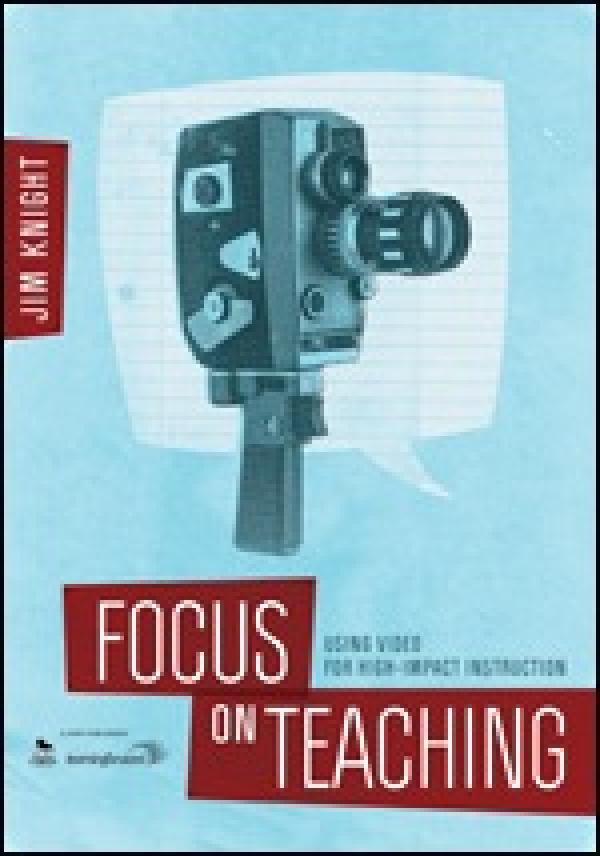
Whether you are a teacher, administrator, or coach seeking to improve your own or other’s instructional skills, Jim Knight’s book provides a useful step-by-step guide for doing so through the use of video. With easy-to-follow checklists and examples, the author explains the rationale for each decision in the process and offers options for working within various physical, spatial, and logistical constraints. While more extensive background to other professional development practices for teachers are cited throughout, this manual stands on its own in terms of the physical and social steps necessary for teachers, administrators, and coaches to work together in using video effectively to improve instruction. After laying out the reasons video-recording of instruction can be so effective, Knight methodically and precisely sets forth systematic plans necessary for a coach or teacher to get started. From an individual improvement focus, he then moves to show how teams of teachers can work together and how administrators can facilitate similar processes. Knight constantly focuses on the importance of creating a psychologically safe environment for the use of video. He defines autonomy and accountability and explains how these concepts can work together instead of representing opposite ends of the instructional responsibility spectrum. While always in the forefront of an instructor’s mind when working with students, the same principles of agreement about values, measurable and attainable goals, timely feedback, and constructive communication remain vital in the context of professional development and effective learning environments. Chapter 6 begins with a principal expressing his angst over “teacher evaluations,” a task he views as necessary but onerous. The author suggests that the use of video can parallel assessment strategies utilized by a college dean. Again, the author’s systematic presentation of the details involved in using video for high impact instructional learning makes the process feasible. The main criticism of the book may be that its methodical approach becomes slightly tedious and repetitive. By chapter 5 the reader feels they have already reviewed the general content four times with slightly different applications depending upon the theme of each chapter. While some new and beneficial information pertinent to the context of the chapter is shared, some educators will find the conceptual redundancy wearisome. Insofar as the book is easy-to-read and a valuable step-by-step guide to using current technology to facilitate better individual instruction and collegial discussion of teaching, it could be valuable for teachers of theology and religion at the post-secondary level, even though the book seems geared for the K-12 audience. The (reproducible) resources provided in the book are valuable for teaching and could be used by instructors at any educational level.