Resources
(And audio recording of this blog may be found here.)Creative teachers are sometimes labelled as people who run wild --- meaning we are people whose boundaries are too wide, whose disciplinary habits and practices are too flimsy, whose appetites look beyond what is safely seen, commonly known, or conventionally acceptable. I am a creative who has, for many years, made a practice of fostering wildness in my classrooms.I believe that the invitation of teaching is for students to join-in with running wild, i.e. create new worlds, grapple with unsolvable problems, cross boundaries as a gesture of connection and justice seeking, build stairways as we climb to uncharted heights. I have met many colleagues who concur with the aspiration of running wild! - but who are too afraid, too anxious, too self-conscious, too hobbled to risk shaping classrooms from this vision. Teachers fear that if they move from a content driven classroom to a classroom which is learner centered that then the students will run wild over the teachers! The fear is that the wildness will make a shambles of the intellectual endeavor, embarrass the teacher, and shame the institution. This fear can be tamed.Before joining a seminary faculty, I worked for many years as the minister of Christian Education at a NYC church. I revamped their large Sunday School. In this seven year process, I learned about teachers’ eagerness to teach freely, with creativity and openness and the ways that that eagerness can be snuffed out by fear of losing control of the classroom.Before the start of our fall classes, the church school teachers participated in three weekends of teacher-training using a laboratory method. During this training, we rehearsed the curriculum through practice sessions. This allowed us to get acquainted with one another, do lesson planning, develop new skills, and have fun. We learned to teach by teaching.At the first teacher meeting of the fall, I gathered the teachers to discuss their work and to reflect on the first three Sundays of teaching. After having observed their teaching for the first three Sundays, I had an overall negative criticism of their teaching. I was nervous about giving this feedback. I was anxious about their reaction. I decided to be straightforward. The eighteen of us were seated together at the table. I spoke in a warm but firm tone. I said,When I walk the halls listening to your classes, I mostly hear your voices. This means that, primarily, you are learning the materials you are teaching by rehearsing the lesson – out loud to the students. Remember our teacher training sessions? We do not want classrooms filled with your voice. We practiced activities that invite the students into energetic lessons.(I paused in hopes they would remember the training and practice)I want to hear the voices of the students. I want to hear the children’s voices engaging the lesson with their questions, concerns, laughter, reading aloud, talking to you and one another. When the children are the primary speakers and doers in the classroom, they are more likely to learn, retain, and be engaged with the lesson.I felt the nervousness in the group rise. Two teachers pushed their chairs back from the table. One teacher folded his arms across his chest. The 5th grade teacher spoke up,Lynne, I need to be honest. You give us creative activities to do with the children, but I am afraid of losing control of the classroom if I let the children do too much talking or move around the room too much. If I do the talking, I am in control. I’m afraid they will run wild!I threw up my arms like someone had made a touchdown and shouted,YESSS! Thank you! You are exactly right! Thank you for your honesty and good observations. Thank you for disclosing your fear.This playfulness lowered some of the tension in the room. The 10th grade teacher still sat with his arms folded across his chest, and now a scowl on his face.I continued,You are right. We do not want chaos in the classrooms with children running amuck. Nobody learns when students are out of control. But we know that students learn best when they are the ones engaged in activity. The various learning activities allow them to take hold of the stories and learn by participating. Sitting quietly teaches them to sit quietly, and that Sunday School is an uninteresting and voiceless place. We want children to learn by doing, interacting, questioning, exploring, investigating, wondering, and playing. And I need you to teach in these ways.I paused for pushback. But no pushback came. I continued,Please, try some of the more creative activity options in the curriculum. I assure you that chaos will not ensue. The children will have fun and so will you.The fears articulated by the Sunday School teachers are the same kinds of fears I hear from colleagues about their adult students in college, university and seminary settings. That is, teachers fear that if they loosen their grip on a session that the students will say or do something Wild! - something unanticipated, unwanted, unhelpful, unplanned that will embarrass the teacher or show the lack of a teacher. Teachers fear that loosening control will put them in danger of being exposed as frauds or imposters. These fears are real. Sometimes these fears are paralyzing or debilitating. These fears can be calmed and overcome.Teaching, with practice, can be improved if you are willing to give up control. For many professors, this teaching tactic feels counter-intuitive and too risky, but my experience knows it to be true.If we surrender content driven approaches – then what will happen?I am pleased to report that none of the Sunday School teachers stormed out of the meeting that day. Each teacher, in their own way, slowly over the years of their commitment, learned to select the learning activities that involved arts, crafts, a wide assortment of storytelling methods, and even trips to other parts of the building. I noticed that the primary motivation for their risk taking was the feedback they received from their students.When the learners were invited to become the story tellers replete with costumes, paints, and instruments their glee was palpable. Enthusiasm grew when the students knew the lessons could include map making, puppet designing, interviews with pastors or baking the communion bread. Excited children began arriving at Sunday School before the start time and asking to stay after the end time. Teachers moved from being reticent to feeling confident when they discovered learners were not there to judge their efforts but were there to benefit from their teaching.Over the seven years, we moved away from being a place of instruction and toward becoming a community of learning – the teachers were the agents of that wild move!Consider these reflection questions:What are your creative or artistic interests and how might you bring those interests into your classroom’s learning activities?What amount of time do you need for course preparation when planning for learning activities that are multidimensional and creative?What funding is available for supplies, resources, excursions, and exhibits?Who can you partner with to create a more vibrant experience for your students?

For the past twelve months, I have made several pivots in my teaching to meet what Dr. Martin Luther King, Jr. identified in his 1967 speech on the war in Vietnam at The Riverside Church in New York City as “the fierce urgency of now.” Dr. King began by affirming the activists from Clergy and Laymen Concerned About Vietnam for their moral vision in organizing people together with the following call: “A time comes when silence is betrayal.” Dr. King then connected the organization’s call with his own challenge to act for peace in Vietnam and join in the global struggle against poverty and racism: “We are confronted with the fierce urgency of now. In this unfolding conundrum of life and history, there is such a thing as being too late.” In addition to teaching through a global pandemic, we are tasked with the responsibility to educate toward racial, social, and intersectional justice. We teach in different disciplines and at diverse institutions, but we inhabit the same world. We live in a world where millions marched to protest the killings of George Floyd and Breonna Taylor, anti-Black racism, and police brutality in May, June, and July. We all witnessed the violent insurrection and mob violence at the U.S. Capitol on January 6. More recently, we grieve and rage at the horrific murders of Soon Chung Park, Hyun Jung Grant, Suncha Kim, Yong Ae Yue, Delaina Ashley Yaun, Xiaojie Tan, Daoyou Feng, and Paul Andre Michels across several spas in metro Atlanta on March 16. In meeting “the fierce urgency of now,” my teaching pivots, as an historian of Christianity in the United States, to reveal that the scourge of hate and violence against Black, Indigenous, and other Persons of Color and the sins of white supremacy and misogyny have roots in Christian traditions with long records and unjust legacies of nativism, settler colonialism, sexism, and slavery. I have pivoted to share honestly with students about how my education at a predominantly white and theologically conservative seminary left me unprepared to confront the challenges before us because of several pedagogical imbalances and gaps. The pedagogies of my professors overemphasized the courageous ministries of Christian heroines and heroes who strove to combat injustice and underemphasized the complicity of Christians in perpetuating discrimination and hate against women, persons of color, and LGBTQIA+ persons. These pedagogies also elevated white men by treating their perspectives as normative and either erased women, persons of color, and LGBTQIA+ persons or reduced the presence of “diverse” voices to recommended (versus required) readings or one isolated lesson under a mishmash of topics. With this pivot, I am implicitly prompting students to assess what they are learning in my classroom as well as in the classrooms of my colleagues at our seminary. Is my pedagogy as a teacher better than what I experienced as a student? Does the teaching and learning at my seminary connect in meaningful ways with the congregations and ministry contexts our students inhabit? In reflecting with my students over the past year, I can offer two insights. The first insight is that pivots to address anti-Black, anti-Asian, and other forms of racial injustice are most helpful when they reinforce and strengthen existing course content. When a course syllabus already contains multiple lessons about communities of color with assigned readings from many scholars of color, pivots to cover urgent events are organically integrated to the foundational structure of the teaching and learning. When a pivot requires the introduction of different lessons or a sudden detour to new assigned readings, it may reveal a larger imbalance or gap in the course syllabus specifically and teaching philosophy more broadly. The second insight is that pivots are generative and effective when they cultivate collaboration in the classroom. In other words, a pivot works best as an invitation to learn together with students rather than an opportunity to be the “sage on the stage” with all the prescriptions to the world’s most pressing problems. One of the most useful prompts in my pivots is to ask students to share what is happening in their families and communities of faith and to discuss together how certain religious beliefs in our diverse Christian traditions have shaped different responses to racial, social, and intersectional justice in the forms of righteous activity, passive inactivity, and hateful violence. Heeding Dr. King’s message, we seek to confront “the fierce urgency of now” through genuine, vulnerable, and collaborative dialogue engaging the challenges, prejudices, and opportunities in our communities of faith.

During the past year, two of my favorite Brazilian writers and educators, Luiz Antonio Simas and Luiz Rufino collaborated on yet another book: Encantamento: Sobre a Política da Vida (Incantation: On the Politics of Life). One of the central affirmations of their work (which follows their previous co-authored publications: A Pedagogy of the Crossroads, An Arrow Through Time, and The Enchanted Science of Macumbas) is that the opposite of life isn’t death—it is desencantamento, or an inability to surrender to a process of incantation. As a verb, incantare evokes our capacity to fuse song and word in an effort to raise our spirits, to spark magic in our imaginations, to invite divine presence. Our capacity to incantate spaces of learning does precisely what theologian Rubem Alves invites us to do: name and invoke the not-yet worlds, so as to break the spells of right-here worlds that continue to abandon, oppress, exclude, and sever from ourselves and our communities of belonging. Incantation as a poetic of resistance allows us to escape, disobey, and ambush the traps set through the colonial matrix of power so that bodies can dare to see, create, invent, and integrate new possibilities freedom, belonging, and liberation through creativity and imagination. Incantation, Simas and Rufino affirm, nests our capacity to move through time, to experience a passage between forms and worlds, to change our points of reference through a politic of life that is rooted in an imprinting of the everyday as rites of reading and writing different poetic routes capable of setting traps to our collective loss of hope and vivacity.[i] In this sense, incantation is an exercise in emergence and survivance that lives and breathes beyond the terrorizing effects of coloniality. It’s the commitment to movement, occupation, visibility, insertion, and participation. It’s the creative force that travels through crossroads of knowledge-making, confronting hierarchizations produced by ontological, epistemological, and semiotic violences. Art, as I understand it, has a tremendous power to forge incantatory pathways of resistance because of its capacity to dis-educate us from disciplinary molding. It reverberates and discloses to us that which is hidden in our interior recesses in embodied, striking, and visceral ways. It can help us re-educate our affections, as Paulo Freire puts it, or work a kind of magic in our souls, as bell hooks states. It also inspires us to name the world as we see it, and to find a poetic tongue when the language we know fails us. It helps us resist, heal, connect, conjure, and tend to all our relations. As generative clearings, the arts are sites for world-making, for dreaming, rehearsing, and choreographing new possibilities of being and intervening in the world. When we immerse ourselves in acts of artmaking, we have the opportunity to access the visceral, the somatic life of the body, its reflexes, limits, intuition, responses, desires, needs, and its alchemies. When we encourage and invite students to in-corporate artmaking processes as they engage readings, discussions, and bodies of knowledge, we participate in this politic of incantation. A student’s performance and ritual entitled “Disposable Beauty” still stands as one of the most profound and generative projects to which I have been witness. As a final integrative assignment, the performance consisted of placing delicate flower arrangements throughout locations in her neighborhood that were marked by abuse, violence, and abandonment. Such poetic gestures in vulnerable spaces in the city sought to raise awareness of our transience, interdependence, and negligence in the face of injustice. The flower assemblages were made out of blossoms and foliage that flower shops would throw away at the end of the day. This poetic gesture both incantated and resisted the (i)logic of degradation, disposability, oppression, and inequity by orienting herself and participants in acts of creative wonder. Through her invocation of not-yet worlds, she extended a gesture of care, of regard, of re-worlding, refusing to be desencantada with the world around her. At the end of these performances, she invited folks to partake in tea ceremonies that were rooted in offering the gift of reciprocity, spiritual care, regard, and a warm cup of tea. As a poetic of incantation, her artistic gestures imbued spaces of desolation, disposability, and abandonment with love, presence, and beauty through a practice that integrated the semester’s resources, readings, discussions and questions with her own wisdom, creativity, and spiritual sensibilities. I return to this experience often to remind myself to continuously ask how many of the assignments outlined in my syllabi impede or foster poetic and incantatory experimentations. Notes [i] See Luiz Antonio Simas and Luiz Rufino, Encantamento: Sobre Política de Vida (Rio de Janeiro, RJ: Morula Editorial, 2020). Photo Credit: Miguel Garcia Saaved - stock.Adobe.com
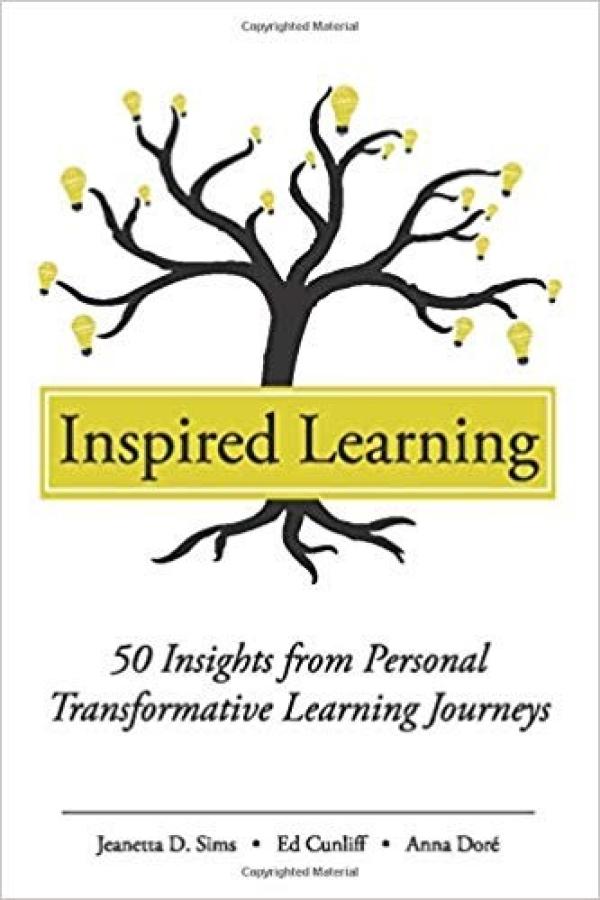
For those who wrestle with transformative learning or who need help breaking down the myths of learning, Inspired Learning offers 50 insights from the personal stories and experiences of award-winning professors. Through sharing personal vulnerabilities, adversities, and triumphs, distinguished educators illuminate the often uneasy and challenging path to learning. Drawn from perspectives across multiple disciplines, brief essays probe race, culture, and identity while inviting readers to consider and re-consider their own transformative journeys in engaging and personal accounts.From suggestions for connecting with mentors and taking advice from others to lessons on valuing failure and developing curiosity, this book grants readers permission to develop their own identity as learners - whether they are new to a college setting or experienced faculty members. Inspired Learning questions what it means to be a learner and offers how an open-minded environment can be beneficial and instructive for transformative learning. (From the Publisher)
Professors know a lot, but they are rarely taught how to teach. The author of the Chronicle of Higher Education’s popular “Pedagogy Unbound” column explains everything you need to know to be a successful college instructor. College is changing, but the way we train academics is not. Most professors are still trained to be researchers first and teachers a distant second, even as scholars are increasingly expected to excel in the classroom. There has been a revolution in teaching and learning over the past generation, and we now have a whole new understanding of how the brain works and how students learn. But most academics have neither the time nor the resources to catch up to the latest research or train themselves to be excellent teachers. The Missing Course offers scholars at all levels a field guide to the state of the art in teaching and learning and is packed with invaluable insights to help students learn in any discipline. Wary of the folk wisdom of the faculty lounge, David Gooblar builds his lessons on the newest findings and years of experience. From active-learning strategies to course design to getting students talking, The Missing Course walks you through the fundamentals of the student-centered classroom, one in which the measure of success is not how well you lecture but how much students learn. Along the way, readers will find ideas and tips they can use in their classrooms right away. (From the Publisher)
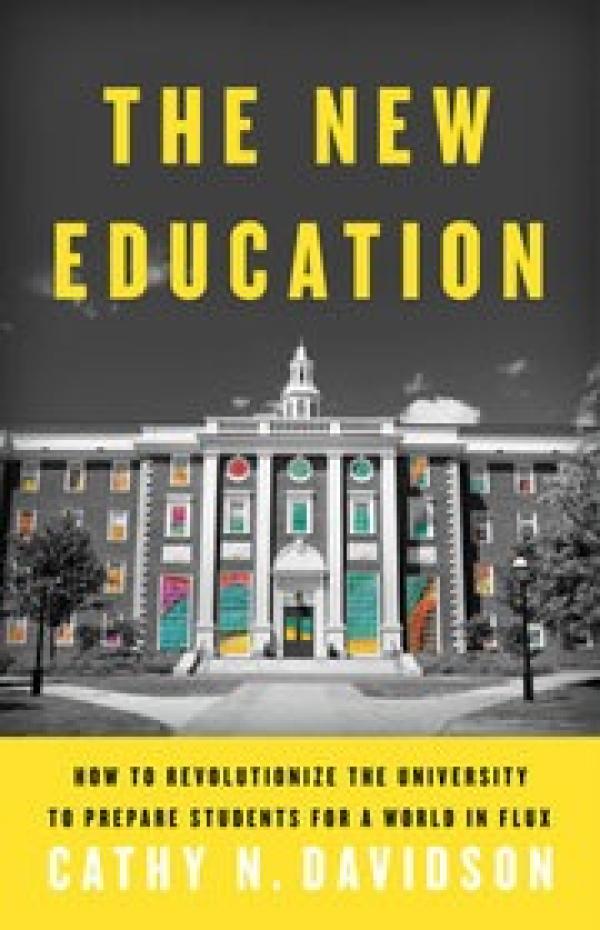
Cathy N. Davidson’s The New Education: How to Revolutionize the University to Prepare Students for a World in Flux is an engaging, enlightening, and empowering call to action. Though its focus is on why and how to transform higher education to meet the needs of today’s students and society, it offers commentary on innovative and effective pedagogy that will be of special interest to Wabash Center readers. If you only have time for a condensed version of Davidson’s recommendations for improving college teaching, read the “Ten Tips for Transforming Any Classroom for Active Student-Centered Learning” (263-67). Davidson lauds 10 techniques: Think-Pair-Share, Question Stacking, Everybody Raise Your Hand, Interview, Class Constitution, Collective Syllabus Design, Collaborative Note Taking, Collaborative Projects with Peer Assessment, Exit Tickets, and Public Contribution to Knowledge. In keeping with Davidson’s central thesis, these techniques serve to invigorate learning in college courses, but their ultimate value is that they best prepare students for life beyond the college gates. Indeed, it is the demands of modern life that prompts Davidson to argue for radically revising the university. America’s system of higher education has reified, she argues, the vision of Charles Eliot, president of Harvard in the late 1800s. Eliot sought (most notably in his essay entitled “The New Education” from which Davidson takes her title) to transform America’s colleges from seminary systems to institutions designed “to train farmers and shopkeepers to be factory workers and office managers” (3). In pursuit of this goal, Eliot, and fellow educational reformers, established the university as we know it: majors, minors, divisions (humanities, social sciences, natural and biological sciences), credit hours, degree requirements, grades, the bell curve . . . class rankings, certification, general education, upper-division electives, . . . professionalization (credentials, accreditation), graduate schools . . . financial aid, college entrance exams . . . tenure . . . school rankings . . . (35-36) and more. By 1925, Eliot’s vision (shaped by his study of German and French models) dominated the landscape of American higher education. Not much has changed, Davidson laments. These features continue to define the college experience for most Americans. But now, they come with anemic “teaching to the test” at all levels of education, crushing student debt, and graduates narrowly trained for specialties that are fast disappearing in the technology-laden world in which we live. Against the current state of affairs, Davidson argues for pedagogy and universities to center on students and aim at preparation for life, not just careers. Davidson documents how the shift from the Industrial Age to our current age (which she dates at 1993 with the dawn of the Internet) has yet to be taken seriously by academics. Doing so, she insists, demands radical rethinking of the college experience. To illustrate the types of changes she advocates as proper responses to the technological age, Davidson points to community colleges and initiatives at universities. LaGuardia Community College in NYC, Arizona State University, and The Red House at Georgetown University receive the lion’s share of her attention. And for good reason. Education at these schools is being rethought and retooled to serve the student and his/her future needs. Actually, as Davidson notes, community colleges have been doing this all along. Founded to serve non-elite students, community colleges succeed by proceeding “from a pedagogy of acceptance. Any growth constitutes success. The student is at the center” (57). Although active learning and student-centered pedagogy benefit students, it is not risk-free. Fear of “losing status” causes many professors and institutions to shy away from adopting the mindset and support systems community colleges embrace. To illustrate the risks, Davidson recounts the story of Alexander Coward, formerly of Berkeley . . . formerly because allegedly his student-centered pedagogy did not sit well with his colleagues (208-210). In addition to the aforementioned “Ten Tips,” those primarily interested in pedagogical issues should read Chapter 3, “Against Technophobia,” and Chapter 4, “Against Technophilia.” Within these two chapters, Davidson offers many, many helpful hints for how to use technology imaginatively and effectively in the classroom.
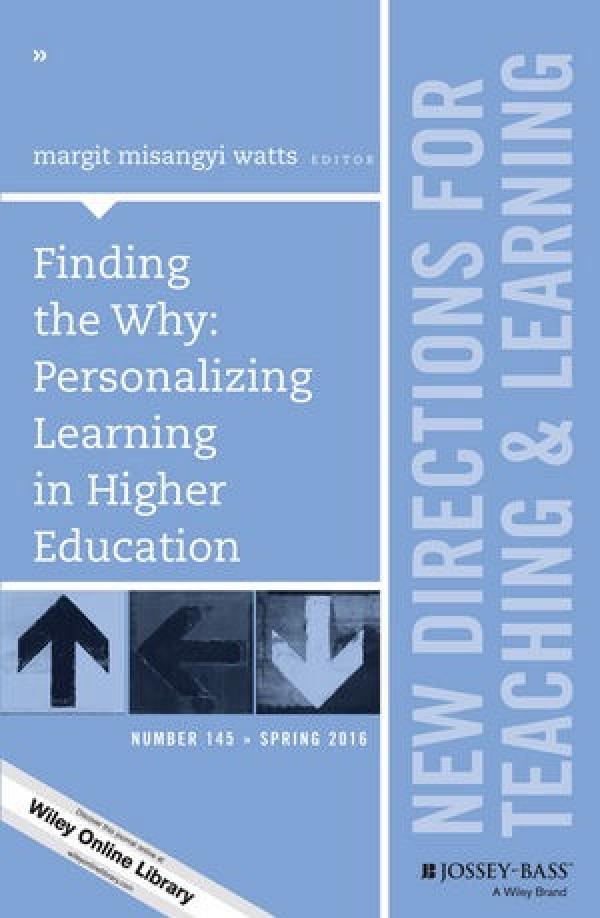
Whenever I’m asked, “How are your classes going?” my answer traditionally has been, “Ask the students.” As more faculty members shift their pedagogy to a student-centered learning, their focus must include not only delivering the content but also inviting students to explore the why of education. The articles in Finding the Why: Personalizing Learning in Higher Education edited by margit misangyi watts (sic), identify key ways to encourage students to discover the purpose of higher education as more than training for a career. While many of the articles describe institutional changes that have been developed to address the student success beyond the university, the principles behind such designs can be incorporated by individual faculty members in approaching how to present their courses’ content. One of the key principles is to encourage students to identify the applicability of a liberal-arts education to professional courses. One means by which this can be accomplished is described in “Integrative Learning: Making Liberal Education Purposeful, Personal, and Practical.” Ann Ferren and Chad Anderson describe several examples from various colleges that integrate learning across curricula and are adaptable even for larger institutions, such as designing opportunities for students to integrate curricula using collaborative projects, partnerships with the local community for service-learning, and making connections among disciplines. Furthermore, in “Project-Based Learning in Colleges of Business: Is It Enough to Develop Educated Graduates?” Penny Smith and Lindsey Gibbon note that business leaders are seeking qualities such as critical thinking skills, identifying and using creative problem solving, and communicating effectively. They note that “for business schools to graduate ‘well-educated’ students, they must forge and engage entire academic villages” (43) in preparing business students for their careers. Another important component of finding the why requires understanding the challenges in culture that affect the attitudes impacting student-centered education. Several of the chapters incorporate strategies to change the culture at institutions themselves to meet the ongoing challenges to student success. Among such recommendations are faculty “talking to students in a way that is supportive and encouraging” (29) or engaging in the six “P’s” of place, preparation, pathways, plan, purpose, and personal connection as explained by Sanford Shugart in “Why Higher Education: Lessons Learned in a Learner-Centered College.” While many of the articles describe specific activities involving changes within the entire institution, such as integrative classes or designing a community college’s plan from its inception, the authors do challenge individual faculty to incorporate helping students find the why within their particular courses. The key to student success in many of the articles involves engaging students individually, not just collectively. Therefore, some of the strategies discussed can be applied by individual faculty on a smaller scale. While my answer to “How are your classes going?” may be the same, my intentionality within my course itself should have students answering in the positive.
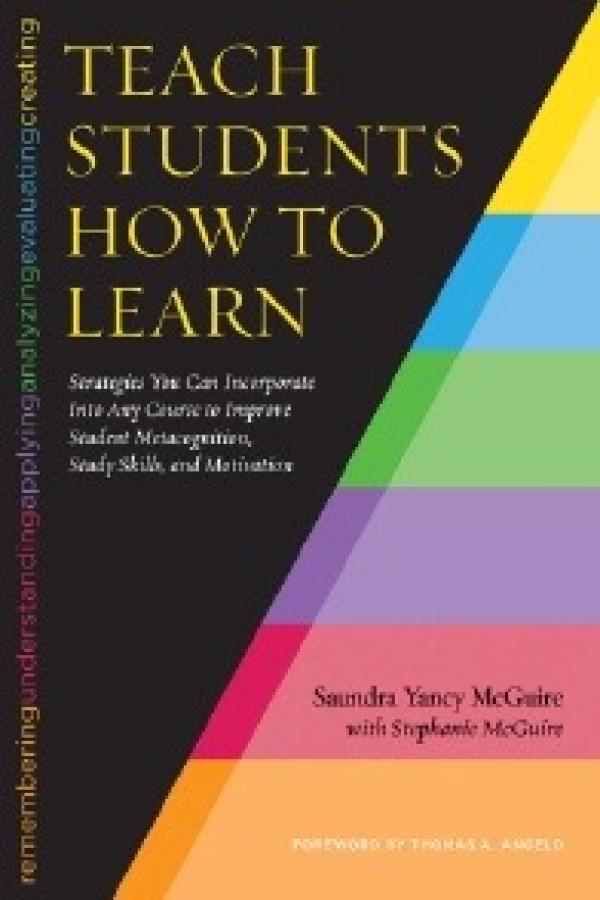
It shouldn’t be surprising that a volume intent on teaching students how to learn is just as intent on teaching the reader how to do just that, but it is still refreshing to read a book that lays out its goals, sticks to the promises it makes, and even creates its own study guide based on how much time the reader has to give to the text. Well-structured and clear, Saundra Yancy McGuire’s Teach Students How to Learn is as thoughtful about itself as it is about the content it presents. McGuire has composed this book to reflect her own response to and engagement with a pressing problem in higher education: namely, that many students, even those who qualify for admission at prestigious institutions, arrive without ever having been taught to learn by anything but rote memorization. Faced with college’s demands of skills higher in Bloom’s Taxonomy, they find themselves struggling and even failing. With this book McGuire gives teachers the tools they need to move their students past the high school model of retention until regurgitation, helping them instead to internalize a more nuanced, flexible understanding of learning. To convey this understanding, McGuire focuses on student mindset, encouraging educators to bring in everything from neurobiological models to fellow student success stories in order to help learners see that they are not stuck being “bad” at something – that change is not only possible, but already well within reach. One potentially significant drawback, depending on one’s perspective, is how the techniques are not out-of-the-box geared to address the concerns of humanities classes. Despite the fact that most of her experience comes from teaching chemistry – and how, relatedly, most of the examples in this book are from students of the sciences – McGuire insists that the techniques here are useful outside of STEM fields. While I have no difficulty believing that claim, it is clear that most of the methods in the book are geared toward content-focused disciplines. Fortunately, McGuire’s significant focus on critical and creative thinking on top of factual learning makes these strategies flexible and worth adapting. Most of all, McGuire is a fun writer. Personal and plainspoken, her style makes the pages fly by. (Any worries that this book might drown the reader in jargon should be alleviated by the appearance of the words “metacognition, schmetacognition” [17].) While perhaps not the most sophisticated text on the subject, Teaching Students How to Learn has hints and information appropriate to instructors at all levels of familiarity with metacognitive concepts, including none at all. I would recommend this book in particular to educators working with students from underserved communities, as giving students access to these techniques will help ensure their success far beyond the boundaries of a single classroom.
The title Listening to Teach caught my eye. When one imagines teaching, one might first think the student’s job is to listen, while the teacher’s job is to speak, or at least to organize activities geared toward a predetermined outcome. What does listening have to do with the role of teaching? Furthermore, for those teaching within the religious academy, what might a pedagogy of listening look like in the context of religious higher education? Although this book does not specifically target religion or higher education, undergraduate and seminary professors will find many ideas, which will inspire their classroom teaching. The various models of pedagogical listening presented in this text can also serve to challenge traditional teaching strategies that are still pervasive in many higher education classrooms: teacher-centered strategies that often rely on a banking model where content is transferred to passive students. Infusing religion classrooms with dialogical and student-centered approaches can create new forms of learning where students learn not only content, but also how to ask good questions and seek answers in ways that are personally and contextually relevant. For many teachers this requires a shift in one’s perceived role: rather than seeing the teacher as having all the information and students as receptacles for it, this approach recognizes that students enter the classroom with a wealth of experiences and perspectives the teacher may not share. Within listening pedagogy models, teachers serve as co-researchers, observers and documenters of classroom interactions, and interpreters who can help students grasp the meaning of the learning that has taken place. As teachers listen deeply to students and encourage them to learn the art of listening to one another, students are able to enter into the learning process in a way that holds their interest and results in learning that remains in place far beyond a content test. Part 1 sparks ideas for teaching strategies and discussion formats that, although predominantly geared toward children, would work at least as effectively in a classroom of college or seminary students. In these methodologies there are some strategies I have come to through trial and error, but like many teachers in higher education, I have no formal training in teaching. Therefore, learning educational theories and strategies others have found helpful provides a deeper level of intentionality in my teaching, and allows me to see how I might more holistically implement options other than didactic teaching. These brief chapters also provide lists of references that are useful for digging more deeply into any of the specific pedagogies outlined. Part 2 contains ideas of particular relevance for higher education religion classrooms. Chapter 8 focuses on a “pedagogy of discomfort,” which the author, Ashley Taylor, suggests as a way to approach teaching and learning about areas of injustice and oppression. Taylor draws together the cognitive and emotional aspects of learning, allowing learners to critically analyze their own emotional responses. A teacher’s role, then, is to listen intently to student responses and create a safe space in which to acknowledge and examine areas outside of our comfort zones. This approach could be quite helpful in facilitating conversations regarding the approach people of faith should take in the face of today’s many areas of social and economic inequity. Chapter 9 suggests a pedagogical model a religion teacher might find useful: curation as listening. Thinking of a religion teacher as a curator of a faith tradition, with particular emphasis on the Latin word curare, “to take care of,” what would it look like for religion professors to imagine our role as caring for the tradition and testimony of our spiritual forbears, closely listening to the voices (present and absent) in our tradition’s history, and the ways those voices speak to our present context? In content-based religion courses such as Bible, history, and some theology courses, how might the professor’s role shift by thinking of him or herself as a curator of the tradition rather than the all-knowing expert? How might the students’ experience change if they see themselves as co-curators, creating meaning alongside the tradition and their curator-professor? Other chapters also hold useful ideas, including the development of trust, the augmentation of uncertainty, and the ways that one transfers these listening pedagogies to an online format. Similar to the struggle experienced by many K-12 teachers regarding “teaching to the test,” many religion professors may wonder if students can learn an appropriate level of content based on these methodologies, and this is a valid critique. Engaging a pedagogy of listening invites academics to reimagine ways by which a discipline is passed on most effectively and meaningfully. For those recognizing the limitations of the banking model of education, pedagogies of listening offer alternative models to advance lifelong student learning.
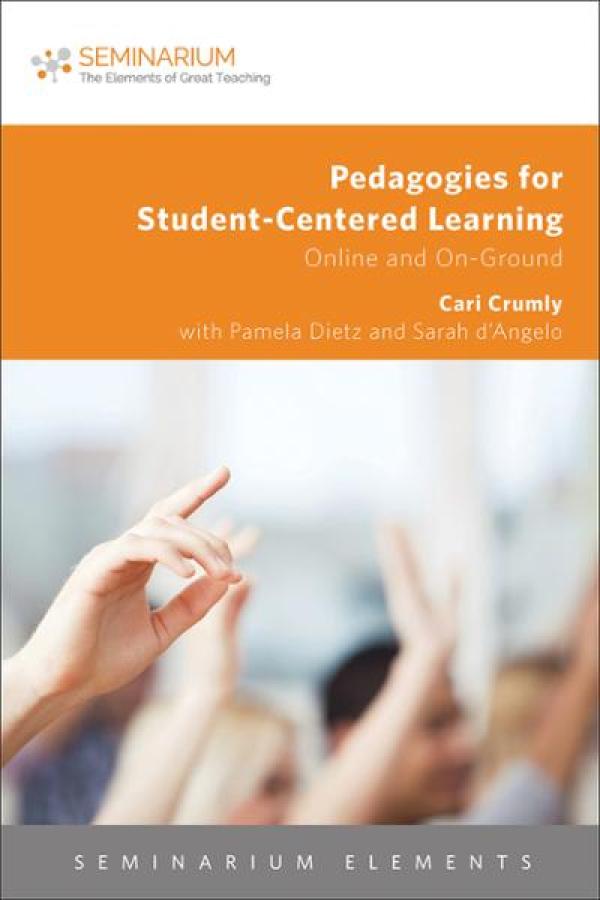
“Teachers are like new parents,” Cari Crumly asserts. “[T]hey don’t want to be told how to raise their children or, in this case, how to teach their students. Yet, sometimes, even the least-experienced teacher can introduce new methods that engage, encourage, and promote motivation and participation among students” (4). Crumly lays down the gauntlet repeatedly in this book: “student-centered learning will revolutionize your classroom and reinvigorate your career” (5). As Crumly notes, “student-centered learning is a learning model placing the learner in the center of the learning process. Students are active participants in their learning, learning at their own pace and using their own strategies; they are more intrinsically than extrinsically motivated; and learning is more individualized than standardized” (4). Certainly there are situations in which (and learners for whom) more external structure is appropriate, but Crumly makes a very persuasive case for those being the exception rather than the rule. The good news is that if you are a teacher-centered professor, Pedagogies for Student-Centered Learning gives you everything you need to make changes in your teaching. There is an historical timeline to remind readers that student-centered learning is not a new fad; it’s been with us for centuries. There is a section on teacher-centered classrooms, so we can check whether we are (or are not) as student-centered as we’d like to think we are. There is information on understanding your learning population. There are examples from real classrooms about how student-centered learning can play out, and how it benefits students. Each chapter contains questions for investigation. There is also a list of instructional tactics, with commonly used exercises and the advantages of using each one. Appendices and URLs point readers to even more resources, and Pamela Dietz adds a section on how to bring faculty, administrators, and tech support on board. If you are a visual learner, there are a number of graphical elements that will assist in your assimilation of the material presented. Fortress Press’s new Seminarium: The Elements of Great Teaching series is ideal for twenty-first-century readers. QR codes dot the pages – but don’t worry, if you don’t do QR codes, the URLs are available in footnotes. This book is full of great, useful information – and points readers to more useful information online. Certainly, there are some distractions (for example, misrepresentations of quotations from other thinkers at times). Definitions of student-centered learning can become repetitive over the course of the book. And Sarah d’Angelo’s chapter on student-centered learning in a theater classroom contains a bit more information than is likely to be useful for religious-studies and seminary faculty. But none of these detracts from the benefits of the book as a whole. I have been reviewing books on teaching for ten years or more – this is easily one of the most helpful books I have ever reviewed, and one to which I will return often. I have attempted student-centered learning in a number of courses and contexts; it can be very hard to pull off successfully, and does require a rethinking of our role as faculty. While Crumly suggests that “The student-centered classroom, whether on ground or online, is characterized by individualization, interaction, and integration,” I did wonder how this might work in an online environment (10). I look forward to further exploring these possibilities.