Resources

Your PowerPoint slides are not projecting on the screen as students trickle into the classroom. Normally you like to have everything prepared before their arrival, but ITS is not responding to your calls. Running on coffee and a few hours of sleep you begin the lecture only to be interrupted by late students. Pushing your hospitalized parent out of your mind, you continue with the lecture thinking that you never would have disrespected your professors this way. A student in the front row is nodding off to sleep. You made it to class early after dropping kids who were screaming for your attention, with runny noses, off at daycare. An “A” student catches your eye. They are diligently taking notes despite having pulled an all-nighter. It is a scene all too familiar to educators. We check our bodies and emotions at the door and wonder why students don’t also. Our advisors and mentors taught us to be disciplined. Prioritize your research and writing in order to succeed. The life of the mind is built upon outsourcing the mundane things like cooking and cleaning to someone else. Students who prioritize learning information to the neglect of their health are rewarded within the status quo. When they compartmentalize their learning from the messiness of life, it is a relief to the educator. They focus on ideas rather than responsibilities to community. Conversely, students overcome by malnutrition, lack of resources, and abuse are punished. They face negative consequences for prioritizing caregiving over self-care. The message is clear: students who are overcome by contexts beyond their control or extenuating conditions are left to “figure it out” as an acceptable pedagogical tool of disciplined thinking. We as educators often assume that the process of learning is for the students, and our job is to deliver content. We use words like “rigor” and “grit” to put the onus on students to persevere through the stresses of learning. Those who don’t succeed presumably were not worthy. But what if we as educators are the problem? Unhealed trauma certainly inhibits student learning, but, perhaps more to the point, the unhealed trauma of educators perpetuates harm in the classroom. What might trauma-informed pedagogy look like? Stacy Williams explains that trauma is not defined by events, but by the lingering effects on our brains and bodies. People can experience the same event and some seem to emerge unscathed, while others may be left struggling to return to their daily routine. This explains the differing levels of impact upon communities with shared experiences and divergent effects. Rather than adjudicate whether the student’s distress is reasonable (the loss of a pet, end of a romance, hunger, discrimination, etc.), we would do better to model teaching and learning as embodied and contextual. We (the authors) suggest that as educators, one of the best things that we can do to improve pedagogy is to attend to our own bodies and emotions. With this baseline in mind. we can begin to unpack the experience of the professor described above. Perhaps the late student was also visiting a loved one in the hospital, the sleeping student might have also been up most of the night with a sick toddler, and many students have missed breakfast. Paying attention to our own needs influences how we hold the learning space. Stress and trauma disrupt the students’ ability to learn, but they also disrupt educators’ ability to teach. The lingering effects of stress and trauma show up in the brain and body faster than logic and reason can process and remain in the body systems much longer than people realize. Which professors and mentors reminded you to attend to your wounds? If they didn’t, what are the lingering effects? In order to avoid retraumatizing others, initiate self-awareness and get curious about the behaviors of your students. Here are a few questions we propose to get you started: When did I last eat a nutritious meal and drink a full glass of water? Do I need to go outside for some movement? Who have I deeply connected with this week? In short: what do you need today to be the best version of yourself to show up for others? Attentiveness to your bodily and emotional needs sets the tone for trauma-informed teaching and learning.
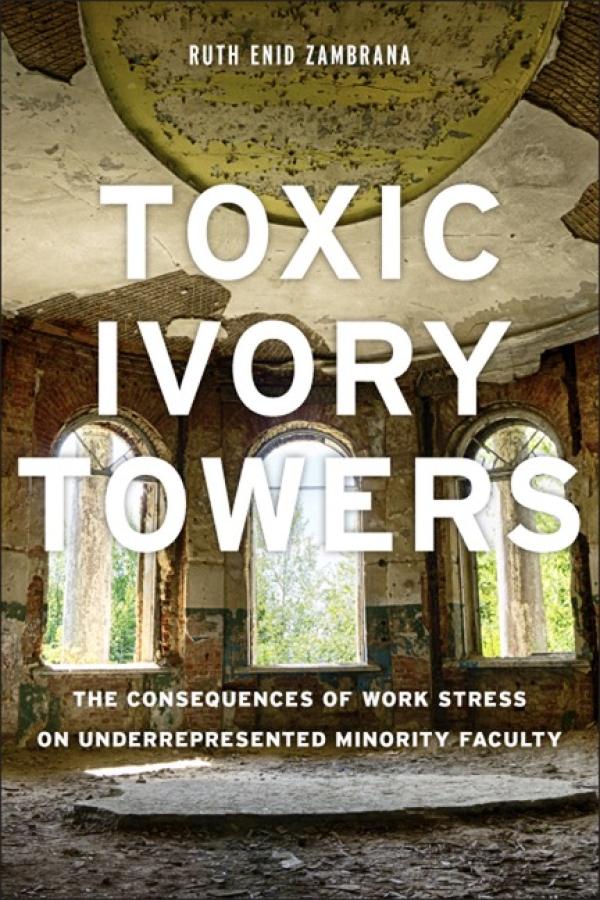
Ruth Enid Zambrana’s Toxic Ivory Towers presents readers with new research on the conditions and consequences of workplace stress among underrepresented minority (URM) faculty in higher education. It draws from the “largest web-based survey of URM faculty in the United States to date” (13) and focuses particular attention on the experiences of African American, Latinx, and American Indian early- to mid-career faculty at elite universities (12). The study examines “the associations between workplace stress, academic organizational factors, coping strategies, and physical and mental health among URM faculty” (10). Zambrana also brings more than thirty-five years of experience to the table as a URM teacher, researcher, and faculty member in order to demonstrate that “workplace stress on URM faculty colleagues is uniquely and adversely impacting their lives” (21). In chapter one, Zambrana illustrates the gap between the stated commitments and actual commitments of universities to diversity initiatives in general and to URM faculty in particular. Then chapter two explores the complicated history behind recruiting URM faculty into the academy. Chapters three through five focus on the climates in which URM faculty experience high levels of stress: climates that are often structurally racist (chapter three), that use mentoring programs to mask deeper problems (chapter four), and that foster micro- and macro-aggressive discrimination (chapter five). Chapters six through eight deal with the impact of work stress on URM homes and families (chapter six), on advancement opportunities such as promotion or tenure (chapter seven), and on emotional and professional well-being (chapter eight). Chapter nine considers the complexities around gender dynamics. Chapter ten exhorts academic leaders to listen to and learn from URM faculty experiences in order to renew their practices. On occasion, Toxic Ivory Towers plods along on account of too many first-hand verbatim reports. More selectivity in verbatims would help with flow. Also, it would be more beneficial to readers if Zambrana proposed a clearer roadmap for the future. Creative solutions are usually more complex than learning from past mistakes and correcting them. However, the many strengths of the book will lead many readers to overlook its weaknesses. Zambrana unmasks the misleading data that a lot of universities publish on the “success” of diversity initiatives; she offers constructive language for URM faculty to help name their experiences; and, her work provokes responses that challenge the status quo. Those who read this book may experience a diverse number of responses: some may be surprised by research findings, others unsettled by testimonies, others reassured they are not alone in their experiences, and still others an aggregate of reactions. Every academic leader (presidents, deans, department chairs, and so forth) who wants positive change in these areas will benefit from interacting with Zambrana’s research, and virtually every URM faculty member will benefit from her adeptness at naming the workplace stressors that they experience.