Resources
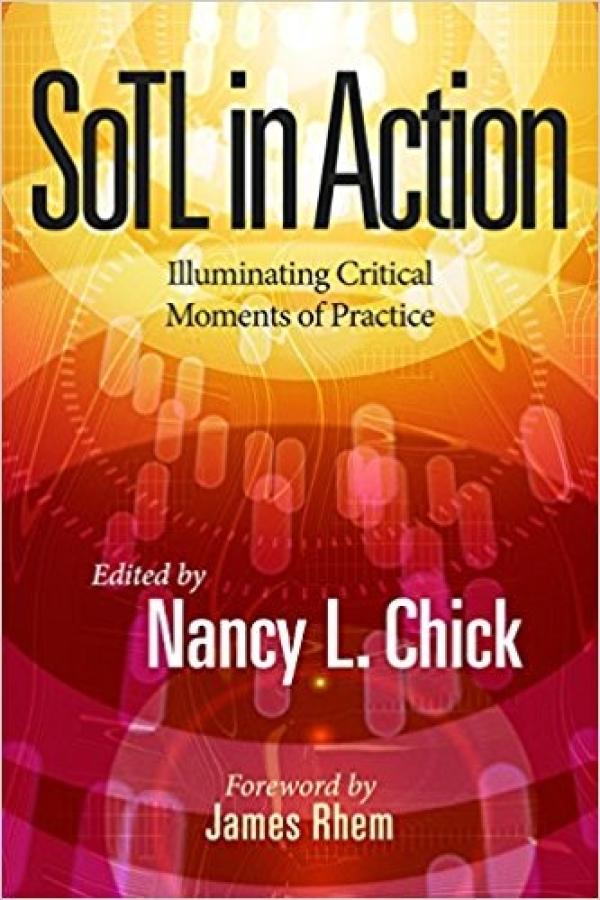
Academics trained in different fields are sometimes at a loss of how to conduct research in the scholarship of teaching and learning (SoTL). Does SoTL have its particular methodologies different from those of other fields? Who are the audiences of SoTL and how can one join the conversation? Is there a quick guide, which introduces the diverse approaches with illustrations? Can we learn from the experts, who can provide advice and point out the pitfalls? This book is helpful for beginners to think more clearly of the scope and research in SoTL, and it also provides insights for seasoned scholars who want to learn from others in diverse disciplines. The book is divided into three parts. Part 1 focuses on the foundations of SoTL, including discussion of the origins of SoTL projects, ways of identifying research issues, the relationship between educational research and SoTL, and the alignment of research methods with purpose. In Part 2 contributors offer examples of specific research methods with examples. These methods include questionnaires, classroom observation, conducting interviews, close reading of student artifacts, and the use of think-aloud protocols developed by cognitive psychologists. Part 3 focuses on making impact and touches on writing and reading SoTL and participating in SoTL conferences. In putting the book together, editor Nancy L. Chick does not want to introduce SoTL in the abstract, but wishes to illumine critical moments in practice through vignettes and examples. Each chapter is like listening to a colleague reflecting on a particular issue in SoTL, drawing concrete examples from classroom practice and research. In the chapter on using questionnaire, for example, the author does not provide a step-by-step guide to creating a questionnaire. Rather, the author shows how he reflects on the big-picture conceptual issue questions related to SoTL when designing the questionnaire. Each chapter includes a helpful reference pointing to further readings. The discussion throughout the book is engaging and shows the authors’ commitment to teaching and to SoTL. It motivates us to become better teachers through engagement with the literature in SoTL. It is encouraging for those of us not trained in social-scientific methods to see that classroom observation and closing reading of student artifacts can also produce SoTL. The chapter on classroom observation explains the process of involving other colleagues to observe teaching in action. The chapter on close reading explains the difference between closing reading for SoTL and grading assignments. While the examples given are helpful, the book would be more useful if it attended to the challenges of doing SoTL research in diverse classrooms, taking into consideration race, gender, sexuality, class, and culture. It would be more up-to-date if it included discussion in SoTL on teaching generation Z students and non-traditional students, and teaching online and hybrid courses, as they are becoming more common in higher education.
You may have heard the announcements that the Wabash Center has launched a new open-access, online journal, The Wabash Center Journal on Teaching. The entire contents of the inaugural issue of the journal is now available for free download online. For twenty-two years the Wabash Center has been publishing Teaching Theology & Religion (TTR), owned by Wiley-Blackwell. Now we’ve moved our whole editorial team from TTR to this new publishing venture in order to make our efforts available digitally without subscription. Although the Wabash Center will no longer be involved in the publication of TTR, Wiley-Blackwell intends to continue publishing it with a new editorial team beginning with volume 23 (January 2020). When we started TTR as a new and unknown center for teaching in the 1990s, we needed the prestige of a major publisher in the field of religion and theology to lend gravitas to the emerging field of the scholarship of teaching and learning. But for many years now we have regretted the paywall our articles have lived behind, limiting our ability to promote this scholarship, support authors, and inspire readers. The Wabash Center Journal on Teaching will continue publishing the high-quality, peer reviewed scholarship on teaching in the fields of theological and religious studies that has been the hallmark of TTR for over two decades. The new journal carries forward the same scope and focus of scholarship – but now our efforts will be freely available online. In the new journal you’ll find the popular Teaching Tactics. In addition to Forums (with contributions now listed individually) we will also highlight Special Topic sections. And the new journal reintroduces Book Reviews, which were removed from TTR in 2015 to allow more space for articles in the print journal. So while you’ll find The Wabash Center Journal on Teaching familiar, you will also begin to notice new developments. The open-access online platform allows us to provide convenient links to sources on the internet and links back to previously published articles. But more than that, the new platform provides the opportunity for The Wabash Center Journal on Teaching to become more than just a print journal available online. It’s easy to insert links to video clips, graphics, or sound files – although these links must be found on the web or created by authors. It takes a leap of imagination to conceive how teaching issues and contexts, arguments and evidence, could be represented graphically, in motion, visually. Until now, the written word would have seemed to be the distinctive home for sustained rigorous, reflection on teaching. But we’re moving into a new world in which the “text” that creates and makes legible academic thinking needn’t be limited to words on a page. So we issue this challenge to our readers and authors: send us sustained critical reflection on your teaching practice and context that explores the boundaries and possibilities of representational forms and genres available on an open-access online platform. 4 Highlights of the Inaugural Journal Issue 1. “State of the Field” essays by: Frank M. Yamada Eugene V. Gallagher and Joanne Maquire A Conversation with Maryellen Weimer (longtime editor of The Teaching Professor, and leading authority on disciplinary based scholarship on teaching) 2. Reflections on the teaching legacy of Dr. Katie Geneva Cannon by several of her former students: Stacey M. Floyd-Thomas Karen K. Seat Miguel A. De La Torre Angela D. Sims Edwin David Aponte 3. Special Topic: Threshold Concepts in Biblical Studies (with contributions from John Van Maaren, Tat-siong Benny Liew, Richard A. Ascough, and Jocelyn McWhirter) 4. Teaching Tactics Zoom in on Interpretive Skills by, Amy Beth Jones, Stephanie Day Powell The Buddha's Positionality, by Christina Anne Kilby Maximizing Engagement between Online and On-Campus Students Via Zoom, by Daniel Orlando Álvarez Does This Sound Religious?, by Amy DeRogatis, Isaac Weiner